May 22, 1989

Source: Israeli Ministry of Foreign Affairs. “Speech by US Secretary of State James Baker before AIPAC.” Israel’s Foreign Relations: Selected Documents, 1988-92. Ed. Medzini, Meron. Jerusalem: Ahva Press, 1993. 165-70. Print.

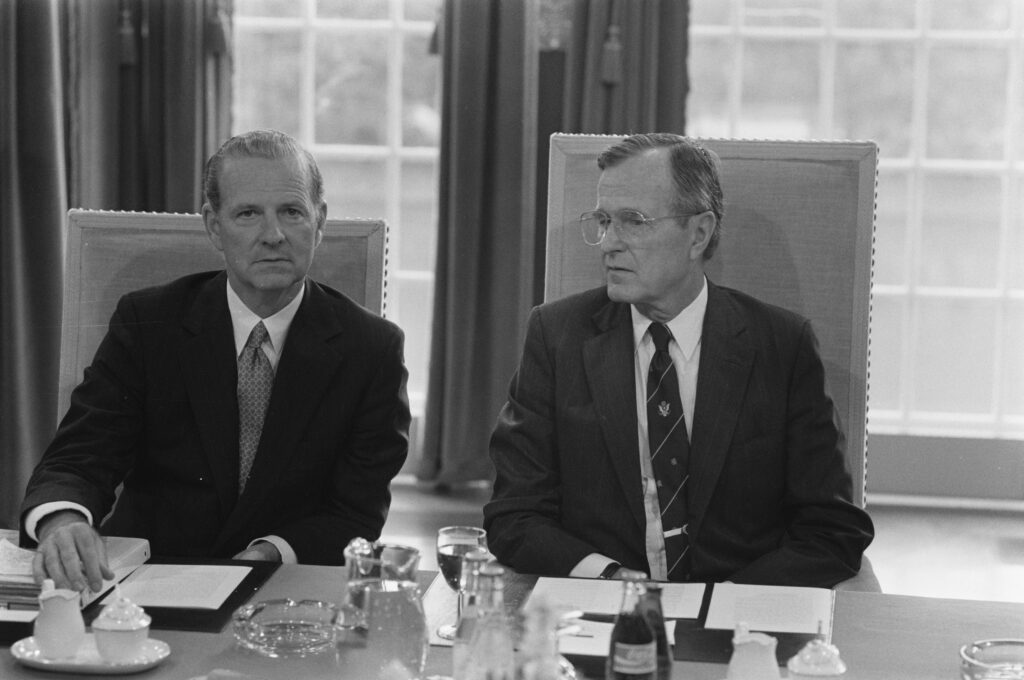
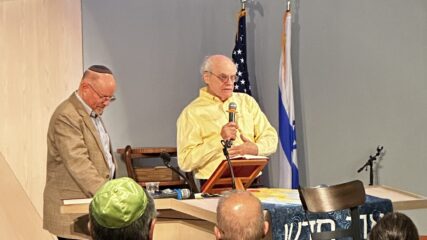
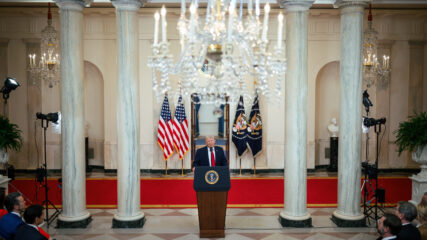
Secretary of State James A. Baker III’s address to the annual AIPAC Policy Conference on May 22, 1989, differed from most such speeches by U.S. politicians because Baker wasn’t there to win cheers or rally support for a possible future campaign. Four months into President George H.W. Bush’s administration, Baker didn’t have to worry about offending voters for a Bush re-election bid 3½ years away, and he had no plans to run for office himself.

Six months before the speech, the U.S. initiated its first public dialogue with the Palestine Liberation Organization, foreshadowing the Bush administration’s readiness to actively engage as a mediator in Palestinian-Israeli negotiations after eight years in which the Reagan administration turned away from the conflict’s mediation.

Baker promised the AIPAC audience renewed U.S. engagement in Israeli-Arab negotiations as well as U.S. support for Israel based on shared values. But he also announced that hard-nosed realism would be applied to mediating the conflict.

He couldn’t know that the Warsaw Pact would collapse with the fall of Communist regimes across Eastern Europe within seven months or that the Soviet Union itself would dissolve two years afterward. But Baker laid out a prescient path for a peace process requiring Israeli concessions, such as trading land for peace in good-faith negotiations, giving up on the idea of a Greater Israel, and acknowledging Palestinians’ political rights, including possible elections of negotiators and eventual self-government.

For the Palestinians, Baker urged an end to First Intifada violence and other terrorism, an embrace of diplomacy that would stop weaponizing international organizations against Israel, and an exercise of agency in determining their future rather than waiting for others to force solutions on Israel. He said the Palestinians had to accept that they could live alongside but not replace Israel, something Palestine Liberation Organization Chairman Yasser Arafat had moved toward with the Stockholm Declaration five months earlier.

Baker said an international conference could be useful for peace negotiations, but direct talks were essential to determine Israeli-Arab outcomes. No outside entity, even the United States, could create and enforce solutions.

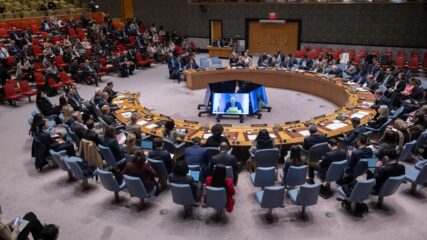
On the international stage, Baker called for an end to the Arab-led economic boycott of Israel and the revocation of U.N. General Assembly Resolution 3379, which labeled Zionism a form of racism.

Baker embraced improvements in the life of Soviet Jews and promises of easier Jewish emigration, and he called for the Soviet Union to restore diplomatic ties with Israel and end arms shipments to Israel’s Arab enemies.

Sure enough, 1 million immigrants from the Soviet Union flooded Israel over the next several years. Because Israel needed U.S. loan guarantees to pay for the infrastructure to absorb the newcomers, they provided leverage to push Prime Minister Yitzhak Shamir to the negotiating table.

The Soviet Union renewed full diplomatic relations with Israel in 1991 to ensure Israeli participation in the Madrid Middle East peace conference, which combined multilateral and direct bilateral negotiations. Before the end of that year the United Nations revoked Resolution 3379.

Madrid opened the door to the secret Oslo talks that resulted in September 1993 in mutual PLO-Israel recognition and the Oslo Accords, which, as Baker had advised, provided a path to Palestinian self-government without predetermining that it would take the form of statehood. The First Intifada largely ended with the Madrid talks and fully ceased with the Oslo Accords.

By 1993, however, Bush and Baker had been replaced by President Bill Clinton and Secretary of State Warren Christopher. They maintained a U.S. commitment to the peace process and found a more willing Israeli partner in Prime Minister Yitzhak Rabin. But they could not overcome political opposition within Israel and, more important, the nihilistic terrorism of Hamas, which was still a new Palestinian force when Baker spoke to AIPAC but led the killing of a thousand Israelis during the Second Intifada from 2000 to 2005 and gained a political foothold in Gaza through legislative elections in 2006 and a violent coup in 2007.

In terms of renewed activism, Baker and Bush delivered what they promised in this speech. Just as Secretary of State Henry Kissinger’s successful Egyptian-Israeli mediation after the October 1973 war established useful precedents for the Carter administration to build on in achieving the 1979 Egyptian-Israeli treaty, Bush and Baker’s groundwork ploughed the paths for Clinton to shepherd the 1993 Oslo Accords.

— Michael Jacobs and Ken Stein, December 27, 2025


American bipartisan support for Israel is a great and an enduring achievement, not only for AIPAC, not only for Israel’s supporters, but also, above all, for America’s national interest. There have been many, many analyses of the U.S.-Israeli relationship over the years, and most of them begin with the fact that we share common values of freedom and of democracy. That is the golden thread in the tapestry of U.S.-Israeli ties, and there are, if I might suggest it, other strands as well.

The president believes — President Bush believes and I believe that … there can only be one policy, and that is a policy of continuity. American support for Israel is the foundation of our approach to the problems, the very, very difficult problems of the Middle East. This support has become all the more important as we approach what I think is a critical juncture in the Middle East. For many years, we have associated that region with either the vanished glories of ancient history or the terrible cost of modern conflict. But now I think the world is changing. We’ve seen long-standing problems in other regions begin to abate.

The president spoke last week of promising and hopeful, even though incomplete, developments in the Soviet Union. Everywhere there is a quickening consciousness that the globe is being transformed through the search for democracy, the spread of free enterprise and technological progress. And, of course, nowhere is that more true, as we meet here today, than in the People’s Republic of China.

The Middle East should be able to participate fully in these new developments. Oftentimes we think of the region as a place full of precious resources, such as oil and minerals. But the area’s most precious resource, if we really stop and think about it, is the lives of its people. And that is the stake.

Are the peoples of the Middle East going to safeguard their most precious resource? Are they going to join the rest of the changing world in the works of peace? Or is this region going to pioneer in conflict once more, through the proliferation of chemical weapons and ballistic missiles?

The people of Israel are vitally concerned with these questions. Israel, of course, is a vigorous democracy. Israelis are among the world’s leaders in communications, electronics and avionics, the new technological revolutions. And Israel understood long ago that the most important of her natural resources is the skill and intelligence of her people. This is the wider context in which we and Israel must consider the peace process. The outcome is of vital concern both to Israel’s future and for our vision of a free and peaceful world.

Not so long ago, we marked a decade of the Camp David peace accords. That occasion reminded us not only of how far we have come, but of how much further we have to go. I would like to report to you that we and Israel have taken some important steps forward.

Before Prime Minister Shamir visited Washington, we had called for some Israeli ideas on how to restart the peace process. We did so based on our conviction that a key condition for progress was a productive United States-Israeli partnership. And I believe that the best way to be productive is through consultation rather than confrontation.

Let me assure you that we were not disappointed. The prime minister will, I’m sure, forgive me if I divulge to you a conversation at our very first meeting. The prime minister said, in preparing for his visit, he had studied President Bush and me, just as he suspected that perhaps we had studied him. I had been described by the media as an “ever-flexible pragmatist.” The prime minister, he said, had been described as an “inflexible man of ideological principle.”

Then the prime minister volunteered that, in his view, the journalists were wrong, and they were wrong in both cases. “Yes,” he said, “I am a man of principle, but I am also a pragmatist who knows what political compromise means.” And he said that it was clear that I, although a pragmatist, was also a man of principle, and that principle would guide my foreign policy approach.

Needless to say, I didn’t disagree with the prime minister. If ever an opening statement achieved its goal of establishing a strong working relationship, this one did. I think it’s fair to say that we understood each other to be pragmatists, but pragmatists guided by principle.

As we approach the peace process together, we understand Israel’s caution, especially when assessing Arab attitudes about peace. I don’t blame Israel for exercising this caution. Its history, and indeed its geopolitical situation, requires it. At the same time, I think that caution must never become paralysis.

Ten years after Camp David, Egypt remains firmly committed to peace, and Arab attitudes are changing. Egypt’s readmission into the Arab League on its own terms and with the peace treaty intact, I think, is one sign of change. Evolving Palestinian attitudes are another.

Much more needs to be done to be demonstrated that such change is real, but I don’t think that change can be ignored even now. This is surely a time when, as the prime minister said, the right mix of principle and pragmatism is required.

As we assess these changes, United States policies benefit from a long-standing commitment to sound principles, principles which have worked in practice to advance the peace process. Now let me mention some of these principles for you.

First, the United States believes that the object of the peace process is a comprehensive settlement achieved through negotiations based on United Nations Security Council Resolutions 242 and 338. In our view, these negotiations must involve territory for peace, security and recognition for Israel and all of the states of the region, and Palestinian political rights.

Second, for negotiations to succeed, they must allow the parties to deal directly with each other face to face. A properly structured international conference could be useful at an appropriate time, but only if it did not interfere with or in any way replace or be a substitute for direct talks between the parties.

Third, the issues involved in the negotiations are far too complex and the emotions are far too deep to move directly to a final settlement. Accordingly, some transitional period is needed, associated in time and sequence with negotiations on final status. Such a transition will allow the parties to take the measure of each other’s performance, to encourage attitudes to change, and to demonstrate that peace and coexistence is desired.

Fourth, in advance of direct negotiations, the United States and no other party inside or outside can or will dictate an outcome. That is why the United States does not support annexation or permanent Israeli control of the West Bank and Gaza, nor do we support the creation of an independent Palestinian state.

I would add here that we do have an idea about the reasonable middle ground to which a settlement should be directed. That is, self-government for Palestinians in the West Bank and Gaza in a manner acceptable to Palestinians, Israel and Jordan. Such a formula provides ample scope for Palestinians to achieve their full political rights. It also provides ample protection for Israel’s security as well.

Following these principles, we face a pragmatic issue, the issue of how do we get negotiations underway. Unfortunately, the gap between the parties on key issues such as Palestinian representation and the shape of a final settlement remains very, very wide. Violence has soured the atmosphere, and so a quick move to negotiations is quite unlikely. And in the absence of either a minimum of goodwill or any movement to close the gap, a high-visibility American initiative, we think, has little basis on which to stand.

If we were to stop here, the situation would, I think, be gloomy indeed. But we are not going to stop with the status quo. We are engaged, as I mentioned a moment ago. We will remain engaged, and we will work to help create an environment to launch and sustain negotiations. This will require tough but necessary decisions for peace by all of the parties. It will also require a commitment to a process of negotiations clearly tied to the search for a permanent settlement of the conflict.

When Prime Minister Shamir visited Washington, he indicated that he shared our view that the status quo was unacceptable. He brought an idea for elections to, in his words — and I quote — “launch a political negotiating process,” close quote, which would involve transitional arrangements and final status. The prime minister made clear that all sides would be free to bring their preferred positions to the table and that the negotiated outcome must be acceptable to all.

The United States welcomed these Israeli ideas and undertook to see whether it could help in creating an atmosphere which could sustain such a process. Just last week the Israeli Cabinet approved a more detailed version of the prime minister’s proposal, indicating Israeli government positions on some but not all of the issues which are involved. The Israeli proposal is an important and a very positive start down the road toward constructing workable negotiations.

The Israeli government has offered an initiative, and it has given us something to work with. It has taken a stand on some important issues, and this deserves a constructive Palestinian and broader Arab response. Much work needs to be done to elicit Palestinian and Arab thinking on the key elements in the process, to flesh out some of the details of the Israeli proposals, and to bridge areas where viewpoints differ.

Both sides, of course, are going to have to build political constituencies for peace. Each idea, proposal or detail should be developed, if I may say so, as a dealmaker, not as a deal-breaker.

It may be possible to reach agreement, for example, on the standards of a workable elections process. Such elections should be free and fair, of course, and they should be free of interference from any quarter. Through open access to media and outside observers, the integrity of the electoral process can be affirmed, and participation in the elections should be as open as possible.

It is therefore high time for serious political dialogue between Israeli officials and Palestinians in the territories to bring about a common understanding on these and other issues. Peace and the peace process must be built from the ground up. Palestinians have it within their power to help define the shape of this initiative and to help define its essential elements. They shouldn’t shy from a dialogue with Israel that can transform the current environment and determine the ground rules for getting to, for conducting and, indeed, for moving beyond elections.

We should not hide from ourselves the difficulties that face even these steps here at the very beginning. For many Israelis, it will not be easy to enter a negotiating process whose successful outcome will in all probability involve territorial withdrawal and the emergence of a new political reality. For Palestinians, such an outcome will mean an end to the illusion of control over all of Palestine, and it will mean full recognition of Israel as a neighbor and partner in trade and in human contact.

Let the Arab world take concrete steps towards accommodation with Israel — not in place of the peace process, but as a catalyst for it.

And so we would say: “End the economic boycott. Stop the challenges to Israel’s standing in international organizations. Repudiate the odious line that ‘Zionism is racism.’”

For Israel, now is the time to lay aside, once and for all, the unrealistic vision of a Greater Israel. Israeli interests in the West Bank and Gaza, security and otherwise, can be accommodated in a settlement based on Resolution 242. Forswear annexation. Stop settlement activity. Allow schools to reopen. Reach out to the Palestinians as neighbors who deserve political rights.

For Palestinians, now is the time to speak with one voice for peace. Renounce the policy of phases in all languages, not just those addressed to the West. Practice constructive diplomacy, not attempts to distort international organizations, such as the World Health Organization. Amend the covenant. Translate the dialogue of violence in the Intifada into a dialogue of politics and diplomacy.

Violence will not work. Reach out to Israelis and convince them of your peaceful intentions. You have the most to gain from doing so, and no one else can or will do it for you. Finally, understand that no one is going to deliver Israel for you.

For outside parties, in particular the Soviet Union, now is the time to make new thinking a reality as it applies to the Middle East. I must say that Chairman Gorbachev and Foreign Minister Shevardnadze told me in Moscow 10 days ago that Soviet policy is changing. New laws regarding emigration will soon be discussed by the Supreme Soviet. Jewish life in the Soviet Union is also looking better, with students beginning to study their heritage freely. Finally, the Soviet Union agreed with us last week that Prime Minister Shamir’s election proposal was worthy of consideration.

These, of course, are all positive signs. But the Soviets must go further to demonstrate convincingly that they are serious about new thinking in the Arab-Israel conflict. Let Moscow restore diplomatic ties with Israel, for example. The Soviets should also help promote a serious peace process, not just empty slogans. And it’s time for the Soviet Union, we think, to behave responsibly when it comes to arms and stop the supply of sophisticated weapons to countries like Libya.

Ladies and gentlemen, I said at the beginning of these remarks that the Middle East had approached a turning point. I believe that this region, which is so full of potential, will not remain immune from the changes which are sweeping the rest of the world. These changes began with the quest for democracy, for individual freedom and for choice. Long ago, of course, Israel chose this path. And long ago the American people decided to walk with Israel in her quest for peace and in her quest for security.

The policy I have described today reaffirms and renews that course. For our part, the United States will move ahead steadily and carefully in a step-by-step approach designed to help the parties make the necessary decisions for peace.

Perhaps Judge Learned Hand expressed it best when he said, “We shall have to be content with short steps, but we shall have gone forward if we bring to our task patience, understanding, sympathy, forbearance, generosity, fortitude and, above all, an inflexible determination.”

Thank you all very, very much.