Six Days That Redrew the Map of the Middle East
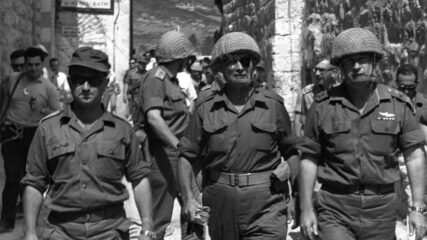
Speeches, source documents and analyses from the 1967 war, gathered into one playlist you can listen to end to end — from the closing of the Straits of Tiran to the aftermath.

Well before their partial expulsion from the Holy Land by the Romans in 70 C.E., Jews lived in Hebron, Jerusalem, Tiberias and Safed. So did Bedouin tribes, some in villages. Many Arabs settled the Land of Israel after various incursions, including the taking of Jerusalem by Muhammad’s successors in 636, and during the sporadic rule of Muslim powers from the Fatimids to the Ottomans. For centuries, tax farmers and later urban notables and sheikhs controlled most of the scarce cultivable land in the coastal plain and valleys. The majority-Arab population engaged in subsistence agriculture and lived mostly in the central mountain range, stretching from the Galilee in the north southward through what is present-day Nablus, Ramallah, Jerusalem, Bethlehem and Hebron.
After modern Israel’s establishment, 160,000 Arabs remained as citizens, while six times that number fled. Arabs constituted some 22% of the Israeli population then and remain about the same percentage today. Arabs of Palestine or Arabs of Israel or Palestinian Arabs living in Israel with citizenship today hold positions in the parliament, the Supreme Court and all walks of life.
 CIE+ Audio Playlist
Speeches, source documents and analyses from the 1967 war, gathered into one playlist you can listen to end to end — from the closing of the Straits of Tiran to the aftermath.

Update June 9, 2026; originally posted June 2021. Compiled by Dr. Ken Stein, CIE President, June 9, 2026 These sources and references unfold the history of the Jewish state through 1949, from state-seeking to state-making…
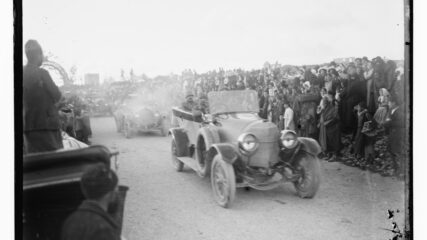
Divine, Donna Robinson, Politics and Society in Ottoman Palestine: The Arab Struggle for Survival and Power, Lynne Reinner Publishers, Boulder, 1994, pp. 191-215 (with author’s permission, September 2025) This is a rigorous analysis of the struggles of…
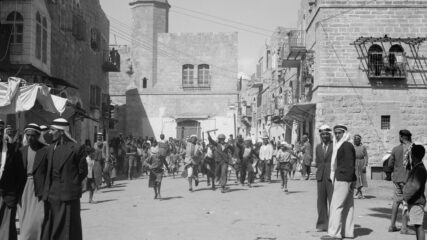
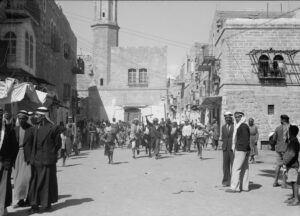
Some ancestors of modern Palestinians and Israeli Arabs, like those of Israeli Jews, lived in the Land of Israel millennia ago, but most came to the area when Muhammad’s successors took Jerusalem and settled there…

Updated July 10, 2026; originally posted October 2023. By Ken Stein Hamas’ Origins The 1988 Hamas Charter and remarks by its leaders and other publications express hatred of Zionism, Israel and Jews. It is thus unmistakable that Hamas…
