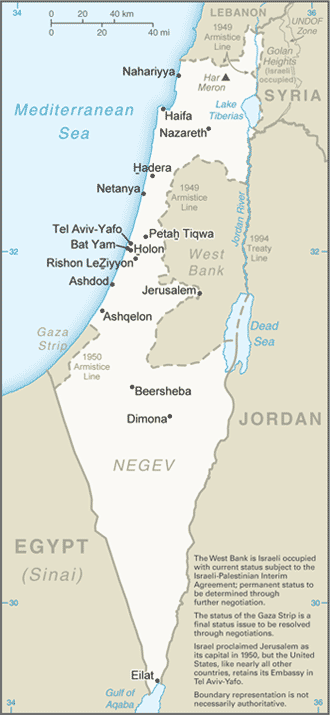
Throughout history, the area of Palestine experienced turbulence and radical transformations. Ruled by many, dozens of armies trampled through the coastal regions and into the central mountainous range surrounding Jerusalem. Agriculture and land use dominated its economic past from the Iron Age to the present.
Palestine, like much of the Mediterranean coastal regions, possessed minimal cultivable land areas. Mountainous areas, deserts and valley regions typified the landscape. Periods of physical and political insecurity caused populations to ebb and flow. The Arab rural population employed extensive agricultural methods, assuring bare subsistence existence. Drought, wars, locust plagues, malaria outbreaks, intermittent rainfall, extensive rural debt, rapacious tax farmers and greedy moneylenders collectively conspired against rural financial solvency. With few notable exceptions, the region lacked an abundance of nutrient-rich soil, efficient horticultural practices, or sufficient water to grow but a limited amount of cash crops, such as citrus in the coastal plain.
Since the beginnings of Zionist immigration to Palestine in the middle of the 1800s, a dedicated few of the new arrivals chose agricultural work. They established their own settlements away from Arab villages or urban Jewish growth. Many early immigrants rejected lives of active religious study, likewise shunning occupations in commercial trades. Early rural Zionist communities evolved into incubators for adoption of modern agricultural techniques. These immigrants spawned socialist ideals among the variations of Zionism in the forms of collectivist agricultural communities, kibbutzim and moshavim.
Individual Zionists invested financially in rural, communal agriculture. By 1914, private Jewish buyers owned 75% of all the land purchased by new Jewish immigrants. Not until the 1920s did national Jewish organizations play central roles in providing the major funds and impetus for collective rural and urban settlement. Drip irrigation, shade house agriculture, aquaponics and mineral-rich fertilizers from the Dead Sea became some of the techniques developed in a slowly emerging Zionist and Israeli agricultural revolution.
The Key Curated Essentials for Agriculture and Ecology