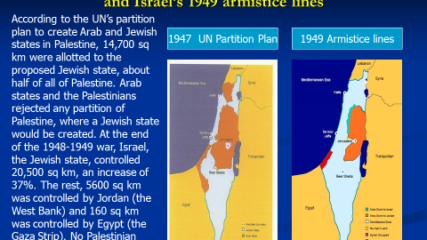
Upon Britain’s 1947 announcement that it would quit governing Palestine, communal violence between Jews and Arabs flared, but the hostilities dramatically escalated after the U.N. General Assembly voted Nov. 29, 1947, to partition Palestine into Arab and Jewish states. When the British left in May 1948 and Israel declared independence, the armies of Egypt, Syria, Transjordan, Iraq and Lebanon attacked but failed to prevent Israel’s creation.
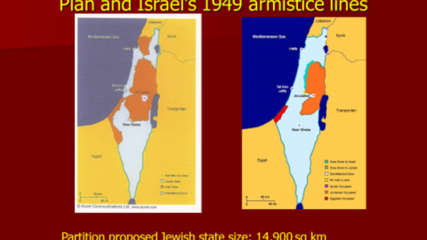
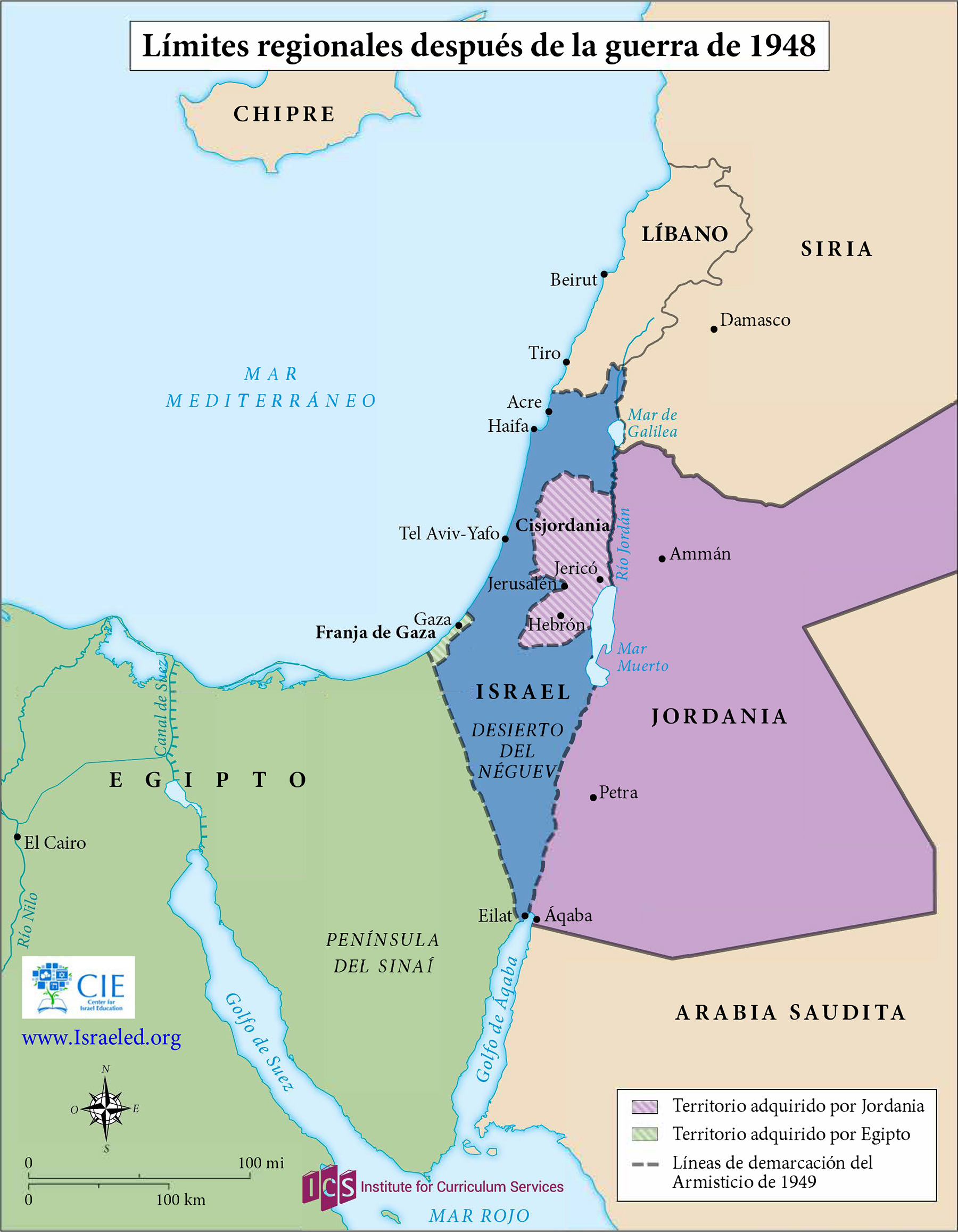
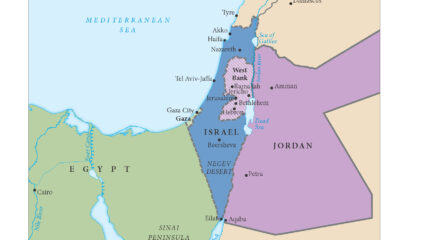
Arab states’ earlier rejection of two states and the war’s outcome had gripping consequences. The dream of creating a Jewish state was realized. No Arab or Palestinian state came into being. Israel increased its size by nearly 37% above what the U.N. plan had allocated to it. Transjordan held the West Bank and parts of Jerusalem, including the Old City, and transformed into Jordan. Egypt held the Gaza Strip. Some 700,000 Palestinian Arabs were displaced. More than 800,000 Jews fled Arab lands over the next five years as anti-Jewish sentiment soared, and most settled in Israel. Armistice agreements but no treaties were signed at the end of the war.
The Key Curated Essentials for the 1948 War