2026 Israeli Election Polling: The Month Ending July 31
Three months from the 26th Knesset election, polling shows the anti-Netanyahu bloc on the cusp of enough votes to form a coalition without the Arab parties.

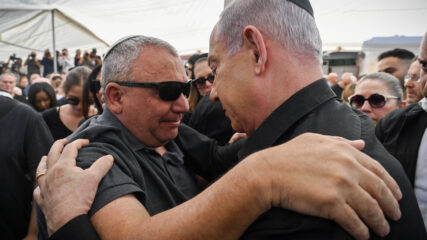
Three months from the 26th Knesset election, polling shows the anti-Netanyahu bloc on the cusp of enough votes to form a coalition without the Arab parties.
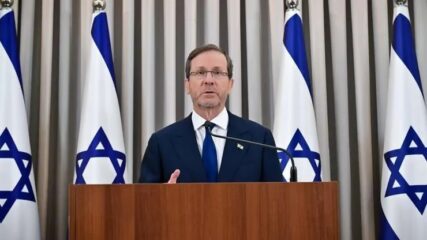
July 21, 2026 Source: https://www.timesofisrael.com/full-text-of-president-herzogs-speech-calling-for-unity-ahead-of-elections/ Introduction Invoking the memory of Jewish infighting as a critical factor in the destruction of the Jewish Temples in 586 B.C.E. and 70 C.E., Israeli President Isaac Herzog — on…
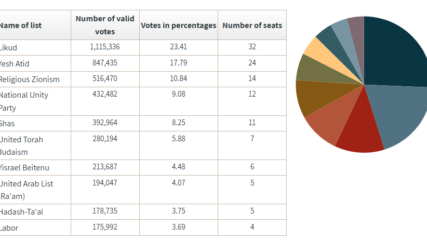
CIE President Ken Stein speaks with the Atlanta Jewish Times in advance of the October 2026 election about differences between the U.S. and Israeli electoral systems.
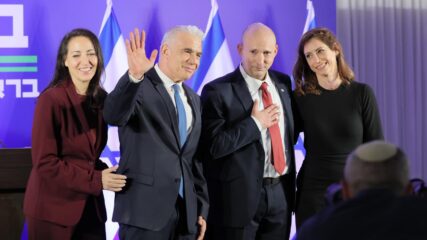
Former Israeli Prime Ministers Naftali Bennett and Yair Lapid, who formed a governing coalition after running separate electoral lists in 2021, put aside their differences in 2026 in their shared quest to unseat Benjamin Netanyahu.

June 2025 With diversity in geographic backgrounds and ideological outlooks, the Zionists practiced democracy to sustain their fledgling movement. From the establishment of the World Zionist Organization in 1897 to the present, Zionist and Israeli…
June 2025 CIE has compiled the following list of books and articles to guide understanding of Israel’s political foundations and institutions. Books Arian, Alan. Politics in Israel: The Second Republic. Washington: CQ Press, 2005. Arian,…
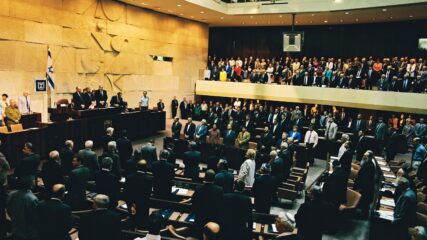
Jewish-majority self-rule existed in Eretz Yisrael during the First and Second Jewish Commonwealths, 1020 to 586 B.C.E. and 538 B.C.E. to 70 C.E., respectively. Then living for centuries as minorities throughout Europe, the Middle East…
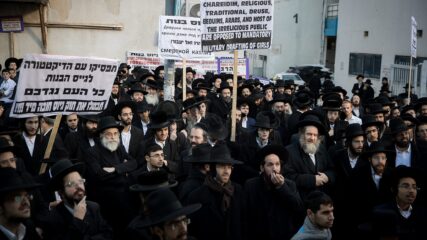
For many years the ultra-Orthodox were perceived as “captive voters” who would always comply with their rabbis’ instructions to cast their ballot for ultra-Orthodox parties. In today’s new reality such directives are no longer enough

Israel’s 13th prime minister, Bennett was born in Haifa to U.S. immigrants. He was an IDF Sayeret Matkal commando and a software entrepreneur. He became the leader of the settler-supported Jewish Home party in 2012…
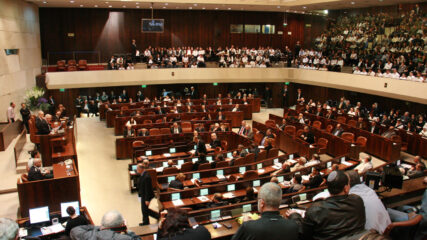
Michael Jacobs and Ken Stein Israel on Nov. 1, 2022, is holding its fifth Knesset election since spring 2019 and its 25th since the state’s founding in 1948. Voters are facing a new mix of…

Born in Baghdad, Yosef in 1984 founded Shas, an Orthodox Sephardi political party. He exerted authority within the party and backed government funding for the poor and Orthodox. An important Talmudic scholar, he served as…
Public opinion both shapes and reflects policy choices. Attitudes provide snap shots of short and long term trends. Assembled here are a variety of current data about policies, reflections, and expectations.
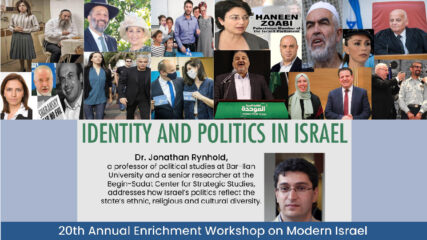
Applying demographic statistics and polling data, Professor Jonathan Rynhold lucidly examines Israel’s politics through the lenses of ethnic, religious, and cultural diversity. He concludes that Israeli society and its political priorities are ever changing, evidenced by the June 2021 formation of Israel’s most ethnically and politically diverse government coalition ever formed.
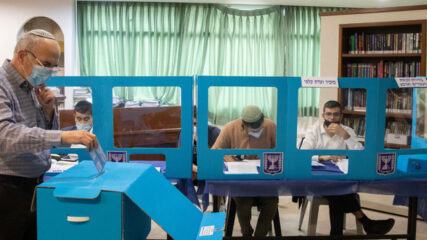
One of the most striking elements to emerge from the preliminary results is that the current Knesset is going to be much more fragmented. If only eight party lists were elected to the Knesset a year ago, thirteen factions succeeded in entering the parliament in this round.
Elections, Parliament, Political Culture, Prime Ministers, Parties and the Voting Public Israel has a parliamentary system of government with some unusual features in the elections and the creation of multiparty ruling coalitions, as explained by…
Israel’s 25 Knesset elections and three direct elections for prime minister have resulted in 14 different people serving as prime minister, in addition to one person, Yigal Allon, who served only on an interim basis….

Former three-term Knesset member is motivated to run in the March 23 elections to create a better Israel for his children and grandchildren, provide a voice for the vital senior population, topple Prime Minister Netanyahu, and restore the Labor Party’s legacy.
CIE board members Nachman Shai, a former Knesset member and a Labor candidate in the March 2021 election, and Yaron Ayalon, the director of the Jewish studies program at the College of Charleston, discuss the decline and possibilities for revival of the once-dominant political left in Israel in a series of three online conversations held in the first three months of 2021.
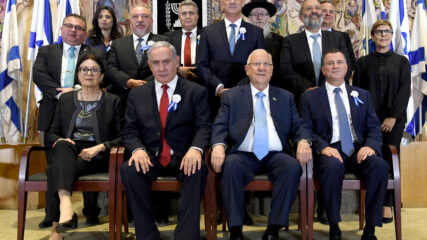
Israel’s Likud and Blue and White parties agree to a three-year national unity coalition government with a rotation of prime ministers (Netanyahu and Gantz) to take place after 18 months. The COVID-19 pandemic, earlier paralysis in coalition formation and President Rivlin’s urging catalyze the coalition agreement.
Former IDF Chief Spokesperson and member of Knesset Nachman Shai shares insights into the current state of Israeli politics with CIE Vice President Rich Walter.
This whiteboard video explains the history of the World Zionist Congress, its impact and function, how it is selected, and which groups are running as part of the 2020 Congress election.

Israel’s third round of elections last week seemed inconclusive at first, but the deadlock may now be broken. Prime Minister Binyamin Netanyahu did better this time than in September’s round two, but his gains were insufficient to form a new government. Potential kingmaker Avigdor Liberman jettisoned his previous idea of getting the two top parties to join forces; instead, personal antipathy and policy differences have led him to definitely state that he will not join any government Netanyahu leads.
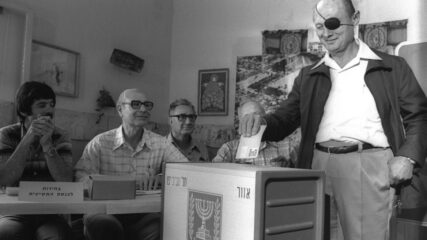
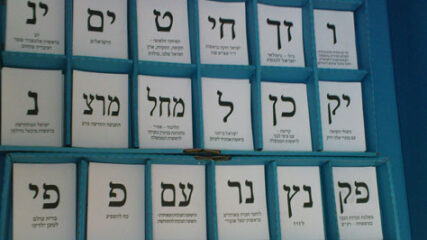
Election season in Israel is traditionally a raucous affair. But unlike the lead-up to Election Day, the voting process is staid, tedious and – despite the sporadic appearance of politicians and celebrities coming to cast their votes – pretty unglamorous. No electronic polling stations. No online voting. Only paper chits, envelopes, a cardboard partition and a box in which to cast one’s ballot. ISRAEL21c presents a photographic retrospective of 7 decades of queuing, cardboard boxes and paper chits that keep Israel’s democracy going.
Has the “Deal of the Century” injected energy into Israel’s third election and perhaps provided an incentive for Arab Israelis to turn out in higher numbers than September? Election rallies for the Arab parties in Israel rarely garner much attention or excitement. But recent policy proposals engineered thousands of miles away may have re-energized a once stagnant and unreliable voting bloc. Arik Rudnitzky uses the village of Bartaa as a possible case study.
