Following the assassination of Czar Alexander II in March 1881, a wave of pogroms (violent attacks) against Jewish communities sweeps through southwestern Russia.
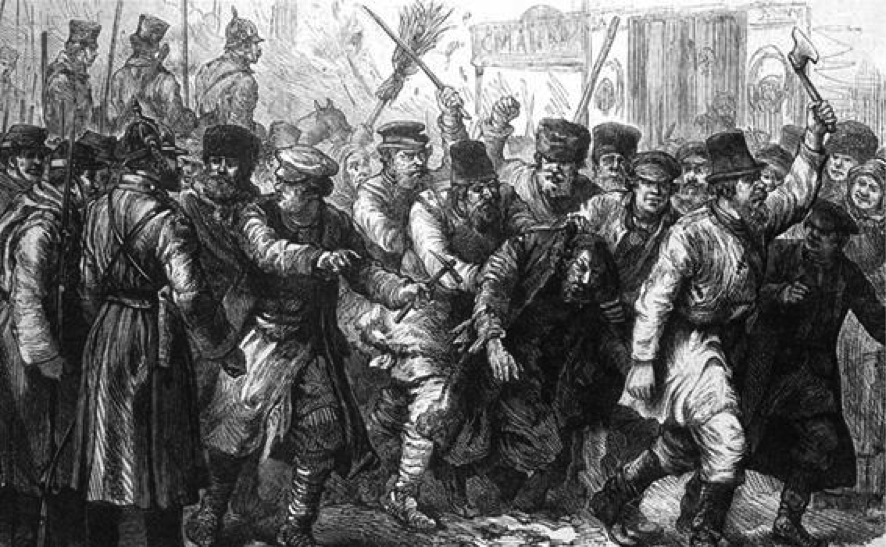

Following the assassination of Czar Alexander II in March 1881, a wave of pogroms (violent attacks) against Jewish communities sweeps through southwestern Russia.
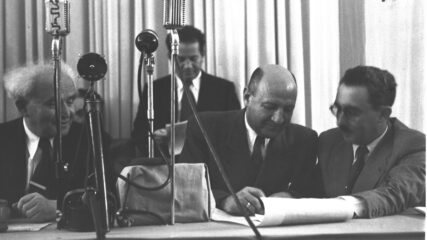
The Israeli Declaration of Independence was crafted in the final month before independence but reflects a thoughtful approach to citizens, neighbors and American precedents.
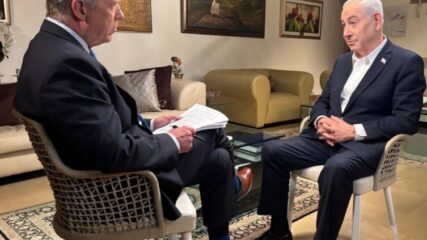
Prime Minister Netanyahu uses the opportunity of an extensive prime-time U.S. interview to promote himself as the defender of a stronger-than-ever Israel, explain the war against Iran and insist on the necessity of removing the Hezbollah threat from Lebanon.
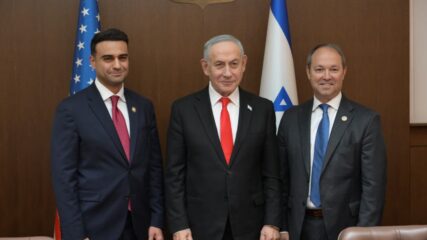
With the support of Prime Minister Benjamin Netanyahu, a pro-Israel congressman moves to reset the U.S.-Israel conversation with a nonbinding resolution to end U.S. military aid to Israel.
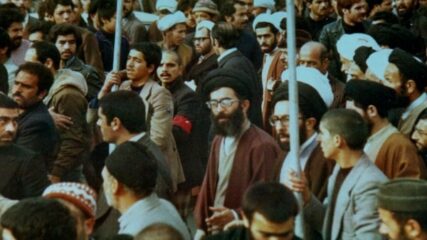
A U.S. House Intelligence subcommittee issued a scathing report on the failures of the intelligence community and policymakers as the Shah’s regime was collapsing in Iran.
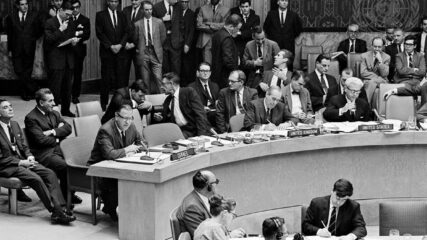
Foreign Minister Abba Eban addressed the U.N. Security Council one day after the Six-Day War began and as Israel was moving from fear of destruction to an extraordinary military victory. He framed Israel’s self-defense after weeks of mounting danger and emotional drain.
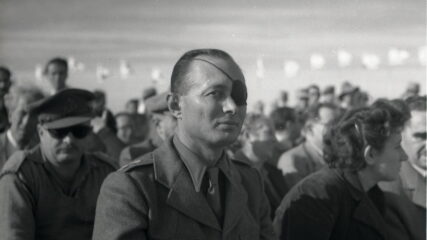
Moshe Dayan, celebrated fighter for Zionism and the state, provides detailed and gripping glimpses of how he and his cohorts fought for Zionism in Syria in the early 1940s.
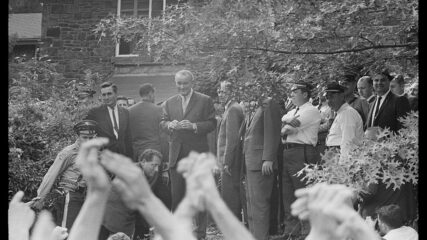
President Johnson’s remarks became the philosophical outline for UN Resolution 242 passed in November 1967. Core to his view was that Israel would not need to return to the pre-1967 war borders, and that the territorial integrity and sovereignty of all states in the region should be protected.
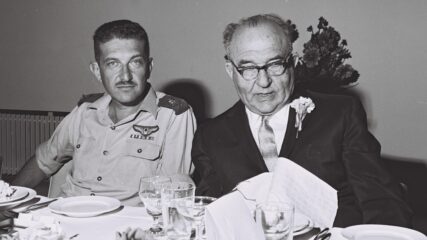
Two days after the conclusion of the June 1967 War, Eshkol, recounts the series of events that led to war, the war itself and the immediate aftermath. He reaches out to Arab states for peace seeking a path to peace with her belligerent neighbors. A week later, Israel will quietly messages Cairo and Damascus through the US, hat Israel seeks an end to the conflict. No answers are received.
“The Six-Day War,” Israel Government Year Book, 5728 (1967-68), March 1968, Central Office of Information, Prime Minister’s Office The short, sharp encounter that has come to be known as the Six-Day War was a highly…
