March 15, 1972
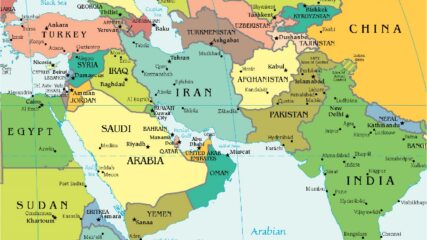
In a radio address to the Jordanian people on Amman Radio, Jordan’s King Hussein proposes a federal solution to the Arab-Israeli conflict. The king’s plan calls for a unified Jordanian-Palestinian state encompassing Jordan and the West Bank with Hussein as monarch. The plan includes an outline for both centralized and regional authority in two capitals, East Jerusalem for the Palestinian region and Amman as both the central and Jordanian regional capital.
The plan comes 18 months after Hussein reasserted power in Jordan and defeated Palestinian attempts at discrediting and overthrowing his government. In July 1971, after a violent struggle that claimed more than 3,000 Palestinian fedayeen, Hussein expelled the Palestine Liberation Organization from Jordan.
Hussein hopes that the new plan will restore support for him among Palestinians, both those living under Israeli control in the West Bank and the sizable population in Jordan.
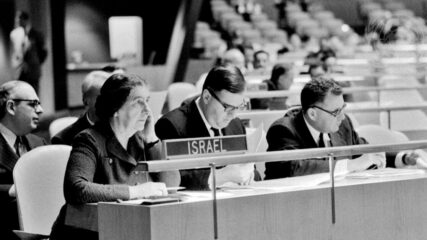
The following day, Prime Minister Golda Meir addresses the Knesset and calls out the king for failing to promote peace or recognize Israel’s legitimate rights as part of his proposal. The prime minister says: “No unilateral declarations or actions whatsoever will bring Jordan one inch nearer to peace. No sophistry, even if it wins banner headlines, will lead to any constructive change. There is only one way which has any prospects — namely, serious negotiations for a peaceful solution, a bold and realistic effort to reach understanding and agreement. Any other way will be futile. Israel is faithful to its policy. It is maintaining the situation as determined in the ceasefire agreements. It will endeavor to strengthen its position in compliance with the needs of its security and development and is ready, with all its heart, for serious peace negotiations.”
The Knesset then passes a resolution rejecting the plan, stating, “The Knesset has determined that the historic right of the Jewish people to the Land of Israel is beyond challenge.”
King Hussein suffers political fallout from the plan in Arab capitals because many Arab leaders see the idea as a first step toward a separate Jordanian deal with Israel. Syria and the PLO reject the plan. Egypt severs relations with Jordan the next month.
Later in March, and again in June 1972, Meir and Hussein engaged in secret but unfruitful peace talks. On March 28, Hussein meets with President Richard Nixon in Washington, but the United States refuses to take an official position on the plan.
The complete text of Hussein’s radio address is available at Israel’s Ministry of Foreign Affairs website. Meir’s response and the Knesset resolution of March 16 are available here.