1921-1922
Arjeh Tartakower, “The Land Question and Land Politics in Palestine,” Der Jude, Vol. VI, 1921-1922, pp. 728-739, Jüdischer Verlag, Berlin.
Introduction
A founder of the Zionist Histadrut’s Labor Zionist Party in Poland in 1927, Arjeh Tartakower was a sociologist and Zionist activist who immigrated to Palestine in 1946, becoming the chair of the sociology department at the Hebrew University of Jerusalem.
Throughout the period before and after World War I, dozens of young Jewish social scientists, activists, engineers and people with other skills grew committed to the idea of renewing an active Jewish presence in Palestine. Some immigrated to Palestine. Others remained in Europe or went elsewhere. Many debated with one another in writing, sharing professional expertise and ideological opinions pertaining to the Zionist project. Educated in Europe, these intellectuals wrote about Jewish culture, Zionist ideas and the rejuvenation of Jewish consciousness.
Der Jude (1916-1928) was founded by Martin Buber. In 1924 its monthly publication became irregular. The number of essays in each volume varied. Each publication had more than 800 pages, with a variety of outlooks offered across multiple topics. Other, smaller journals and newspapers in Berlin, Vienna and elsewhere in Europe published essays, debates and opinions on such issues as whether Arabs and Jews should cooperate in Palestine and what the Zionist attitude should be toward the Arab population in Palestine. Each essay provided crisp analysis, such as this one by Tartakower, relating to land purchases and how they affected Jewish state-building.
These European essays helped inform young Zionists working in Palestine as decisions were considered about policies made by the Palestine Zionist Executive, the Palestine Colonization Association, the Jewish National Fund and other new institutions. Well before the British issued the Balfour Declaration in 1917, more than a dozen dissertations were written in German and Austrian universities about peasant life, social-economic matters, the land regime and more in Palestine. They all added to Zionist knowledge about the Arab community, including its demography and sociological divisions.
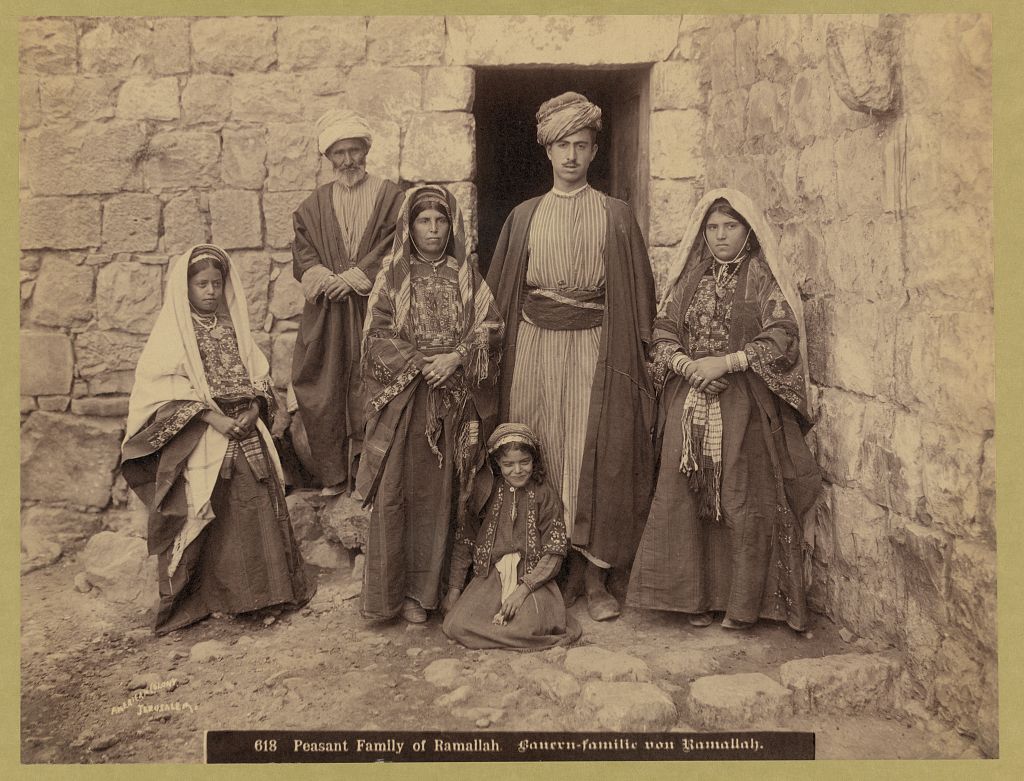
Tartakower described the land regime in Palestine with several hundred Arab families owning hundreds of thousands of acres and a majority of the Arab peasants, or fellaheen, with no land, working instead as short-term tenants in highly insecure conditions, not knowing from one crop cycle to the next if they would work the same lands. He described the stark imbalance between wealthy Arab landowners and impoverished peasant tenants. Under Ottoman rule, he noted, lands were increasingly concentrated in the hands of a small elite, many of them absentee owners living in Beirut, Damascus or Cairo, long before Palestine had its Mandate borders.
The structure left tenants deeply vulnerable. They typically paid rent amounting to a significant share of their agricultural output while also bearing tax burdens and lacking long-term rights or incentives to improve the land. Frequent eviction and rotation of tenants prevented stability, keeping peasants in cycles of poverty and dependence on large landowners. Tartakower described the growing impoverishment of the tenant classes, who were becoming landless well before a small number of Zionists immigrated to Palestine before the British Mandate. Landowners regularly moved tenants from plot to plot or forced tenants to leave.
The arrival of Jewish and German buyers introduced capital, modern farming and rising demand for land, which triggered a dramatic escalation in prices. Land that once sold for a few francs per dunam increased many times over within decades, reaching levels described as “unimaginable.” Arab landowners, recognizing the opportunity, shifted from leasing land to selling it at high prices, often displacing the tenants who had leased and farmed the land. Tartakower quoted examples of land inflation from the early 1880s to the post-World War I period: “An estate purchased for 4000 Fr. in the Jewish colony of Rehovot was sold by its owner after 20 years for 12,000 Fr. for the 2/3 uncultivated; for the rest one offered him 8000 Fr. In the Jewish colony Rishon leZion, land cost 7 Fr. per dunum at the time it was founded (1882); today, if planted, 600 Fr.; as farmland, 1500 Fr. per dunum. In the Jewish colony Petah Tikvah land cost 10 Fr. per dunum at the time it was founded (1883), today 1000 Fr. In the German colony Sarona, 200 Fr. per hectare were paid in 1871, today 4000-5000 Fr.”
Land became an object of speculation rather than production. Wealth accumulated among absentee elites, while tenants were pushed off the land, and colonizing groups faced inflated acquisition costs. The article concluded that without structural reform, especially addressing speculation and tenant insecurity, Palestine’s economic development would remain fundamentally distorted. Arab sellers did not hesitate to offer lands for sale because of some sense of Palestinian national consciousness to keep land in Arab control for the future. The Palestinian Arab press (1931-1949 Arab Land Sales to Jews — Palestine Arab Press, British Reports and Zionist Accounts) regularly bemoaned the sale of Arab lands to Zionists, chiding Arab leaders, a majority of whom lived in Palestine, sometimes in urban areas. For example, the mayor of Haifa sold the Shatta Village lands in Beisan to Jewish buyers, brokers or the Jewish National Fund in the 1920s and 1930s The land sales at Zirin village near Jenin in 1930 by members of the Abd al Hadi were another case in point.
Palestine land sales from Arabs living outside Palestine continued into the 1930s, with the same process of sellers reaping huge profits and tenants displaced and losing their agricultural incomes. In the mid-1930s, Jewish buyers had more offers from sellers than money to buy, as described in a JNF directorate meeting in late December 1937.
In the 1920s, during the first years of the British administration in Palestine, land costs continued to rise, but not as fast as they had in the previous 40 years. Arab peasant insecurity continued apace, eventually causing the British to pass the Protection of Cultivators Ordinances in 1929, 1931 and 1933 to require Arab sellers to compensate Arab tenant farmers before they vacated lands because of the transfer of ownership, be it from Arab to Arab or Arab to Jew.
— Ken Stein, April 8, 2026
“The Land Question and Land Politics in Palestine”
By Arjeh Tartakower
One can surely maintain that the land question is at present the central question of Palestine’s economic life. As long as this question, which has in the course of the last century become confused in a disastrous way, is not approached by a halfway satisfactory solution, healthy development for Palestine is out of the question. The country of Palestine enters the new phase of a difficulty and complexity that few countries have had to bear. To give free rein to things would amount to running open-eyed into ruin.
This was already dimly perceived by many several years ago still in the time of Turkish rule and is now increasingly felt as economic life, for the first time, actually begins to develop under the English mandate. The few decrees that have been issued up until now with regard to land situations and which have initiated their land politics make it appear probable that they were aware of the difficulty of the question. Indeed, they are not suited for producing any decided improvements. The administration has thus far taken a quite proper position for oriental circumstances: that too much rule in the first few years is more damaging than it is useful. So one has thus indeed avoided decisive action that would be poorly understood by the Arab population, in particular, and could lead to unrest that without this has occurred enough for political reasons. But it is apparent that this tactic, which may be appropriate for the first years, will not bear fruit in the long run. Because the “Fortwurstelm” [unknown to translate] avenge themselves nowhere more than in the land question, and the experiences in so many European countries and outside of Europe (England, Italy, Romania, the United States, etc.) are the best proof of this. One must also consider that for Palestine, as a purely agricultural country until now, the question of agriculture (that in part represents the land question) is the economic question par excellence. In contrast to this, one must consider the country as one which only recently appeared as newly striving in all areas of economic life during the period of rapid urban development with sad social consequences, the increase of city land prices, and the unfortunate arrangement of rental and living circumstances that we still have all too clearly before us in Europe. One can thus easily imagine the dangers that threaten the country as a result of the unfortunate confusion of the land situations.
If one wishes to understand the uniqueness of the Palestinian land question, one must examine its development historically. In the course of Turkish rule, which lasted for over 400 years (since 1507), Palestine increasingly developed into a country of decidedly large land holdings. To examine the reasons for this development here would lead us too far astray.[i] They lie in part in the uniqueness of Turkish laws (foreclosure of the land upon three years of not being worked with a resulting sale to the highest bidder, tax law), in part in the incapacity of the government with its weak influence on economic life (tax leases, much too long military service, lack of an organized credit system). The results of this development are revealed by a few figures:
According to Auhagen (Contributions to the Understanding of the Nature and Economy of the Country of Syria), in the year 1907 only 15% in East Jordan, about 20% in northern Palestine (Galilee), about 50% in southern Palestine of the land was in the hands of the farmers. Everything beyond that (when with respect to size we do not leave out of the account significant German and Jewish colonies) belonged to large land holdings. An official report of Vilayet Damascus (to which all of East Jordan belonged) from the year 1917 (contributed by Ruppin: “Syria as Economic Area,” Berlin 1917) stated that 60% of the land was large land holdings, 15% medium-size, 25% small. In areas of Gaza and Beersheba (therefore in South Judea), large landowners own 2 million dunam (1 dunam equals 917 square meters or one-eleventh hectare), 11 of these had 100,000 dunam, 7 had 30,000 to 100,000 dunam. Around Jerusalem-Hebron 26 large landowners occupy 2 million dunam. Around Jaffa there are 45 with 162,000 dunam. In Schem (Nablus) and Tulkarem 5 with 120,000 dunam, in Jenin 6 with 114,000 dunam, in Nazareth 8 with 123,000 dunam, in Tiberias 6 with 76,000 dunam. The Sursok family alone has control of an estate of about 230,000 dunam in various parts of the country, particularly in the Jezreel Valley. Overall, more than 3 million dunam are found in the hands of 120 families.[ii] Against that, 67% of the fellaheen around Jerusalem and 63% around Sichem must share land that measures to less than 50 dunam, although in Syria the normal territory for a farmer (the old German Hufe, called Feddan or Sikke in Syria) is an area of 100-250 dunam.[iii]
In contrast to the ever-expanding large landownership, there is not a trace of large business. Most large landowners can be found outside of the country (most in Egypt) and do not give a thought to working their land themselves. It is much more frequently either through the mediation of an enterpriser or directly leased in small plots to farmers who had to pay rent (almost everywhere in nature) regularly set at one-fifth of the profit and, in addition to that, all the taxes. The conditions are quite similar in this regard to those that existed in Ireland until the famous reforms were carried out, as they now still exist in part in Italy and Romania, with the only difference that although in the two last named countries most are small farmers who must work the land in order to exist, the farmer in Palestine in most cases is only the tenant and is therefore totally dependent upon the despotism of the large landowner.
The effects of this kind of development of real estate circumstances are naturally the same as those in the above-named countries. The larger landownership spreads in connection with absenteeism the more agriculture falls behind. As the farming methods of the Arab farmer are anyhow very primitive without any marked changes for many centuries, so along with this social position as tenant — although mostly for short periods of time (the tenant is changed every 3-4 years so that no limitation occurs in his possession/property) — any stimulus for intensive cultivation is taken away from him. This is so extensive that one can recognize from a distance if an Arab village is a village of tenants or free owners. Trees can only be seen with the latter. Where the tenant economy dominates, a tree cannot be seen for miles. Thus, one can then hardly speak of a ground rent for tenant-cultivated land. What the tenant pays the effendi (large landowner) is purely the yield of work, which is still deducted from the minimum for existence produced by farming. It is hard to imagine the misery that rules in the Arab tenant households. Man sinks to the level of an animal with which he, by the way, shares his miserable loam hut.
These already unthinkable conditions are complicated in the most harmful way by the input of colonization activity of Germans and Jews. To them this activity naturally represents a blessing for the country. Now for the first time it can be seen what intelligent, free farmers that also have at their disposal the necessary means to carry out the melioration and acquisition of appropriate inventory with which Palestinian land can be farmed. The ground rent, which had been practically nothing until now, began to climb rapidly and with that, of course, the price of land — which is also affected by the unending immigration of European settlers. This last influence, which under normal circumstances would be suited for bringing riches and blessings to the country, was a curse in view of the existing property situation, for the Arab tenant as well as for the colonist intended for the colonizing community.
The Arab large landowner quickly recognized that he could now do much better business with his land than if he were to continue to have it worked by tenants. The land had purely been a source of revenue for him which provided him with a work-free income, in the crassest sense of the word. Now it has become a welcome object for speculation. It was valid to sell it to the newly arrived colonist and indeed for the highest possible price. What was to happen to the renter from whom the land was, so to speak, sold from under his feet concerned the effendi very little. He was just tossed out onto the street and had to take to his heels.
So the colonization became an uninterrupted source of tenant tragedies. On the other hand, the price of land rose in an unimaginable manner. The pursuits of the effendis became ever more shameless since there was no competition to be feared. The land in the surroundings of Jewish colonies (German colonization is no longer developing) is today practically beyond one’s means. Even in remote parts of Palestine, land prices are climbing to a height that one would not have dreamed of earlier and that one would not dare to dream of in the rest of the Orient even today. Of course, land prices are climbing accordingly to a fabulous height in the German and the Jewish colonies. As these prices are in part justified since this concerns land that is ameliorated, most planted and found in good condition, so any shade of justification for Arab land that has almost always been exploited to the extreme by bad treatment through hundreds of years completely disappears. What is involved here is only shameless speculation that takes advantage of the needy condition of the colonizing people.
I will present some figures to substantiate this account.
The first Jewish colonists that came into the country paid 7 Fr. per dunam wherein they were notoriously swindled and paid much too much. In contrast, shortly before the war, Arab ground cost on the average about 50 Fr. per dunam. This indicates that it had already increased (in the course of 40 years) at least sevenfold! Today one cannot buy the worst land for under 1 P per dunum, better land is about 3 P per dunum, and especially good land is 5-10 P per dunum. The value of agricultural land (we will return to city land) has therefore climbed at least tenfold in the course of 50 years!
I have already mentioned that this morbid land speculation extends to the Jewish and German colonies. I will now present a few examples (from Smilansky in the journal Hapoel Hazair, 1912): An estate purchased for 4000 Fr. in the Jewish colony of Rehovot was sold by its owner after 20 years for 12,000 Fr. for the 2/3 uncultivated; for the rest one offered him 8000 Fr. In the Jewish colony Rishon leZion, land cost 7 Fr. per dunum at the time it was founded (1882); today, if planted, 600 Fr.; as farmland, 1500 Fr. per dunum. In the Jewish colony Petah Tikvah land cost 10 Fr. per dunum at the time it was founded (1883), today 1000 Fr. In the German colony Sarona, 200 Fr. per hectare were paid in 1871, today 4000-5000 Fr. I believe that these few figures indicate how desperately serious the situation in Palestine is in this regard.[iv]
The effects of such an enormous development in prices are not difficult to surmise. Thereby many advantages go to very few. These are largely people who waste the completely unearned, acquired fortune outside of the country. The Arab tenant, for whom the next day is never secure, suffers severely from this. The colonizing community, which must pay exorbitant prices, suffers severely (today mainly the Jewish people). The expenditures for the acquisition of land are of course completely unproductive. The more that is paid for it, the less is left for the productive preparation of the acquired land, for carrying out amelioration, purchase of inventory, building and so on. But also the more paid for the bare land, the more the profitability of colonization carried out under such circumstances is endangered. The important Jewish Colonization Association, JCA, which has already purchased much land in Palestine, explains through the mouths of its Palestinian representatives that it could not think of further land purchases as long as such tremendous prices are required. The Zionist World Organization, which represents the Jewish people in Palestine, naturally cannot choose this way out: a tremendous expansion of the colonizing community from whom the country does not draw the slightest profit, but by whom it is, rather, to the contrary, largely harmed because the capital that could otherwise be invested in it flows into foreign pockets. This is particularly unique there.
The picture of the Palestinian land question would be largely incomplete if I did not mention the urban land question. As wild as the speculation in agricultural land value is and also as damaging its consequences, it does not yet by far approach the same type of development in the city. Yet while the speculation on the land is more or less a sorry monopoly of Arab large landowners, in the cities representatives of all nations participate, in brotherly unity, to the same extent. For those who observe the development of urban ground rents in Europe in the course of the previous century and partly up until today, the following figures may not be surprising. One must, however, keep in mind that this development in Palestine almost without exception precedes the development of commerce and industry, threatens this the worst, or makes it almost impossible to clearly illustrate the damage that economic life will thereby suffer. The social consequences of this price usury already reveal themselves sharply now.
In the year 1875, one square ell cost 50 para (equals about 5 centimes) near Jerusalem. In the year 1910 one already paid 20 Fr. per square ell, therefore 400-fold! Today prices are significantly higher. In Jaffa one paid up to 10 Fr. per square ell in 1910; ten years later, already 1-8 P (equals 200 Fr. peace parity?); therefore, a 20-fold increase. 1 Fr. per ell was paid for the land for the Jewish city Tel Aviv, near Jaffa, founded in the year 1908. Within three years the price of land, whose purchase was made possible by a loan from the Jewish National Fund, climbed four- and five-fold. In the year 1910 the business-minded landowners could already boast that they had pocketed a profit of 25,000 Fr. which had occurred through the increase in the value of pieces of land. Today land prices in Tel Aviv run up to 2 P per square ell. The price of a construction site (1000 ells) was 1000 Fr. in 1908; today it hangs between 400 P and 1000, an increase of 10-25 times within 13 years!
These are the particulars for three Palestinian cities. All others faithfully follow, even if not always in the same large measure. Apartment rentals adjust according to these price increases. In Jaffa, in 1921, 4-5 P monthly were asked and paid for an unfurnished room, the same in Haifa and Jerusalem. In Tiberias one pays 3 P monthly for a small, empty room. One must only compare the monthly income of a worker or a member of the middle class (an educated worker earns up to 1½ P monthly, an educated worker 12-13 P, an official 25-30 P) against this to understand such untenable conditions. It is only this bad in the cities of Europe in very few cases.
This is what the Palestinian land question looks like. It is clear that such circumstances indicate severe danger for the country that, if not removed early, must at least injure its future development. The best political possibilities only help a little when the sad specter of a very seriously complicated land question is not struck down. I say “struck down” since it is hardly thinkable that without the application of radical methods that a sweeping improvement could be achieved.
The past precautions of the mandate government are, as mentioned, only of value as temporary resolutions and as such earn much notice. By a provisional decree of September 1920, land trade was sharply limited. In this decree it was determined that the acquisition of land, which could only go to a predetermined maximum height, should be allowed solely to Palestinian citizens and tied to proof that one would immediately cultivate the acquired land. Only associations for the public good were excluded from these restrictions. This decree, which was, by the way, strictly enforced, nevertheless meant a much too great restriction of free trade and was therefore stripped of power on the recommendation of the Palestinian state council (an advisory commission of appointed representatives of the three creeds to assist the British governor general) in December 1921. It did not direct itself enough, by the way, against the actual speculators — the Arab large landowners.
Through another regulation from the same decree, which was not repealed, measures to protect the tenants in case of the sale of the land were created. In this case the tenant must be left the minimum area for his livelihood; in the doubtful case 100 dunams. As important as this regulation is, one can hardly see, even in it, the right solution. It is apparent that its use in most cases will much more heavily burden the buyer than the speculating seller. In fact, for the purchase transactions executed last year, the acquirer of the land, the JNF, on the basis of this regulation turned over almost 8,000 dunams in rent to the Arab farmers in the course of 6 years, with the stipulation that after the end of this term they could acquire this land by purchase or had to leave, while the Arab large property owner, in his generosity, remitted 2,000 dunams to the farmer. Thus, the severity of this decree almost completely directs itself against the buyer, who, even without this, was heavily indebted by the high price of land. This can hardly be a solution.
The decree of June 1921 finally signifies a very important measure through which the extension of the expired tenant contracts, as long as no extraordinary circumstances are present, are made obligatory, and the arbitrary increase of tenant taxes is sharply limited. It is the only decree that meets the essence of the matter and which to that extent could safely be acquired by future land legislation.
One consequently sees that in this area just about everything still needs to be done. The next years will show if the mandate government is equal to this undoubtedly very difficult task.
If the future land politic is to reach its goal and free the country of the pressing weight of the land question, it must work in three directions, just as the grievances, as we have seen, are also to be drawn in three areas. First, the highly unhealthy landowner and cultivation system must be thoroughly reformed. Second, measures to inhibit speculation in the sale of agricultural land are to be taken. Finally, urban land speculation must be fought most strongly and must be made impossible.
As far as the first task is concerned, the path is clearly indicated by experiences made in Europe. Only in the ways of internal colonization can lasting improvements be made. Nevertheless, it should not be forgotten that particularly in this regard the greatest difficulties must be overcome. The effendis will hardly let go of such a good object for speculation without tremendous resistance. Despite their noisy patriotism — which they have discovered within themselves only in the last years as the danger began to threaten in earnest that orderly conditions would appear in the country which would make further exploitation of the inhabitants impossible — they would indeed much rather sell the land for a high price to the Jews than for a lesser price to the Arab farmers. It is even very probable that for these reasons the transformation of the tenant into free landowner will not be carried out without further ado. In this case one must begin with extensive, authoritative regulation of tenant conditions. The actualization of the three F’s (fair rent, fixity of tenure, free sale) that succeeded in Ireland and were set in motion through the decree of June 1921, mentioned above, cannot in any case be held off for long. Nevertheless, it can however only be a transitory measure. The goal indeed remains free property for the farmer, which must be forced even after several years. At the same time, how this will be dealt with in the individual case, if it would be more purposeful for the state to take over the land for an official estimated price and then turn it over to the tenants in return for long years of installment payments, or if it should take it over directly from the large landowner for an appropriate purchase price whereby a state credit institute must come to its aid, are the technical questions whose discussion can be omitted here.
In the battle against land speculation to which we now come to speak, an important step has already been taken, although not by the country’s government. The Zionist World Organization, the official advocate of the Jewish people, has resolved, by passage of the Palestinian mandate at their annual conference in London in June 1919, that no Jewish private ownership of land is to be allowed in the future. The land should mostly be acquired by the Jewish people as such and should for all time remain the people’s property and should only be leased in the form of long-term tenant contracts or in inherited lease or inherited cultivation/building rights. Any land speculation from the Jewish side is hereby effectively barred for the future. A change in the current circumstances, however, was by its nature not able to bring about such a resolution. Here the government must intervene.
Nationalizing the ground, which would be the most radical solution, is naturally unthinkable. Likewise, not much would be accomplished, as experience has shown, by limiting free trade as has been tried in the past. Thus, applying the tax levy is the only remaining solution which could be used to fight speculation. Now those who know the Palestinian conditions could object that agriculture carries the main tax burden anyway. The agricultural taxes, in particular the tenth tax (Oscher), made up 6/7 of all taxes until recently, and today still cover 2/3 of all tax income. An objection against the socio-political application of tax measures can hardly be seen in this. It is without a doubt that the Turkish tax law, which is still valid in Palestine today, is purposeless to the highest degree and must be changed in the interest of the development of the country. The transformation of the Oscher into a set land tax is just a question of time, and with it the greatest grievances will disappear. The farmer will only have to pay the tax in accordance with the productivity of the land and can safely keep more profits yielded by increased wages or capital expenditure. But the possibility to introduce a few supplementary taxes will also be provided by this means, which will service the battle against land speculation. One does not argue that accomplishing internal colonization will of itself limit land speculation or quite remove it from the world. We have already seen this earlier, as speculation proceeded triumphantly in Jewish and German villages, and it is without a doubt that the Arab farmer, as far as possible, will faithfully copy the effendi. (By the way he is already doing this today to a large extent.)
Battling the symptoms of speculation is the next concern. When agricultural ground is acquired or otherwise occupied and not cultivated, in most cases either a clear case of speculation or criminal negligence exists. Both must be energetically anticipated. By the way, the regulation that land which is not cultivated for three years returns to the state (one of the few purposeful regulations of Turkish law) exists in Palestine. It is, however, poorly suited to stop speculation. On the one hand, the time period of three years is much too long with the leaping increases in land prices; on the other hand, one can easily get around this regulation (and is done regularly) by somehow working the land, for example, harvesting, and then just letting it lie fallow without having to pay any taxes for it since it does not bring any profit. Freeing this type of land from the tax, however, naturally means a premium for speculation or mismanagement. The reform must therefore proceed in such a way that the tax must also be paid in those cases and in fact since the land tax cannot be taken into account as a tax on the entire value of the property. Since the overall value of the property stands in absolutely no relation to the profit value in most cases in Palestine today, the owner to whom this applies will already in a very short time lose interest in continuing his speculation. He who cannot or will not cultivate the land must sell it. The tax on the overall value will quickly bring this result with it.
Otherwise, a value appreciation tax for the entire country must be introduced as a correlation to this tax. The higher the prices required for the land, the greater the part that the state receives from this gain must also be. Naturally, the tax must therefore be correspondingly high. The highest value appreciation tax known to me was in the German colony of Kiautschou. It amounted to 33 1/3%. One could safely go much higher in Palestine. Here, in the overwhelming majority of cases, the only one hurt will be the speculator, who, in addition, often lives outside the country. It is, by the way, recommended that the tax be levied only at the sale of the land, since especially if the internal colonization is to be carried out, the landowner in very many cases will absolutely not think of selling the land and in these cases would of course remain free of the tax.
Will the two recommended measures bring the hoped for effect with them? Everywhere that it has been tried up until now (especially in Australia and Kiautschou) this was the case. Nevertheless, conditions in Palestine are much more complicated. In any case, one of the two will quite certainly result: Either speculation will continue, and the state will have a very large income. It will certainly need this income since today it must with each step do battle with financial deficits while huge sums flow into foreign pockets completely unearned. Yet I believe, however, that the first result would at least after the passage of some time be much more likely to establish itself.
As long as considerable caution and hindsight are still in effect in the organization of land circumstances in the country, urban land and house speculation cannot be fought strongly enough. The conditions in this regard have already spread so far that they mock every concept of a halfway normal economic life. If the cancerous damage of the urban land speculation is not quickly and thoroughly exterminated, a healthy development of commerce and industry, on the one hand, is impossible. On the other hand, Palestine will very soon, as far as living conditions are concerned, be able to compete with the large cities of Europe. Here, as well, it will be the tax on the overall value and the value appreciation tax whose establishment can create improvement. But they must be shaped differently according to general tax for all building sites in the city and in the immediate surroundings. This will exercise a very effective pressure for house construction since this type of tax would naturally be very heavy depending upon the height of the value of the land. The capital gains tax should, in contrast, be developed as a regular tax paid annually, since value appreciation, of course, does not only occur with the sale of land. Any increase in rent should be considered as value appreciation and covered by a higher tax. Then the house owner would certainly reflect repeatedly before he demanded unreasonable prices for dwelling places. In comparison, a rental tax would be less advisable since experience shows that it can be easily ignored.
And one more thing: In Palestine one should beware of establishing the urban value appreciation tax as a general tax, like it quite generally occurs in Germany, since an actual democratic municipal government is out of the question there today. The clique of land and house owners that rules almost everywhere would be heartily glad if one turned over the value appreciation tax, or with that even the tax on the overall value, to them as municipal taxes. They would render it harmless in short order. Therefore, the value appreciation tax must become a state tax.
These are, expressed in briefest form, the measures that must be carried out if the disastrously confused land question in Palestine is to be led to a solution. Naturally, in practice it will not proceed as easily and simply as it is written down. I have already pointed out a few difficulties that may stand in the way of inside colonization. Countless will also result from the battle against speculation, particularly in the city where one will all too often have to deal with an educated opponent or one who is well acquainted with legal skills. The program just outlined indicates to a certain extent a maximal program that can only be realized slowly and with the passage of time. But it must be realized. It would be a very sad fact if the great opportunities for development that the country presently offers, with the appearance of an organized and doubtlessly well-meaning government following the unhealthy form of landowning conditions, were not utilized. It cannot, in any case, come to that. Therefore, the solution to the land question is indeed the most important of the reforms — whose number are by no means insignificant — to be carried out presently in Palestine.
[i] I can save myself this trouble since it is well presented in Leon Shulmann’s paper “Palestine and the Fellaheen Economy,” Weimar, 1915, Booklet 12.
[ii] Ben-Zwi: The Arab movement, “The Jewish Worker,” Vienna, 1922.
[iii] It is still to be mentioned that there is quite a lot of mortmain (ecclesiastically owned) land in Palestine (Waqf, Muslim foundation [endowment] estates), just as there was much crown land until recently that was mostly the sultan’s private property. As far as the management of both types is concerned, there is no difference between them and other large properties.
[iv] D. Trietsch, Palestine Handbook, Fifth Edition, Vienna, 1922.