August 6, 1923
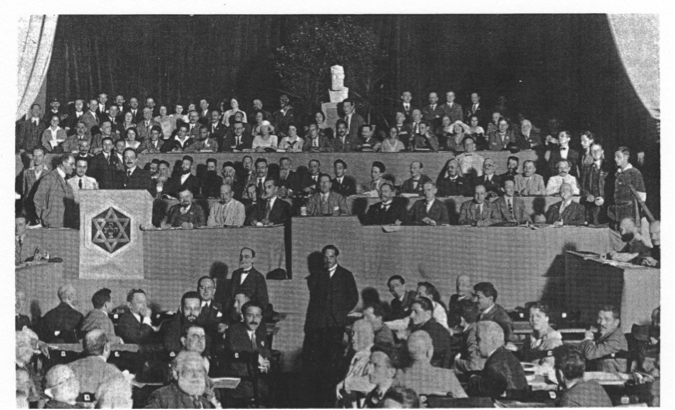
Convened in Carlsbad, Czechoslovakia, the 13th Zionist Congress discusses details of the Palestine Mandate and particularly the prerogatives of the Palestine Zionist Executive (PZE), which guided Jewish immigration and settlement in Palestine. Inheriting the work of the Zionist Commission (1918-1921), the PZE is headed by Col. Frank Kisch. It changes its official name to the Jewish Agency in 1929 but already is recognized by the British as the Jewish Agency, representing Zionist interests in Palestine.
Article 4 of the “League of Nations: The Mandate for Palestine” states:
An appropriate Jewish agency shall be recognized as a public body for the purpose of advising and co-operating with the Administration of Palestine in such economic, social and other matters as may affect the establishment of the Jewish national home and the interests of the Jewish population in Palestine, and, subject always to the control of the Administration, to assist and take part in the development of the country.
The Zionist organization, so long as its organization and constitution are in the opinion of the Mandatory appropriate, shall be recognized as such agency. It shall take steps in consultation with His Britannic Majesty’s Government to secure the cooperation of all Jews who are willing to assist in the establishment of the Jewish national home.
During the congress, details for the establishment of the Jewish Agency are discussed at length, and the issue of non-Zionists joining the Agency is a point of contention. It is ultimately decided that non-Zionists are not to be included. However, at the 16th Zionist Congress in Zurich in 1929, Chaim Weizmann, the president of the World Zionist Organization, is able to reverse this decision, and non-Zionists are admitted.