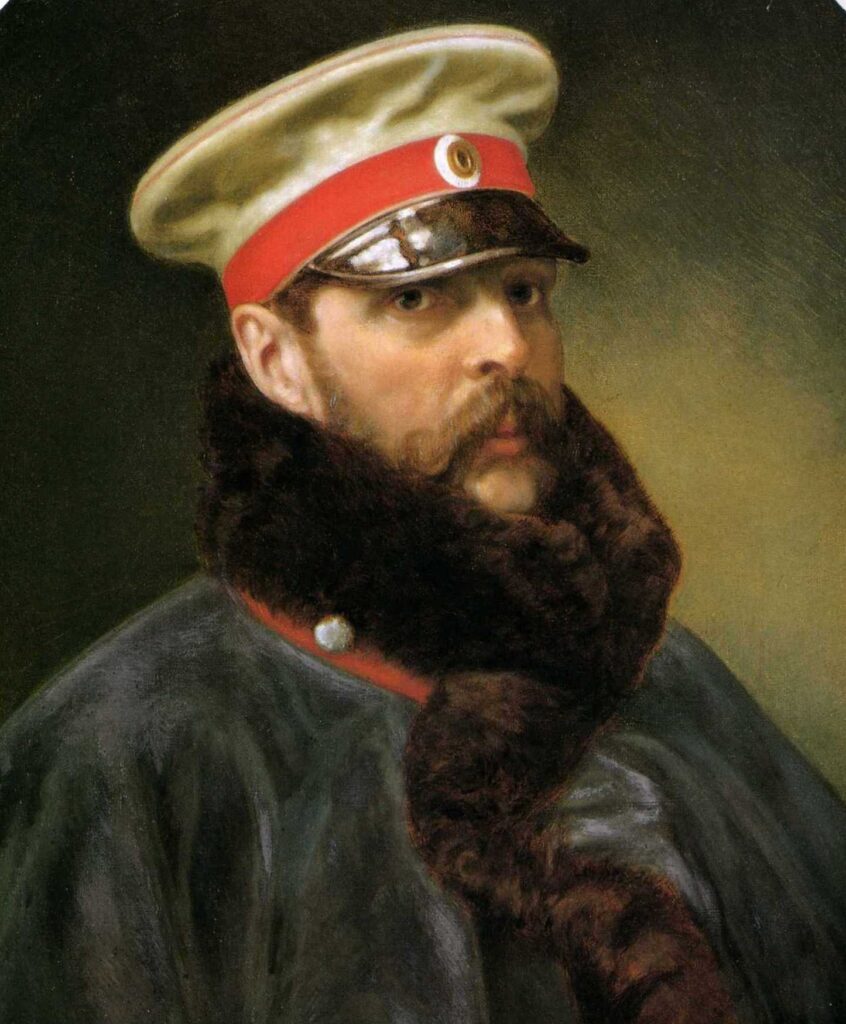
March 13, 1881
Russian Czar Alexander II is assassinated in St. Petersburg when a bomb is thrown into his carriage.
Alexander succeeded his father, Nicholas I, in 1855 and was a more liberal leader. He relaxed some of the restrictions Nicholas placed on Jews, including abolishing the Cantonist system of Russification, established in 1827. The Cantonist system forced Jewish males ages 12 to 18 away from their families into a program of Russian and Christian education in preparation for a 25-year military conscription. Jewish leaders had to supply a quota of youths and even hired kidnappers to take children as young as 8 to meet the demands.
Alexander also allowed some Jews to live outside the Pale of Settlement, the 472,000-square-mile region covering most of modern Poland, Ukraine, Belarus, Moldova, Latvia, Lithuania and Estonia, where Jews had been forced to live beginning in 1835. Moving outside the Pale resulted in the development of Jewish communities in Moscow and St. Petersburg, and many Jews became more involved in the cultural and intellectual life of Russia.
The assassination of the czar is a major turning point in Jewish history. A month later, pogroms — organized attacks against Jewish homes, businesses and synagogues — spread throughout the southwestern areas of the Russian Empire and strike hundreds of Jewish communities. The new czar, Alexander III, blames his father’s liberal policies for his assassination and moves to consolidate his power into an absolute autocracy.
A Russian investigation into the cause of the pogroms finds that the Jews “have succeeded in exploiting the main body of the population, particularly the poor, hence arousing them to a protest, which has found distressing expression in acts of violence” (H.H. Ben Sasson, A History of the Jewish People, Cambridge, MA: Harvard University Press, 1976, p. 882). In May 1882, Russia enacts the May Laws, which further restrict Jews to living in the Pale of Settlement and prohibit them from living outside larger cities and towns, owning real estate, leasing land, or operating businesses on Sundays or other Christian holidays.
The pogroms and the new laws force Jews to re-examine life in Eastern Europe. Approximately 2.3 million Jews leave the area of the Russian Empire between 1881 and 1930; most go to North and South America, South Africa, or Australia. Other Jews turn to self-defense and self-determination, spurring the modern Zionist movement, as they conclude that only by taking destiny into their own hands can they protect their well-being.
The need for a Jewish territory is further reinforced after a second wave of Russian pogroms begins in 1903 and again as result of the Holocaust from 1933 to 1945.