March 24, 2026
Source: https://news.un.org/en/story/2026/03/1167194
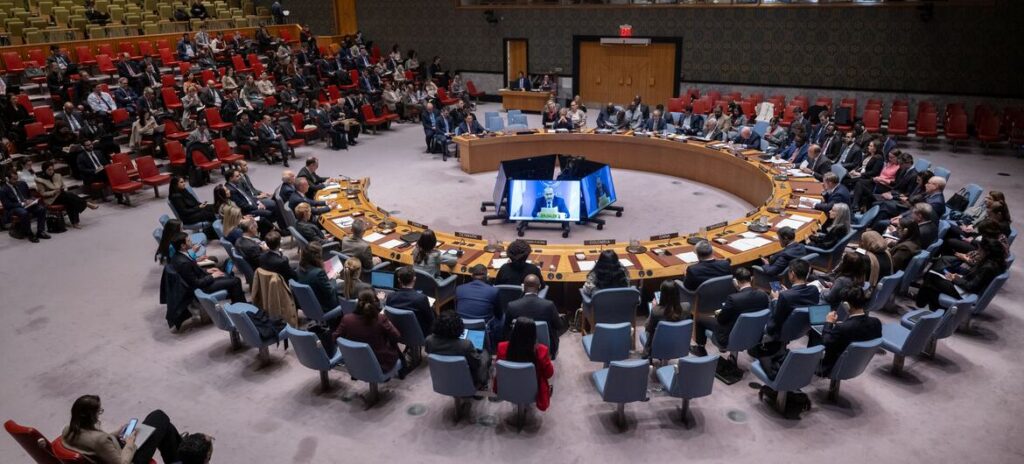
Despite the regional war pitting Iran and Hezbollah against the United States and Israel, Gaza is on track for demilitarization and reconstruction. That was the message Nickolay Mladenov, the high representative for Gaza on the U.S.-led Board of Peace, brought to the U.N. Security Council on March 24, 2026.
During a session focused on the implementation of U.N. Security Council Resolutions 2334 of 2016 and 2803 of 2025, the latter of which authorized the Board of Peace, Mladenov was explicit that all parties in the Palestinian-Israeli conflict must embrace President Donald Trump’s admittedly imperfect ceasefire and reconstruction plan for Gaza or must expect an endless cycle of spiraling violence.
“There can be no credible pathway to Palestinian self-determination and statehood if Gaza remains under the control of Hamas and other armed groups,” Mladenov said. “If we are serious about advancing peace between Israelis and Palestinians, then we must be equally serious about implementing this plan.”
The war that began February 28 has not halted progress in Gaza, he said, including tens of thousands of applicants for a new police force, the commitment of five countries to supply troops for the International Stabilization Force and the selection of 15 Palestinians for the technocratic administration.
But more must be done, Mladenov said, including the permanent opening of the Rafah Crossing, the continuing increase of aid trucks and immediate temporary housing.
He laid out the sequence for Hamas and other Palestinian militants to disarm to enable reconstruction to proceed and urged Security Council members to do everything possible to force military decommissioning to clear the way for Israel’s withdrawal and full reconstruction.
“What stands between the Gaza of today and the Gaza that can be built is not money,” Mladenov said. It’s simply a matter of the parties choosing between the status quo and a better future. “There is no third option.”
— Michael Jacobs, April 5, 2026
Nickolay Mladenov: Mr. President, members of the Security Council, thank you for the opportunity to brief the council today. Let me also begin by thanking Ramiz Alakbarov, the deputy special coordinator in Jerusalem, for his excellent work and commitment to humanitarian principles.
This is my first appearance in my capacity as high representative for Gaza, and I want to begin by expressing my gratitude for the invitation and the opportunity to brief you today.
Resolution 2803 endorsed U.S. President Trump’s comprehensive plan to end the Gaza conflict and authorized an institutional architecture for the transition in Gaza, including a Palestinian-led, apolitical, technocratic committee to administer the Gaza Strip. Without that resolution, nothing that I am about to report would have been possible.
I have had the privilege to brief this council in different capacities — as the secretary-general’s special representative for Iraq and as the special coordinator for the Middle East peace process. I know the weight of the decisions taken here, and I know the credibility of every envoy before this council rests on one thing: telling the truth, including when it is uncomfortable. That is what I intend to do today.
Mr. President, I want to speak plainly about what brought us here because the transitional institutions we are building, the framework we are implementing and the choices we are asking the parties to make were precipitated by the catastrophe that this council must never allow to be normalized.
On October 7, 2023, Hamas launched a premeditated and devastating attack on Israel. Over 1,200 people were killed in their homes, at a music festival and in their communities along the Gaza border. More than 250 people were taken hostage. It was the deadliest day for the Jewish people after the Holocaust.
I condemned it then without reservation, and I do so again now. The trauma that happened has affected every single Israeli family. There is no cause, no grievance, no political objective that justifies the deliberate targeting and intentional slaughter of civilians.
What followed was a military campaign in Gaza that has caused destruction and suffering on an immense scale. Over 2 million Palestinians have endured 17 months of war. Tens of thousands have been killed. Civilians have paid the price. Sixty to 70 percent of infrastructure has been destroyed. The health care system has collapsed. The psychological wounds, particularly of children, will take a generation to heal, if they ever heal at all.
I say this not to assign equivalence, but because this council must hold both tragedies in full view simultaneously. The horror of October 7th does not diminish the suffering of the Palestinian people, and the suffering of the Palestinian people does not diminish the horror of October 7th.
The purpose of the framework that this council authorized and the 20-point plan is to ensure that neither tragedy is repeated ever again.
The roots of the Gaza catastrophe extend beyond the lack of a political resolution to the Palestinian question or Hamas’ two decades of militant control of the Gaza Strip. They have been exacerbated by years of systematic complacency — complacency toward extremism, complacency toward radicalism. This failure has resulted in immense human cost affecting Palestinians, affecting Israelis and people across the Middle East.
The transition in Gaza must decisively address the underlying failures. Resolution 2803 speaks of decommissioning weapons and of reconstruction. Both are essential. Yet they remain insufficient without a concerted effort to challenge the ideologies that fuel violence and to establish a durable framework for sustainable peace and tolerance rooted in justice and the recognition of the rights of both peoples.
Mr. President, four months ago, when this council adopted the resolution, the ceasefire was basically 5 weeks old. The question of how armed groups in Gaza would be disarmed had no framework and no mechanism.
Today, Phase 1 of the comprehensive plan is largely complete. Despite challenges, the ceasefire has held. All hostages have been released and returned to their families. Initial humanitarian aid has been restored and scaled up alongside commercial goods.
We should not take this for granted. This is the foundation on which everything else rests. I wish to thank the guarantors, Egypt, Qatar, Turkey and the United States, for their tireless efforts to the same.
The National Committee for the Administration of Gaza, ably led by Dr. Ali Sha’ath, has been constituted. Fifteen Palestinian technocrats, approved by consensus among Palestinian factions, now form the incoming transitional civilian authority for Gaza. Commissioners have been appointed across critical portfolios: social protection, health, education, infrastructure and security.
The National Committee is currently preparing to enter Gaza, and my office is supporting them in this process. The committee is a competent, transparent, transitional body endorsed by the Security Council and called for by the League of Arab States that provides the Palestinian people in Gaza with civilian administration while the broader question of Palestinian institutional reform is addressed.
The National Committee exercises its authority solely on an interim basis. The end state is a reformed Palestinian Authority capable of governing Gaza and the West Bank and ultimately a pathway to Palestinian self-determination and statehood.
The NCAG, the National Committee, has taken the lead on preparing to secure the Gaza Strip. They have made strong progress in vetting tens of thousands of qualified Palestinian civilian police candidates, who will form the backbone of law and order in Gaza. The response to the open recruitment process has been remarkable, with tens of thousands of potential recruits stepping forward within days of its launch to help rebuild Gaza’s future.
I want to express my gratitude to Egypt for agreeing to serve as the lead training partner for developing the core of this police force, which will be beginning in the coming weeks as their training begins now.
Resolution 2803 also authorized the deployment of the International Stabilization Force, the ISF. Today, five countries are bringing that mandate to life through the commitment of troops — Indonesia, Morocco, Kazakhstan, Kosovo and Albania — operating under the command of the United States through Maj. Gen. Jasper Jeffers. I want to commend these countries and the leadership of the United States and call on all member states of the U.N. to consider contributing to the International Stabilization Force.
My office has also presented to the Palestinian factions a set of transitional principles that govern how the de facto authorities should transfer civilian ministries and civilian institutions in Gaza to the National Committee.
Mr. President, perhaps the most significant development since November is one that, by its nature, has received the least public attention. My office, together with the guarantor states, the United States, Egypt, Turkey and Qatar, has developed a comprehensive framework for the decommissioning and reintegration of armed groups in Gaza. This framework is agreed by all guarantors and has been formally presented to all relevant parties. Here discussions are underway as we speak.
I want to be precise about what decommissioning means in the context of Gaza. The comprehensive plan agreed by the parties establishes the principle of one authority, one law and one weapon. That principle applies to all armed actors in the Gaza Strip without exception.
It applies to Hamas and its military wing, the al-Qassam Brigades. It applies to Palestinian Islamic Jihad and its Al-Quds Brigades. It applies to every other faction that maintains an armed capacity in Gaza, and it applies equally to the irregular armed formations that have emerged on the ground.
It requires the complete decommissioning of weapons in the Gaza Strip and putting them under the control of the transitional Palestinian Authority.
The framework that we have developed and presented rests on five principles.
First is reciprocity. Decommissioning proceeds in parallel with staged withdrawal. This is fundamental to the credibility of the entire process.
Second is sequencing. The most dangerous weapons, rockets, heavy munitions, explosive devices and assault rifles, owned by the armed groups are addressed first. Tunnels must be neutralized. Personal weapons are addressed later through a registration and collection process.
Third is verification. Compliance will need to be monitored and verified. Reconstruction can only be unlocked after the decommissioning stages are certified. This is the linkage that gives the framework its driving force. The people of Gaza want reconstruction, and reconstruction requires the decommissioning of weapons.
Fourthly, the framework addresses the people, not just the weapons. It includes pathways for individuals currently affiliated with armed groups to re-enter civilian life with dignity through structured amnesty arrangements and reintegration programs.
Fifth, my office has the authority to grant timeline extensions where parties are making good-faith efforts. This is a managed process with built-in flexibility because the reality on the ground does not always conform to the timelines on paper.
I will not go into operational details of the timelines or the status of our discussions with the parties. Agreement on the implementation of the framework requires space, and I ask all to respect that space.
What I can tell the council is this: The framework exists. It has been endorsed by all mediators. It has been presented to the parties, and the engagement on it is very serious.
In our last meeting with Palestinian factions, the representatives of Qatar, Turkey, Egypt and myself explained that the implementation of this framework is necessary for the implementation of U.N. Security Council Resolution 2803, and that is the only way to ensure that reconstruction in Gaza and Israeli military withdrawal happens.
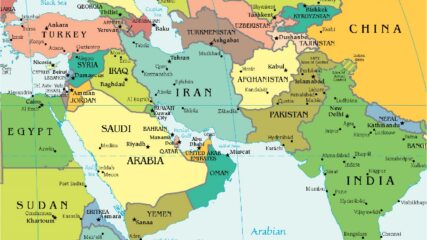
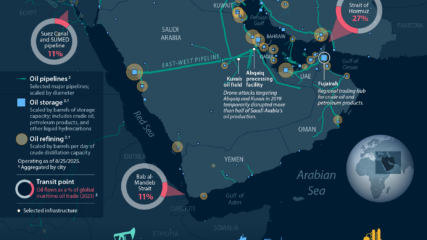
Mr. President, as tensions in the region escalate with Israeli and U.S. operations against the regime in Iran and Israel’s operations against Hezbollah in Lebanon, with continuing drone and rocket attacks by Iran on Gulf countries, and global shipping and energy threatened by Iran’s closure of the Strait of Hormuz, we should not lose sight of the situation in Gaza.
Allow me the opportunity of today’s meeting to ask the Security Council members to support us in two areas.
Firstly, to reiterate publicly and consistently that the decommissioning of weapons in Gaza is not only a fundamental requirement by U.N. Security Council Resolution 2803, but the only way forward that allows for reconstruction to happen and Israeli military withdrawal to take place and for the rights of the Palestinian people to self-determination and statehood to be pursued through meaningful negotiations.
Secondly, I ask the council members to use all means at their disposal to urge Hamas and all Palestinian factions to accept this framework without delay. Every hour, every day wasted carries a human cost and further erodes the prospects for credible and lasting peace.
If realized, this framework would mark a fundamental point. The laying down of arms by militant groups would represent a decisive break from cycles of violence that have defined life in Gaza for decades. It would create the conditions for a unified and accountable Palestinian security structure, restore a single transitional authority, and allow for Gaza and the West Bank to be reunited under one reformed Palestinian National Authority.
For the people of Gaza, the implications are profound. Israeli military withdrawal and reconstruction at scale. It would open the door to sustained international investment, freedom of movement, and the rebuilding of institutions capable of delivering governance, justice and opportunity for all.
But, Mr. President, the full implementation of the comprehensive plan is also the only pathway that provides Israel with durable security. Israel has conducted multiple military operations in Gaza over the past two decades. The weapons have always returned. The tunnels have always been rebuilt. The cycle has been repeated over and over again.
Only verified decommissioning combined with a new professional police force exercising full control over the use of force and a civilian administration with a stake in stability and focused on reforms eliminates that threat permanently.
That is what this framework offers Israel.
I say this directly to those in Israel and elsewhere who argue that military control is the only option: The evidence of the last 20 years says the opposite.
Verified decommissioning and accountable Palestinian governance does not trade away security. It can achieve what military action has not, provided it is given the space and the support to succeed.
Mr. President, let me turn to several urgent matters that require attention by the parties.
Despite significant improvements through the implementation of Phase 1, the situation in Gaza remains very, very difficult. Essential services are operating at a fraction of pre-war capacity. The health care system is in collapse. There is no functioning economy.
I have commissioned a comprehensive needs assessment of the gaps, and my humanitarian team will present that in the coming days. But I will not wait for that assessment to tell the council what is already obvious.
First, the Rafah Crossing must remain open and permit more people to cross in and out of Gaza. Any restriction on its operation directly impedes the implementation of Phase 2 of the ceasefire.
Despite some setbacks due to the regional escalation, my team and I are working hard with Israel and with Egypt to ensure that the Rafah Crossing reopens in the coming days, actually tomorrow, and the number of people allowed to cross over the next period of time should increase significantly.
Second, aid and good entering Gaza must be at least up to the levels agreed in the ceasefire.
The current flow is not adequate for the scale of need, and we are engaging with the relevant Israeli authorities to ensure that the number of trucks allowed to bring goods into Gaza increases in the immediate future. The pipeline is ready, but access must be improved.
Third, we must accelerate temporary housing solutions.
Over 2 million people cannot continue to endure undignified living conditions. Our immediate priorities should be delivering prefabricated housing and transitional shelters, clearing rubble, and restoring access to basic services such as water, health and sanitation to make existing areas habitable.
This cannot wait for the full reconstruction program to begin.
Fourth, and I want to be very clear about this, all parties must fully respect the ceasefire. Every violation, from whatever quarter, risks unraveling what has been painstakingly built over the last five months. The ceasefire is the foundation of the entire transition.
I call on all parties to exercise maximum restraint and to honor the commitments that they have made. This council should accept nothing less.
Mr. President, if this process fails, if the current status quo is allowed to become permanent, the consequences will be devastating. A divided Gaza with Hamas maintaining military and administrative control over 2 million people in roughly 50 percent of Gaza’s territory means those people continue to live in rubble, dependent on humanitarian aid, with no prospect for reconstruction. It means a generation of children growing up in conditions that breed despair and radicalization. And ultimately it means the end of any credible pathway to Palestinian self-determination and statehood.
Let me be explicit about that last point. There can be no credible pathway to Palestinian self-determination and statehood if Gaza remains under the control of Hamas and other armed groups.
That is why everyone, every member of this council, every state in the region, the Palestinian National Authority and every Palestinian faction that cares about peace has an interest in the implementation of the 20-point comprehensive plan, not because it is a perfect document. No plan is perfect. But because it is the only document that connects decommissioning, reconstruction, civilian transition and the reunification of Palestinian institutions into a single sequence.
If we are serious about advancing peace between Israelis and Palestinians, then we must be equally serious about implementing this plan.
But, Mr. President, I do not want to leave the council only with the cost of failure. Let me describe what success looks like because it is worth fighting for.
If this transition succeeds, the Gaza Strip will not simply be rebuilt. It will be built anew, and it will be built by Palestinians for Palestinians.
Imagine a territory where goods flow freely through crossings, not trickling in under restrictions and closures. Where a port handles commercial traffic. Where young Palestinians are not queuing for humanitarian rations, but attending universities that have the freedom to pursue opportunities beyond Gaza and to return home with skills and investment that benefits their people. Where electricity comes from a grid, not a generator. Where a child born next year grows up in a house, not in a tent, and is educated in a school, not a shelter.
None of this is fantasy. The resources exist. The pledges have been made.
What stands between the Gaza of today and the Gaza that can be built is not money. It is a combination of unresolved security concerns, continued armed activity and restrictions that hold these developments back. It is the perpetuation of armed structures and strict closures that make reconstruction impossible and that condemn over 2 million people to live as they live now.
That is the choice before the parties, and that is the choice before this council too: a renewed war or a new beginning, the status quo or a better future. There is no third option. Thank you, Mr. President.