
Nabil Shaath was a close adviser to Arafat particularly in the tumultuous 1998-1993 period when the PLO was buffeted by events and bad choices. Shaath praised Secretary Baker, President Bush and Yitzhak Rabin, and was pleased that Palestinians were participating in the Madrid Conference. He hoped for an end to the conflict with Israel in 1992, based on land for peace but held out for the right of Palestinian return for that to happen. In 2023 he is a foreign policy adviser to Mahmoud Abbas.
Latest articles from CIE
Explainer: How Israel Votes (5:10)
Our latest Israel on Board video explains how the electoral system in Israel works. The video highlights the voting process, explains proportional representation and the electoral threshold, and describes why there are so many different parties.
Explainer: Forming a Government (4:50)
The Israeli election on April 9 is just the first part of the process to decide who will lead the country. Our newest Israel on Board video explains what happens next and how the country’s government is formed.

Mecca Defense Agreement: A Muslim Security Pact for an Uncertain Middle East
Three powerful Muslim countries agreed to a still-vague mutual defense pact both to constrain Iran and to increase their strategic flexibility amid regional changes and U.S. concerns.
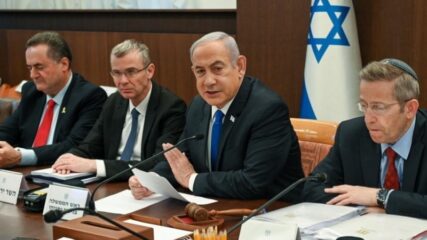
Israeli Prime Minister Rejects Gaza Roadmap, August 2026
Facing a tough election in less than three months, Benjamin Netanyahu appeared to prioritize Israeli public opinion over pleasing ally Donald Trump in rejecting the latest implementation plan for the Gaza ceasefire.
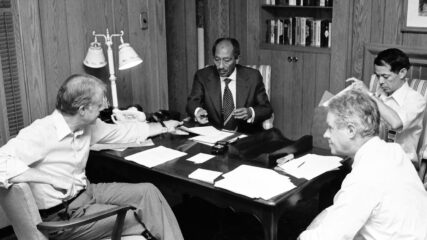
Memorandum of Conversation Between U.S. and Egyptian Delegations at Camp David, September 11, 1978
President Sadat evolved and presented the bulk of Egypt’s views at Camp David, greatly limiting his advisers’ participation. He particularly kept them from demanding Palestinian rights from Israel, which would have ended the talks without an agreement. Sadat anointed President Carter as the more willing, tougher negotiator with the Israelis. Sadat left Camp David with the U.S. at deep odds with the Israelis and Egypt as close as ever to Carter and the Americans.
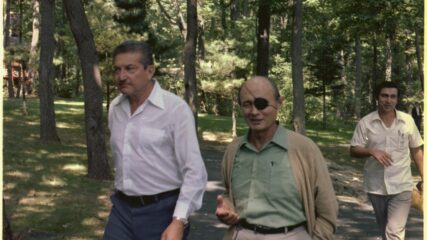
Moshe Dayan and Ezer Weizman Meet With Cyrus Vance and Harold Brown at Camp David, September 7, 1978
On the second day at Camp David, the United States and Israel candidly reviewed the 1967 refugees and the relationship of the West Bank to Israel.

#161 Contemporary Readings, July 2026
July 31, 2026 By Maya Rezak and Ken Stein Videos and Multimedia John H. Cochrane, Niall Ferguson, H.R. McMaster and Bill Whalen, “Trump’s 14 Points: Epic Fury or Epic Fail,” Hoover Institution, June 18, 2026….
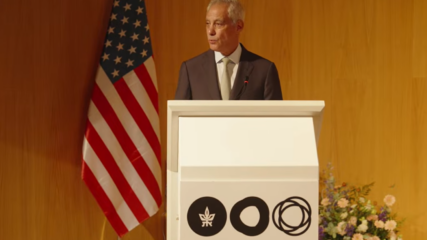
Rahm Emanuel, “The U.S.-Israel Relationship: Where It Stands Today and the Road Ahead,” July 2026 CIE+ members only
Originally posted July 25, 2026; introduction revised August 3, 2026. Source: https://rahmemanuel.substack.com/p/the-us-israel-relationship-where CIE+ Reliable resources for deeper Israel understanding Embrace informed content on Israel, the Middle East and the Diaspora. $39 / year JOIN CIE+…

Board of Peace Roadmap for Future of Gaza and Israel, July 2026 CIE+ members only
Source: https://x.com/BoardOfPeace/status/2083593633698394592 President Donald Trump and his Board of Peace announced “a historic breakthrough” July 30, 2026, on a roadmap for the full implementation of the 20-point ceasefire plan unveiled in late September. The plan,…
