August 7, 2026
Note: The full, comprehensive text remains unpublished.
Signed August 7, 2026, the Mecca Joint Defense Agreement brings Saudi Arabia, Turkey and Pakistan into a collective-deterrence framework rhetorically modeled on NATO’s Article 5: An armed attack against one will be regarded as an attack against all.
The agreement is another of several alliances formed within Southwest Asia in the past six years to bring countries together for mutual collaboration rather than ideology. This is the third alliance system; taken together, they informally contain Iran’s intention to spread its toxic ideology, which includes diminishing the sovereignty and legitimacy of Middle Eastern state structures.
The pact combines Saudi financial resources, religious standing and energy influence with Turkey’s military strength and expanding defense industry and Pakistan’s experienced armed forces and nuclear status. Its immediate trigger was the regional war after the February 28 American-Israeli attack on Iran. Its deeper origins, however, lie in nearly three years of negotiations and a broader regional determination to achieve greater strategic self-reliance without relinquishing American military assistance. Its durability will depend on whether three governments with distinct interests can translate a broad promise of mutual defense into common planning, credible obligations and sustained action.
The agreement names no adversary, yet Iran’s attacks, proxy network and capacity to disrupt regional shipping clearly shaped its formation. Concerns about Israeli, Russian and Chinese actions may also have encouraged the three governments to establish a security mechanism capable of restraining external threats — and perhaps one another’s unilateral ambitions.
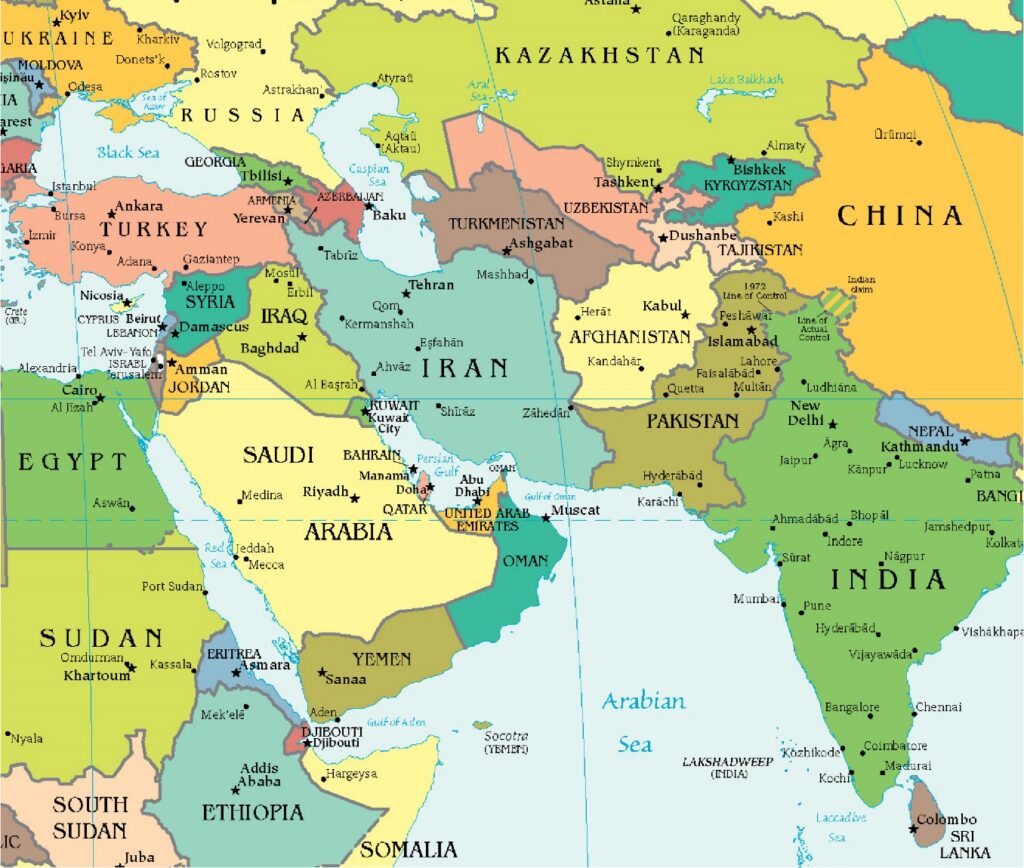
The Mecca Agreement nevertheless remains a pledge rather than an integrated military alliance. It has no permanent forces, unified command or automatic military response. Unlike the American-supported Baghdad Pact, it is not organized against one ideology or power. Unlike the Arab League, which repeatedly proved politically ineffective, or the Gulf Cooperation Council, whose defense ambitions were weakened by internal rivalries and dependence on consensus, Mecca joins three complementary Muslim powers within a narrower framework. Its significance may rest on whether they can convert political solidarity into credible diplomacy, active defense and deterrent power.
While Egypt may eventually join the Mecca Agreement, its current foreign policy encourages caution toward an alliance that could compromise Cairo’s hard-earned role as a mediator in Middle Eastern conflicts. Egypt must balance the attraction of being a formal member of a regional security framework against the risk of losing diplomatic flexibility, which still includes its treaty relationship with Israel.
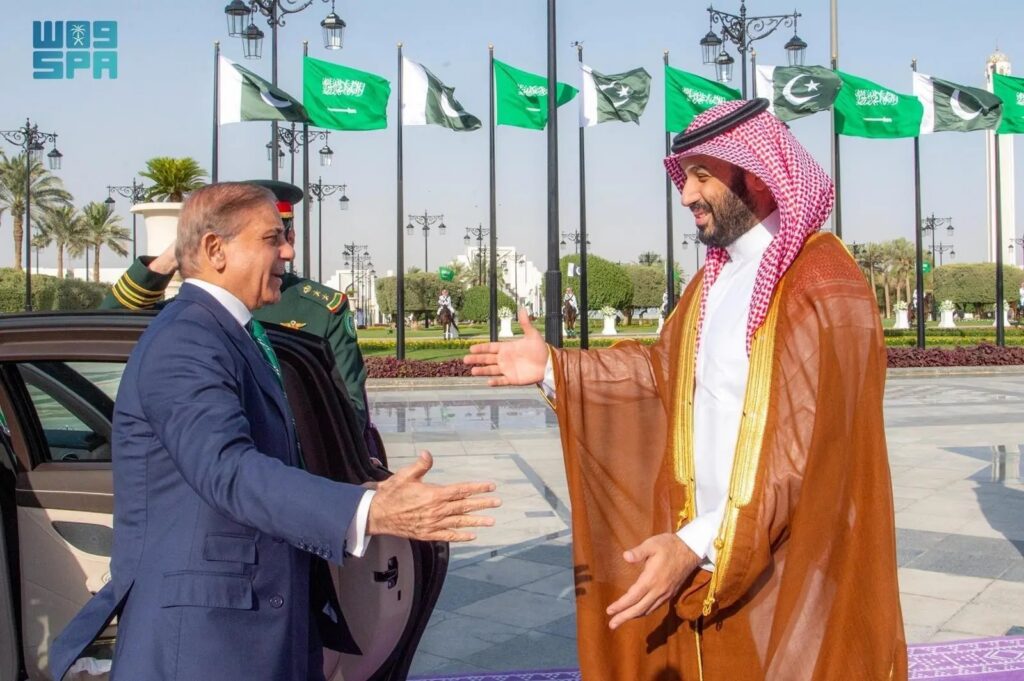
Beyond their existing bilateral relationships, the Mecca Joint Defense Agreement formally connects Saudi Crown Prince Mohammed bin Salman, Turkish President Recep Tayyip Erdoğan and Pakistani Prime Minister Shehbaz Sharif within a trilateral structure. It creates a ministerial committee and a Saudi-based secretariat, while leaving the scale, form and timing of military assistance to subsequent consultation. That ambiguity preserves each state’s freedom of action, but it also raises questions about what assistance would actually follow after an attack on one of them.
The three countries bring complementary assets. Turkey possesses NATO’s second-largest military and an expanding defense industry. Pakistan supplies experienced armed forces and the Muslim world’s only nuclear arsenal, although Islamabad insists that its nuclear deterrent is not covered by the agreement. Saudi Arabia contributes money, strategic geography, legitimacy across much of the Islamic world and substantial influence over global energy markets. Existing military relationships — Pakistani deployments and training in Saudi Arabia, Turkish arms sales to Riyadh, and Turkish-Pakistani naval cooperation — give the agreement more substance than a ceremonial declaration. Each member contributes something the other two cannot easily supply alone.
During the past several years Saudi Arabia has taken notable steps to assert its influence in the Persian Gulf and the wider Middle East without making splashy declarations about regional leadership. It has stated its interest in long-term political stability in the region, which is at odds with Iran. Riyadh appears intent on helping shape the region during the coming decade while avoiding unnecessary confrontation or overextension. The kingdom sought an additional and stronger deterrent without binding itself exclusively to American planning, military intervention or changing political priorities.
The alliance’s organizing concept is strategic self-reliance and regional self-empowerment while the member countries remain connected to NATO, the United States and established Western defense systems. The Mecca Agreement therefore does not represent a complete loss of faith in Washington. It reflects diminished confidence that the United States alone will consistently protect regional partners, preserve maritime commerce or respond predictably to attacks. Saudi Arabia and Turkey still depend heavily on American weapons, intelligence and military cooperation. Pakistan also values its relationship with Washington but receives the bulk of its military supply from China. The U.S. has bases in Turkey and Saudi Arabia.
A looser alignment linking Greece, Cyprus, Israel and, increasingly, India offers another comparison, although it is not a formal collective-defense alliance. Its participants share interests in energy development, infrastructure, maritime security, trade routes and resistance to unwanted external penetration into the eastern Mediterranean and Southwest Asia. The Mecca Agreement similarly reflects the rise of transregional cooperation organized around practical interests rather than complete ideological agreement.
These multilateral arrangements suggest that the region is moving toward a flexible, overlapping alliance system rather than lurching to a political pole. States increasingly choose different partners for different purposes: military deterrence, energy security, maritime protection, technology, infrastructure or diplomatic leverage. The Mecca Agreement’s importance lies in the addition of a Saudi-Turkish-Pakistani framework to that emerging system.
And, importantly, these arrangements surround Iran with collaborative undertakings that indirectly confront Tehran’s interest in spreading its ideology through ideological zeal funded by copious amounts of fossil fuel revenues. Containment of the Islamic Republic is attempted through informal alliance collaboration.
— Ken Stein, August 16, 2026