January 2, 2026
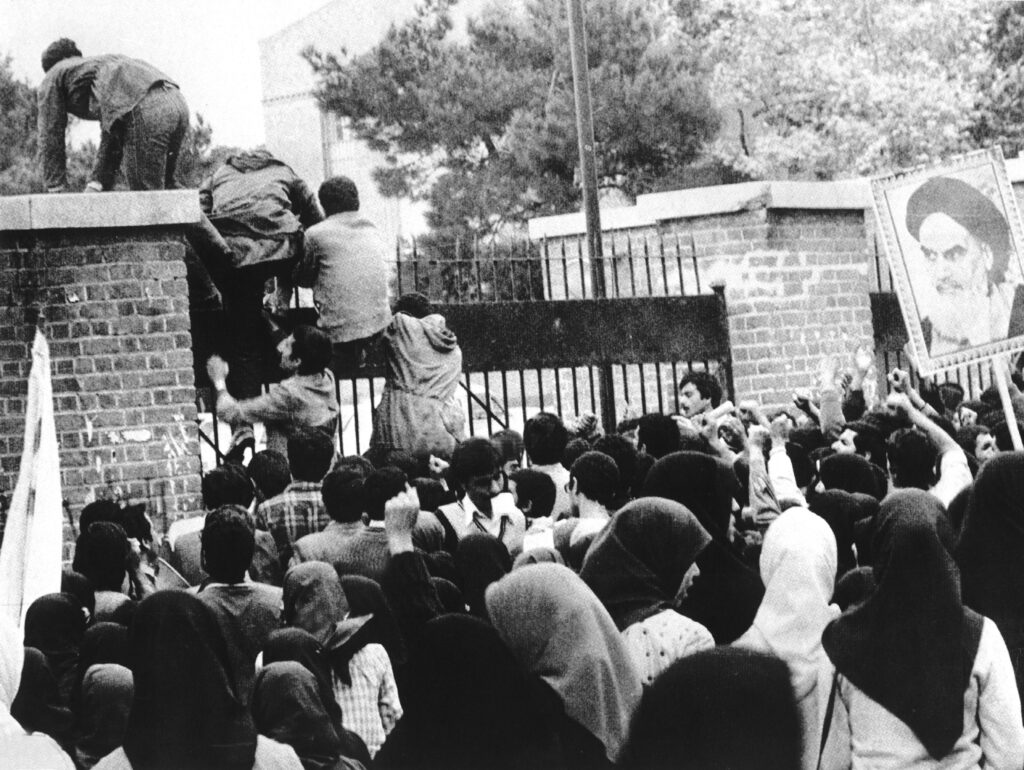
A week of unrest in Iran does not guarantee a revolution even if 85-plus million Iranians are angry at the country’s autocratic, theological rulers. Iran is a security-clerical oligarchy where kleptocracy, cronyism and authoritarianism have prevailed since Ayatollah Ruhollah Khomeini and his supporters toppled the Shah’s regime in early 1979. The Iranian government reported oil revenues of $53 billion and $67 billion annually in 2023 and 2024, with as much as 80% sold to China, so the regime can sustain mega-shocks to its rule.
Iran in January 2026 is undergoing intense internal unrest amid economic turmoil, and President Donald Trump has said the United States is “locked and loaded and ready to go” if the Iranian regime kills peaceful protesters. Although more than 80% of Iranians have at least a high school degree, 25% of the population is unemployed, and 40% is underemployed. Food costs have soared, with bread prices up 15% in one month. Annual inflation has run 30% to 40% the past three years. Water scarcity prevails throughout the country, and reportedly 90% of the limited water available is used for low-yield agriculture. Iran’s brain drain is severe: An estimated 150,000 to 180,000 scientific professionals left from 2007 to 2021. From 2018 to 2024, some $80 billion left the country, some of it channeled into the coffers of the Iranian Revolutionary Guard Corps, which protects the regime.
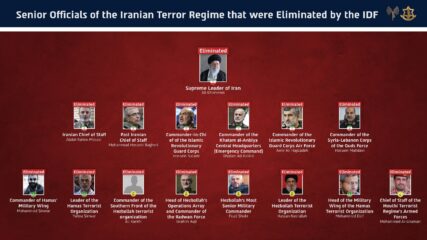
In June 2025, Israel and the United States severely degraded Iran’s nuclear and ballistic missile capabilities. Earlier in the Hamas-Israel war, Israel decapitated the leadership of Hamas and Hezbollah, two insurgencies funded by Iran as part of an axis of evil that ideologically sought to destroy Israel and kill Jews.
We have assembled five sets of items as background to contemporary Iran and the popular protests. This list is not exhaustive. We recommend visiting some of the websites for future readings because publications are generated almost weekly.
Beware of predictions, particularly when they come from academics, diplomats, analysts or politicians who confidently foretell a ruler’s actions. When the Carter administration was waffling about whether to provide military and political support for the Shah’s teetering rule in 1978, Professor Richard Cottam, who had apparently met Khomeini in August 1978, said, “The religious leader has no interest in running the government and planned to retire to Qom,” the religious center; Khomeini controlled the government from 1979 to 1989. Andrew Young, as President Jimmy Carter’s U.N. ambassador, said the ayatollah was “a moral figure who raged against a corrupt and tyrannical regime,” compared the anti-Shah revolution to the American civil rights movement, and predicted that Khomeini would be recognized after the revolution as “some kind of a saint.” James Bill, another Iranian academic specialist, said the clerics were “the guardians of social justice and morality” and “would never participate in the formal government structure.” (Citations from Ofira Seliktar, Failing the Crystal Ball Test: The Carter Administration and the Fundamentalist Revolution in Iran, Westport, CT, Praeger, 2000, pp. 120-122.)
— Ken Stein, January 2, 2026
Current Readings
Hussain Abdul-Hussain, “Victory Over Iran Gives Trump the Chance to Reshape Mid East With Trade Deals,” Foundation for Defense of Democracies, June 24, 2025.

Thomas Albery, “A Crisis of Crises: What Is Going on in Iran?” The Boar, December 29, 2025.
Masumeh Bolurchi, “Iran’s Regime Faces Mounting Economic Collapse as Prices Soar and Capital Flees,” National Council of Resistance of Iran, Foreign Affairs Committee, November 9, 2025.
Masumeh Bolurchi, “Iran’s “Most Perilous” 20 Years: Cabinet Turmoil Deepens Amid Currency Slide and Smog Crisis,” National Council of Resistance of Iran, Foreign Affairs Committee, December 27, 2025.
Rachel Brandenburg, Shira Efron, Michael Koplow, Garrett Nada, Avishay Ben-Sasson Gordis, Danny Citrinowicz, Udi Dekel, Orna Mizrahi, Yaron Schneider, Eldad Shavit, Sima Shine, Carmit Valensi, Raz Zimmt and Ari Heistein, “Fracturing the Axis: Degrading and Disrupting Iran’s Proxy Network,” Israel Policy Forum and Institute for National Security Studies, September 11, 2025.
Holly Dagas, “Khomeini Promised Free Water. Iran Is Running Out of it,” Washington Institute for Near East Policy, November 28, 2025.
Faramarz Davar, “The Timeline of Iran’s Nuclear Program From 1956 to Now,” IranWire, June 13, 2025.
Yoni Ben Menachem, “Strategic Suicide? Why Iran’s Ayatollah Khamenei Is Again Preparing for War,” Jerusalem Center for Security and Foreign Affairs, June 29, 2025.
Jubin Katiraie, “Thirty-Eight Percent of Iran’s Oil Revenue Did Not Return to the Country From March to November,” Iran Focus, January 1, 2026.
Dalga Khatinoglu, “The Year in Review: Iran’s Deepening Economic Crisis,” Middle East Forum, December 27, 2025.
Shahram Kholdi, “Iran Is Muddling Through an Economic Mess but Its Luck May Run Out,” Iran International, December 11, 2025.
Eric Lob, “Iran’s Water Crisis Is a Warning to Other Countries,” Carnegie Endowment for International Peace, November 24, 2025.
Maziar Motamedi, “As the Dams Feeding Tehran Run Dry, Iran Struggles With a Dire Water Crisis,” Al Jazeera, November 12, 2025.
Reza Parchizadeh, “Iran’s Axis of Resistance After the 12-Day War: Adaptation, Restructuring, and Reconstitution,” Middle East Institute, December 19, 2025.
Fred Pearce, “After Ruining a Treasured Water Resource, Iran Is Drying Up,” Yale Environment 360, December 18, 2025.
Nitsan Prayzler, Mora Deitch and Raz Zimmt, “Iran From Within: Analysis of Protest Events and Regime Support,” Institute for National Security Studies, September 16, 2025.
Sai Rajabi, “Iran’s Brain Drain Crisis: How Corruption and Repression Are Driving a Generation Away,” Iran Focus, June 12, 2025.
Gregg Roman, “The Invisible Front: Iran’s Unprecedented Espionage Offensive Against Israel: How Tehran Weaponized Financial Desperation to Build a Network of Disposable Spies,” Middle East Forum, December 28, 2025.
Scott N. Romaniuk, Erzsébet N. Rózsa and László Csicsmann, “Iran’s Water Crisis: A National Security Imperative,” Geopolitical Monitor, December 27, 2025.
Jim Zanotti and Clayton Thomas, “Israel-Iran Conflict, U.S. Strikes, and Ceasefire,” Congressional Research Service, June 2025.
Timelines
Timeline: Iran, Israel and the Jewish People, June 2025.
Timeline: Hamas-Israel Relations With Events, Statements and Clashes, 1988-Present.
Jeremy Sharp and Jim Zanotti, “Israel and Hamas Conflict in Brief: Overview, U.S. Policy, and Options for Congress,” Congressional Research Service, January 11, 2024 (updated October 4, 2024).
Readings and Videos From the Hamas-Israel War
Center for Israel Education, Explainers: Hezbollah and the Hamas-Israel War (4 videos).
Center for Israel Education, Explainers: Iran and the Hamas-Israel War (5 videos).
Matthew Levitt, “Ending Iran’s Nuclear Weapons Program Is Not Enough,” Washington Institute for Near East Policy, April 25, 2025.
Meir Litvak, “Iranian Regime’s Embedded Hatred of Jews and Israel,” Center for Israel Education, December 11, 2024.
Majid Rafizadeh, “Biggest Blow to Iranian Power Since 1979: The Fall of al-Assad and Loss of Strategic Ally,” AlArabiya, December 12, 2024.
CIE Documents and Sources
Israeli Prime Minister Netanyahu Announces Attack on Iran, June 2025
Yahya Sinwar, Hamas Leader in Gaza, Seeks Israel’s Eradication, Thanks Iran — His Own Words, 2017 to 2021
Jimmy Carter’s Hamas Decade of Embrace
Maps of the Middle East and the Gaza Strip
Israeli Prime Minister Netanyahu Addresses Congress on Iranian Nuclear Program, 2015
Jimmy Carter’s Unbridled Praise for the Shah of Iran at a State Dinner in Tehran, 1977
Jimmy Carter, “The U.S. and Iran, the Shah’s Downfall, the Hostage Crisis, and the Rise of Ayatollah Khomeini,” March 24, 1985, presentation to Emory University students.
Historical Backgrounders
Shahram Chubin, “Iran and the Arab Spring: Ascendancy Frustrated,” Gulf Research Center, September 27, 2012.
Michael Eisenstadt, “If Iran Gets the Bomb: Weapons, Force Posture, Strategy,” Washington Institute for Near East Policy, November 2024.
Michael Eisenstadt, “The Risk and Reward of Preventive Strikes Against Iran,” Survival: Global Politics and Strategy, Volume 67, No. 25, October-November 2025.
Ephraim Kam, “The Iranian Military Intervention in Syria: A New Approach,” Strategic Assessment, Institute for National Security Studies, Volume 20, No. 2, July 2017.
Meir Litwak, Emily Landa and Ephraim Kam, eds., “Iran in a Changing Strategic Environment,” Institute for National Security Studies, March 2018.
Suzanne Maloney, “The Roots and Evolution of Iran’s Regional Strategy,” Atlantic Council, October 2, 2017.
National Security Archive, “Iran’s 1979 Revolution Revisited: Failures (and a Few Successes) of U.S Intelligence and Diplomatic Reporting,” 12 key documents, George Washington University, 12 key documents, February 11, 2019.
National Security Archive, “20 Years after the Hostages: Declassified Documents on Iran and the United States,” George Washington University, November 5, 1999.
Kenneth M. Pollack, “Facing the Iranian Challenge in the Middle East: The Role of Iranian-Backed Militias,” American Enterprise Institute, October 24, 2017.
Clayton Thomas, “Iran: Background and U.S. Policy,” Congressional Research Service, May 22, 2025.
Jim Zanotti, “Israel: Possible Military Strike Against Iran’s Nuclear Facilities,” Congressional Research Service, September 28, 2012.