June 17, 2026

Source: https://www.c-span.org/program/white-house-event/president-trump-holds-news-conference-as-g7-summit-concludes/681122

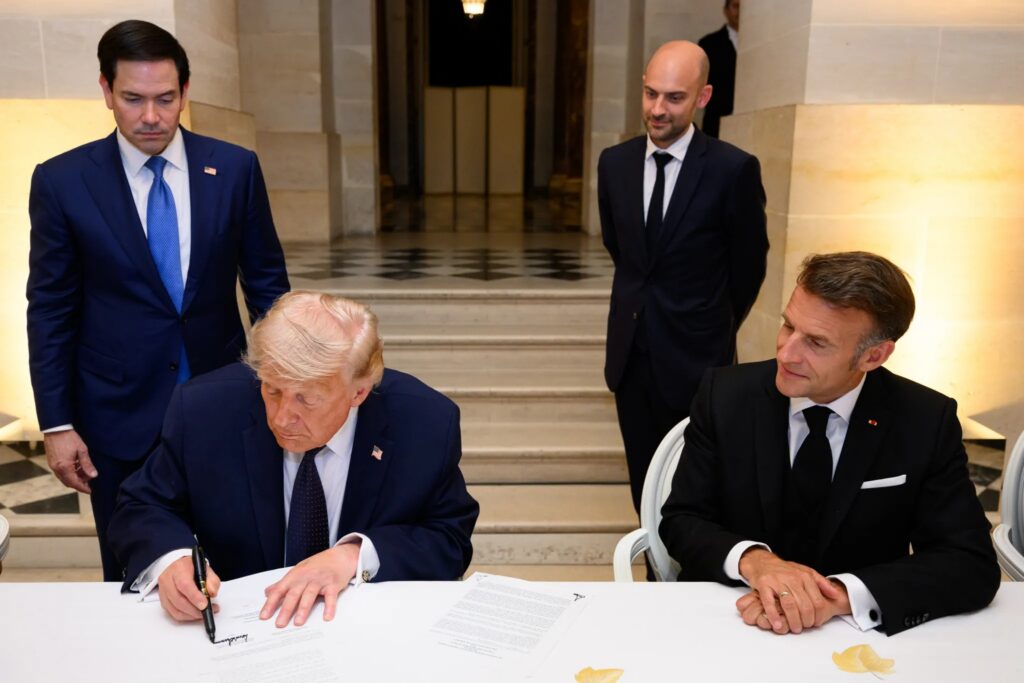
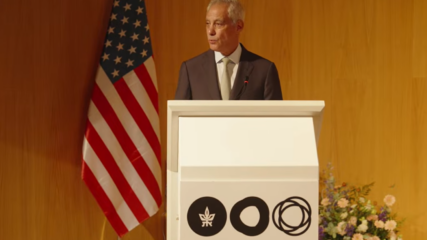
President Donald Trump celebrated his agreement to halt the war with Iran and established daylight between his and Israel’s priorities in the Middle East during a press conference closing the Group of Seven summit in Evian, France, June 17, 2026. A few hours later, he signed the memorandum of understanding with Iran over dinner at Versailles.

Although Trump expressed appreciation for Israel and Prime Minister Benjamin Netanyahu, he also dismissed the state of 10 million citizens as “a very small partner” while he speculated on the commercial possibilities of oil-rich Iran, a country that is 75 times Israel’s size, has nine times the population and is in desperate need of reconstruction after 100-plus days of war. Trump, enamored by the wealth of the oil-producing countries in the Gulf, showed similar appreciation for them in October and November 2025 statements about Qatar and Saudi Arabia.  

Trump said he expects his junior partner to observe the MOU, including protections for Lebanon’s territorial integrity, even though Israel was not a signatory to the deal. The MOU does not address the dangers Israel has battled from Hezbollah in Lebanon for 35 years, particularly the daily security threats to some 150,000 Israelis who live within 10 miles of the border. But the president’s comments over several days in Evian indicated that such threats no longer matter to him as long as oil flows freely through the Strait of Hormuz and lubricates the world economy.

The agreement does include an unverified Iranian promise not to pursue nuclear weapons. Trump indicated that should be enough to earn Israel’s gratitude, though Israel has learned the past two decades that Iran does not observe promises about its nuclear program.

“Without the United States, there would be no Israel. Without me, there would be no Israel because no other president was willing to do what I did,” he said June 16 during a meeting with Qatari Emir Tamim bin Hamad Al Thani.

(Israelis polled about Trump’s comments were crushed, with 71% saying they did not trust the president to look out for Israel’s interests in Iran negotiations. After the U.S. and Israel attacked Iran together February 28, 2026, more than 90% expressed faith in Trump. The resulting short-, intermediate- and long-term consequences on the U.S.-Israel relationship and the impact on Israel’s October parliamentary elections remain to be seen.)

Trump touted the interim agreement with Iran and unspoken understandings from negotiations as forming a “wall” against Tehran obtaining nuclear weapons. In contrast, he referred to the Joint Comprehensive Plan of Action negotiated by President Barack Obama’s administration in 2015 as paving a “road” to a nuclear-armed Iran. Trump did not address how the MOU fails to meet the standards for an Iran agreement he laid out in 2018 after withdrawing from the JCPOA.

In his closing press conference and bilateral media appearances with such world leaders as the Qatari emir, Egyptian President Abdel Fattah el-Sisi and Indian Prime Minister Narendra Modi, Trump repeatedly criticized Israel’s war against Hezbollah as an unnecessary sideshow to the big war against Iran. He also accused Israel both of overreacting to Hezbollah attacks and of showing incompetence in failing to finish off the Lebanese Shia terrorist movement.

“They should have been able to do the job faster. It just goes on forever,” Trump said with the emir beside him. “And when that happens, it throws a negative light on the big deal, and that’s the deal with Iran. So when you ask me about Bibi, an unbelievable relationship, but Israel would have been blown up a long time ago had I not gotten involved.”

Trump suggested that the forces of new Syrian President Ahmed al-Sharaa should be turned loose to eliminate Hezbollah — an alarming prospect for Lebanon, which suffered 29 years of Syrian occupation until 2005 and relentless Syrian interference under the Assads for more than five decades. Israel, meanwhile, has clashed with al-Sharaa: Israel carved out a buffer zone in southern Syria to protect its bordering population after the fall of the Assad regime in December 2024, then intervened militarily last year to protect Syrian Druze.

“If Israel can’t do the job without killing everyone else, he’ll do the job,” Trump said of al-Sharaa during his appearance with Al Thani. “Syria will do the job.”

That embrace of Israel’s longtime enemy undermined Netanyahu’s efforts to establish Israel as one of the strongest U.S. allies rather than an insignificant if expensive partner. Israeli leaders and American defense officials viewed fighting a war together for the first time as a major step in that direction. Another was the transition from annual military aid to an innovative defense partnership, as proposed in a recent Netanyahu interview with 60 Minutes and in a nonbinding U.S. House resolution he supported.

During a White House press conference June 18, Vice President JD Vance reinforced the idea that Israel is a U.S. dependent and should be thankful for Trump. “No. 1, Donald J. Trump is the only head of state in the entire world who is sympathetic to the nation of Israel at this moment in time. And he happens to be the head of state of the world’s superpower. If I was in the Cabinet of the Israeli government, I might not be attacking the only powerful ally that I have anywhere left in the entire world,” Vance said. “And the second message I would give to some of those Cabinet members — Bibi to his credit has not gone down this path — but to some of these Cabinet members who are attacking the president of the United States, the other thing I would say is that over the last three months two-thirds of the defensive weapons that have protected your homeland have been built by American hands and paid for by American tax dollars. The problem for Israel is not Donald J. Trump. And anybody in Israel who thinks their biggest problem is the president of the United States needs to wake up and smell the reality of the situation that country is in.”

Throughout roughly 40 minutes of speaking and a half-hour of answering reporters’ questions, Trump repeated themes and exact phrases from earlier appearances in France. Among them:

  • He is tougher on Iran than any other president since the Islamic revolution 47 years ago.
  • The JCPOA was the worst U.S. deal ever, with the possible exception of NAFTA.
  • Written deals come and go; what matter are personal understandings, including knowledge of dire consequences for breaking agreements.
  • Iran’s promise not to resume a nuclear weapons program is worth more now than the same promise in 2015 because Tehran knows it will face relentless U.S. bombing if it resumes its nuclear quest.
  • The soaring stock market and falling oil prices validate the war and the new agreement.
  • The assassination of Quds Force commander Qasem Soleimani in 2020 was the start of the “unprecedented pressure” on the Iranian regime and one of the most important events in Middle East history.
  • If he hadn’t withdrawn from the JCPOA in 2018 and sent B-2 bombers to strike nuclear sites in June 2025, Israel wouldn’t exist anymore.
  • It doesn’t matter whether the United States removes Iran’s highly enriched uranium because it’s buried under collapsed mountains and has little value.
  • Although the United States isn’t giving Iran any money, it must uphold international standards by releasing frozen Iranian funds, and it’s fine if other countries invest hundreds of billions of dollars in Iran.
  • Since February 28, U.S. and Israeli strikes have wiped out two tiers of Iranian leadership and part of a third, leaving a changed regime that is rational and trustworthy.

One of the biggest criticisms of the JCPOA was its failure to address Iran’s non-nuclear threat to its neighbors through its network of terrorist proxies and its U.N.-sanctioned ballistic missile program. Trump explicitly cited the ballistic missiles as a reason for Operation Midnight Hammer in June 2025 and Operation Epic Fury in February 2026.

But after reaching the MOU, the president said he couldn’t deny ballistic missiles to Iran while letting other Middle Eastern countries, such as Saudi Arabia, have them. Besides, he said, missiles “hurt a little location, but they don’t blow up the planet.”

During his press conference the next day, Vance drew an equivalence between Iran’s missile capacity and the missile programs of Gulf Arab states and Israel: “All the president said yesterday is that you can’t expect any country to give up its right of self-defense. You have to have parity.”

— Michael Jacobs and Ken Stein, June 19, 2026


Excerpts from President Donald Trump’s news conference June 17, 2026, at the close of the Group of Seven summit in Evian, France.

President Trump: On Sunday we reached an agreement with Iran that achieves everything we set out to accomplish — everything and much more — ending the current conflict, reopening the Strait of Hormuz and preventing Iran from ever obtaining a nuclear weapon. That’s what it was all about. That was about 99 percent: Iran cannot have a nuclear weapon. They can’t develop it, buy it. They can never have a nuclear weapon. At the same time, with this announcement or close to it, as people started to think it was going to happen when Iran was making some very positive statements, the stock market has surged to record highs, picking up thousands of points over the last short period of time, thousands of points. And oil is dropping like it has never dropped before. …

But if we didn’t do this deal, we could have dropped more bombs for another three weeks, two weeks, four weeks, two years. You would never have the Hormuz Strait open. You would never have success. Your market would have, instead of going up at levels that nobody’s ever seen before, would go down at levels that nobody ever saw before. Maybe except for 1929 or whatever.

And, you know, all the tough guys, the tough guys don’t realize that this wasn’t a three-month deal. This was years in the making. You know why? Because I was the one that killed General Soleimani. And if I didn’t kill General Soleimani, we probably wouldn’t be talking right now about this deal because he was a mad genius. They never were able to replace him.

But a lot of people forget that — the tough guys, you know, the tough guys that would drive the country right down the tubes.

The past two days have provided a chance to discuss the details of this historic agreement with many of our closest friends and allies, including the G-7 nations and many presidents and prime ministers, as you saw. Prime Minister Modi was here. We had a long talk. He’s a great guy. They are thrilled that we made a deal, every one of them.

There’s not one nation that came to us and said, “Please, sir, keep dropping bombs on them. Please keep dropping bombs.” The stupid people say that. …

And, by the way, those last two days were brutal: $200 million worth of bombs. And you know, it is expensive, too, by the way, aside from everything else. And they knew I was coming for a third night. We informed them we’re coming for a third night. They didn’t have their navy. It’s sunk. They didn’t have their air force. It’s gone. Not one plane. They didn’t have anti-aircraft equipment, so we got free rein.

They didn’t have their leaders. But they have a new group of leaders that actually I think they’re smarter. I think they’re very smart. I think they’re far less radicalized, and I think they’re really good. They love their country. …

Their one set of leaders is all gone. Their second set of leaders is all gone. Their third set of leaders, a little bit gone but for the most part, and frankly I think that’s regime change. I think they’re going to behave much differently. I think they see a different way of life that they were never exposed to. …

I didn’t want to see economic catastrophe. If you kept this going, that could have happened. But all I know is every time we talked about the possibility of peace, the stock market shot up like a rocket ship. It never went down. … The stock market is more brilliant than anybody there is, including the people on this stage, other than me, of course. …

The one president I did not want to be was the late, great Herbert Hoover. I didn’t want that. And who knows what would have happened, but bad things happen. …

Let’s say we went another month, another two, three months, maybe weeks, could be another three months, could be whatever. What do you have left? That may be nothing. But you don’t have, the strait will never be open because people that own billion-dollar ships — these ships cost a billion dollars — they don’t like sailing ships or having their ships participate when you go up the coast and you go through the strait and there are rockets flying over your head. They want to protect their billion-dollar investment. You wouldn’t have oil for maybe years. These are stupid people.

But nobody was tougher than me. … When I hit Soleimani, people thought that was the biggest thing to happen in the Middle East for 50 years. That was the biggest event. He was the boss of Iran and respected, but he was a mad genius. He was a genius, the father of the roadside bomb. …

I blew him up in the Valley of Death. He got off his plane, and we followed him. And in all fairness, because they’ve been wonderful to me, Israel, but they didn’t want to do that attack. They were all set. The night before the attack they informed me they didn’t want to do it, so I had to make a decision. I made the decision to do it. …

That was a joint venture between Israel and us. We studied it for a month. We knew what plane he was going to be on almost a month before. He only traveled on commercial airliners, the big ones with lots of people, because he knew we wouldn’t shoot him down. He’s very smart. But we knew he was going to be on that plane. Followed him.

And then Israel informed me that they won’t do it. And I had to make a decision. I had some very good generals, and not the ones you see on television. Very good. And I want to thank also Pete Hegseth and General “Raizin” Caine, who’s phenomenal. OK? These guys are phenomenal. They can’t be better.

But I had some good generals. And I said to them, “Well, if Israel’s not going to do it, we’re all prepared. Do we do it? Do you like doing it or not?”

He said, “Sure, if you want to do it, we can do it.” “How well?” “We’ll do it just as well or better. We do it ourselves. We don’t need anybody.” So we took out Soleimani. One of the biggest events to happen in the Middle East maybe ever. But they say 50 years. They say 100 years. I was with the prime minister of Pakistan. He said it’s maybe the biggest event that has ever taken place. Nobody could believe it.

So that’s when it started. It didn’t start like three or four or five weeks ago. And Obama wouldn’t do it. What Obama did was he did the JCPOA. He loaded up a plane with 1 billion, 700 million in green cash from banks all over Washington, Maryland and Virginia. They were stripped of all their cash. They had no cash to do payrolls. It all went into a Boeing 757, a wonderful plane, and they flew it to Iran. And they gave it out to people. They bribed people. They thought they were going to get it done. Then they gave billions and billions of dollars after that. And they got a deal that was a road to a nuclear weapon.

I get so angry — I guess I’m allowed to get angry — when I watch these Dumocrats. They talk about it all the time. “We had this deal done.” You had a deal that was going to give them legally a nuclear weapon. And if that happened, Israel would have been blown away.

And in all fairness to Bibi Netanyahu, who happens to be a good man, gets a little excited sometimes, but he happens to be a very good man. We’ve had an amazing partnership. He’s been an amazing prime minister. We have a little dispute over Lebanon. I say, “You can do a little softer touch, Bibi. You don’t have to knock down a building every time somebody walks into it that’s from Hezbollah.”

But it’s been an amazing partnership. But he will say we’re the big partner, and he’s a very small partner. And that’s true.

So he came to the country, and he begged Barack Hussein Obama, the president, not to do the JCPOA. He said it could be the end of Israel, and it would have been if I didn’t come along. And Obama didn’t listen to him. Bibi actually went to Congress and pleaded with them, and he got nowhere. And they had this horrible deal that was horrible for Israel, horrible for Israel. And that’s where it stood.

And then I came along, and I terminated that deal. It had very little time left. You know it was a short-term deal. You know, with countries, you need hundreds of years. You don’t need eight years or nine years. This isn’t like you’re signing a lease on a candy store on the corner. You need hundreds of years.

This was a short-term lease. It expired long ago. Had I let it run, it expired. You wouldn’t have been around, and a lot of people wouldn’t have been around. But Israel would have been terminated. I think the whole Middle East would have been terminated. You saw that when everybody was shocked that all these missiles, they were aimed at these different places: Qatar, Saudi Arabia, UAE, think of it, Bahrain, Kuwait. They got hit. Nobody thought that was even — I didn’t think it was going to happen. They didn’t think it was going to happen.

They were going to take out the entire Middle East, including Israel. And if they had a nuclear weapon, they would have used it within moments after getting it.

So I made it very tough for them when I terminated the Barack Hussein Obama catastrophe JCPOA, one of the worst deals. NAFTA might have been worse, but that was worse economically. This deal was really dangerous, what he did. He gave them everything, including a lot of money, which we don’t give them, by the way, just in case you have any question.

We’ll be giving this out so you can read it, and you can see, and it’s a memorandum of understanding. If it doesn’t get done in 60 days, it’s all right. We go back to bombing. You know, I don’t want to do that because it’s no good, but we might have to because we’re never going to let them have a nuclear weapon. But they’ve agreed not to, and you’ll see that very clearly in the agreement.

But then the second phase of that was they were building or they were enriching material, as they say. I call it nuclear dust. They were enriching material under granite mountains. Granite being, for those not in the construction business, granite being a very strong, the strongest stone. It’s not as pretty as marble, but it’s much stronger. It’s a lot stronger. Like the new granite I put on the stairs of the White House going to the Oval Office, the black granite, it’s rated 1 million years-plus. No marble’s rated at that. Marble’s rated a hundred years if it’s outside.

So these are granite mountains, and the B-2s came along, and they hit those air shafts in the dark at 1 o’clock in the morning with no moon. They had a beam going right up everywhere. Those guys did a job, and then they were criticized by certain members of the press like CNN for possibly not doing that much damage. And it turned out that the damage was far greater. Those mountains collapsed right on top of everything.

Nobody’s going to get that for a long time unless we want to get it. We’ll get it. But we’re the only ones that can. And they say China has the equipment to get it, and we have the equipment to get it. And it’s actually not valuable, not a lot of value, but would like to get it psychologically, but nobody’s touching it.

We also have cameras. That’s what Space Force is. We have the best, we have the greatest military in the world, by the way. But I’m proud of Space Force because I started it. We have Space Force cameras on every single door. Well, there are no doors. They’ve been pretty well shattered. But every area of that, if somebody walks in, and he’s got a badge with his name on it, like Muhammad something, which is about a 50-50 guess, Muhammad something, they can tell the name. They can give you a serial number. We can see things you wouldn’t believe, the quality of the stuff that we have. It’s why we’ve been so successful.

And that’s why our blockade will go down in the annals of history as being unbelievable. Nobody’s ever seen a blockade like that. Just was like a steel wall.

So what happened is we then terminated that, and I call it the nuclear dust, and that was the end of that. But if we didn’t hit that with the B-2 bombers or if it wasn’t successful, they would have had a nuclear weapon, a nuclear bomb, at a very high level. Not the highest, but it would have been a very high level. …

So the deal we reached with Iran on Sunday will be signed shortly. … My whole life is all about deals. That’s all I ever did is make deals, and crazy things happen with deals. I’ve gone into deals where it’s a guarantee. No way it cannot be signed, and it doesn’t get signed. And I’ve gone into deals that you have no chance of making, and they go like nothing.

But we’re going to most likely sign a deal. They want to sign a deal, and they’ve been acting very appropriately. They took a big two hits last week. Those were two very big hits.

So, importantly, Iran has agreed that they will neither produce nor procure a nuclear weapon. Neither produce because originally they said, they talked about that they will not develop a nuclear weapon, and some people found it OK. These guys didn’t, in all fairness, but some people. But I didn’t like it, said it won’t develop. I said, “What happens if they should buy?” I don’t know, it’s very dangerous for somebody to sell because whoever sells them a nuclear weapon will get nuked themselves if they sold a nuclear weapon. Only a few that could do it. They would be nuked. They wouldn’t have that country long, so it’s a very dangerous thing for somebody to do.

But I wanted it in there, so it’s develop, procure, buy, anything, and you’ll see that when you see the agreement. But it’s appropriate that we release the agreement, and we did send a copy to Israel, by the way. They’ve been a good partner.

Again, I think they could do better with respect to Hezbollah. I’m not saying they shouldn’t protect themselves. I’m saying when two drones are shot into the desert and dropped harmlessly, you don’t have to knock down buildings in Beirut. They could behave better, and frankly they could do a better job.

I love them as a partner. They were terrific, but they could do a much better job with Hezbollah. On that, I don’t think they’re doing well.

And I feel very bad for Lebanon. Lebanon’s been, you know, it was a great culture. It was a great — they had the professors, the doctors, the lawyers. It was an incredible culture. Maybe the highest in the Middle East for years and years, centuries. And for the last 50, 60 years, they have been just trashed. They have been living in hell.

So they’ll work closely with us to turn over the so-called enriched material that’s very deep in the bowels of the earth, very deep. Nobody can get it. So it’s not important that we do it quickly, but we could do it fairly quickly. When we have a chance, we’ll do it. But in the meantime, we have cameras on every inch of it. Nobody can do it. And if they do, we’ll hit them with Patriots. That’s all, and they’ll be gone. And they know that.

Technical discussions on the removal of all stockpiles of enriched materials will begin immediately. We’re going to start that immediately. And unlike Barack Hussein Obama, who sent Iran pallets of cash, any relief they receive under this deal, they’ll have to get based on merit.

And it won’t be from us. We don’t have to give them anything. But some people may want to invest. Like what are you going to do? Say you can never ever invest in a country? I mean, it’s pretty tough. I don’t mind being tough, but it’s pretty crazy. You can invest in a country. You can invest in any country you want, but you can’t invest there?

Well, they need investment because we did a trillion and a half, maybe 2 trillion dollars’ worth of damage. So somebody’s going to have to help them out. There’s no guarantee about helping them out, and could be their neighbors will help them out a little bit. I don’t know. But it’s a lot of money. Almost nobody has that kind of money. That’s the kind of damage that was done.

But we’re not investing any money. … We don’t give them money. We don’t give them any of that.

And what happens is with time, if they behave, if they be a citizen of the world, a reasonable citizen of the world, and I think this group — again, I didn’t do this for regime change, but I think this group is regime change.

I mean, hey, the first group is dead. One little morning having breakfast, the whole group, they thought they’d never be caught because we never bombed during breakfast. But we bombed, and they all, 88 people, and I’m not proud of it at all.

But the second group came in, and they were very unreasonable too, and they were all gone. They were all gone.

And then the third group, we’ve been dealing with them. Couple left this planet, but we’ve been dealing with them. And, again, they’ve been fine. I mean, I’ve had a lot easier. I’ve had some easier ones. They’re tough. They’re smart.

Maritime traffic through the Strait of Hormuz has already increased very substantially, and the normal flow of energy will resume in the coming days. And trillions of dollars will be made by the world, and the stock market will, I believe, continue to rise.

The only difference is that a player that’s very volatile, very tough, very smart frankly — you know, they have in one way a primitive culture, but it’s also a genius primitive culture. They’re very smart people, very good negotiators, but so are we. …

We’ll be working on a parallel effort with the Gulf nations to address non-nuclear issues such as the conventional ballistic missiles, which we’ll be talking about and support. I mean, they have to have some because other people have some. You got to have some. Somebody said you shouldn’t give them one. I mean, I have guys, I like some of these guys, but I don’t think this, I don’t think they’re smart. “Sir, you shouldn’t let them have any missiles.” I said, “Well, what am I going to do? I’m going to let Saudi Arabia have missiles, but they can’t have them?” “Yes, sir.”

Doesn’t work that way, you know. It doesn’t work that way. And missiles aren’t the problem. Missiles are, they hurt a little location, but they don’t blow up the planet.

So the Gulf nations will address the non-nuclear issues as we’ll be talking about the ballistic missiles, and we’ll talk also about the terrorist proxies that they have that we don’t want that to happen.

But I want to thank our partners in both Pakistan and Qatar. These people work so hard, and they knew them a little bit. In the case of Pakistan, quite well, and in the case of Qatar, they were sort of at odds end. You know, Qatar was great because they were right next door.

When I flew from there, from that location, to Saudi Arabia, I’d fly for 40 minutes, and I’d fly to UAE for 40 minutes. … And Mohammed at UAE is an incredible warrior. He was dropping bombs last week. I said, “Who the hell’s dropping all those bombs?” It was UAE. He’s a good fighter, Mohammed.

But every administration for decades has sought to get Iran to relinquish its nuclear ambitions, but the threat only got bigger. The words got bigger and bigger and stronger and bigger, and nothing ever happened. And Iran got stronger and tougher.

If we didn’t blow them up the first time and then blow out those weapons, they would have been unstoppable. This should have been — what I’m doing and what I did should have been done years ago. Would have been much easier, much less firepower, but it wasn’t.

And, again, I want to thank all those countries, and I want to thank Israel and Bibi Netanyahu.

So obviously the breakthrough would not have been possible without the unprecedented pressure the United States put on the regime over the past year and a half. But, again, it started a long time ago. It started with the death of Soleimani. That was a big deal. No president in history has ever been tougher on Iran than I have, and they know that.

And, by the way, if they don’t honor the agreement, or some things aren’t even mentioned in the agreement, it’s a memorandum of understanding, but we have an understanding of certain things without writing it. And if they don’t honor that, we’ll probably go back to bombing them until they honor it. You know, it’s amazing what bombs can do.

So I say it, the Obama deal, was a road to a nuclear weapon. And let’s call it the Trump deal was a wall for a nuclear weapon that the nuclear weapon could not get through. Nobody’s going to get through it. We built a wall. They weren’t going to have it. And that’s what we have right now.

And it says very clearly, the most important clause to me too, No. 1, the strait opens, but that’s much less important than the other clause … that they will never have a nuclear weapon. And it doesn’t say they’ll have one in five years or 10 years or 20 years. With Obama, they were able to enrich very quickly.

This agreement now provides Iran with a historic opportunity. If they follow the path of cooperation we have opened for them, their country will have a chance to survive. Now think of it, you know, they have 91 million people. …

But as I expressed to the world leaders here this week, it’s my hope that the peace agreement will be the beginning of a much larger deal all across the Middle East. We’re very close. Look at the job we’ve done on Gaza. Look at Hamas. Hamas has been very silent. You haven’t read anything about Hamas. And we’re trying to get them unarmed.

You know, they grew up with a machine gun in their hand. I think they actually, when they were born, they came out with a machine gun in their hand. So it’s not the easiest thing, but they’ve actually, you know, behaved pretty well, considering this was not the lifestyle that they were taught to have.

But including an end to all Iranian aggression, and they’re not going to be Iranian aggression, and an end to war and terror in Lebanon. So the Lebanon piece is something we’ll have to work on a little bit. It’s a very small piece of the puzzle actually, but it still makes a lot of noise.

The big deal is the Iran deal. That’s where the money is, where the power was. But they have Hezbollah, and we got to get that done one way or the other. We’ll do it. I think Israel can do a much better job on it. Syria would love to do it.

I was very responsible for the gentleman in Syria that’s now the president of Syria. He’s done a tremendous job. He’s put that country together in a year and a half. Sort of like our country, a year and a half. It’s pretty similar size.

They said, “Please don’t put him there. He’s a very violent man. Al-Qaeda,” they said. Well, I know one thing: A Boy Scout’s not going to work. And he’s actually done a very good job. He’d love to go in, and, you know, Hezbollah is an enemy of his, and he’d go in, but he wouldn’t knock down buildings every time he hears there’s somebody. He’d just go and get him with precision. But I don’t know that people want that. Maybe they don’t. Maybe Lebanon doesn’t. We have to be guided a little bit by Lebanon.

And, by the way, the president is going to be coming — prime minister, president — going to be coming over to see us very shortly over the next week or two. Good man. … It’s amazing there is a Lebanon with all they’ve been through. They have been treated worse than just about, I think, anybody, disrespected incredibly.

So the expansion of the Abraham Accords is the other thing that we hope we’re going to get. And I think Saudi Arabia, if they lead the way, they’d be doing themselves a big favor because everybody that’s in it — UAE went in right from the beginning. Again, he’s a warrior, and they never got out. Nobody ever got out. You’d think maybe during the war. They were all afraid of Iran, and that’s why we ended up with the original members. …

We hit the Iranian minesweepers and mine-droppers, they call them. Who would have 28 mine-droppers? Who has 28 mine-droppers? They actually had them, but they don’t have them anymore. …

The emir of Qatar, Sheik Tamim, was — I tell you, I wish I could really know the guy. You know, some people say, “Well, he lived in that neighborhood. You can’t be saying things that you’d like to have him say.” He was fantastic on this. And he’s been fantastic guy in terms of energy and getting energy out there. President of the United Arab Emirates Mohammed bin Zayed, who’s an amazing warrior. President el-Sisi of Egypt. Prime Minister Modi of India, we spent a long time together today. I spoke to Mohammed. I spoke to the crown prince of Saudi Arabia a number of times. They’re all so happy. You have to have them happy, too. You know, we’re using their airports. Not that they could stop us. …

Think of what Israel is getting. They’re not going to be nuked. It’s very simple. I told Bibi, “Bibi, your biggest risk was that they drop a nuclear weapon into the middle of Israel. They’d only need one, and there would be no more Israel. Think of it, Bibi, you got the best, the most important thing that you were asking for is that.” So I think they’re happy. …

We stopped nuclear holocaust. …

Reporter Peter Doocy: You’ve been clear, President Trump, the United States is not going to directly pay Iran. But the U.S. is going to let the Iranians start making billions of dollars selling oil, accessing this reconstruction fund —

Trump: Only if they’re doing things right. Only if, Peter, only if — we’re not doing anything. We’re not putting up money. Only if they’re doing things right. If they’re doing things right, if people want to invest, they can invest. But they had this $300 billion fund. It’s only if they’re doing things right. Remember this also, when you talk about billions of dollars, they’ve had much more than a trillion dollars’ worth of damage done. They got a long way. They’ll be 15 to 20 years to rebuild what they have right now. So they have to behave themselves. If they’re not behaving, they get hit again. You know, they’ll be hit again because we can do it very easily. It’s going to take a long way for them to build back their anti-aircraft stuff.

It’s going to take — and you know the other thing, I want to thank China, President Xi. I was with him, and he stayed neutral, totally neutral, and I appreciate it. And I would want to thank Vladimir Putin. He was very neutral. They could have made it much more difficult for us. …

Doocy: Can you explain though what the difference is between giving Iran U.S. dollars and unfreezing U.S. dollars for —

Trump: Well, the unfreezing, that’s an easy one to answer. We have taken a lot of their money, and we have their money. We have taken their money. It’s not our money. It’s their money. And we froze it. At a certain point in time, I guess we’re going to have to give it back. You know, if we didn’t give it back, nobody would ever invest in the dollar again. If you took their money, because I thought about it. You know, I’m not the most perfect person. I said to Scott [Bessent], “Scott, why do we keep their money? What the hell are we giving it back to them?”

But, you know, people from lots of nations, some nations we don’t agree with, we have their money. The dollar’s become very strong under me, and they don’t want to have a little conflict with somebody and end up having the United States just take their money. So if you do that, you really don’t have a system.

Doocy: And I just want to ask you about this. A wise man once said in January of 2020, “Iran never won a war but never lost a negotiation.” That wise man —

Trump: Who said that?

Doocy: Donald Trump.

Trump: Oh, that’s what I thought you were going to say.

Doocy: So how do you go back to the United States and convince a skeptical American public that this deal —

Trump: Look, here they lost militarily, OK? It’s very tough because I know that no matter what, if I would go, by the way, if I’d go another three or four weeks, the same people that are critical would say he went too long. … If I went out and continued to bomb them for another four weeks, just bomb the hell out of them, I’d get bad press on that. No, there’s nothing I can do. But what this does is it allows the ships to go. If we keep bombing, those ships won’t be going. And you’re talking about 500, 600, 700 million dollars a day. It’s a lot of money, a lot of money. That’s why the world is OK. It’s liquid. It’s fine.

Also, we run out of reserves in about four weeks. You know, there are reserves all over the world. And we would really run out, and there’ll be a time when you wouldn’t be able to get it. And you want to see bedlam? So for all those so-called geniuses that want to show me how smart they are, ask them why didn’t they blow up General Soleimani. …

Reporter: In The Art of the Deal, you write about the importance of leverage. Obviously, you have a lot of leverage when it comes to Iran, whether it’s militarily or through economic sanctions. What leverage, sir, do you have when it comes to Israel and Hezbollah to ensure that they abide by the ceasefire?

Trump: Well, I think we have leverage just by the fact that we really have Iran now has to be good. They have to behave. And we might help. That’s a much smaller conflict. It’s a conflict that should be able to be over with. I’m surprised it’s taken so long, and it’s a much smaller — but we have a lot of leverage. We have, look, we have the greatest military anywhere in the world. We have the strongest, most powerful. Look at the blockade. By the way, the blockade was more impactful than all of the bombing raids where we dropped a billion dollars’ worth of bombs on Iran. The blockade was so incredible, the naval blockade, the admiral, the whole thing. Not one ship got through. That meant no money got through. They were dying. They had no money. They have inflation that’s 250 or 300 percent. They have no money. We have tremendous leverage. We have the leverage of the economy as an example.

We’ll get that done. That’s a small one. And we’ll work with Israel and get it done. But I’d like to do it. I mean, you have people living there. Buildings are being dropped on top of them or right alongside of them. How would you like to live there? It’s so unfair. Especially Beirut. You know, you go into Beirut, and I looked at the scene two days ago, yesterday, where they hit. That was a big hit. That was unnecessary in my book. …

Reporter: If you could clarify something you said just a few minutes ago. … One of the goals of Epic Fury, going into it, was to destroy Iran’s ballistic missiles and its capabilities to build more.

Trump: Yeah.

Reporter: Why is it acceptable to you now that they keep some of that capability? …

Trump: What are they keeping? They have less than other nations now. We knocked out probably 84, 85 percent of their missiles. The rest of them are underground. They can’t even get them out. You know, the other night’s raid, I think it was on the first night, we knocked out hundreds of their missiles actually by mistake. We were hitting an area, and it, you know, you can sort of see when the bombs are going off. And then you see one that looks like, wow, what happened? A lot of missiles knocked out.

No, but what are you going to do? Let’s spend another two weeks and give them none? They don’t want to be firing missiles right now. They’re going to have a hard time rebuilding. They’re going to have a hard time rebuilding. And if people from the Middle East, you know, if people want to invest, and again, they don’t have to invest at all, but if they do want to invest, it does have oil. It does have probably a future, but it’s going to take a long time. But are you going to let the 91 million people starve to death?

I mean, one of the things I was very intent on, they have water desalinization plants, very good ones. I could have knocked them out in five minutes, just like I knocked out Kharg Island. I knocked out everything but the oil. It was so complete. The only thing there is the pipes coming with the oil because I didn’t want to ruin the world market because they do a lot of money.

But I didn’t want to do that, no. It would have been so easy. It would have been easier, and I would have satisfied a group of 10 percent of the people. But it would have been the wrong thing to do, and it could have caused an international depression. …

Reporter: Iran’s position has always been that their nuclear program was for civilian purposes. If they come back after the signing of this and say they want to continue to have a civilian nuclear program, is that acceptable to you?

Trump: Well, I’ve said to them always, I say, “Look, you have probably the third-largest oil reserves in the world. What the hell do you need nuclear for? You need nuclear for some electricity?” So I’ve always felt that way. So we’ve been pretty tough on that. You know, also it is a little hard, though, when you say that somebody wants it, other people have it, other adjoining states have it, and you’re not letting them have it for purposes of electricity and things like that. It’s always a little tough. You have to use a little common sense. …

Reporter: Now that you’re approaching a new phase in this conflict with Iran, can you now say whether you will hold anyone in your administration accountable for the strike on a school that killed more than a hundred children on the first day of the war?

Trump: No. If it was a fault, and as you know that’s under investigation, it’s such a strange question to be asked at this stage because you’re talking about a long time ago. But nobody did that on purpose. I guess you’d have to say about them, what about the thousands of soldiers that they blew up when they opened their car door? What about the thousands of people that were killed by Iran? No, mistakes are made. War is nasty. But I know it’s under investigation, and I could have a report for you tomorrow. … I would ask Pete Hegseth that question because they have it under investigation.

Reporter: Mr. President, you’ve been saying all week that this deal permanently prevents Iran from getting a nuclear weapon, but the drafts of the deal that have been floating around barely mention Iran’s nuclear program. So can you explain how exactly the deal achieves that goal?

Trump: So when I say permanently, it should be permanently, but if it’s not permanently, we will bomb them. They will be bombed just like I bombed them on Wednesday night and Tuesday night and was going to bomb them on Thursday night at a level that was three times greater, and they knew that. I will bomb them. Now that’s with me as president. If you have a weak, pathetic president, maybe that doesn’t happen. …

Reporter: So you’re threatening to bomb Iran if they don’t comply, but there’s nothing enforceable in the deal itself. Is that correct?

Trump: Doesn’t have to be. I let them know. I said, “Look, if you don’t adhere to the agreement, I don’t want to do that, but we’re going to bomb the hell out of you.” And I don’t think that they’re going to veer from the agreement. What else am I going to do? Am I going to say, “I’m going to take you to court. Let me take you to court. Let me sue you.” No, we’re going to bomb the hell out of them if they violate the agreement. I don’t want them to. I want them to honor the agreement. Again, the straits close up, bad things can happen. You know, in war, terrible things happen. Like you mentioned the question before about a school gets hit, other things get hit. Bad things happen in war. War is a nasty place. I see it better than maybe anybody has ever seen it. …

Reporter: Will Iran be able to immediately sell their oil to market? And will U.S. sanctions snap back immediately if there is a delay or collapse in the talks? And then, relatedly, is there any safeguard in this deal to prevent Iran from charging what they say could be fees after the 60-day extension?

Trump: The thing that’s going to stop them from doing that, because you can’t cover everything in a document, is common sense. They don’t want to get bombed. They don’t want to get hit. As far as sanctions are concerned, at some point, you know, we have sanctions which will never let them rebuild. They would have no money. They would be in poverty. The 91 million people would starve. So something will happen as soon as they behave. When they behave, we’re going to let that go. We’re going to have to. I’ve put sanctions on a lot of people, and then I let them go. …

Reporter: Yesterday Pakistan thanked the Chinese government for its help to make peace talk between Iran and the United States. So what do you think about China’s work to get the United States and Iran sitting down to talk and make the deal? …

Trump: I think China’s been terrific. I told you that before. They could have been bad. They could have sent in to try and block or break the blockade. They could have sent in an oil ship with six destroyers alongside of it on each side. They didn’t do that. President Xi helped me. He tried to help, and I think he probably helped get it solved. You know, they get 50 percent of their oil from that location, so that wasn’t that easy. President Xi was fantastic. He tried to help me solve it. And he didn’t give any big weaponry. I guess we’ll find something somewhere along the line, but he didn’t give any big weaponry. I can tell you that. No, I think China was — I couldn’t ask for much more. Again, they were impacted because they get more than 50 percent of their oil from the Hormuz Strait. …

Doocy: I have a question about this weekend. Why not stick around for the signing ceremony with this Iran peace deal?

Trump: I might.

Doocy: You might.

Trump: Yeah, I might. But I’d rather — this is a memorandum of understanding. It’s very important, but it might not be the kind of a document that I should be signing.

Doocy: Is there some element to this where you send the vice president? If it works out, great. You look like a genius for sending him. And if it doesn’t work out, it’s the vice president.

Trump: I like that idea. … This way, if it works out, I’m going to take the credit. If it doesn’t work out, I’m blaming JD. You better be careful, JD. He’s going to turn his plane around and get the hell out of here. Yeah, I like that idea. I think it’s a good idea.