December 29, 2025

Sources: https://www.c-span.org/program/white-house-event/president-trump-and-prime-minister-netanyahu-speak-with-reporters/670987 and https://www.c-span.org/program/white-house-event/president-trump-and-prime-minister-netanyahu-hold-news-conference-after-meeting/671030

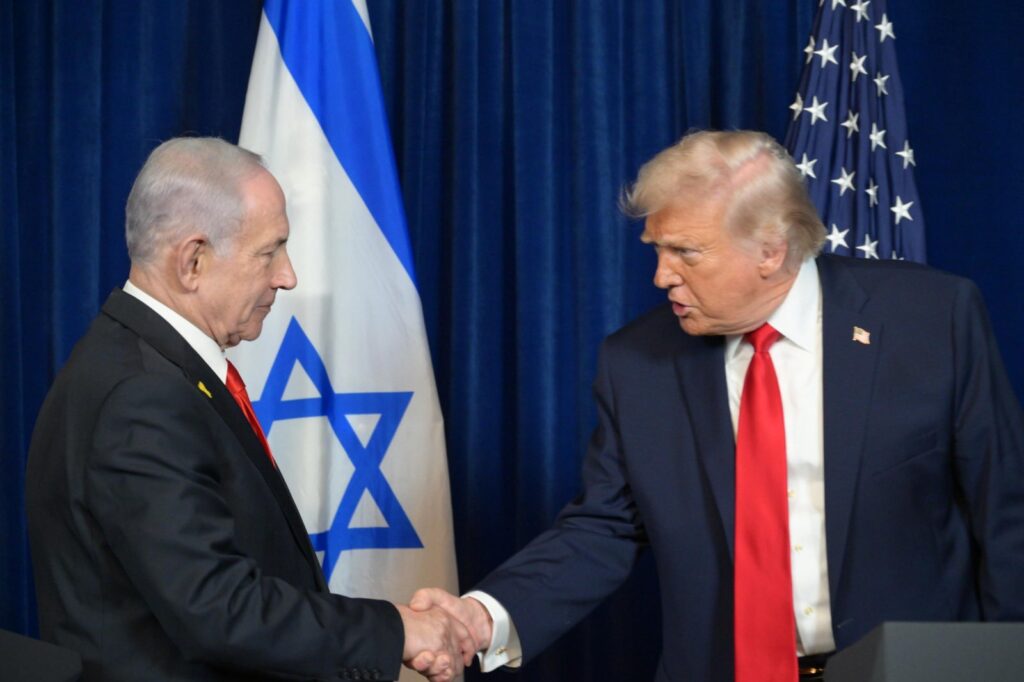
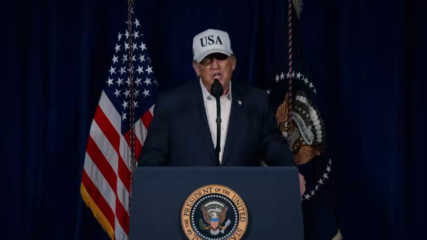
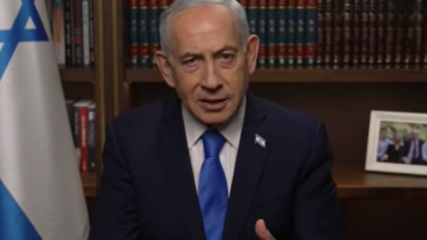
Israeli Prime Minister Benjamin Netanyahu met with U.S. President Donald Trump at his Mar-a-Lago home in Florida on December 29, 2025, their fifth U.S. meeting of the year. With the body of only one hostage, Ran Gvili, still held in Gaza, the agenda featured implementing the pathways to reach Phase 2 of the Hamas-Israel ceasefire, meant to include Hamas’ disarmament, the rollout of the International Stabilization Force, the beginning of postwar reconstruction and the next partial Israel Defense Forces pullback. But the public comments on Gaza were light on specifics. The two leaders did not offer a firm timetable, and Trump kept open the possibility of Gazans voluntarily leaving the Strip. Trump repeated threats of “horrible consequences” for Hamas if it doesn’t disarm quickly, saying, “Other countries … will come in and do it. They said, ‘Let us do it for you if they don’t.’”

Trump said Israel has done everything expected of it under the ceasefire approved in October and endorsed by the United Nations in November.

He said he supports renewed Israeli attacks on Iran, with possible U.S. involvement, if the Islamic regime tries to rebuild its ballistic missile and nuclear programs. But he would like to make a deal with Iran and declined to endorse regime change in Tehran.

Trump directly linked the American-Israeli victory over Iran in June 2025 to regional support for the Gaza ceasefire plan: “If we didn’t beat Iran, … the Arab countries, who have been fantastic, would not have been able to make a deal.”

The president predicted good Israeli relations with Saudi Arabia, Turkey and Syria despite a lack of progress in Saudi-Israeli normalization, Turkish President Recep Tayyip Erdogan’s incendiary and personal rhetoric against Netanyahu, and Israeli military operations in Syria, including assistance to Druze Syrians.

Turkey marked one of the few notable areas of daylight between Trump and Netanyahu. Trump said he’s looking at supplying F-35 fighter jets to Turkey, threatening Israel’s guaranteed qualitative military edge over any combined group of regional adversaries, though the president said he was sure Turkey would not use F-35s against Israel. In November 2025, Trump promised F-35s to Saudi Arabia, indicating that Israel understood that such sales to countries not a peace with Israel were necessary to advance U.S. national strategic interests.

Trump said he and Netanyahu are not fully aligned on how Israel should respond to settler violence in the West Bank, but the president refused to detail their differences.

Netanyahu repeated his praise for Trump as Israel’s greatest friend ever in the White House. Over lunch, the prime minister called Education Minister Yoav Kisch, who announced that Trump was being awarded the Israel Prize for his special contribution to the Jewish people. The Israel Prize had never been given to a non-Israeli.

Before their lunch meeting, Trump said Israeli President Isaac Herzog had assured him that Netanyahu would receive a pardon for the corruption charges against him. But Herzog’s office denied any decision or any conversation between the presidents since Trump’s mid-November letter requesting the pardon.

According to the Israeli Government Press Office, Netanyahu also held separate meetings December 29 with Secretary of State Marco Rubio and Secretary of Defense Pete Hegseth.

While it was not discussed in public, Trump the same day issued an executive proclamation on trade issues that updated the provisions of the U.S.-Israel Free Trade Area related to agricultural products. The countries entered a four-year agreement on agricultural products in 2004, and each president since 2008 has issued an order for a one-year extension to provide time to negotiate a replacement deal. The 2026 extension includes the following maximum amounts for tariff-free imports from Israel, all unchanged since 2008:

  • 466,000 kilograms of butter, fresh cream and sour cream.
  • 1,304,000 kilograms of dried milk.
  • 1,534,000 kilograms of cheese and cheese substitutes.
  • 131,000 kilograms of peanuts.
  • 707,000 kilograms of ice cream.

— Michael Jacobs and Ken Stein, December 30, 2025


Press Q&A Upon Netanyahu’s Arrival at Mar-a-Lago

The following excerpts from questions and answers before the Trump-Netanyahu lunch meeting exclude topics such as Venezuela and the Russia-Ukraine war.

President Donald Trump: Does anybody recognize this man? Not too many people. They’ve been very fair actually for last three days.

Reporter: Mr. President, how quickly can we expect Phase 2 of the peace plan for Gaza?

Trump: As quickly as we can, but there has to be a disarmament. You know that. We have to disarm with Hamas. So one of the things we’ll talk about certainly, but there has to be a disarming of Hamas. Otherwise, very quickly. …

Reporter: Are you going to allow Turkish forces or do you expect Turkish forces to be stationed in Gaza?

Trump: So I have a great relationship with President Erdogan, and we’ll be talking about it. And if it’s good, I think that’s good. And a lot will be having to do with Bibi. We’re going to be talking about that. But Turkey’s been great, and he’s been, you know, excellent as far as I’m concerned. I don’t know about you. To me, he’s been very good.

Reporter: Mr. President, can you tell me a little bit about your relationship with Prime Minister Netanyahu and how important it is for you to see him pardoned by the Israeli president?

Trump: Look, he’s a wartime prime minister. He’s done a phenomenal job. He’s taken Israel through a very dangerous period of trauma. Israel with other people might not exist right now if you want to know the truth. That’s a pretty big statement, but it’s true. I feel that you had the wrong prime minister, Israel right now would not exist. Because they were met with a force the likes of which very few countries could have handled, and we worked together, and we were extremely victorious, to put it mildly. Now I hear that Iran is trying to build up again, and if they are, we’re going to have to knock them down. We’ll knock them down. We’ll knock the hell out of them, but hopefully that’s not happening. I heard Iran wants to make a deal. If they want to make a deal, that’s much smarter. You know, they could have made a deal the last time before we went through, you know, a big attack on them, and they decided not to make the deal. They wish they made that deal. So I think again they should make a deal. They want to make a deal. But sometimes that doesn’t happen. Yeah, please.

Reporter: Mr. Trump, would you support the overthrow of the Iranian regime?

Trump: I’m not going to talk about overthrow of a regime. They’ve got a lot of problems in Iran. They have tremendous inflation. Their economy is bust. The economy is no good. And I know that people aren’t so happy, but don’t forget every time they have a riot or somebody forms a group, little or big, they start shooting people. You know they kill people. And the people tend to — I’ve watched this for years. There’s tremendous discontent. They form 100,000, 200,000 people. All of a sudden, people start getting shot. And that group disbanded pretty quickly. So I’ve watched it for years. They’re vicious, vicious people. Yeah?

Reporter: Mr. President, will you support an attack, an Israeli attack, on Iran if Iran does not have a deal, if Iran will continue with ballistic missiles and also nuclear weapons?

Trump: If they will continue with the missiles, yes, the nuclear fast, OK. One will be yes, absolutely. The other, we’ll do it immediately.

Reporter: What are your plans regarding Gaza for the next year?

Trump: Well, we’re going to be dealing in Gaza. That’s why this very great prime minister is here right now. We’re talking about Gaza. We’re talking about a lot of things. We have about five major subjects that we’re discussing, and Gaza will be one of those subjects.

Reporter: Mr. President, can you guarantee that the last hostage, Ran Gvili, will be released before the second phase in Gaza?

Trump: Well, let’s put it this way. Every hostage just about that’s been released was released because of me, Steve Witkoff, Jared Kushner, my whole team, Marco Rubio, Pete Hegseth. They were all released because of us. None were released in the Biden administration. None. They were all released because of us. Then we had a lack of releases with respect to the dead. And all of a sudden they started coming back because I said nope. You said you’re — we have one wonderful young man whose parents are right now inside — what beautiful parents, beautiful brother, sister, and a beautiful family, and they’re waiting for their son. The only one left. And we’re doing everything we can to get his body back. And the parents just said, “Hopefully he’s alive,” and I said, “I’d love you to think that way.” OK? So we’re doing everything we can.

But think of it. Out of all of these people, and I’m not just talking about the final 20. Look at all of the people. What do you think the total number is?

Prime Minister Benjamin Netanyahu: 255.

Trump: 255.

Netanyahu: 254 came out. One more.

Trump: Think of that, and we got them all.

Reporter: President Trump, does the reconstruction of Gaza begin even before Hamas is disarmed?

Trump: I think it’s going to begin pretty soon. He’s looking forward to it. So am I. Look, what a mess. What a mess it is, and it’s been a mess for centuries. It’s been a mess for a long time. It seems to be born for that, but we’re going to straighten it out. No, we’re already starting certain things. We’re doing things for sanitary conditions and others, but Gaza’s a tough place. You know the expression “It’s a tough neighborhood”? It’s truly a tough, it’s truly a tough neighborhood.

Yeah, you had a question in the back. Go ahead. Yeah, please go ahead.

Reporter: I asked about the relationship between you and the prime minister.

Trump: What about it? I don’t think it can be better. We just won a big war together. You know, if we didn’t beat Iran, you wouldn’t have had peace in the Middle East because nobody would have been able — the Arab countries, who have been fantastic, would not have been able to make a deal. If we didn’t wipe out their nuclear — we wiped it out — if we didn’t wipe out with our beautiful B-2 bombers, if we didn’t — and we sent a lot of Tomahawks in there also, by the way, from a submarine.

Reporter: What about the pardon for the prime minister from the president of Israel?

Trump: A pardon? I think he will. How do you not? He’s a wartime prime minister who’s a hero. How do you not give a pardon, you know? I think it’s a very hard thing not to do it. I spoke to the president. And he tells me it’s on its way. You can’t do better than that, right? …

Reporter: One question, Mr. President, can you respond on the importance of a strong relationship with the State of Israel? And, Mr. Prime Minister, you’ve called President Trump the strongest friend for the State of Israel. You’ve worked with numerous administrations, numerous presidents. Can you expound on that, what makes President Trump such a strong friend to the State of Israel?

Trump: You go first.

Netanyahu: I’ll say it again and again and again. We’ve never had a friend like President Trump in the White House. It’s not even close, and I think you can judge that not merely by the frequency of our meetings, but by the content and the intensity. I think Israel is very blessed to have President Trump leading the United States and, I’ll say, leading the free world at this time. I think it’s not merely Israel’s great fortune. I think it’s the world’s great fortune.

Trump: Well, I just want to say that it’s very important who the prime minister and president of Israel is. We have a great relationship. It was an honor to speak before your leaders. That was a great honor for me. I think it had not happened before, or something they don’t. But the relationship has been extraordinary, and Bibi’s a strong man. He can be very difficult on occasion, but you need a strong man. If you had a weak man, you wouldn’t have Israel right now. Israel would have been — you know, Israel with most other leaders would not exist today. They would not exist. And now they’re stronger than ever.

Yeah, please.

Reporter: Are you going to ask Mr. Netanyahu to sign an agreement with Syria?

Trump: Well, I hope he’s going to get along with Syria because the new president of Syria is working very hard to do a good job. He really is. I know he’s a tough cookie. And he’s — you know, you’re not going to get a choir boy to lead Syria. That’s the one thing I will say. So I hope they’re going to get along because, you know, I dropped the sanctions on Syria because otherwise they wouldn’t have had a chance. We want to see Syria survive. So we’re going to be talking about Syria too.

Thank you very much. …

Netanyahu: You know, after you hear these things, I think better to quit now. Thank you.

Press Conference After Lunch

The following excerpts of the Trump-Netanyahu press briefing exclude issues such as China and the Federal Reserve.

President Donald Trump: We had a big meeting with a lot of people, a lot of talent from Israel and from the U.S., and I think we came to a lot of conclusion, a lot of conclusion and conclusions. And there’s very little difference in what we’re looking at and where we want to be, where we want to go. And so I just want to thank you for spending time. I know you’re going to be over here for a couple of days and maybe will be surprising us on New Year’s Eve. That’ll be fine.

Prime Minister Benjamin Netanyahu: Well, thank you.

Trump: And it’s wonderful seeing you and Sara and your whole group, very talented group. We’ve done very good work together, and it’ll continue. So thank you very much, Bibi.

Netanyahu: Thank you.

Trump: Thank you very much.

Netanyahu: I have to say that, in addition to what I said that we’ve never had a friend, even close, a friend as President Trump in the White House. I think he’s been extraordinary in his friendship and his support for Israel. His principled positions. His willingness to just cut through to get to the essence of things, and I don’t say that as a compliment. I just mean it. People have heard me say that behind your back, Mr. President, many times. But I want to say something else. I think we have a partnership, if I can quote you, “second to none.” I think it’s allowed us to do enormous things.

You know, people said there was a different conception at one time, which means that America can advance its interest in the Middle East if it opens a lot of daylight between it and Israel. And President Trump has done the exact opposite. He’s achieved remarkable things in the Middle East because we’ve worked together. We talk about our ideas. Sometimes we have different ideas, but we work it out. And most of the time we see eye to eye. But it’s been a remarkable experience, and this was a very, very productive meeting and, may I say, a very good lunch. Thank you. Thank you for your friendship.

Trump: Thank you very much.

Netanyahu: And thank you for your support. It’s meant from the heart.

Trump: Thank you. You know, as I said outside, he’s been a wartime prime minister, and we were — well, look, I guess I could say I was a wartime president in more places than just Israel if you think about it. But Israel was a big factor. And we’re with you, and we’ll continue to be with you. And a lot of good things are happening in the Middle East. We have peace in the Middle East, and we’re going to try and keep it that way. I think we will be very successful in keeping it that way. And you’ve been a great friend, and I’ve been a great friend to you and to Israel, and it’s been my honor. And the award that I was given was really surprising and very much appreciated.

Netanyahu: Well, President Trump has broken so many conventions to the surprise of people, and then they figure out, “Oh, well, maybe, you know, he was right after all.” So we decided to break a convention to or create a new one, and that is to award the Israel Prize, which in almost our 80 years we’ve never awarded it to a non-Israeli, and we’re going to award it this year to President Trump. This was announced formally over lunch by our minister of education, who is responsible for the Israel Prize. It’s going to be awarded to President Donald J. Trump for his tremendous contributions to Israel and the Jewish people. I think there’s — it’s such a fitting thing. And it would honor us obviously, Mr. President, if you could visit Israel on that occasion on our independence Day, but I have to say that this reflects the overwhelming sentiment of Israelis across the spectrum. They appreciate what you’ve done to help Israel and to help our common battle against the terrorists and those who would destroy our civilization. So, again, that’s an expression of thanks and appreciation.

Trump: Thank you, Bibi, very much. That really is a great honor. Any questions, please? We’ll go pretty quickly because pretty much we agree on most of the things, and you would know what most of those things are. Please go ahead.

Reporter: Thank you, Mr. President. I’d like to know if you and the prime minister talked about having Israel pull back its troops before Hamas fully disarms. I know that’s been an issue. Did you push for that today?

Trump: Well, we talked about Hamas, and we talked about disarmament. And they’re going to be given a very short period of time to disarm, and we’ll see how that works out. Steve Witkoff and Jared Kushner will be in charge of that from our side. But if they don’t disarm as they agreed to do, they agreed to it, then there’ll be hell to pay for them. And we don’t want that. We’re not looking for that. But they have to disarm within a fairly short period of time.

Reporter: And Israel withdrawing its forces?

Trump: Well, that’s a separate subject. We’ll talk about that.

Reporter: Mr. President, did you have a message for the prime minister about the West Bank, and are you at all concerned that settler violence, Israeli settler violence, could be undermining the peace plan?

Trump: Well, we have had a discussion, big discussion, for a long time on the West Bank, and I wouldn’t say we agree on the West Bank 100%. But we’ll come to a conclusion on the West Bank.

Reporter: If I could ask, what is the disagreement?

Trump: Well, I don’t want to do that. It will be announced at an appropriate time, but he will do the right thing. I know that. I know him very well. He will do the right thing. Yes?

Reporter: There is a growing fear of a confrontation between Israel and Turkey. How are you going to ease this tension, given the fact that Erdogan, President Erdogan, calls Mr. Netanyahu Hitler and compares Israel to the Nazis?

Trump: Well, I know President Erdogan very well, and, as you all know, he’s a very good friend of mine. And I believe that, and I do respect him, and Bibi respects him, and they’re not going to have a problem. They’re not going to have a problem. I know them very well, and you’ve seen me do things with President Erdogan in Turkey that nobody else could have done. We’re not going to have a problem. He’s done a fantastic job. I’m with him all the way. I’m with Bibi all the way. Nothing’s going to happen. Yes?

Reporter: Mr. President, are you concerned that Israel is not moving quickly enough to Phase 2 of the peace plan?

Trump: Well, I’m not concerned about anything that Israel’s doing. I’m concerned about what other people are doing or maybe aren’t doing, but I’m not concerned. They’ve lived up to the plan. They’re strong, they’re solid, and sometimes they don’t understand when somebody violates something that you want to give them a second chance. Well, we’ll give them a couple of second chances, but, no, Israel’s lived up to the plan 100%.

Don’t forget we made the plan possible by taking out Iran. And, speaking of Iran, I hope they’re not trying to build up again because if they are, we’re going to have no choice but very quickly to eradicate that buildup. So I hope Iran is not trying to build up, as I’ve been reading that they’re building up weapons and other things. And if they are, they’re not using the sites that we obliterated, but they’re using possibly different sites. We know exactly where they’re going, what they’re doing, and I hope they’re not doing it because we don’t want to waste the fuel on a B-2. It’s a 37-hour trip both ways. I don’t want to waste a lot of fuel. OK?

Reporter: President Trump, earlier you made remarks regarding the pardon request of Prime Minister Netanyahu. Herzog’s office told us that you have not talked after the official request of Prime Minister Netanyahu’s pardon. Can you clarify to us, did you talk about it with the president?

Trump: What president are you talking about?

Reporter: President Herzog, the Israeli president, Herzog? Did you talk with him directly?

Trump: President Erdogan?

Reporter: Herzog, Herzog.

Trump: Oh, so you’re talking about pardon.

Reporter: Yeah.

Trump: Oh, well, you’ve got to say that. No, I think he’s going to be in great shape. He’s a wartime prime minister at the highest level. He’s achieved tremendous success. And I’ll say it: You know, if you had eight out of 10 prime ministers in his position right now, or before right now maybe, you wouldn’t have Israel any longer. Israel would not exist. I’d say two of them would, and eight of them wouldn’t. Those are not good odds. You needed a very special man to really carry through and really help Israel through this horrible jam. You know, these are major factions, and it started with our negotiation with Iran. I think it probably started with Soleimani. That was really where — you mentioned that today — it started with Soleimani, a bad guy doing bad things, hurting a lot of people, killing American soldiers and other soldiers. But it started — right there would probably be the starting point. And then from that point forward, but you would, you have a wartime prime minister at the highest level. There could be other wartime prime ministers, but they’d lose. He won, and I think the people of Israel appreciate it. I think a lot of the people in the world appreciate it actually, and because of that victory we were able to get peace in the Middle East.

If you had a different kind of a personality, if you had a weak person or a stupid person, and there are plenty of both of them, you would not have had success, and you might not have Israel. And you report for Israel. I know you’re very proud of it, and you do a great job. You might not have a job because there might not be an Israel right now if you had a different prime minister. That’s a big statement, but to me it’s a very simple statement to make. I’m looking at Pete Hegseth, and he’s sort of nodding. If they don’t have a strong prime minister, Pete, you might not have Israel today.

I think he’ll go down in the record books, and you know I was a big help — I’ll be honest with you — big, big help. Somebody said in the room, if you don’t have Trump — you needed a proper combination of everything. And if you didn’t have that combination, which they had, you would not have an existing Israel right now, and the people of Israel know it. That’s why they like me, and that’s why they, really, they actually like him.

He’s got a little bit of a love-hate more than I do over there, but you know what? Even the haters have a lot of respect for him. There’s a lot of jealousy about him, a lot of jealousy. Jealousy is a bad word. But I believe you would not have Israel right now, so it’s a big deal. Yeah, please.

Reporter: A recent poll showed that as many as half of Gazans would be willing to leave the Gaza Strip if afforded the opportunity to do so. Back in February you said that all Gazans should be resettled.

Trump: I heard that number today, half of Gaza would leave. I’ve always said it. I said if they were given the opportunity to live in a better climate, they would move. They’re there because they sort of have to be. I think it would be, I think it would be a great opportunity, but let’s see if that opportunity presents itself. But we’re helping the people of Gaza a lot. So is Israel, by the way. So we’ll see what happens, but I saw that. It was a poll. It was actually more than half the people would leave if they were given the opportunity, and I’ve been saying that for a long time. To me, it was common sense. So it’s interesting.

Reporter: Why wouldn’t countries accept them?

Trump: Look, let’s not talk about it because we don’t want the controversy. Right now we’re helping Gaza, but if they were given the opportunity, I think even higher than that. The group that did the poll is usually, I call them negative pollsters. You have a lot of them. And yet this poll was, I think, very accurate, other than it would be more than half the people if given the opportunity. But they haven’t been given that opportunity. So we’ll see what happens.

Reporter: Have you reached a point of understanding regarding Syria?

Trump: We do have an understanding regarding Syria. Now with Syria, you know, your new president, I respect him. He’s a very strong guy, and that’s what you need in Syria. You can’t put a choirboy. You can’t put somebody that’s a perfect person. Everything’s nice, no problems in life. You have the opposite there. He’s a strong guy. We get along with him great. I can’t ask for any more. He’s been with us all the way. We had that mishap with ISIS, and he was with us all the way. He was fighting us — you know, he was fighting them. So I hope Israel, I’m sure that Israel and him will get along. I will try and make it so that they do get along. I think they will. Bibi, do you have anything to say about that?

Netanyahu: Yeah, well, our interest is to have a peaceful border with Syria. Our interest is to have, and we openly say it, we want to make sure that the border area right next to our border is safe. We don’t have terrorists. We don’t have attacks. And we also want to secure our Druze friends. And, by the way, I think not only the Druze, but other minorities, especially the Christians, should be protected as well in Syria and throughout the Middle East and in Nigeria. And your efforts we back completely because Christian communities are beleaguered around the world and especially in the Middle East, but in parts of Africa too. And we stand for the same thing.

Trump: And don’t forget it was President Erdogan that helped very much get rid of a very bad ruler of Syria. That was President Erdogan. And he never wanted the credit for it, but he really gets a lot of credit. Bibi agrees with that. I agree with it. I mean, I know it. And President Erdogan should get a lot of good credit for what he did. He got rid of some very bad people, and you know they’ve been wanting to do that for a thousand years, with different names, but for a thousand years in Syria. President Erdogan did it. And we give him a lot of credit. I give him a lot of credit. But I think it’s going to work out well between Syria and Israel.

Reporter: Mr. President, about Lebanon, the Lebanese government, from what we saw, is not meeting the terms of the ceasefire agreement, has failed to disarm Hezbollah actually. In your view, should Israel strike the terrorist organization again?

Trump: Well, we’re going to see about that. We’ll see about it. The Lebanese government is at a little bit of a disadvantage if you think of it with Hezbollah, but Hezbollah has been behaving badly. So we’ll see what happens.

Reporter: Mr. President, how close are we to another operation of Israel in Iran? You said before the meeting with Netanyahu that you are in support of Israel if the ballistic missile project will take on and also the nuclear weapons, but after the meeting, after what you know from the intelligence, how close are we to another war with Iran?

Trump: Well, I don’t want to say that, but Iran may be behaving badly. It hasn’t been confirmed, but if it’s confirmed, look, they know the consequences. Consequences will be very powerful. Maybe more powerful than the last time. Yeah? And Iran should have made a deal the last time. I gave them the option. I said: You can make a deal; do it. I told them: Do it. And they didn’t believe me. Now they believe me.

Reporter: Do you have evidence that Iran is behaving badly, and what do you mean by that?

Trump: This is just what we hear, but usually where there’s smoke, there’s fire. Have you heard the expression?

Reporter: But what do you mean? Related to the nuclear capability?

Trump: Well, no, I’m hearing that they’re not nuclear yet, but maybe nuclear too. The sites were obliterated, but they’re looking at other sites. That’s what I’ve heard. They’re looking, so it’ll take a long time. They’re not going to go back to where they were, but they have other places they can go, and if they’re doing that, they’re making a big mistake. Yeah, please. There’s no reason for them to do it.

Reporter: Mr. President, is the United States currently open to engaging in bilateral discussions with Tehran? We’re hearing reports from numerous countries that there may be some discussions. Is that something you would support or something that is happening?

Trump: Yeah.

Reporter: You would support that.

Trump: I would, yes.

Reporter: Right now?

Trump: I have been. By the way, before the war I would support that. I said to him, Bibi, I said let’s negotiate. And they didn’t believe what was going to happen would happen. …

Reporter: Mr. President, if you don’t see Hamas disarm in that short amount of time you’re giving them, can you tell us what the next steps would be?

Trump: Horrible for them. Horrible. It’s going to be really, really bad for them, and I don’t want that to happen. But they made an agreement that they were going to disarm. And you couldn’t blame Israel. By the way, we have other countries that will come in and do it. They said, “Let us do it for you if they don’t.” Countries that were with them, wanted the deal to be made, agreed that they would disarm, and now if they say they’re going to disarm, that’s fine. If they say they’re not going to disarm, those same countries will go and wipe them out. They don’t even need Israel. You know, we have many countries, 59 countries, that are in agreement. This is a real peace in the Middle East. And Hamas is a small part of it, but it’s still a part of it. But we have 59 countries that signed on, big countries, countries that are outside of the Middle East as you know the Middle East. They want to go in and wipe out Hamas. They don’t want Israel. They don’t need Israel. They want to do it because it’s the right thing to do. Because they were for the deal based on the fact that Hamas pledged, they swore, that they were going to disarm. Now if they’re not going to disarm, those same countries will wipe out Hamas. Yeah?

Reporter: President Trump, do you think that the PA should be involved in the day after in Gaza Strip, even in the near future? And the same question to Prime Minister Netanyahu. Do you see a real opportunity that the PA will be in Gaza?

Trump: Go ahead, Bibi.

Netanyahu: I think President Trump put clearly the conditions of reform that he wants to see in the PA for them to be involved. And I think he put it very clearly what he wants to see. The kind of real reforms, not just perfunctory reforms, but real reforms. Stop pay to slay. Change the curriculum and your textbooks. Open up, you know, a different society and a different future. If they do it, well, you know, let them. You know, I think it was clear.

Trump: Pretty clear.

Netanyahu: He put guidelines that were, by the way, in the Trump plan of 2020, and they were put then in the 20 points, and it’s up to them.

Trump: Remember this: If we didn’t do what we did to Iran, just to make the subject just slightly different, you wouldn’t have peace in the Middle East. You wouldn’t have a deal signed in the Middle East. You wouldn’t have a deal because other Arab nations, which are great, great, great people, I know them very well. I know them well. They’re great people. They wouldn’t be able to have agreed to peace in the Middle East because you would have had a dark cloud hanging over everything. It wouldn’t have been possible. So Iran has been greatly reduced in power, prestige. I don’t want to use the word humiliation because you know they’re trying to build up again. But we can’t let them build up because if they build up, there can’t be peace in the Middle East.

It was a mistake, you know, when they wiped out Iraq. Iraq and Iran were about the same power, and they fought each other with different names for a thousand years. And then our country came out and blew up one of those two countries, namely Iraq. Then all of a sudden Iran had the whole Middle East all to itself, but that’s not true anymore. That’s not true anymore.

Reporter: Can you tell us something about your plan to expand the Abraham Accords. If you can tell us something about your plan to expand the Abraham Accords?

Trump: Well, the Abraham Accords are great. It’s a great achievement of Jared and everybody. I mean, it was one of the great achievements. They’ll be expanded. Countries are already talking about expanding it, and they’ll be expanded fairly quickly. Yeah, please.

Reporter: Saudi Arabia’s place, is it still on the table?

Trump: They have a great leader and a friend of mine and a friend of a lot of people. Also an enemy of some people, but those people aren’t doing so well. No, Saudi Arabia’s been very good as far as I’m concerned. They’ve done everything that we can ask for.

Reporter: Their recognition of Israel is on the table?

Trump: They’re getting along great with Israel. They will. And at some point they’ll sign the Abraham Accords. …

Reporter: Are you selling F-35s to Turkey?

Trump: We’re thinking about it.

Reporter: And what is preventing their use against Israel?

Trump: They’ll never use it against Israel. I promise you. … They’ll never use it.

Statement From President Isaac Herzog

The Israeli president’s office issued the following statement in response to media questions about Trump’s comment that Herzog had committed to pardoning Netanyahu.

There has not been a conversation between President Herzog and President Trump since the pardon request was submitted.

Several weeks ago, a conversation took place between President Herzog and a representative on behalf of President Trump, who inquired about the U.S. president’s letter. During that conversation, an explanation was provided regarding the stage of the process in which the request currently stands and that any decision on the matter will be made in accordance with the established procedures. This was conveyed to President Trump’s representative, exactly as President Herzog stated publicly in Israel.