February 19, 2026
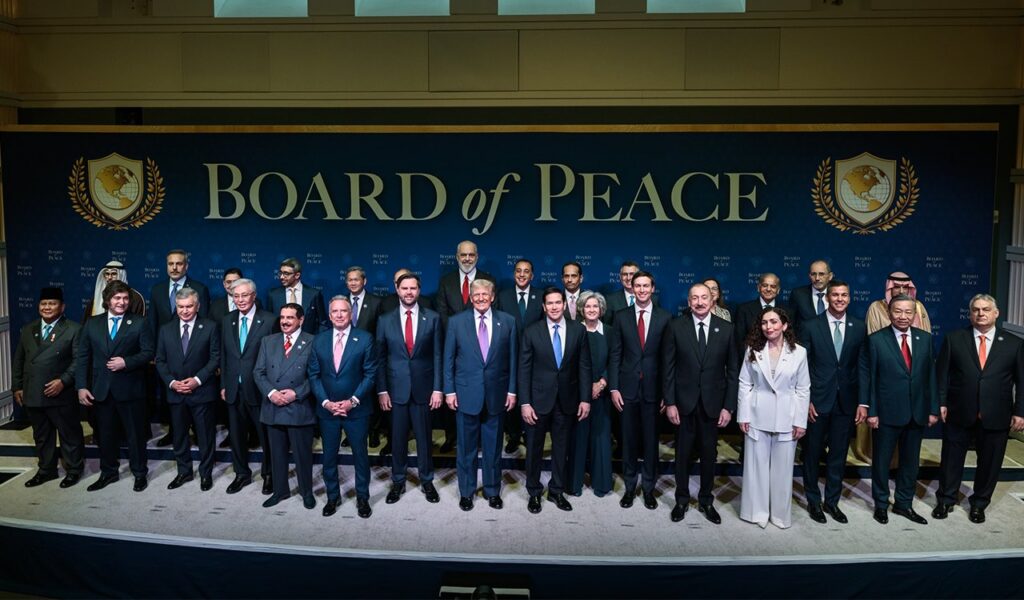
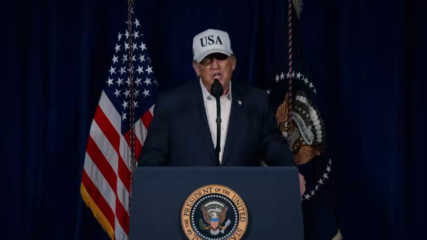
President Donald Trump announced at the inaugural meeting of his Board of Peace in Washington on February 19, 2026, that member countries had pledged $7 billion for Gaza’s reconstruction, in addition to $10 billion Trump promised from the United States.
Trump did not disclose the source of the U.S. funding, which Congress has not appropriated, but said the amount was small compared with the cost of war.
The 2½-hour meeting presented grand visions for Gaza’s future as the first step toward a broad peace across the Middle East and beyond, all under the undefined international reach of the Board of Peace. While the U.N. Security Council authorized the Board of Peace through the end of 2027 under Resolution 2803, the board’s charter envisions a permanent entity with Trump at the helm as long as he wants the job. The Board of Peace has not received congressional authorization.
As in the previous four major conflicts between Hamas and Israel (2008-2009, 2012, 2014 and 2021), no treaty has been negotiated. A ceasefire ended the fighting but not the mutual hatred. Each previous time, quick international pledges were followed by slow disbursement of funds. Reconstruction then was hampered by disagreements about how to distribute the money and to whom, and insecure conditions crippled outcomes. Each time, the money delivered fell far short of the pledges, as did the construction of homes and institutions. Of the funds that did reach Gaza, large amounts were diverted to the pockets of administrators, intermediaries and Hamas.

For the current plans in Gaza, Trump cited nine Muslim-majority countries — Kazakhstan, Azerbaijan, the United Arab Emirates, Morocco, Bahrain, Qatar, Saudi Arabia, Uzbekistan and Kuwait — as committing the $7 billion for reconstruction. The exclusion of the United Nations as a funder does not displease Israel, which has had decades-long disagreements with the world body.
But putting the influence, direction and pace of reconstruction primarily in U.S. hands also opens the possibility of disagreements small and large between Jerusalem and Washington, including on the critical issue of whether Hamas plays any role in governing the nearly half of the Gaza Strip it controls. How much friction develops between the United States and Israel over Gaza’s reconstruction could influence elections in both countries in the fall.
The Washington meeting also revealed that Indonesia, the most populous Muslim-majority country, has promised at least 8,000 troops from its 400,000-person military for Gaza’s International Stabilization Force. The ISF’s commander, U.S. Maj. Gen. Jasper Jeffers, said Indonesia has accepted deputy command of the force, which is tasked with ensuring Hamas and other militants in Gaza disarm. The same day, the White House announced a U.S.-Indonesia trade deal.
Jeffers said the security plan for Gaza calls for the ISF to deploy five brigades, beginning in Rafah and moving north. He did not disclose the full composition of the force.
But Morocco’s foreign minister said his country will send high-ranking officers and a military field hospital. Turkey’s foreign minister offered troops for the ISF, but the return of Turkish soldiers to Gaza might not be popular more than a century after the British drove out the Ottomans during World War I.
Trump said two unspecified countries are ready “to go in and do a number on Hamas” if it does not disarm as promised under his 20-point Gaza plan. Previous plans for Gaza failed because they failed to address the core issues of terror, hate, incitement and indoctrination, Israeli Foreign Minister Gideon Sa’ar said, but the Board of Peace plan includes disarmament, demilitarization and deradicalization.
Morocco’s foreign minister, for example, said his country will lead a deradicalization program to stop hate speech and expand tolerance and coexistence. “It’s the first plan to address the root of the problem,” Sa’ar said. “We support it and are working and will work toward its success.”
The National Committee for the Administration of Gaza (NCAG), the technocratic Palestinian body created to govern the Strip under Board of Peace oversight, has begun forming a transitional police force for Gaza. The board’s high commissioner for Gaza, Nikolay Mladenov, said 2,000 Palestinians applied to be police within the first few hours. He also said Egypt will lead the training of the officers.
The head of NCAG, Ali Shaath, emphasized the “extremely difficult conditions” for humanitarian support and reconstruction in Gaza. He said NCAG’s priorities as Phase 2 of the Gaza ceasefire takes effect are security, with the deployment of 5,000 police officers within 60 days; the economy; emergency relief; and the restoration of basic services, including free movement for Gazans.
Mike Waltz, the U.S. ambassador to the United Nations, said aid is reaching those in need, with 4,200 trucks a week entering Gaza and less than 1% of aid being diverted. With the help of 70 countries, Waltz said, only 1% of households are suffering severe hunger.
Like the security plan, the economic redevelopment laid out during the meeting is meant to start in Rafah and sweep north. Marc Rowan, a member of the Board of Peace’s Executive Board and its Gaza Executive Board, said 400,000 homes and $30 billion worth of infrastructure will be built.
Rowan said the 25-mile Gaza coastline, a potential eastern Mediterranean Riviera, could be worth at least $50 billion, part of $115 billion in value waiting to be unlocked in Gaza for the benefit of the Palestinian population. “This is not a problem of money or collateral,” he said. “This is a problem of peace.”
The board meeting included discussions of cyber infrastructure, construction jobs, restoration of Gaza’s ancient place as a crossroads of trade, and even a $75 million, FIFA-sponsored soccer infrastructure, from youth fields to a national stadium.
All of it, however, depends on Hamas giving up its weapons. “There is no Plan B for Gaza. Plan B is going back to war. No one here wants that,” Secretary of State Marco Rubio said. “Plan A, the only path forward, is one that rebuilds Gaza in a way of enduring and sustainable peace where everyone can live there side by side with one another and never worry again about returning to conflict, to war, to human suffering and to destruction.”
Some two dozen officials spoke during the meeting. The following excerpts exclude comments that weren’t in English, such as the remarks from President Shavkat Mirziyoyev of Uzbekistan, President Javier Milei of Argentina and Foreign Minister Jarrah Jaber Al-Ahmad Al-Sabah of Kuwait, and most of the personal, repetitive praise for Trump.
— Michael Jacobs and Ken Stein, February 25, 2025
President Donald Trump: What we are doing is very simple: peace. It’s called the Board of Peace, and it’s all about an easy word to say but a hard word to produce, peace. We are going to produce it. …
Today is a tremendous honor to welcome you all to the United States Institute of Peace for the inaugural meeting of the Board of Peace, very important. I believe it’s the most consequential board, certainly in terms of power and in terms of prestige. There’s never been anything close because these are the greatest world leaders. Almost everybody’s accepted, and the ones that haven’t will be. Some are playing a little cute. It doesn’t work. You can’t play cute with me. They’re playing a little bit, but they’re all, they’re all joining. …
We worked together to ensure a brighter future for the people of Gaza, the Middle East and the entire world. I think that the Board of Peace, because it’s mostly leaders and unbelievably respected people but mostly leaders of Middle Eastern countries, countries from all over the world, and they’ve been very generous with money also. And the United States, which I’ll say in a moment, is also very generous with money because there’s nothing more important than peace, and there’s nothing less expensive than peace. You know, when you go to war, it costs you 100 times what it costs to make peace. …
Steve [Witkoff] has done a great job, and then a little bit later on we brought Jared [Kushner] in. Jared was responsible for the Abraham Accords, which is incredible. Nobody else could have done that. He’s a very smart guy, and we’re making Jared an envoy also, envoy of peace. They’re both envoys of peace. …
They’ve had some very interesting meetings having to do with, as you know, Iran is a hotspot right now. And they’re meeting, and they have a good relationship with the representatives of Iran, and, you know, good talks are being had. It’s proven to be over the years not easy to make a meaningful deal with Iran. We have to make a meaningful deal; otherwise, bad things happen. But we have to make a meaningful deal. But they have a great relationship with the representatives of Iran. …
Israel and Iran, and we’ll see where that goes. But when you think of Israel, we’ve done the biggest thing of all: We have peace in the Middle East right now. That’s bigger than — people said it couldn’t be done. For 3,000 years they’ve been talking about the Middle East. They said it couldn’t be done.
And you look at what’s happened in Gaza. And one of the keys to it was when we took those beautiful, magnificent — we just ordered 22 more of them, updated model. The B-2 bombers are incredible. … It went into Iran, and it totally decimated the nuclear potential. And when it did, when it decimated that, all of a sudden we had peace in the Middle East because nobody — there was a black cloud hanging over the Middle East. And if that wasn’t done, that cloud would have been there, and countries like Saudi Arabia, countries like Qatar, countries like nobody could have signed. You would have had that threat. Nobody could have had — you couldn’t have had peace in the Middle East.
So now we may have to take it a step further, or we may not. Maybe we’re going to make a deal where you’re going to be finding out over the next probably 10 days.
But this meeting today is proof, with determined leadership, nothing is impossible. When I took office, the war in Gaza was raging, with thousands of people being killed, and no end in sight. Today, thanks to unrelenting diplomacy and the commitment of many of the great people in this room, we have 59 countries signed up on Gaza. Think of that. We have, it’s amazing, but all the people, many, really so many, in this room. The war in Gaza is over. It’s over. There are little flames, little flames.
Hamas has been, I think they’re going to give up their weapons, which is what they promised. If they don’t, they’ll be harshly met, very harshly met. They don’t want that. You know, all the stuff like they don’t mind dying. They told me that’s not true. People would say, “Oh, they don’t mind dying.” No, they don’t want to die. They said, “We don’t want to die.” People don’t want to die.
The ceasefire has held, and every last remaining hostage, both living and dead, has been returned back home. …
I want to thank every nation that helped us achieve this monumental breakthrough, saving countless lives and really bringing peace and bringing the concept of peace because nobody thought peace in the Middle East — I’ve always heard peace in the Middle East is impossible. And it’s turned out not to be.
And we do have some work to do with Iran. They can’t have a nuclear weapon. It’s very simple. They can’t have peace in the Middle East if they have a nuclear weapon. And they can’t have a nuclear weapon, and they’ve been told that very strongly since the hard-won ceasefire of last October.
The United States and our partners have facilitated the delivery of vast amounts of humanitarian aid, numbers that nobody’s ever seen before. In November, the United Nations Security Council unanimously approved the Board of Peace, and last month in Davos we welcomed over two dozen members to this very important new organization. And we are very closely working with the United Nations. …
But together we’re committed to achieving a Gaza that is properly governed throughout. The whole area is going to be, you know, so many countries that have really nothing to do with the Middle East, but they may be somewhat close by, they’re all involved. They want to go in and fight. They tell me all the time, “We’d like to send soldiers to fight if it’s necessary.” And I don’t think it’s going to be necessary. We have two countries that want to go in and do a number on Hamas. I said, “I really don’t think it’s — I hope it’s not going to be necessary.” Because they made a promise, and they promised me they’d get rid of their weapons. Looks like they’re going to be doing that, but we’ll have to find out. But it’s no longer a hotbed of radicalism and terror. …
I’m pleased to announce that Kazakhstan, Azerbaijan, UAE, Morocco, Bahrain, Qatar, Saudi Arabia, Uzbekistan and Kuwait have all contributed more than $7 billion toward the relief package. … Many more are contributing too, so the numbers are, you know, this just started. This is our first meeting. But every dollar spent is an investment in stability and the hope of new and harmonious Middle East.
It’s a region that’s so important. It’s so vibrant. It’s so incredible. The people are so incredible, but we want to have a harmonious Middle East. The Middle East is amazing. …
The world is now waiting on Hamas, and that’s taking place, and it’s the only thing that’s right now standing in the way. We have Lebanon with certain things that we’re working on that are very important. We have to solve the problem of Lebanon, but it’s relatively small in terms of what we’re, what’s been done. And, again, the key was getting rid of the nuclear potential because Iran would have had a nuclear weapon, based on everything we’ve found out since, within one month. We can’t let that happen. …
The U.N. Office for Coordination of Humanitarian Assistance is raising $2 billion for the support of Gaza. Additionally, Japan has just committed to host an aid fundraiser which will be a very big one — it’s already successful; we know some of the numbers that are being talked about — which will be attended by other nations in the region, including South Korea, the Philippines, Singapore and others.
And I know that China’s going to be involved, and I think Russia’s going to be involved. I think they will be. I want to have everybody, get all sides, because it doesn’t help when you have all sides with one ideology. You have to have everybody together for this.
I’m also pleased to announce that FIFA will be helping to raise a total of $75 million for projects in Gaza. …
The nations represented here today, just in closing, are not just contributing money. Some are also pledging personnel to help preserve the ceasefire and secure a very enduring peace. We have to have enduring peace. Having peace, knowing it’s going to blow up in two weeks, doesn’t mean anything.
In particular, Indonesia. Thank you very much, Indonesia. … Morocco, thank you very much. Great. What you’re doing is great. Albania, Kosovo, Kazakhstan have all committed troops and police to stabilize Gaza. Egypt and Jordan are likewise providing very, very substantial help, troops, training and support for a very trustworthy Palestinian police force. We think we’re getting some very good people on that police force. …
All of these countries are working together around the vision of a Middle East that is free from the curse of extremism and terror. And now is the time. And by the way, even people with extremism and preaching extremism, they’re exhausted. They’re tired. It’s been going on for too many years. I don’t care who you are, they’re tired. They want peace.
And now is the time for Iran to join us on a path that will complete what we’re doing. And if they join us, that’ll be great. If they don’t join us, that’ll be great too. But it’ll be a very different path. They cannot continue to threaten the stability of the entire region. And they must make a deal, or if that doesn’t happen, I maybe can understand if it doesn’t happen. It doesn’t happen, but bad things will happen if it doesn’t. …
I want to let you know that the United States is going to make a contribution of $10 billion to the Board of Peace. … We’ve had great support for that number, and that number is a very small number when you look at that compared to the cost of war. That’s two weeks of fighting. It’s a very small number. It sounds like a lot, but it’s a very small number. So we’re committed to $10 billion.
Together, we can achieve the dream of bringing lasting harmony to a region tortured by centuries of war, suffering and carnage. They say 3,000 years. … But the ancient wounds can be healed, and they are indeed ancient. This has been going on for so many centuries that our entire planet will be a better, safer, more beautiful and more peaceful place for us all. …

Vice President JD Vance: When I look at what happened to Israel on October 7th, all those innocent people who were murdered, the fact that you had all of these hostages and of course a terrible war that came from it, I remember thinking to myself, “How is it ever going to be possible to get these hostages home safely? To make it possible for the people of Gaza to actually have a reasonable future, but also to ensure that Israel is never attacked again?”
It turns out the answer was you just need a president who is committed to the effort and committed to the work, and that’s what we had thankfully under the leadership of this president. And you’ve got to make peace, but then you have to make the peace stick. …
That’s what the Board of Peace, I think, is fundamentally about, is making the peace stick. And it’s an incredible thing that you guys have all done. So to all of the leaders gathered here today who are investing in the future, who are investing in peace, we’re grateful to you. …
To the American people, I think it’s important that the American people recognize why we’re here today. And the reason that we’re here today is, yes, to save lives and, yes, to promote peace, but this creates incredible prosperity for the American people. The countries represented here represent trillions of dollars of investment in the United States of America that would not have been possible without this president’s leadership and advocacy for peace. The economies here represent millions of American jobs of people who are receiving products built in American factories and made by American workers, would not be possible without a focus on peace. …
Secretary of State Marco Rubo: This was a very unique crisis in Gaza, one that the existing international institutions could not solve or figure out. It needed a very specific type solution that required the partnership of all the nations that are here, including those that are here on an observer status, and we appreciate you coming today and being a part of this as well. And that’s the point I want to drive home today.
And soon you’ll hear from Steve and Jared, who, by the way, deserve an incredible amount of credit for pulling this together and working countless hours and traveling all over the world. They truly deserve our appreciation and thanks for the work they’ve put in under the leadership of President Trump to make this possible. This Gaza situation was impossible to solve under orthodoxy, under existing structures, and so what we did is they went to the U.N., and they got the U.N.’s approval to put this group together and bring these nations together to come up with a very specific solution — solutions — to a very unique and specific problem.
We have a long ways to go. There’s a lot of work that remains. It will require the contribution of every nation-state represented here today, and we thank you for being a part of it. And I hope that this — we hope that this can serve as a model for other complex and difficult situations so they can be solved in the same way.

But right now the focus is on this one. We have to get this right. There is no Plan B for Gaza. Plan B is going back to war. No one here wants that. Plan A, the only path forward, is one that rebuilds Gaza in a way of enduring and sustainable peace where everyone can live there side by side with one another and never worry again about returning to conflict, to war, to human suffering and to destruction.
And, again, Mr. President, thank you for having the vision and the courage to pursue something that has never been done before, and we’re not done yet. And thank you to Steve Witkoff and Jared Kushner for the time and the work they put into this, and thank you, on behalf of the State Department and the U.S. government, to all of the nations that are here. Every one of you is indispensable, including our observer partners, who we hope can find your way to join us at some point as officially part of this, but we are grateful for the fact you’re here today and the contributions you’ve made already. …

Special peace envoy Steve Witkoff: With regard to the hostages, we’re here today, again I say it, I know it sounds redundant, but we’re here today because of President Trump. Without him, nothing, none of this was possible. There were 251 hostages, 168 came out alive, 83 bodies were returned to their families so that they could grieve and remember their loved ones like in a normal way, in a way that brought their families together. So that was just as important. This was a monumental effort, and I want to tell a story about the president.

Every time a hostage family came to visit with us, they were not on the president’s schedule. I would walk down to the Oval Office. I would tell the president that there was a hostage family here, and he would say, “Steve, bring them up,” every single time. And when we got the last 20 out, we had a celebration at the White House, and I could see the emotion on the president’s face. And he came up to me and he said to me, “I have to tell you, this is my fifth year in the Oval Office, and I don’t know that I’ve ever had a more special time than this moment with these people seeing them come home.” And I said to the president, “You have to look around because none of them would be home without you, sir. None of them.” …

U.N. Ambassador Mike Waltz: Bottom line, humanitarian aid has absolutely surged since the Gaza war ended. Our Central Command, our great military, is working together with Israel, with the U.N., so many countries here to coordinate the aid to make sure there’s deconfliction. Over 70 countries now are participating in our Civil-Military Command Center, and here are the results. Aid is up; 4,200 aid trucks have entered Gaza each week for 13 consecutive weeks, the longest stretch of high-volume assistance to Gaza in years. Diversion is down significantly from prior to the ceasefire, with less than 1% diverted this month. Food supplies are way up. We are reaching the full 2.1 million Gazans with aid, up to five times from the delivery levels before the ceasefire. The percentage of households experiencing severe hunger has dropped from about 30% to down to 1% as of this past February. Drinking water has doubled, and child malnutrition has been cut in half. …

Mr. President, only under your leadership and this great team could we bring together the United States, Israel, Egypt, Jordan, the UAE, the United Nations agencies. …
Ali Shaath, chief commissioner of the National Committee for the Administration of Gaza: A new governing authority is now in place for Gaza with a clear mandate and a clear commitment to establishing development and stability. However, we are operating in extremely difficult conditions. Large parts of Gaza Strip are severely damaged, destroyed actually. The humanitarian needs are acute. Law and order remain fragile. This is not normal operating environment, President, which is precisely why discipline and prioritization matter.
Our priorities therefore are defined into four categories. First, restore security via professional civilian police under one authority, one law and one weapon, including training and developing 5,000 Gazan police to be deployed in 60 days. Secondly, revive economic activities and livelihoods, creating decent jobs, especially for our young population. Thirdly, ensure sustainable emergency relief as described earlier. Fourthly, restore basic services, including electricity, water, health and education, and, last but not least, access and movement.
Our mandate is simple, President: step by step to build the foundation for lasting peace, dignity and prosperity for the people of Gaza. And this is where we count on your continued leadership and support. Blessed the peacemaker. …

Nikolay Mladenov, the Board of Peace’s high representative for Gaza: Today we’re very happy to announce that we’re creating the Office of the High Representative for Gaza of the Board of Peace, which will be there to support, to guide and assist the National Committee for the Administration of Gaza, hopefully removing the roadblocks that they will be facing in taking over civilian and administrative control of the Gaza Strip. We plan to work in full transparency under the guidelines and supervision of the Board of Peace and the Executive Board, and of course we will do that in great coordination with Israel and with the Palestinian institutions, who we both require to make this work on the ground, and certainly with my very good colleague here General Jeffers on the International Stabilization Force that is coming together. …
As of this morning, we started the process of recruiting the Palestinian police force that Ali was just referring to, and just in the first few hours we have 2,000 people who have applied to join a new transitional Palestinian police force to be formed in Gaza under the authority of the National Committee with the support of the Board of Peace, trained in Egypt, where we have received an excellent proposal of how to do that forward. And this is critical to what we need to do as we begin this process.

And if we may move to the second slide, it is this Palestinian security force under the authority of the National Committee for the transition period that will allow us to ensure that all factions in Gaza are dismantled and all weapons are put under the control of one civilian authority. The only way to do that is the full implementation of the 20-point plan and the U.N. Security Council resolution which binds us all to make sure that that is the way forward. We have now a fully agreed framework with the mediators on how to do this, and I thank very much the state of Qatar, Egypt and Turkey for their excellent support in this.
We now need to move forward on communicating it and negotiating the details of the implementation plan with the factions on the ground, but rest assured to all of you that we’re on the right track. And if I can ask one thing of all of us, it’s to make sure that we have one message: There is no other option except the full demilitarization and decommissioning of all weapons in Gaza for reconstruction to begin and for people to have a new way of life going forward. …

Maj. Gen. Jasper Jeffers, International Stabilization Force commander: The ISF will do two things: stabilize the security environment in Gaza and enable civilian governance as established by the National Committee. For the last few months we’ve had a team on the ground of U.S. military experts preparing the infrastructure for the ISF. This team’s already operating from a combined joint operations center that’s going to be the headquarters for the entire ISF.
As you can see on our map, our plan is for the ISF to be assigned in five different sectors, each sector receiving one ISF brigade. In the short term, we plan to deploy to the Rafah sector first, in addition to the training of police. Midterm objective is to continue to expand sector by sector, all moving to our long-term 12,000 police and 20,000 ISF soldiers.
I’m incredibly pleased to announce today that the first five countries have committed troops to serve in the ISF: Indonesia, Morocco, Kazakhstan, Kosovo and Albania. Two countries have committed to train police: Egypt and Jordan.
I would also like to announce that I have offered and Indonesia has accepted the position of deputy commander for the ISF.
With these first steps, we will help bring the security that Gaza needs for a future of prosperity and enduring peace. …

Former British Prime Minister Tony Blair, Gaza Executive Board member: For decades, Gaza’s governance has been characterized by extremism, corruption, ineffective institutions and the complete absence of a route to prosperity for the Gazan people. Yet, as President Trump recognized, its potential has always been vast: 25 miles of Mediterranean coastline, proximity to great regional and global markets, and a young, dynamic population with a median age of 19. So today we set out profound changes necessary to rebuild Gaza for Gazans — Gaza not as it was, but as it should be, including its governance, effective public institutions serving the people, a business environment where enterprise flourishes, an education system educating the young for tolerance and achievement, and a tech-enabled society making the most of the digital revolution.
This is a vision of Gaza as part of the Middle East at peace — not a phony peace of declarations no one means and agreements no one intends to keep, but a genuine commitment to a region where, whether you’re a Muslim, Jew, Christian, of any faith or none, you can rise by your own efforts and feel your government by your side, not on your back. That is the vision behind President Trump’s 20-point plan for Gaza, and it remains the best, indeed the only hope for Gaza, the region and the wider world. …

Yakir Gabay, Gaza Executive Board member: Gaza is destroyed. We assembled here on this historic day with common vision to rebuild Gaza for the next generations.
Our mission is to recycle and remove 70 million tons of rubble and UXO and hundreds of miles of tunnels, arrange for the population fast, temporary housing, in parallel to start construction of infrastructure and permanent housing. We have a detailed master plan for housing and infrastructure of modern schools and hospitals, manufacturing and agriculture, roads and trains, water and energy plants, logistic hubs, telecom, tech and data centers, sports and leisure facilities, seaport and airport, and much more.
We lined up many regional contractors who build housing for millions of people in the Middle East. They will join the massive redevelopment with competitive pricing. The funding is ready and will be invested in a free economy. The local population will build their own cities, which will create hundreds of thousands of jobs and will revive the economy.
The Gaza coastline is 26 miles long. It can be developed as a new Mediterranean Riviera with 200 hotels and potential islands. The value goes to the Gazans through the Gaza Sovereign Fund. This plan is all subject to a full disarmament of Hamas. Thank you very much. Together we will make this vision into a reality. …

Liran Tancman, Israeli tech entrepreneur: When we asked the NCAG what Gaza needs to unlock its potential, the answer was clear: Reconnect Gaza to the world digitally and economically, and replace corruption with an open, tax-free system. Gaza was once a vital trade hub between Asia and Europe. Reconnection is a return to its roots. Even the word gauze comes from Gaza, where silk was woven and exported to Europe.

So we brought together Palestinian, Arab and American partners to deliver practical solutions. By July, Gaza’s 2G network will be upgraded with free high-speed access to essential services. The NCAG is building a secure digital backbone, an open platform enabling e-payments, financial services, e-learning and health care with user control over data. This effort is supported by our regional partners, and I believe you will hear some exciting news from them on that later today.
In parallel, we’re advancing an Amazon-like logistics system to help Palestinians launch businesses, import globally and trade securely. This will lower prices, drive growth, and help transform Gaza into an open, transparent, corruption-free economic zone. …

Apollo Global Management CEO Marc Rowan, Gaza Executive Board member: The goal is simple: to take the momentum all of you have provided and build it into something that is not just temporary relief, but something that provides a long-term foundation that will enable many of the goals we’ve spoken about today to be achieved. We plan to do this by gathering Gaza’s productive assets in one unified structure. This will allow independent, professional, conflict-free management of the resources to benefit the Gazans. This will also enable expeditious planning and zoning and not fragmented projects that do not contribute to an economic whole.

The potential here is tremendous, but it has to start somewhere. The start is in Rafah, where, as you heard, that will be the first place security is deployed. The plan is 100,000 homes for 500,000 residents, plus $5 billion of infrastructure. Over time, 400,000 homes for the entirety of the population, with more than $30 billion of infrastructure.
Let me put it in financial terms. This is not a problem of money or collateral. This is a problem of peace. The coastline alone, $50 billion of value on a conservative basis. The housing stock, more than $30 billion as rebuilt. The infrastructure, more than $30 billion — $115 billion of value. It just needs to be unlocked and financed. …

World Bank President Ajay Banga, Board of Peace Executive Board member: All this requires money, and so when the U.N. Security Council resolution got passed, we set about creating the Gaza Reconstruction and Development Fund at the World Bank. It’s housed there. The World Bank’s role is that of a limited trustee. We manage the donor contributions coming in of the type that the president said a little earlier in his opening remarks, and then we help to manage that money while it stays with us. And under the direction of the Board of Peace, we disperse the money for reconstruction and development projects in Gaza.

This fund is ready to receive the donations that he spoke about just a little while ago.
The second part of the story is that U.S. donors deserve the right to know that the money is being used in a transparent way. We are helping along with the Board of Peace, which takes the ownership of ensuring that the right kind of financial, legal and oversight mechanisms are being put in place. We’ve even assigned a financial controller from the World Bank on a secondment basis to the Board of Peace to ensure that we can try and help build the best standards in this process.
Now this is just the beginning. This work is going to need two or three things that the World Bank Group can bring to the table. The first is leveraging of public finance. Because of our AAA rating, we have the ability to leverage private bond money to help to create the resources we need to do what Marc just talked about. The second is we can de-risk private investing, and the third is we have people on the ground and expertise and knowledge of doing this kind of work in other markets. …

Special envoy Jared Kushner: We cannot change the past, but I think that what you’re seeing today is that we can potentially change the future if we focus and do this in the right way. We tried to structure this meeting like a proper board meeting like we do in the private sector, where we have all the preparation, we get the right people together, and we really report on what our challenges are, what the opportunities are and what are the approaches.
What you’ve seen today is just a small sample of the work that’s been done, and I really want to thank the entire team that’s worked so hard at this. A lot of these people are volunteers. They’re doing this not for any personal gain. People are not personally profiting from this. They’re really doing this for their children and for their grandchildren and because they want to see peace.

One small anecdote is Liron said to me, “Are you sure I should be presenting? I’m a Jewish Israeli, and I’m working on Gaza and all these things.” And I said, “That’s exactly why you should be presenting today. If Jews and Muslims work together, Israelis and Palestinians with Americans and English and Bulgarian and people from all around the world, then we can kind of join on a common goal, which is peace and togetherness.” And that’s really what we’ve done. …
I’d really like to thank all the countries that joined on very early. I see this as a very self-selecting group of countries that really believed that the future can be different and wanted to join in partnership and put their reputations and their resources and their time and their ideas on the way to say, “These are the challenges that we’re solving in our own countries. We want to come with new ideas because we’ve achieved success, and we believe that the world can be better in that regard.”
So I don’t have to go through these slides in great detail, but we’ve secured today, even without the president’s, you know, amazing commitment, over $7 billion. As Marc said, we don’t really have a resource issue here, although we are going to need everyone’s support. We just need to be executing and doing this in a good way.

We’ve dealt with the humanitarian issue. We’ve returned the hostages, but the one final thing I just want to talk about as well from our perspective is that President Trump in his heart wanted to get the hostages home, but he also really wanted to help the people of Gaza. He saw the suffering that they were enduring not through fault of their own, because of the bad leadership that they had, the situation they were born into.
The war was a horrific, horrific situation, and I think through this process, thanks to Ali and the committee, we are now here to fully support the committee. We are here to help the people of Gaza, to lift them up and give them every opportunity to succeed, and we really see this as a partnership with them and with the Israelis to see if we can create an environment that can be peaceful, that can be functional, that can offer people the opportunity to really live a better life. And I think you’ve seen some of the work today, and hopefully we’ll be successful. …
Failure is not an option, and we have to really push forward and keep finding ways to succeed with this. …
King Hamad bin Isa Al Khalifa of Bahrain: The meeting comes during the holy month of Ramadan, where we will pray to Almighty God that our endeavors will bring peace, security, prosperity to the world.
As a founding member of the Board of Peace, the Kingdom of Bahrain recognizes and endorses the tremendous potential of this body, the extraordinary drive of its chairman and his sincere efforts to unify nations in our common objectives of fostering and enduring peace for the Middle East. We greatly appreciate President Trump’s initiative in presenting the Gaza peace plan and establishing this board as a vital platform for dialogue, action and delivery.
As we embark on this historic journey together, we urge all peace-loving nations, organizations and groups to actively engage in the successful implementation of the second phase of the Gaza peace plan. This includes ensuring a lasting ceasefire in Gaza, facilitating its reconstruction, and providing hope and new opportunities for the people of Palestine and Israel.
This inaugural meeting of the Board of Peace marks an extraordinary and pivotal chance to envision a new future to Gaza, one that emerges from the ruins of conflict to building a landscape of security, aspiration, hope and opportunity for its people. And reaffirming our commitment to this vision, the Kingdom of Bahrain has contributed the funds towards the operations and administration of the Board of Peace, and today we announce our readiness to provide the necessary infrastructure and skills to establish an effective government digital services platform for Gaza.
Our decision to join the Abraham Accords and enter into the C-SIPA [Comprehensive Security Integration and Prosperity Agreement of 2023] agreement with the United States reflects our commitment to advancing peace and stability in the Middle East. The United States’ historic and ongoing presence in our region has served as a positive force for stability, and we remain dedicated to strengthening our partnership. We look forward with optimism to working with the Board of Peace and all of our international partners who share our ambitions for a brighter future for all. …
President Kassym-Jomart Tokayev of Kazakhstan: Our meeting here at the Donald Trump U.S. Institute of Peace comes at a moment when decisive and pragmatic actions matter most. In fact, it’s about making durable peace through practical, target-oriented measures, but not through endless conferences with wishful resolutions.
Mr. President, your clear vision and far-sighted approach to promoting global peace and stability has inspired my country to join the Board of Peace. The Board of Peace is widely expected to respond directly to new realities by reinforcing existing multilateral efforts. The world has never seen a move like this. It is absolutely unprecedented because, in essence, peace through construction is a very innovative concept or project. And it has every chance to become a reality by our joint efforts.
Therefore, Mr. President, I acknowledge and accept your conviction that lasting peace must be built on concrete actions. As our first step, we are ready to contribute a significant amount of cash finance directly to the Board of Peace without any delay. Kazakhstan is also keen to be part of the restoration and construction process through international companies with strong credentials. The program, mostly funded by our government, may include the construction of infrastructure, housing, residential complexes, schools, hospitals and other important civilian facilities, as well as the rubble clearings.
We pledge to fully accomplish our financial commitment to the board. As one of the world’s major producers of wheat, Kazakhstan is ready to provide humanitarian assistance to enhance food security in Gaza and beyond. Kazakhstan plans to provide 500 scholarships to Palestinian students to pursue academic programs in our universities over a five-year period. We can share our internationally recognized e-government expertise and other digital solutions. Kazakhstan is willing to support the ISF by deploying military units, including medical units, and sending our observers to the Civil-Military Coordination Center.
Sustainable development in the Middle East requires new ways to promote peace, cooperation and trust across the region. That’s why Kazakhstan has joined the Abraham Accords. This crucial move is fully aligned with the noble mission of the Board of Peace. Both of them may constitute a solid basis for joint efforts to promote peace and security in the Middle East and to foster economic, humanitarian cooperation in the region and even beyond. Given the global nature of the board’s agenda, Kazakhstan is committed to providing practical support, including through hosting meetings at different levels and scales.
I also would like to propose to establish a special President Trump’s Award of the Board of Peace to recognize his outstanding peace-building efforts and achievements. I’m confident, Mr. President, that under your strong leadership, the Board of Peace will successfully deliver its great noble mission. …
President Prabowo Subianto of Indonesia: Indonesia, from the first day that we studied President Trump’s 20-point plan, we completely agreed, and we are fully committed to this plan. And that is why we joined the Board of Peace. We are committed to its success. We know there will be a lot of obstacles. There will be a lot of difficulties, but we are very optimistic, with the leadership of President Trump, this vision of real peace will be achieved. There will be problems, but we will prevail. We will achieve our dream of peace in Palestine. Peace, a lasting and peaceful solution for the Palestinian problem and in Gaza. The achievement of the ceasefire is real. We commend this, and therefore we reaffirm our commitment to contribute a significant number of troops, up to 8,000 or more if necessary. We are prepared to contribute the troops to take part actively in the International Stabilization Force to make this peace work. …
President Nicusor Dan of Romania: I think everyone desires peace, stability, prosperity in Gaza, but the question is how to act for it, and that’s why this meeting and this format, it’s important.
What Romanians can do: First, on the humanitarian situation, we can increase the number of flights in order to extract children with disease and to treat in the Romanian hospitals. We’ve done already, and we can do for 1,000 children and 4,000 family members. Secondly, we have a good expertise in emergency response systems like ambulance, fire systems, and we can help in order to rebuild that system. And we can donate some equipment. Third, we are already offering some scholarships for Palestinian students, and we can expand the program. And we can help also to rebuild, refurbish the schools in Gaza. And fourth, I think the most important, we have also some expertise: We can help to build the institutions like police, like justice, like public administration. We have done that in other parts of the world, so we have some expertise we can contribute with experts, with trainers, and also it’s important to say that we have traditionally good relations with the Jewish people and with the Palestinian people, so it will help.
So you can count on us. …
Prime Minister Edi Rama of Albania: The fully aligned, bipartisan vote of support this initiative received in our parliament speaks for itself about how honored Albania is to be a founding member of this new organization. Many in Europe say the Board of Peace is meant to substitute the United Nations. It does not look to me like an attempt to replace the U.N. But if it helps shake that agonizing giant and, inshallah, wake it up, then God bless the Board of Peace.
Mr. President, we commend your decisive role in bringing a halt to the heartbreaking conflict in Gaza. And Albania has confirmed its participation in the stabilization force with our troops. At the same time, I propose that this board invite all countries to contribute directly by building a dedicated public facility for Palestinian children. And in doing so, the world would help the children of Gaza, who are the most innocent hostages of the lunacy of Hamas, … to grow within the tangible presence of the largest chain of hands humanity has ever joined together. By not only putting the money, but bringing their own architects in this, so the world will transform a wound of history into an oasis of hope, where compassion takes concrete form and the future is shaped around those who deserve it most, the next generations of Palestinians. Albania will be privileged to stand in that chain. …
Again, thank you so much for including Albania in this noble initiative. By bringing close friends of Israel and of the Arab countries, we very much hope to be an added value in your amazing vision. …
Prime Minister Mostafa Madbouly of Egypt: Egypt supports President Trump’s vision to usher in a new era of peace and coexistence among the people of the region in which the Palestinian people enjoy the rights to self-determination and statehood in accordance to relevant international resolutions. Egypt also appreciates President Trump’s firm position on rejecting the annexation of the West Bank.
Egypt supports the mandate of the Board of Peace as a principal framework for governing the transitional period in Gaza. It is necessary to fully empower the National Committee for the Administration of Gaza to function effectively from within and throughout the Strip. Also, preserving the institutional and geographical link between the West Bank and Gaza is vital for the Palestinian Authority to eventually resume its role in Gaza. Within the framework of Egypt’s support to President Trump’s plan, Egypt will continue its effort to train Palestinian police personnel to maintain security within the Strip.
Egypt values President Trump’s position rejecting the deportation of the Palestinian people from Gaza as reflected in the 20-point plan and stresses the importance of initiating early recovery projects in the whole of the Strip in a manner that preserves its geographic unity. Let us consider today’s meeting as initial step in advancing these objectives. …
Prime Minister Mohammed bin Abdulrahman Al Thani of Qatar: Qatar reaffirms its commitment to the Board of Peace, as it was committed to the very first day of the mediation efforts, from that day until the end, when we have witnessed in that historical moment in Sharm el-Sheikh the signing of this agreement together with our partners. For decades this conflict has burdened our region and the world, and our responsibility remains to achieve a just and lasting resolution.
The board under the President Trump’s leadership will advance the full implementation of the 20-point plan without delay, ensuring fairness and justice for both Palestinians and Israelis. In this spirit, Qatar pledges $1 billion in support to the board mission aimed at reaching a final resolution that fulfills Palestinian aspiration for statehood and recognition and the Israeli aspiration for security and integration. We will also continue our humanitarian coordination together with our U.N. partners and the Board of Peace. …
Foreign Minister Abdullah bin Zayed Al Nahyan of the United Arab Emirates: I really hope that the beginning of Ramadan will give us all guidance towards peace, coexistence and living in prosperity with each other.
Mr. President, just over five years ago, you with your friend my president, Sheikh Mohammed, and the prime minister of Israel launched the Abraham Accords. And since then we’ve managed not only to work with you, with Israel, towards a better future for the region, but even when October 7th took place, the UAE managed to work with Israel in providing, since the war started, almost $3 billion of assistance to the Palestinian people in Gaza.
Today, Mr. President, the UAE announces a further $1.2 billion for supporting Gaza through the Board of Peace, which I’m delighted that I’ve been working with so many friends like Steve and Jared, Secretary Rubio, who’s been so inspiring in so many other ways on so many other fronts, and looking forward to working with him in the future. And, Mr. President, if it wasn’t for your support, I think this board would not have been gathered. We would not have had the meeting in New York to end this war when you gathered eight leaders of the region to end this war. …
Foreign Minister Nasser Bourita of Morocco: As a committed founding member of the Board of Peace and with instructions of His Majesty King Mohammed VI, Morocco is pledging the following in honor of President Trump’s visionary peacemaking. One, Morocco has already made the first-ever financial contribution to the Board of Peace. Two, Morocco is ready to deploy police officers and train policemen from Gaza. Three, Morocco will deploy high-ranking military officers to ISF joint military command. Four, Morocco will deploy a military field hospital. Five, Morocco is ready to lead a deradicalization program to fight hate speech and promote tolerance and coexistence.
To conclude, allow me, Mr. President, to briefly highlight four elements. The conditions set in Phase 2 of your 20-point plan should be met for the success of our action. Preserving stability in the West Bank is crucial. The Palestinian ownership is important through legitimate institutions. Lastly, you are, Mr. President, the only leader able to bring peace to the Middle East. We hope that the stabilization of Gaza will help launch a global and genuine peace process based on the two-state solution. …
Foreign Minister Hakan Fidan of Turkey: After two years of immense suffering, ceasefire in Gaza has been achieved thanks to President Trump’s personal engagement and our collective efforts. Yet the humanitarian situation remains fragile, and ceasefire violations continue to occur. A prompt, coordinated and effective response is therefore essential.
President Erdogan remains fully committed to Gaza’s security, stabilization and recovery. Turkey has already been providing immense amounts of humanitarian assistance to Gaza. We can also contribute meaningfully to the rehabilitation of health and education sectors as well as the training of the police force. In addition, we are prepared to provide troops to the International Stabilization Force.
Mr. President, Turkey will continue to support your efforts towards a just and lasting peace. We remain convinced that the foundation of such peace is a two-state solution. Let us work towards that objective for the benefit of all peoples of the region. …
Foreign Minister Faisal bin Farhan Al Saud of Saudi Arabia: It is a pleasure to be here with you as we embark on a journey towards establishing a lasting and just peace in the Middle East, a peace that results in two states, Israel and Palestine, living side by side in peace and security, a peace that results in transforming our region from death and destruction to hope and prosperity by integrating the region, bringing together its resources and unleashing its potential. The Kingdom of Saudi Arabia, Mr. President, has been seeking peace and justice in the Middle East for a very long time. In 1981, King Fahd offered the eight-point plan which was adopted by the Arab world at the summit in Fez that essentially established or reconfirmed the notion of land for peace. In 2002, Saudi Arabia, the late King Abdullah launched the Arab Peace Initiative, which was adopted by the Arab world unanimously as well as by the Islamic world. Today, the custodian of the Holy Mosque, King Salman bin Abdulaziz, and His Royal Highness Crown Prince Prime Minister Mohammad bin Salman are working towards realizing a vision for peace and prosperity and security and integration in our region. … I’m pleased to announce that King Salman bin Abdulaziz will pledge $1 billion over the next three years in order to achieve this objective, to work towards alleviating the suffering of our Palestinian brothers and bring them the peace that they and the whole region so desperately desire. …
Prime Minister Viktor Orban of Hungary: Hungary is the only country to be represented here on the highest level among the founding members from the European Union. … There is serious talks going on in Europe about the Board of Peace and its future role. We understand that during the recent decades international organizations have failed to fulfill their role to preserve peace and stability worldwide. Therefore, new initiatives are needed to bring forward the issue of peace globally. We are sure that President Trump’s initiative to establish the Board of Peace is such a step to the right direction.
President Santiago Peña Palacios of Paraguay: I come from a country that 160 years ago faced extinction. We went to a war against our neighbor, and we lost 60% of our territory and 90% of the male population. So we know on our own to face the hard and all the difficulties of war. That’s why Paraguay is so proud to be a founding member of the Board of Peace, and we’re here to collaborate. Maybe we are not going to be the country that’s going to bring them more money or more security forces, but I think that there’s a lot that all of the countries can bring to the table to solve these issues.
Paraguay, together with a handful of countries, have been supporting Israel, and we will continue to do so. But we come here with an open heart to work for peace. And today is Gaza. Tomorrow will be another conflict area in the world. But we need to solve each of all these conflicts, and I really appreciate the leadership that you have taken, President. Paraguay stands ready to collaborate next to you. …
Foreign Minister Gideon Sa’ar of Israel: I’m proud to represent here the State of Israel that stood through such a difficult war for two years on seven different fronts, demonstrating resilience and strength. As I stand here, I recall the 925 brave soldiers that gave their lives in a war against pure evil, Hamas, Islamic Jihad and Hezbollah. These are the best people. To them we owe our existence and all our achievements. They will not be forgotten. I think of them and their families who paid the heaviest price.
Since Hamas violently took over Gaza in 2007, it built the largest terrorist state in the world with huge terror infrastructure above and below ground. October 7th was the peak of Hamas’ ongoing terror campaign through decades. Hamas raped and murdered women, killed children in front of their parents and parents in front of their children, burned whole families alive. That terrible day will not be forgotten, and we must act to ensure it never repeats itself.
Distinguished leaders, our previous plans for Gaza failed because they never addressed the core issues: terror, hate, incitement and indoctrination. At the heart of President Trump’s comprehensive plan are the disarmament of Hamas and Islamic Jihad, demilitarization of Gaza Strip, and deradicalization of Palestinian society there. It’s the first plan to address the root of the problem. We support it and are working and will work toward its success.
As Mr. Mladenov emphasized, Hamas must be disarmed. That includes all its weapons. Its terror infrastructure, underground tunnel network and weapons production facilities must all be dismantled. As the plan emphasized, there must be a fundamental deradicalization process. The infrastructure that indoctrinates Palestinian children to hate and kill Jews in educational and religious institutes should no longer exist. All those are important not only for the Israelis. Gazans have lived under a terror regime for decades. The people of Gaza must be liberated from these terrorists. …
Prime Minister Shehbaz Sharif of Pakistan: The people of Palestine have long endured illegal occupation and immense suffering, and to achieve long-lasting peace, it is very important that ceasefire violations must end to preserve lives in advance of reconstruction efforts. The people of Palestine must exercise full control of the land and their future in line with U.N. Security Council resolutions.
Mr. President, we must work together towards a credible pathway to Palestinian self-determination through the establishment of an independent, sovereign and contiguous state of Palestine in line with the relevant resolutions. Mr. President, we hope that under your visionary and dynamic leadership we will ensure a just and lasting resolution to the issue of Palestine, and today is a day which will mark a place in the annals of history that through your efforts, through your untiring support and great efforts, long-lasting peace in Gaza will be achieved. …
Trump: We’re going to straighten out Gaza. We’re going to make Gaza very successful and safe, and we’re also going to maybe take it a step further where we see hotspots around the world. We can probably do that very easily. This is a tremendous group of powerful people and brilliant people. And I think that we can do things that a lot of other people would not be able to even conceive of or think of. …
We’ll work again with the United Nations and bring it back to health. It needs help. It’s got tremendous potential, but it needs a lot of help. …
But most importantly for today, the Board of Peace is going to lead the way in Gaza. We’re going to make Gaza an example of success and safety and unity, and it’s an honor that you’re here. …
These are the most powerful people in the world. They’re the richest people in the world through their countries. And they have made a tremendous commitment, and the United States likewise has made a tremendous commitment. Thank you to everybody for your involvement, and we look forward to working with you over the years for many, many reasons, many very, very good humanitarian reasons.