January 14, 1925

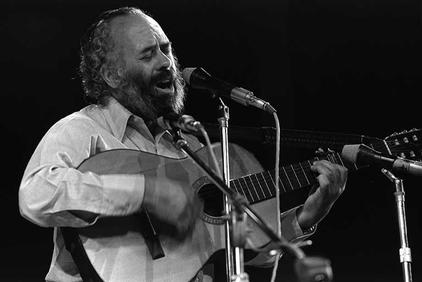
Rabbi Shlomo Carlebach, one of modern Judaism’s most influential composers and spiritual leaders, is born in Berlin. Carlebach spends his early years in Baden, Austria, where his father is the chief rabbi. In July 1938, a few months after the Nazi annexation of Austria, Carlebach’s family escapes to Lithuania before leaving for New York in 1939 after the German invasion of Poland. The family settles in Williamsburg in Brooklyn, where Carlebach studies in an ultra-Orthodox yeshiva in Flatbush.

As a student, he develops an interest in Hasidism and becomes involved with the Chabad Lubavitch movement, traveling to college campuses and performing outreach. To broaden the appeal of his message and teaching, Carlebach learns to play guitar and begins composing songs. His melodies infuse elements of traditional Hasidic niggunim into American folk music. In addition to his outreach and teaching, he begins regularly performing in coffee houses in Greenwich Village.

In 1966 he is invited to perform at the legendary Berkeley Folk Festival, which includes Pete Seeger and Jefferson Airplane. He is an instant success and soon founds the House of Love and Prayer in Haight-Ashbury in San Francisco to reach young, disaffected Jews through study, prayer and music.

In 1977 he moves to Israel and founds a moshav, Me’or Modi’in, outside Tel Aviv. He spends the next 17 years touring the world, performing concerts and influencing Jewish prayer and ritual while becoming active in the fight to free Soviet Jewry. He alternates his time between the moshav and New York, where he and his twin brother lead the congregation their father had led.

Carlebach dies in New York on October 20, 1994, and is buried in Israel.

Allegations of Carlebach sexually assaulting women and minors over decades surface in 1998 in an article in Lilith magazine. Further allegations come out later. In 2018 his daughter, Neshama Carlebach, writes about her father’s legacy in a Times of Israel piece called “My Sisters, I Hear You.” The following year, Yeshiva University’s student newspaper features an option piece focusing on the need to acknowledge what Carlebach did.