March 29, 2026
By Ken Stein, CIE President
Iran in March 2026 announced the closure of the Strait of Hormuz, the waterway that connects the Persian Gulf to the Gulf of Oman and the Arabian Sea. For Tehran, it is the easiest and potentially most consequential response to the military pummeling it is receiving daily from the United States and Israel. As other countries along major waterways in the Middle East have done in the past hundred years, Iran is using its geographic contiguity and control over a critical transit point as a political weapon. Egypt and Turkey control the Suez Canal and the Bosporus, respectively, and have shut them down in the past to achieve political outcomes against enemies. Unlike the Strait of Hormuz, where only one shore is Iranian, the Suez Canal and Bosporus are controlled on both sides by one sovereign state.
The Iranian Islamic Republic seeks to maintain exclusive control over the Strait of Hormuz for an indefinite period. Closure will shock the world economy over the short, intermediate and long terms, forcing the U.S. military and willing allies to physically open the strait and keep it open. But that effort would tie up forces in the strait for a prolonged period and generate economic hardship and political wrangling that would harm Iran’s bitterest of enemies. And it notably would elevate Iran as a world-class player in determining global consumption of oil, gas, other fuels, distillates, sulfur, lubricants, synthetics, plastics, medicines, fertilizers and so much more. Controlling the strait exclusively adds massive Iranian influence over the world’s economies for decades to come. For a regime that seeks to undermine individual freedoms, liberty and democracy and to promote anti-Western and antisemitic beliefs, any Iranian success could reshape power alliances.
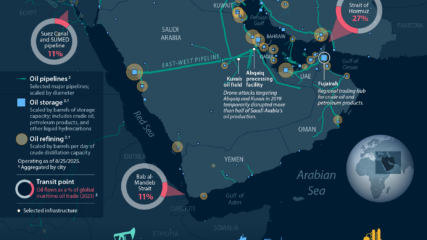
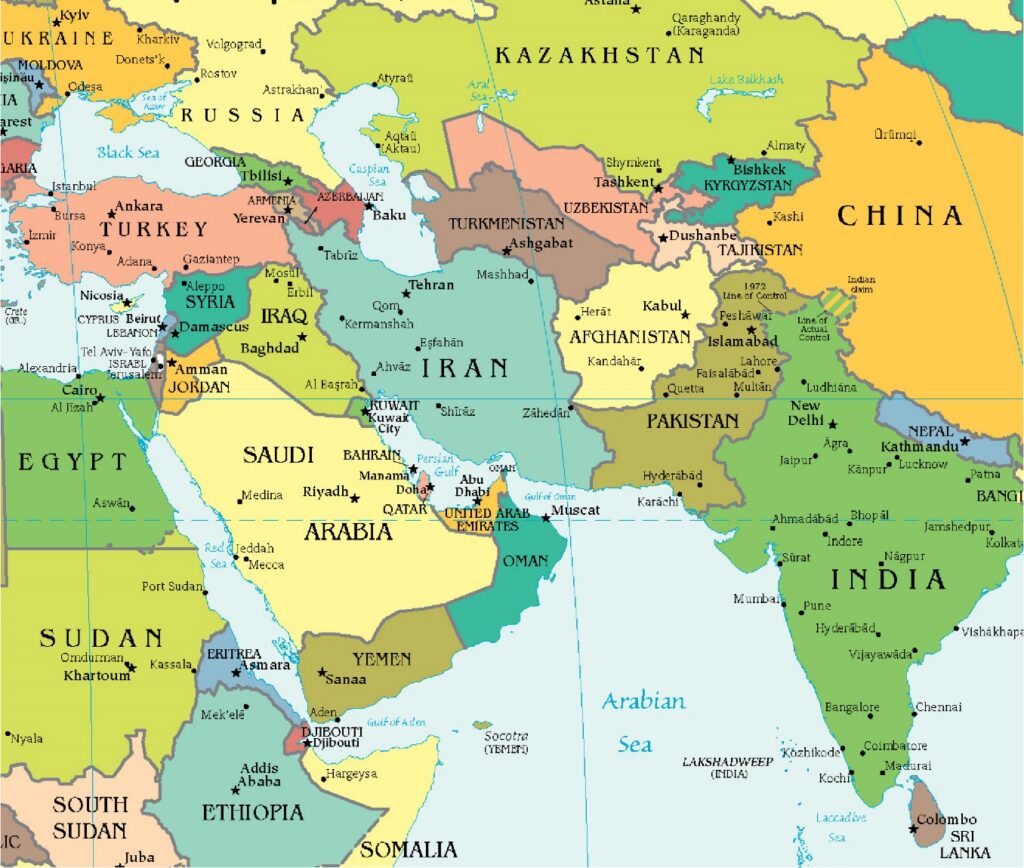
The Strait of Hormuz is a 104-mile-long waterway that connects the Persian Gulf in the north with the Arabian Sea and Indian Ocean in the south. While the strait is 21 miles wide, only 6 to 10 miles are employed for ships to pass each other in opposite directions. Before the war more than 20% of the world’s oil and gas passed through the strait.
Iran’s present and future depend on oil production and sales, which are tied to access through the strait. According to open sources, 20% to 25% of the country’s GDP in 2025-2026 comes from the oil and gas sector, as do 80% of Iran’s export revenues. And oil and gas pay for almost 50% of the military and security budget. Stop the oil revenue flowing to the regime, and the regime is slowly undermined. But it will not immediately disappear, and it is not easily overthrown because officials reportedly have stashed billions of dollars in foreign accounts.
According to open analyses and reporting, notably beginning in the last years of the Shah’s reign in the 1970s, when the price of a barrel of oil quadrupled after the 1973 Middle East war, his family siphoned off some $2 billion a year to themselves and to a small, favored elite. When the Islamic clerical regime took over, it transferred some of the Shah’s wealth into its own funding mechanisms, then for the next 45 years diverted an average of $10 billion to $20 billion a year in oil revenues to the regime’s maintenance, including billions of dollars to the coercive elites who keep it in power, including the Islamic Republican Guard Corps.
Exclusive control of the Strait of Hormuz has a direct impact on the regime’s access to the flow and pricing of petro-wealth and affects its ability to pressure and coerce its Arab Gulf neighbors, all of whom have multiple military and economic relationships with the United States, Iran’s most detested foe. The controlled flow of oil enables Iran to support and finance ideological allies and proxies (Hezbollah, Hamas, Palestinian Islamic Jihad, the Houthis, Iraqi Shia militias, possibly sleeper cells and others).
As Iran watched an array of American military might approach the Middle East in January and February 2026 and anticipated U.S. attacks, it kicked into gear its long-held plan to close the Strait of Hormuz. Using proximate geographic advantage was a relatively simple, asymmetric response to the overwhelming military might arrayed against it. During the 1980-1988 Iran-Iraq War, both countries attacked commercial vessels in the Persian Gulf, and the U.S. Navy escorted tankers through the gulf and the strait. In 2011-2012, Iran threatened to close the strait if Western powers imposed sanctions on Tehran for its nuclear weapons program.
Iran’s objectives as the war unfolds remain, among others, controlling the Strait of Hormuz (oil and gas flows), which means declaring the strait sovereign Iranian territory; sustaining a nuclear weapons production capability; avoiding restrictions on its missile and drone development capabilities; gaining relief from sanctions on its oil sales; releasing Iranian funds held in international institutions; receiving reparations for war damages; blocking international restrictions on how it uses its funds; and ending Israel’s war with Hezbollah. The United States and others find those objectives almost impossible to accept. Trade-offs could be made, with negotiations likely to be extended, while the status of the strait remains uncertain.
Rules for Middle East Straits
The Suez Canal, which opened in 1869, represents the clearest case of a fully internationalized waterway. Running across Egypt’s Isthmus of Suez, it links Europe directly to the Indian Ocean without requiring passage around Africa. Under the Convention of Constantinople of 1888, the canal must remain open to all commercial and military vessels in peace and war, without discrimination, and is designated as neutral territory. The canal may not be blockaded. Egypt, despite exercising sovereignty, is legally obligated to allow uninterrupted passage. In practice, however, political realities have intervened: The canal was closed to Israeli-flagged ships from 1948 to 1979 and was closed to all ships during the 1956 Suez crisis and from 1967 to 1975.
The Bosporus strait, together with the Dardanelles, forms the only maritime outlet from the Black Sea to the Mediterranean. This strategic corridor is governed by the 1936 Montreux Convention, which regulates the passage of commercial and military vessels. In peacetime, merchant vessels have complete freedom of passage, but Turkey has the authority to regulate or restrict military transit, especially during war or perceived threat. In February 2022, Turkey closed the straits to all warships because of the Ukrainian-Russian war. During World War II, Turkey declared its neutrality and closed the straits, which kept Axis and Soviet fleets from going to or coming from the Mediterranean.
In contrast, the Bab-el-Mandeb strait, which connects the Red Sea to the Gulf of Aden and the Indian Ocean, is, like the Strait of Hormuz, not governed by a special international convention.
At the end of March 2026, the Houthis in Yemen announced that they were closing the Bab-el-Mandeb, which on the western side is adjacent to Djibouti at the northwestern tip of Africa. In December 2025, Israel formally recognized Somaliland as an independent state south of the Bab-el-Mandeb, controlling 850 kilometers (about 525 miles) of coast across from Yemen. Israel is reportedly seeking to refurbish the port of Berbera and its international airport as an advance warning platform and launch facility against the Houthis, a proxy of the Iranian Islamic Republic.
Along with the Strait of Hormuz, Bab-el-Mandeb access is reportedly governed by the U.N. Convention on the Law of the Sea. UNCLOS defines them as international straits and guarantees “transit passage,” meaning ships and aircraft have the right to continuous movement that cannot legally be suspended by bordering states. Yet the Bab-el-Mandeb has experienced repeated disruptions, most recently because of Houthi attacks on commercial shipping from 2023 to 2025, constraining passage without a formal legal closure.
The Strait of Hormuz, bordered by Iran and Oman, falls under the same UNCLOS framework, though with significant complications. Iran has signed but not ratified UNCLOS and asserts a narrower concept of “innocent passage.” The Bab-el-Mandeb and Hormuz are governed by the broader legal framework of UNCLOS (1982/1994), but their openness ultimately depends on power, not principle — the power of the states astride the waterways. By contrast, Suez and the Bosporus operate under clearly defined treaty regimes, though still subject to political realities sensed and applied by Egypt and Turkey.
So much is at stake whether Iran or the international community controls the Strait of Hormuz during and after the U.S.-Israel-Iran war. What is certain from Iran’s behavior in negotiations over a half-century, as chronicled by hundreds of analysts, is that whatever the Islamic Republic agrees to do today has a high probability of being reversed, as pragmatic and ideological needs might demand. The regime tests limits as few other countries have, except for those that are relentlessly ideologically driven and committed to unflinching belief. The Iranian regime exploits ambiguities and holds that steadfastness is an uncompromising virtue, and its survival demands unfettered access to oil and gas revenues.