Explainer: Forming a Government (3:43)
The Israeli election on April 9 is just the first part of the process to decide who will lead the country. Our newest Israel on Board video explains what happens next and how the country’s government is formed.
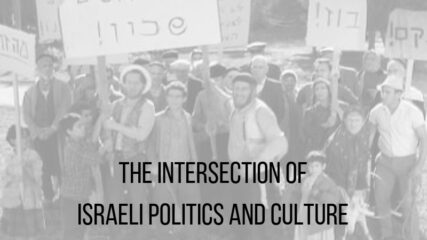
CIE Vice President Rich Walter speaks with Eli Sperling, Academic Research Coordinator of the Emory Institute for the Study of Modern Israel and a Visiting Professor for the Tam Institute of Jewish Studies at Emory University about the influence of politics in Israeli culture.
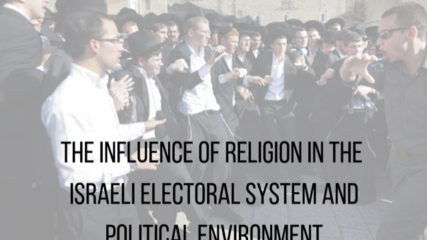
In this four part video series, CIE Vice President Rich Walter speaks with Emory University Professor Rabbi Michael Berger about the influence of religion in Israel’s politics.
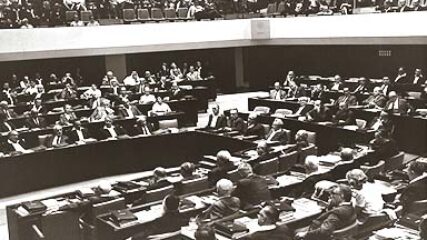
Our latest Israel on Board video explains how the electoral system in Israel works. The video highlights the voting process, explains proportional representation and the electoral threshold, and describes why there are so many different parties.
Professor Doron Shultziner explains the origins of Israel’s democratic norms and how the country has used Basic Laws to uphold the rule of law in the absence of a formal constitution.
Israel is only 70 years old. It is certainly more developed and different than the US was in 1846. What are the domestic and foreign policy issues that remain open-ended? Which issues have settled into consensus acceptance? CIE President and Founder Professor Ken Stein explores these questions and more in this webinar from May 2018.
After the June 1967 war, the Israeli government sent word through the United States to Egypt and Syria seeking to jump-start a peace process. Apparently no response was received.
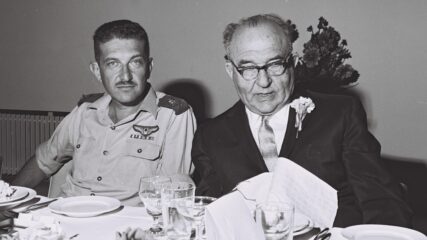
Two days after the conclusion of the June 1967 War, Eshkol, recounts the series of events that led to war, the war itself and the immediate aftermath. He reaches out to Arab states for peace seeking a path to peace with her belligerent neighbors. A week later, Israel will quietly messages Cairo and Damascus through the US, hat Israel seeks an end to the conflict. No answers are received.
With tensions on its borders, Eshkol tries to reassure Israeli public. Instead he gives a “painfully faltering” speech. Popular and party disgruntlement follow, opening the way for Eshkol to turn over the Defense Ministry two days later to General Moshe Dayan.
Israel’s Declaration of Independence which was issued by David Ben-Gurion in Tel-Aviv on May 14, 1948 was drafted by a small committee. This video highlights the similarities and differences between the Israeli and American declarations of independence and outlines the Israeli Declaration’s contents including the state’s intentions towards its citizens, the historical connection of the Jewish people to the Land of Israel, and the right of the Jewish people to determination.