2026 Israeli Election Polling: The Month Ending July 31 CIE+ members only
Three months from the 26th Knesset election, polling shows the anti-Netanyahu bloc on the cusp of enough votes to form a coalition without the Arab parties.


Three months from the 26th Knesset election, polling shows the anti-Netanyahu bloc on the cusp of enough votes to form a coalition without the Arab parties.
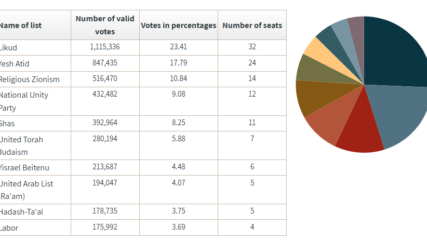
CIE President Ken Stein speaks with the Atlanta Jewish Times in advance of the October 2026 election about differences between the U.S. and Israeli electoral systems.
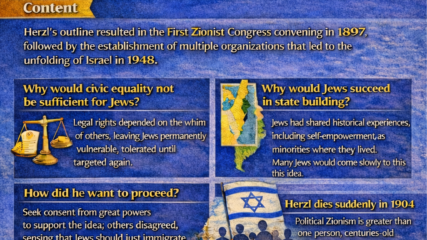
Nine questions guide key understandings about Theodor Herzl’s “The Jewish State.”

Three years after the Israeli government began the process to overhaul the judiciary, and after two years of war delayed efforts, the drive to rein in judicial independence continues.

Two major discordant issues that vexed Israel before October 7, 2023, continue to cleave Israeli society: a possible exemption from mandatory military service for the Haredim and the Netanyahu government’s persistent effort to wrench from…
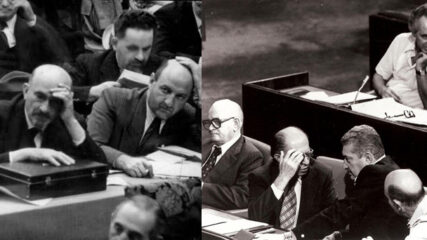
Neither Israel’s political culture nor Israel’s democracy based on Jewish self determination simply materialized on May 15, 1948. A connection exists from Jewish self-rule in the Diaspora to Zionist political autonomy during the Yishuv and to contemporary Israeli political culture. Likewise, the origins of Israeli democracy are found in the hundreds of years of Jewish Diasporas transitioning into the Zionist movement to the state; from aliyot before the Palestine Mandate to 1948 and since. Components of Israeli political culture…
By Ken Stein, May 1, April 4, March 22, March 5, February 11, 2023 Four months after Benjamin Netanyahu, was sworn in as Prime Minister to lead Israel’s 37th government in late December 2022, his cabinet…
Explore the foundational text of the State of Israel.

On January 1, 2022, I completed 43 years of teaching at Emory University. It was a great run and great fun. Along the way, I accumulated more pieces of paper than was necessary, among them…

Do you think any of the Maccabees would have guessed that the one jar of oil would have kept the menorah burning in Mod’in for eight days rather than one? If one had predicted yes or no, there probably would not have been either good or bad consequences in the years after 165 BCE.

Using original sources and employing perspective are keys to substantive Israel education. Failure to use either, handicaps and prejudices learning about Israel. When documents and texts or a broad overview of the literature in a field are not employed, there is a strong possibility that the educator either has a personal political agenda or, is covering up for their own lack of knowledge of what they are teaching. This premise is true for teaching any country’s history and through the lens of any discipline. I reside in the discipline of history.
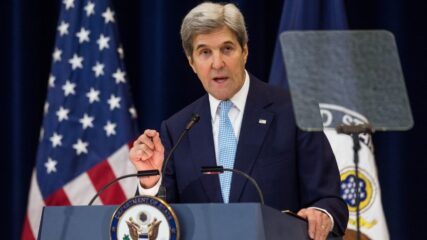
In the aftermath of UNSC Resolution 2334 condemning Israeli settlement construction, Secretary of State John Kerry publicly blamed Israeli settlement construction in the West Bank for being the major barrier to a two-state solution to resolution of the Israeli-Palestinian conflict.
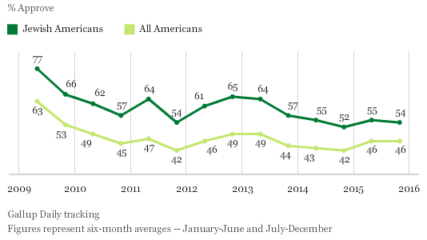
Candidates that speak forcefully about a strong US-Israeli relationship and a need to provide Israel with a qualitative military advantage over any array of adversaries, secure the attention of American Jewish voters who put Israel at the top of their list in determining who should receive their vote in congressional and presidential election contests.
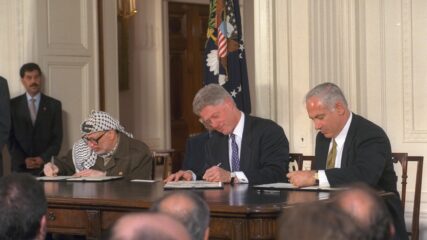
Kenneth W. Stein, “The Arab-Israeli Peace Process,” Middle East Contemporary Survey, Vol. XXII, 1998, Bruce Maddy-Weitzman (ed.), Westview Press, pp. 56-89. For almost all of 1998, the Arab-Israeli peace process was analogous to a driver…
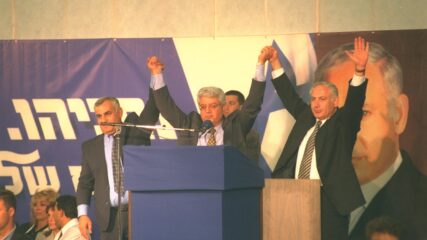
Kenneth W. Stein, “The Arab-Israeli Peace Process,” Middle East Contemporary Survey, Vol. XX, 1996, Bruce Maddy-Weitzman (ed.), Westview Press, pp. 34-65. Of all the events in 1996, the 29 May Israeli general elections had the…
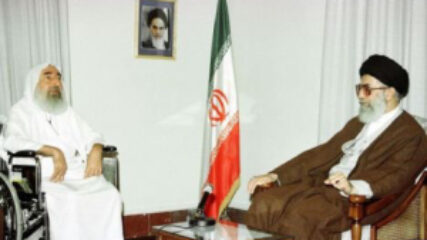
Days before his assassination, Yitzhak Rabin explains that he accepted the Oslo Accords and shook Yasser Arafat’s hand because the PLO represented the last hope for a secular Palestinian nationalism amid the rise of Hamas.
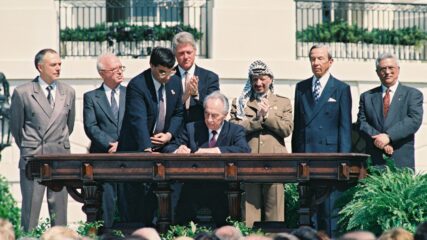
In September 2023, thirty years after the historic signing of the Oslo Accords, there is occasion to review Prime Minister Rabin’s understanding of them. I assembled this collection years ago from Daily Reports- Near East and South Asia, 1993-1995. Two short items about Rabin’s views are also found or linked here. Rabin provided a summary of his views of the Accords in a Knesset speech in October 5, 1995. Some of Rabin’s reasons for signing the Accords are also provided in Yehuda Avner’s The Prime Ministers.
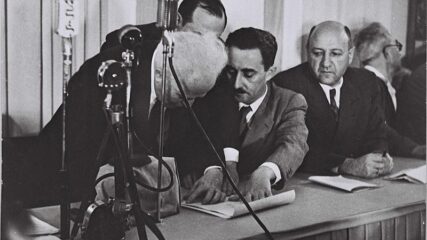
In the months before the UN vote to partition Palestine into Arab and Jewish states in November 1947, the Jewish Agency leadership there had to overcome a series of foreign policy obstacles working against the Jewish state’s establishment.
