Cards List
FILTERED BY:
<span class="cie-plus-title">Dayenu — From Exodus to Contemporary Israel</span><span class="cie-plus-badge">CIE+</span>

Dayenu — From Exodus to Contemporary IsraelCIE+

Sung or recited on Passover, the original Dayenu is reflective appreciation of 14 significant events specifically wrapped around the exodus from Egypt. The Dayenu presented here chronicles Jewish history from Exodus to the present day. This history can be read individually or responsively. Different moments and personalities in Jewish history could have been included. Hebrew and Spanish versions of Dayenu are available.

<span class="cie-plus-title">Origins of Israeli Democracy: Jewish Political Culture and Pre-State Practice</span><span class="cie-plus-badge">CIE+</span>

Origins of Israeli Democracy: Jewish Political Culture and Pre-State PracticeCIE+

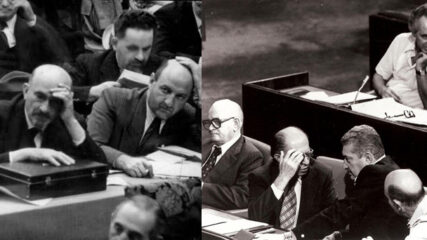
Neither Israel’s political culture nor Israel’s democracy based on Jewish self determination simply materialized on May 15, 1948. A connection exists from Jewish self-rule in the Diaspora to Zionist political autonomy during the Yishuv and to contemporary Israeli political culture. Likewise, the origins of Israeli democracy are found in the hundreds of years of Jewish Diasporas transitioning into the Zionist movement to the state; from aliyot before the Palestine Mandate to 1948 and since. Components of Israeli political culture…

<span class="cie-plus-title">Proven Success in Israel Education: Context, Sources and Perspective</span><span class="cie-plus-badge">CIE+</span>

Proven Success in Israel Education: Context, Sources and PerspectiveCIE+

Using original sources and employing perspective are keys to substantive Israel education. Failure to use either, handicaps and prejudices learning about Israel. When documents and texts or a broad overview of the literature in a field are not employed, there is a strong possibility that the educator either has a personal political agenda or, is covering up for their own lack of knowledge of what they are teaching. This premise is true for teaching any country’s history and through the lens of any discipline. I reside in the discipline of history.

<span class="cie-plus-title">Impassioned Zionist Max Nordau- the case for a Jewish state</span><span class="cie-plus-badge">CIE+</span>

Impassioned Zionist Max Nordau- the case for a Jewish stateCIE+

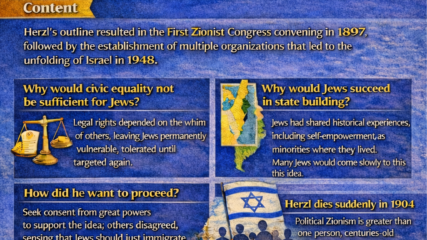
Context and perspective are key elements in understanding history. Zionism emerged in the 19th century because there was a unique Jewish identity built around belief, Torah, ritual, and community concern for one another. And second, the presence of wretched anti-Semitism. Nordau gave an impassioned speech about the Jewish condition at the First Zionist Congress in 1897 in the late 19th century making the case for a Jewish national home. Nordau energized the audience and the Zionist movement.

Biographies, Ken's Blog|December 12, 2018
<span class="cie-plus-title">One Tribe, Multiple Minyans</span><span class="cie-plus-badge">CIE+</span>

One Tribe, Multiple MinyansCIE+

Four out of every five Jews in the world live in the United States and Israel; 6.3 million in Israel, 6.7 million in the US.  According to Pew Research Center Studies, 7 in 10 American Jews feel attached or very attached to Israel.

Issues and Analyses, Ken's Blog|February 13, 2018
<span class="cie-plus-title">What Works in Zionist Education</span><span class="cie-plus-badge">CIE+</span>

What Works in Zionist EducationCIE+

In teaching history, the most difficult task remains creating context:catapulting students back into a different time frame and having them disregard their contemporary historical perspective. The goal is to witness history as it unfolded, not as it concluded.