In two books written sixty years apart, When Prophecy Fails, 1957 (Festinger, Riecken and Schachter) and The Influential Mind, 2017 (Sharot, an Israeli neuroscientist), the conclusions were the same.
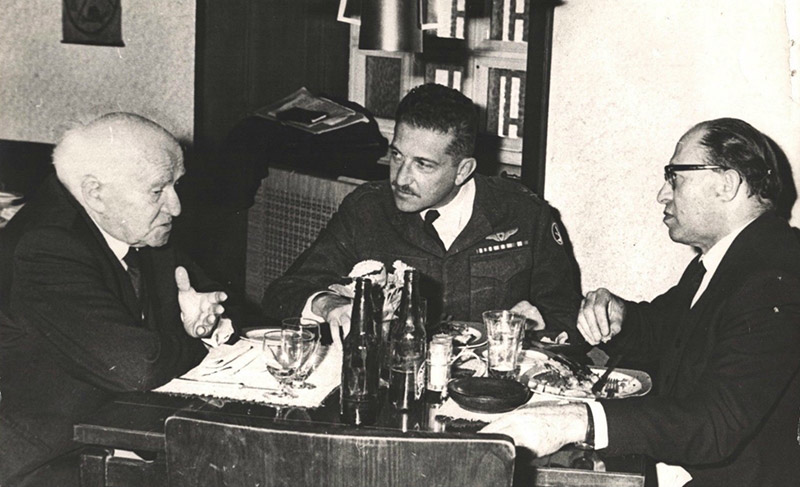

In two books written sixty years apart, When Prophecy Fails, 1957 (Festinger, Riecken and Schachter) and The Influential Mind, 2017 (Sharot, an Israeli neuroscientist), the conclusions were the same.
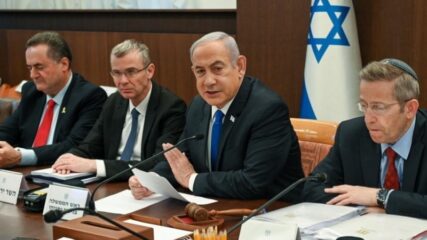
August 9, 2026 Source: https://www.gov.il/en/pages/spoke-start090826 Introduction Israeli Prime Minister Benjamin Netanyahu rejected the Trump Board of Peace’s Gaza roadmap at his weekly Cabinet meeting August 9, 2026. In the process, he eliminated any strategic ambiguity…
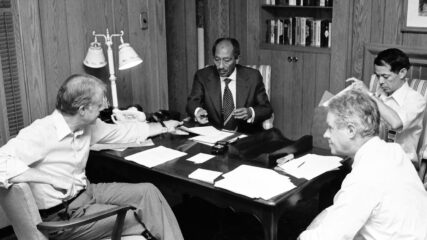
President Sadat evolved and presented the bulk of Egypt’s views at Camp David, greatly limiting his advisers’ participation. He particularly kept them from demanding Palestinian rights from Israel, which would have ended the talks without an agreement. Sadat anointed President Carter as the more willing, tougher negotiator with the Israelis. Sadat left Camp David with the U.S. at deep odds with the Israelis and Egypt as close as ever to Carter and the Americans.
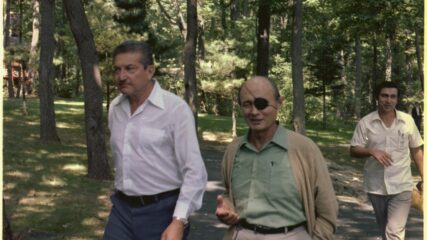
On the second day at Camp David, the United States and Israel candidly reviewed the 1967 refugees and the relationship of the West Bank to Israel.
July 31, 2026 By Maya Rezak and Ken Stein Videos and Multimedia John H. Cochrane, Niall Ferguson, H.R. McMaster and Bill Whalen, “Trump’s 14 Points: Epic Fury or Epic Fail,” Hoover Institution, June 18, 2026….
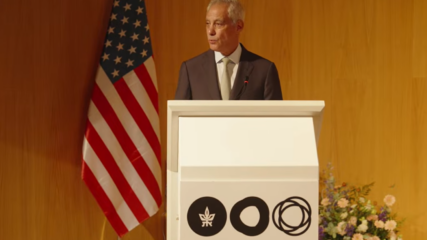
Originally posted July 25, 2026; introduction revised August 3, 2026. July 8, 2026 Source: https://rahmemanuel.substack.com/p/the-us-israel-relationship-where Introduction At Tel Aviv University in early July, Rahm Emanuel, the former mayor of Chicago, Congressman, President Barack Obama’s chief…

July 30, 2026 Source: https://x.com/BoardOfPeace/status/2083593633698394592 Introduction President Donald Trump and his Board of Peace announced “a historic breakthrough” July 30, 2026, on a roadmap for the full implementation of the 20-point ceasefire plan unveiled in…
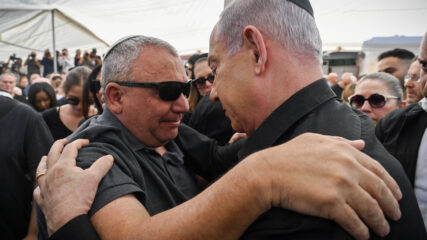
Three months from the 26th Knesset election, polling shows the anti-Netanyahu bloc on the cusp of enough votes to form a coalition without the Arab parties.
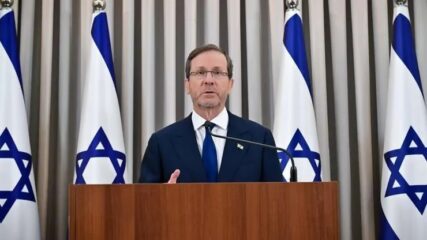
Source: https://www.timesofisrael.com/full-text-of-president-herzogs-speech-calling-for-unity-ahead-of-elections/ Invoking the memory of Jewish infighting as a critical factor in the destruction of the Jewish Temples in 586 B.C.E. and 70 C.E., Israeli President Isaac Herzog — on the eve of Tisha…
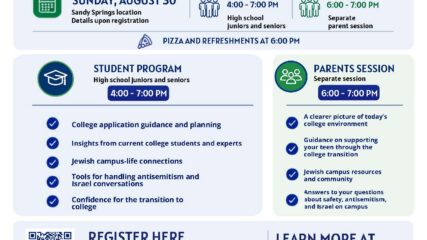
Join CIE and more than a dozen partners for peer and professional insights into making the most of your college years.
