Objectives and Conclusions: U.S.-Israel-Iran War CIE+ members only
While too much is unknown after a week of fighting to make definitive statements about the war, certain possible outcomes can be explored.

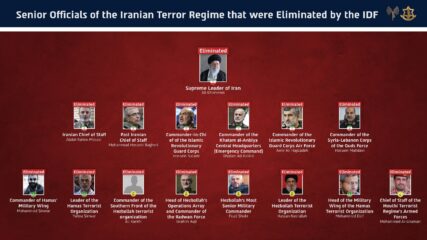
While too much is unknown after a week of fighting to make definitive statements about the war, certain possible outcomes can be explored.

CIE President Ken Stein addresses what is and what is not known about why Hamas attacked October 7, 2023, why Israel was caught off guard, and what happens after the war across the region.
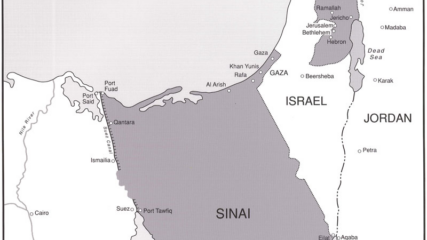
Enormous tension and risks taken by Egyptian and Israeli leaderships are recounted in a brief chronology of events that led to the June 1967 war, a benchmark turning point in Middle Eastern, Israeli, and Jewish history.
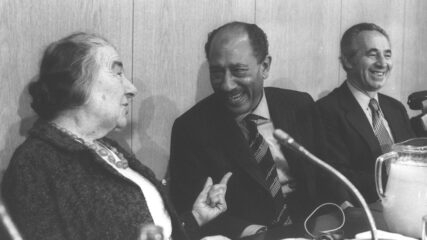
October 1991 Kenneth W. Stein and Samuel W. Lewis, Making Peace Among Arabs and Israelis: Lessons From Fifty Years of Negotiating Experience, United States Institute of Peace, Washington, October 1991, second printing 1992, 69 pages.

Israel and Lebanon agreed to a treaty in 1983 through U.S. mediation, only for Syria’s dominance and Lebanon’s dysfunction to block ratification.
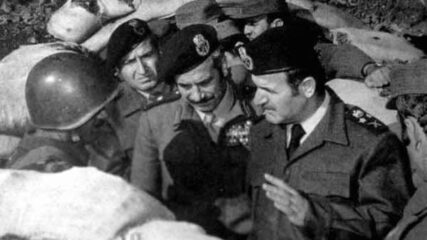
Henry Kissinger and and Hafez al-Assad meet in Damascus in December 1973 (credit: Agence France-Presse stringer, released by Getty in January 1974). By Ken Stein Sandwiched between the end of the 1973 October Middle East…
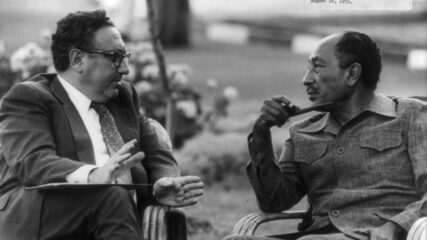
Egyptian President Sadat colluded with Syrian President Assad to attack Israel on October 6, 1973. Sadat’s objective was not to seek Israel’s destruction but to gain a limited success by crossing the canal. He also sought to engage American diplomacy to generate talks with Israel that would see Israeli withdrawal from Egyptian land Israel secured in the June 1967 War. Sadat took a large gamble by attacking Israel yet he unfolded a negotiating process with Israel that lasted through 1979. He achieved his overarching long-term priority of having Egyptian Sinai returned to Egyptian sovereignty.
