Objectives and Conclusions: U.S.-Israel-Iran War
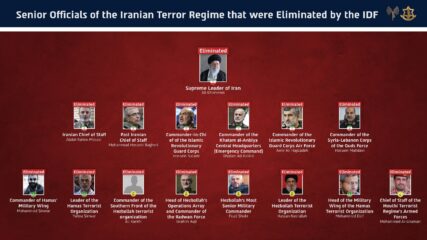
While too much is unknown after a week of fighting to make definitive statements about the war, certain possible outcomes can be explored.
CIE President Ken Stein addresses what is and what is not known about why Hamas attacked October 7, 2023, why Israel was caught off guard, and what happens after the war across the region.
Updated January 5, 2026; originally posted October 2023. By Ken Stein Hamas’ Origins The 1988 Hamas Charter and remarks by its leaders and other publications express hatred of Zionism, Israel and Jews. It is thus unmistakable that Hamas…
Two major discordant issues that vexed Israel before October 7, 2023, continue to cleave Israeli society: a possible exemption from mandatory military service for the Haredim and the Netanyahu government’s persistent effort to wrench from…
Since coming to office the first time in 1996, Israel’s longest-serving prime minister, Benjamin Netanyahu, has met with four presidents (Clinton, Obama, Trump and Biden) on 11 occasions. Four times he has addressed Congress, each…
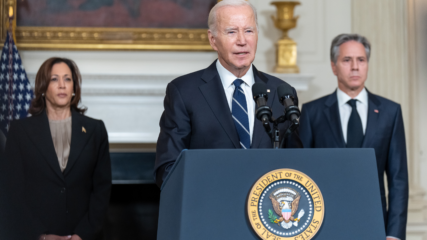
Scott Abramson and Ken Stein, Center for Israel Education Common political, emotional and strategic threads are present in President Joe Biden’s speeches and comments about the brutal reality of the Hamas attacks on Israel and…
February 13, 2024 — Dr. Kenneth Stein and Pastor Dr. Armando Alducin, Israel y el Medio Oriente Entrevista (Israel and the Middle East) with Mauricio Friedman, (75 minutes in English and Spanish) Five points stressed in…
Former US President Jimmy Carter embraced Hamas as a legitimate voice of the Palestinian people. His motivations possibly stretched from intentional to misguided to malevolent. Hamas leaders who were engaged in inter-Palestinian struggles remained pleased with the recognition he gave them. American officials and Israelis were keenly perturbed by the courtship he gave them.
Enormous tension and risks taken by Egyptian and Israeli leaderships are recounted in a brief chronology of events that led to the June 1967 war, a benchmark turning point in Middle Eastern, Israeli, and Jewish history.
On January 1, 2022, I completed 43 years of teaching at Emory University. It was a great run and great fun. Along the way, I accumulated more pieces of paper than was necessary, among them…
In August 2021, the U.S. withdrew its military from Afghanistan, ending America’s longest war. Correctly, we needed to prevent another 9/11 on our doorsteps. We still have that imperative. Our departure does not diminish America’s need for stable allies, like Israel and Arab states. The US should build an effective alliance system among them. We should have a small, substantive and selective US footprint in the region for support of friends and deterrence of foes, not for nation-building.
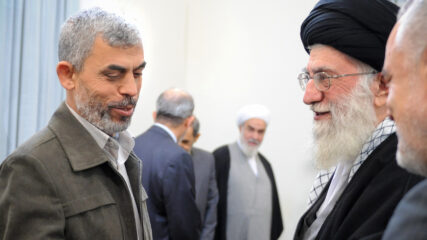
Yahya Sinwar, the Hamas leader in Gaza and mastermind of the October 7 attack, repeatedly expressed his desire to destroy Israel and his gratitude for Iran’s support.
Placing Jewish destiny into Jewish hands was why Zionism emerged at the end of the 19th century. Acquiring political power to promote Jewish security is how a Jewish state was created.
Coming up, fifty years after the June 1967 War. How many times have I taught the causes and effects, or written about the War? Hundreds of times in forty years.
Just as al-Qaeda seeks the total destruction of western democracies, Hamas seeks Israel’s total demise. Since its inception in 1988, Hamas has been crystal clear about its opposition to Zionism and Israel.
As it has in the past Hamas may accept a tahdi’a or calming down of tensions, or even a temporary truce or hudna, negotiated by a third party, but for it to accept Israel as a reality is totally contrary to its ideological outlook.
Hamas has opposed all agreements and cooperation which either the PLO or the Palestinian Authority have signed with Israel. “Hamas will never recognize Israel. This is a red line that cannot be crossed.
Many recollections remain from the Egyptian-Syrian surprise attack on Israel on Yom Kippur in 1973. The war set in motion a diplomatic process that eventually culminated in the 1979 Egyptian-Israeli Peace Treaty.
Lessons from the overthrow of the Morsi government in Egypt, the restart of Palestinian-Israeli talks, and the civil war in Syria remind us how difficult it is to judge whether American engagement is good or bad in the long run.
Should the United States become centrally or peripherally involved in monitoring a cease-fire and the movement of a cease-fire into a new status-quo for Gaza, the contents of this MOU could constitute a workable outline for helping enforce calm in Gaza and on its borders.
“The Quest for Arab-Israeli Peace: Israel’s Disengagement from the Gaza Strip: Precedents, Motivations and Outcomes” Zionism Fulfilled.- Israel’s preemptive physical disengagement from the Gaza Strip in August 2005 was the result of a national consensus;…
Days before his assassination, Yitzhak Rabin explains that he accepted the Oslo Accords and shook Yasser Arafat’s hand because the PLO represented the last hope for a secular Palestinian nationalism amid the rise of Hamas.
In September 2023, thirty years after the historic signing of the Oslo Accords, there is occasion to review Prime Minister Rabin’s understanding of them. I assembled this collection years ago from Daily Reports- Near East and South Asia, 1993-1995. Two short items about Rabin’s views are also found or linked here. Rabin provided a summary of his views of the Accords in a Knesset speech in October 5, 1995. Some of Rabin’s reasons for signing the Accords are also provided in Yehuda Avner’s The Prime Ministers.
October 1991 Kenneth W. Stein and Samuel W. Lewis, Making Peace Among Arabs and Israelis: Lessons From Fifty Years of Negotiating Experience, United States Institute of Peace, Washington, October 1991, second printing 1992, 69 pages.