November 1978
Source: United States Government, Washington, U.S. Printing Office, 1979, https://babel.hathitrust.org/cgi/pt?id=hvd.32044059214148&seq=9
With blunt force, the November 1978 House Intelligence subcommittee staff report judged that the United States failed in Iran because intelligence agencies and policymakers reinforced one another’s blindness. More than a missed prediction, the failure grew out of a system trapped by its own assumptions: confidence that the Shah would endure; dependence on Iran as a strategic pillar in the Persian Gulf; and reluctance to test the possibility that popular opposition could break the monarchy. Strong U.S. ties to favored regimes, the report made clear, can weaken objectivity, discourage contact with opposition forces, and reduce incentives for analysts to challenge conventional wisdom.

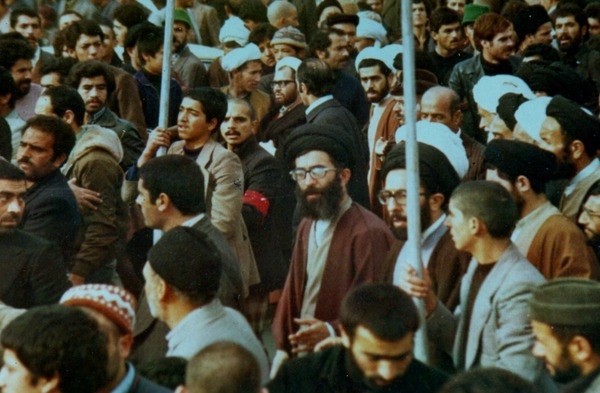
Just as damaging, the Carter administration did not grasp Islam as a political platform, a mass organizing force, or a governing ideology capable of replacing the Shah’s state with a regime deeply contemptuous of the United States. In its March 1980 report on Iran, noting Tehran’s aggressive ideology toward Washington, the CIA pounded the U.S. failure to consider that Iran might become anti-American. Perhaps it was too much to consider then that half a century later Iran would become Washington’s most potent adversary in the Middle East. Had analysts earlier been forced to examine whether the Shah might not rule a stable Iran into the 1980s, or had they understood the power of political Islam, the analytical gaps would have appeared sooner.
By October 1978, when senior officials finally concentrated on Iran, the crisis had outrun American policy. Options that once might have mattered — pressing the Shah to broaden his government, engage opposition figures or make credible concessions — no longer held much promise. Too broad was the opposition, too brittle the Shah’s authority, too damaged the regime’s legitimacy. Unfolding directly before Washington was not simply disorder, protest or modernization backlash, but the rise of political Islam as a disciplined alternative source of authority.
At the heart of the report stood a sharp indictment of American intelligence. Too often, analysts underestimated the size, discipline and appeal of the opposition, especially its religious wing. Demonstrations received complacent treatment. Missing from the analysis was the depth of distrust felt by middle-class Iranians, moderate opponents and religious activists toward the Shah. Also missing was a serious appreciation of how religious leadership could translate grievance into organization, moral authority into political command, and anti-Shah mobilization into anti-American rule. Embassy reporting and CIA collection offered only a narrow view of Iranian society. Rare, sometimes contemptuous contacts with opposition figures reflected Washington’s fear of offending the Shah or jeopardizing access to strategic intelligence facilities.
Intelligence production fared little better. Current reporting described events but often failed to explain their cumulative meaning. On Iran, the intelligence agencies did not have an institutional memory, let alone one that was conceptually dexterous. Attempted in 1978 but never completed, a National Intelligence Estimate on Iran collapsed into bureaucratic delay, disputes over format and a search for shallow consensus. CIA and Defense Intelligence Agency analysts assumed the Shah could survive if the military and security services stayed loyal. More attentive to popular dissatisfaction, State Department analysts were more pessimistic, but they did not press their case with sufficient force. Even when analysts saw unrest, they did not sufficiently see an ideology moving toward power.
Severe and enduring, the report’s central lesson remains clear. Intelligence cannot serve policy if policy first decides what intelligence may safely see. In Iran, Washington’s commitment to the Shah narrowed collection, dulled analysis and deafened senior officials to warnings already in the record. It also blinded them to political Islam unfolding in front of them — not as temporary clerical agitation, but as a revolutionary ideology ready to govern and define itself against the United States.
— Ken Stein, May 28, 2026
“Iran: Evaluation of U.S. Intelligence Performance Prior to November 1978”
Subcommittee on Evaluation, U.S. House Permanent Select Committee on Intelligence
Introduction
In late 1977 and early 1978, violent demonstrations erupted in Iran against the 25-year rule of the Shah of Iran. Renewed violence during the summer and fall of 1978 appeared to put the monarchy in jeopardy, and with it the substantial U.S. interest in Iran’s stability. Administration review of U.S. policy options toward Iran in early November resulted in White House assurance to the Shah of support for his efforts to restore order.
Soon afterward, President Carter expressed dissatisfaction with the quality of political intelligence, and press reports reflected the frustration of Administration officials who felt that the inadequacy of intelligence had narrowed American policy choices. In his November 30 press conference, President Carter restated his concern, emphasizing the need for good assessment of “intelligence derived through normal political channels.” Debate over the “intelligence failure” in Iran has continued.
Following preliminary examination in early December, the Chairman of the Subcommittee concluded that weaknesses in the intelligence community’s performance in this case were serious enough to warrant further attention. The staff then undertook a more thorough study of intelligence community performance during the period preceding the current crisis. The following report is based on interviews with analysts and managers at CIA, the Department of State, DIA, and NSA; and on an extensive review of intelligence field reporting, finished current intelligence reporting, analytical pieces, and public sources.
Findings
Clearly, there was a warning failure, in that the attention of top policymakers was not brought forcefully to bear on Iran until October 1978. By then, the degree of dissidence there had made orderly transition away from the Shah’s autocratic rule nearly impossible. U.S. policy options which might have existed earlier — such as encouraging the Shah to bring opposition elements into his government — no longer held promise.
Rather than simply an “intelligence failure,” however, this staff report finds a failure to which both the intelligence community and the users of intelligence contributed. The intelligence and policymaking communities must each carry part of the blame for insensitivity to deep-rooted problems in Iran. More importantly, intelligence and policy failings were intertwined:
• Intelligence collection and analysis were weak. Intelligence analysts observed the demonstrations complacently, underestimating the capabilities of the religious opposition, the breadth of popular opposition, and the extent to which even middle-class Iranians and moderate opposition leaders distrusted the Shah. Intelligence collection — routine political reporting by the U.S. Embassy in Tehran, as well as CIA’s clandestine collection — provided an inadequate base from which to gauge these capabilities and attitudes.
• Policymakers’ confidence in the Shah, which intelligence did not challenge, in turn skewed intelligence. As U.S. policy in the Persian Gulf became more dependent on the Shah, risk of offending the Shah by speaking with the opposition became less acceptable. No CIA intelligence reporting based on sources within the religious opposition to our knowledge occurred during a two-year period ending in November 1977, and Embassy political reporting based on contacts with the opposition was rare and sometimes contemptuous. U.S. policy toward the Shah also affected intelligence analysis and production — not directly, through the conscious suppression of unfavorable news, but indirectly. From an analyst’s perspective, “until recently you couldn’t give away intelligence on Iran.” Analyses issued in 1976 and 1977, describing some of the elements which have contributed to the current crisis, met with little interest. Policymakers were not asking whether the Shah’s autocracy would survive indefinitely; policy was premised on that assumption. Lack of imagination concerning alternative U.S. policies limited both the search for an accurate understanding of Iran’s internal situation, and the receptiveness of intelligence users to such analysis.
Intelligence Collection and Field Reporting
The sources for political intelligence on Iran included open reporting by the U.S. Embassy’s political section, and U.S. intelligence reporting.
Until mid to late 1977, reporting on the Iranian political situation received very low priority compared to clandestine reporting on other targets in Iran, and open and clandestine reporting on certain policies of the Iranian government. More aggressive Department of State and CIA reporting occurred after mid-1977, reflecting urgings to the Embassy by intelligence analysts in Washington, as well as the increasing pace of events in Iran. Significant insights derived from contacts between the Embassy political section and opposition elements did not appear in the State Department’s Morning Summary until September 1978.
CIA intelligence reporting on the Iranian internal situation was minimal before late 1977. No reports based on contacts with the religious opposition had appeared during the previous two years, and there was absolutely no reporting on the internal situation based on sources within the opposition during the first quarter of 1978.
In sum, intelligence field reporting from Iran provided a narrow and cloudy window through which to observe the sweeping social and political changes underway. Reports on riots were timely and reasonably accurate. Both the official policies of the military and security services, and the unofficial views of their officers were noted. Such coverage revealed that official Iranian policies of intimidation, assaults, and other violence directed at demonstrators and dissident leaders were failing to quell the disturbances; certain reports gave cause to question the military’s unconditional loyalty to the Shah. Economic reports showed that money was being transferred abroad and there were problems in various economic sectors, but also reflected cautious optimism among some Iranians in business circles. What was missing — and is still weak — was insight into the goals and expectations of opposition elements, and popular attitudes toward them.
In a publication issued in August 1978, a senior CIA analyst made a plea, which he had made in various ways before, for greater collection on “less tangible influences,” including whether Iranians were loyal to the concept of a monarchy as distinguished from a particular dynasty, to what extent the Tehran urban masses provided an exploitable tool to support or oppose a new government, etc. He complained that “we knew much more about the views [of key Iranians toward the monarch] 15 or 20 years ago when many of these Iranians discussed with American officials … [concerning] even doubts about the viability of the monarchy.” Neither CIA nor the Embassy political section was very responsive to these requests. One problem is that information on social groups and trends tends to be considered overly academic by field personnel, since it is usually not fast-changing, and its relationship to policy issues and users’ requirements is not readily apparent. Another is that collection on these intangible subjects is difficult and unrewarding to any but an “Iranophile,” and in too many cases field personnel lack the background, language fluency, or inclination to pursue them effectively.
The critical weakness in intelligence collection on Iran has been the lack of widespread contact with Iranians of various persuasions, leaders and followers alike. Whereas one or two more clandestine penetrations of student, religious, and other opposition elements could have provided samplings of attitudes and plans, their value would have been limited. Reliable assessments of the volatility of the situation, the degree of polarization, and relationships among groups and between individuals would have required broad contact with the Iranian people. Yet this sort of collection, at least as much the job of Embassy political reporting as of the CIA, could not be performed effectively by U.S. officials as long as U.S. policy toward the Shah prevented direct contact with opposition elements. U.S. close identification with the Shah limited the opportunities for U.S. officials to hear from Iranians who opposed him, thereby causing Iran to resemble a closed society from the U.S. perspective, with even clandestine collection on Iranian politics discouraged.
An important factor was the concern that the Shah, suspecting a CIA conspiracy against him, might deny U.S. access to its technical collection sites or restrict other forms of intelligence cooperation. Given the risk of irritating the Shah, another critical factor discouraging collection lay in the implicit priorities of policymakers who for years increasingly premised U.S. policy in the Persian Gulf on a judgment of the Shah’s permanence, while showing little interest in questioning his performance. In sum, the failings of CIA and State field reporting to convey a more vivid picture of mounting dissidence and the Shah’s vulnerability were rooted in policies and attitudes that have marked U.S. relations with Iran for years.
Intelligence Analysis and Production
Intelligence community production on Iran can be judged no better than fair. Although considerable information was available to the alert policymaker, most of it was presented in episodic current reporting. Practically no production addressed the question: Will the Shah survive the challenge posed by current disturbances?
Current intelligence
Current intelligence is inherently episodic — it does not lend itself to assessments of the long-term significance of events. It is an important warning vehicle but most effective in reporting events that stand out clearly. Thus, the National Intelligence Daily (NID), written primarily by CIA, and the State Department’s Morning Summary, the primary vehicles which bring current political intelligence to senior policy officials, failed to draw Washington’s attention to Iran in the early spring and in the summer of 1978, following the most severe rioting in a decade. The Morning Summary, more than the NID, early identified factors which would militate against a resolution of the crisis.
The long-simmering problems in Iran, when examined over time and through the use of hindsight as in the footnote[1] at the bottom of the page, do evidence a clear pattern. However, while the events were occurring the “signal to noise ratio” tended to obscure their significance to analysts who, caught up in a series of fast-breaking situations, tended to overlook the immediate past in assessing the present.
A comparison between current intelligence and a sampling of U.S. and British news publications yields only a few contrasts. Whereas the Washington Post and the New York Times reported in May and early June 1978 on an alliance between Islamic traditionalists and other opponents, the NID, which had quite early noted the potential of any such alliance, did not report on its actual existence until June 17, and even then with some uncertainty. However, in August and September, while much of the press anticipated no major changes prior to the 1980s, current intelligence (the Morning Summary somewhat more clearly than the NID) underlined impediments to any real resolution of the current impasse.
Prediction and estimation
During most of 1978, intelligence community analysts struggled to produce a National Intelligence Estimate (NIE) on Iran. The NIE process, which requires extensive collaboration and coordination by all the intelligence agencies, is inherently cumbersome and time-consuming. As the year wore on, and events in Iran attracted consumers’ attention and sharpened the need for short-term estimation, the NIE became increasingly inappropriate as a vehicle. The process bogged down in differences over the product’s length and focus as well as over substantive differences. Ultimately, no NIE was produced.
In its preliminary review of the NIE production process, the Subcommittee staff found indications that senior intelligence officials may have resisted having the NIE address the likelihood that the Shah might be ousted before the mid-1980s. The possibility existed that such resistance was presaging a policy decision, then being formulated, to have the President express firm support for the Shah. In the absence of attractive alternative policies, senior U.S. policymakers and advisers may not have wished to receive bad news, and may have communicated this attitude to managers of the NIE. However, after careful review, the staff finds no evidence of such deliberate manipulation. Rather, it finds that a number of factors contributed to the failure of the estimative process:
• The NIE is not worth fighting for. In a fast-moving political situation like Iran, analysts and senior intelligence officials increasingly regarded the NIE as a distraction from more pressing business. Under the pressure of deadlines, there was the tendency to avoid tackling substantive differences. Although the Department of State perceived significant differences between their concern about the Shah’s political prospects and the “complacency” of other intelligence community participants, they were neither consistent nor forceful in putting their judgments forward. They devoted greater effort to convincing others to adopt a change in format, than in arguing the basis for their pessimism about Iranian stability. State Department analysts wrote a dissenting footnote to the draft NIE on August 1, but partly due to the time delays inherent in the NIE process, the footnote was not forcefully pushed. The NIE was laid aside by the DCI in mid-September, without objection from other participants. Analysts, relieved of the NIE burden, looked to other vehicles, primarily current intelligence, to carry their judgments to intelligence users.
• The mechanics of NIE production tend to discourage a sound intellectual process. After limited discussion of the terms of reference, various sections of the NIE are drafted by different elements of the intelligence community. From the moment when these contributions are linked together in a first draft, basic reasoning and assumptions tend not to be questioned. Implicit in CIA and DIA products on Iran, for example, was a general assumption that the critical pedestals of the Shah’s power were the military and security services and a small political elite. State Department analyses seemed to assign greater weight to popular support, and therefore expressed greater concern as economic conditions over the last year exacerbated popular dissatisfaction. Whereas CIA and DIA’s implicit model suggested that it was enough to monitor the loyalty of the Shah’s military and security services and ensure that he maintained his own self-confidence, State’s set of assumptions would have required asking more questions about the level of popular dissatisfaction and the trends that have been uniting intellectual dissidents and religious traditionalists. The NIE process, which should have provided a way for analysts to challenge each other’s models, instead mired key personnel in a frustrating search for superficial consensus.
• Weak field reporting left serious analytical flaws unchallenged. Hope that the Shah could restore order, particularly as expressed in CIA and DIA products, seemed to rest on the assumption that the Shah had two powerful instruments, one or both of which could be applied effectively: military and police force with which to clamp down on dissidents; and policies of liberalization with which to split the opposition. Whether these two instruments could ever be used simultaneously is debatable even in theory. (State very early pointed to their incompatibility.) More importantly, better intelligence collection would have shown that neither instrument could be used very easily. The days when the Iranian opposition could be no more than “troublesome” — as claimed by a CIA paper earlier in 1978 — were long gone, but inadequate collection permitted analysts to underestimate the current power and organization of the opposition. Similarly, the opportunity to buy off a moderate opposition through liberalization policies was constrained by the deep distrust and dissatisfaction among even middle class Iranians.
There is little intelligence production that attempts short- or mid-term assessments, and, as described above, the NIE failed to serve that purpose. DIA’s Intelligence Appraisals, the State Department’s Intelligence Reports, and CIA’s Intelligence Assessments sometimes address that need, although the CIA’s product tends to focus on the long term.
DIA. Five Intelligence Appraisals were produced on Iran by DIA in the first nine months of 1978, along with a brief “prognosis” of the political situation in Iran. They contained several short-term predictions of reasonable accuracy, but did not suggest that disturbances had exceeded the bounds of previous crises which the Shah had weathered. They concluded as recently as the September 28 “prognosis” that the Shah “is expected to remain actively in power over the next ten years.”
State INR. State Department’s Bureau of Intelligence and Research (INR), lacking a full-time Iran analyst, produced no Intelligence Reports on Iran in 1978. However, in addition to frequent Morning Summary items, briefings, and contributions to State Department papers, INR did hold a number of seminars and colloquia on Iran during the year. One of the sessions intended to familiarize analysts and mid-level policymakers with the views of various academics occurred in early March, 1978, and focused on a paper by an academic participant, titled “Monarchy in Crisis.” The paper, which was later summarized for senior State Department officials, concluded that “time is not on the side of the Shah.” A later session held on 27 October involved a larger circle of academic and intelligence personnel as well as policymakers, and represented the first major policy gathering during the current crisis.
CIA. Two major long-term analyses by CIA provided valuable insights into many of the trends, forces, and relationships that underly current events in Iran, but they failed entirely to prepare consumers for the gravity of recent popular disturbances. Iran in the 1980s, a 60-page study published in August 1977, was constructed within assumptions that included “the Shah will be an active participant in Iranian life well into the 1980s,” and “there will be no radical change in Iranian political behavior in the near future.” Iran After the Shah, a 23-page Intelligence Assessment published in August 1978, is similarly “not an assessment of what will happen,” but “an examination of persons, institutions, and other factors that will play a role. …” Although useful in its intended purpose, it proved to be highly misleading with its preface, which asserted, “Iran is not in a revolutionary or even a ‘prerevolutionary’ situation.”
Users as Part of Warning Cycle
In an August 1978 classified staff report,[2] the Subcommittee highlighted the importance of user attitudes to the effectiveness of warning. Identifying this as the most difficult of five basic lessons demonstrated by past warning and crisis management situations, the report stated, “history provides ample illustration to suggest the futility of warning if decision makers are unwilling to accept warning or are unprepared to deal with the terms in which the warning comes.”
Although the interplay of consumer attitudes and intelligence performance in the Iranian case can never be fully known, the following observations can be made:
• Considerable intelligence on the mounting crisis in Iran over the past year had been produced and distributed to high-level readers. State Department Morning Summaries, which early noted the seriousness of the disturbances, were received at the White House for inclusion in the President’s daily reading. Other intelligence products described above, including the NID, also reached the White House and other senior officials.
• Policymakers must assume responsibility, perhaps to a greater degree than the intelligence community, for the unwritten considerations which restricted both open and clandestine intelligence field collection on the Iranian internal situation.
• Consumers did not demand analysis of the Shah’s stability. Large arms transfers and other major policies in the region were pursued without the benefit of in-depth analysis of the Iranian political scene.
Conclusion
• Clearly, policymakers were not served as well as they needed to be. Weaknesses in the intelligence community’s performance in this case are serious. However, simplistic charges of “intelligence failure” do not accurately describe the situation. Such charges blind us to the importance of user attitudes in any warning process. In the case of Iran, long-standing U.S. attitudes toward the Shah inhibited intelligence collection, dampened policymakers’ appetite for analysis of the Shah’s position, and deafened policymakers to the warning implicit in available current intelligence.
• The difficulty of achieving independent and objective intelligence, illustrated by Iran and other countries with which the United States has historically strong ties, suggests the need for changes in intelligence community structure. The Director of Central Intelligence (DCI) serves both as the President’s chief intelligence adviser and as the executive of U.S. policy decisions requiring covert action. Within CIA, the Directorate for Operations (DDO) both collects clandestine intelligence and conducts covert operations. The danger that CIA’s action responsibilities might color its intelligence performance in Iran is implicit in the dual tasks assigned to CIA. On the one hand, CIA had historically considered itself the Shah’s booster. On the other hand, it was supposed to provide sound intelligence analysis of the Iranian political situation. Thus, for years CIA field personnel had had to collect information both in order to disseminate intelligence, and with a view to reporting weaknesses in the Shah’s opposition which could, if necessary, be used to negate opposition efforts.
The problems of objectivity within CIA are compounded by the DCI’s dual role. This structural problem, which long antedates the present DCI, will remain as long as the DCI continues to fulfill the role as the President’s chief adviser while at the same time having operational responsibilities as the Director of the Central Intelligence Agency. This is a problem to which there is no simple solution. The Congress will be considering legislative charters for the intelligence community this year, and it is one of the more difficult issues it will have to treat.
• The Iran case illustrates an environment which lacks incentives for analysts to challenge conventional wisdom. In the first place, analysts were not required to consider the possibility that popular opposition might undermine the Shah’s rule. Such alternative hypotheses tend not to be addressed. Secondly, assessments which cut across the grain of current or proposed policy tend to be downplayed. Analysts’ initiative tends to be clouded by the perception that such assessments would never be accepted. Whether because of deliberate suppression of such views by intelligence managers, or simply because arguing unconventional views is a time-consuming and unappreciated business, those who challenge conventional wisdom have little to look forward to in their intelligence careers.
As a postscript to the present crisis, a favorable development in the intelligence community should be noted. Under procedures begun in the fall of 1978,[3] the National Intelligence Officer for each geographic region holds monthly meetings of analysts, the purpose of which is to deliberately address the less likely hypotheses and predictions. If pursued with proper guidance and intellectual integrity, this procedure promises to ensure that, in a situation comparable to the Iranian one, analysts would very early have to confront and try to disprove the (seemingly unlikely) hypothesis that the Shah will not “continue to rule a generally stable Iran through the mid-1980s.” If such an exercise had been undertaken a year or more ago, significant intelligence collection and analytical gaps would have been sharply revealed.
• This report is offered in a spirit of constructive criticism, with a hope that the intelligence community and policymakers alike might profit from its observations.
[1] As early as January 14, 1978, the Morning Summary noted growing restiveness in Iran over the past several months, and attributed it to the system’s failure to provide an outlet for complaints about dislocations caused by Iran’s efforts to modernize. On January 29 it reported that the Shah’s Islamic opponents were in their strongest position since 1963, and described the policy dilemma the Shah faced. With steady coverage throughout the spring, the Morning Summary warned that continued unrest would precipitate a crackdown, that confrontations would become more violent, and that SAVAK officials feared these would present a growing threat to the government. Although less consistent in its coverage, by May 11 the NID was also warning that there appeared to be little room for compromise between the Shah and his opponents. Both publications reflected that the Shah appeared to be losing his grip, and that the social fabric of Iran was unraveling; NID coverage, somewhat less gloomy, noted the seriousness with which the Shah viewed continued unrest. In September both publications reported on the imposition of martial law, and said that the Shah appeared to have recovered his self-confidence. The NID reported indications of morale problems in the military, but generally stressed the capacity of the Shah and of the Iranian army to handle the situation. Morning Summary reporting during September underlined the deeply ingrained economic problems, reported on contacts with oppositionists, and stated that the critical question was whether the Shah’s government could convince opponents that it was serious about political freedom and social justice.
[2] Warning: An Assessment of Intelligence Community Performance and Capability, Subcommittee on Evaluation, House Permanent Select Committee on Intelligence.
[3] These procedures were developed under the “National Intelligence Officer for Warning,” a position established by the DCI largely in response to criticisms by the Committee of warning intelligence management. While the mere creation of this position falls short of responding to the full range of Committee concern, the newly instituted procedures hold promise for improving intelligence analysis.