January 15, 2021

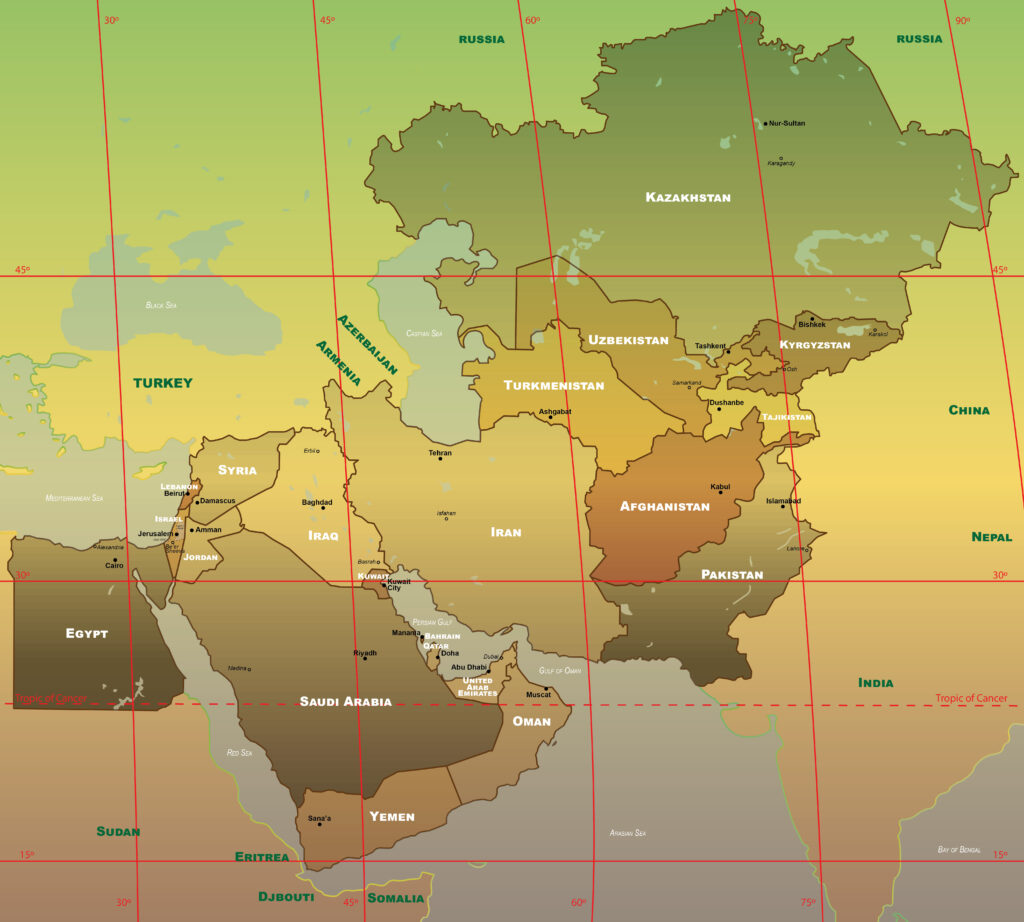
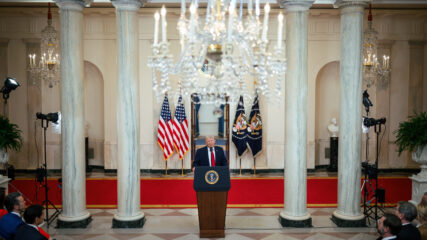
The U.S. Department of Defense announced in the final week of the first Trump administration that it was shifting Israel from the area of responsibility of the U.S. European Command to the AOR of the U.S. Central Command, which already covered Egypt, all of the Arab states in southwest Asia, Iran, and all the “-stan” countries from Afghanistan and Pakistan to Kazakhstan. The brief announcement January 15, 2021, credited the 2020 Abraham Accords for clearing the way for better regional cooperation, especially against the shared threat of Iran.

That announcement in full:

The United States has made a change to the Unified Command Plan. The 2020 UCP shifts Israel from the U.S European Command area of responsibility to the U.S. Central Command area of responsibility. DOD reviews the UCP every two years and reassesses all boundaries and relationships against the operational environment. We structure boundaries to best mitigate risk and protect U.S interests and partners.

The easing of tensions between Israel and its Arab neighbors subsequent to the Abraham Accords has provided a strategic opportunity for the United States to align key partners against shared threats in the Middle East. Israel is a leading strategic partner for the United States, and this will open up additional opportunities for cooperation with our U.S. Central Command partners while maintaining strong cooperation between Israel and our European allies.

A Pentagon news article that day provided some of the history: “When the Reagan administration set up CENTCOM in 1983, officials left Israel as part of EUCOM. Arab nations, except Egypt, did not recognize the Jewish state. U.S. military coordination in the region — including multilateral exercises and operations — would have been complicated. But as a result, Israel — though surrounded by nations that were in CENTCOM’s area of operations — worked through the EUCOM’s headquarters in Stuttgart, Germany. EUCOM and CENTCOM, of course, consulted often.”

The Biden administration continued Israel’s transition from EUCOM to Tampa, Florida-based CENTCOM, which was completed September 1, 2021. That announcement:

Today, U.S. Central Command assumed combatant command responsibility for U.S. forces in the State of Israel.

The realignment, announced by the Defense Department in January, strengthens the strategic U.S.-Israeli defense relationship and offers opportunities to deepen operational collaboration between the Israel Defense Forces and CENTCOM’s many partners in the region.

CENTCOM will now work to implement the U.S. Government commitment to a holistic approach to regional security and cooperation with our partners. The U.S. Government’s unwavering commitment to Israel’s security remains enduring and ironclad.

The importance of Israel’s CENTCOM integration was evident during the two-year war after the Hamas terrorist attack of October 7, 2023. CENTCOM not only worked directly with Israel in arms deliveries, intelligence sharing and operational updates, but also facilitated the multinational defensive response to Iranian ballistic missile and drone attacks on Israel and the participation of U.S. air and sea power in the bombing of Iran’s nuclear facilities in June 2025. Under Adm. Brad Cooper, who took over in August 2025, CENTCOM in mid-October 2025 began leading U.S. oversight of the Hamas-Israel ceasefire through the new Civil-Military Coordination Center in Kiryat Gat.

CENTCOM commanders Marine Gen. Kenneth McKenzie Jr. (through April 2022) and Army Gen. Michael Kurilla (April 2022 to August 2025) provided insights into the mutual value of Israel’s move to CENTCOM during briefings, interviews and congressional testimony from 2021 to 2024. Key excerpts follow.


McKenzie Appearance at the Middle East Institute

February 8, 2021

Middle East Institute President Paul Salem: One of the biggest developments relates to Israel and breakthrough agreements between Israel and a number of Arab states, the Gulf, Sudan and Morocco. How does that change sort of CENTCOM’s approach to things? And then the inclusion of Israel in CENTCOM is certainly an interesting development. How does CENTCOM address that? How does it handle that? …

McKenzie: I want to note the potential for the normalization of relations with Israel. The easing of tensions between Israel and other Arab countries provides us with a strategic opportunity to align additional partners against shared threats to stability in the region. Now I fully understand there are fundamental political issues that remain to be worked out between Israel and many of its Arab neighbors, and that process will take its course. But it’s always been my observation that since you can’t choose your neighbors, you have to find a way to get along with the ones that you do have. Clearly, several Arab nations have weighed their options and have chosen rapprochement with Israel over the destabilizing tactics of Iran. But Iran has choices as well. The new U.S. administration has signaled it will take a deliberate and thoughtful approach moving forward with its Iran policies, working in close consultations with our partners. …

Salem: How does Central Command intend to go forward in integrating Israel into the region? There are both benefits and costs, I think, associated with this. But how do you see it and what are your next steps? I know you were just in Jerusalem. …

McKenzie: Let me just take a minute to describe the Unified Command Plan. It is a document signed by the president that tells geographic commanders what their responsibilities are. It’s updated every couple of years. In the most recent update Israel was moved from the European Command area of responsibility to the Central Command area of responsibility. So first, practically, and I know you as a diplomat will appreciate this, this does align Israel with Israel’s presence in the Middle East bureau that they are in the Department of State. So it’s actually bureaucratically — it’s just a thing that makes it a little easier to work those relationships. However, what will happen now is we’ll get an order from the secretary to do this. That’ll take a little time to actually make it happen so that we get an opportunity to do it right after he’s had a chance to review it going forward. We do a lot of business with Israel now, just as a practical matter of fact, because their threats generally emanate from the east. So in a certain way this is just a natural recognition of that at the operational level. At the same time, coming as it does in the wake of the Abraham Accords and what that has meant at a higher level in the region, it also gives an opportunity to sort of put an operational perspective to that. It will allow further corridors and opportunities to open up between Israel and Arab countries in the region. And we would hope that that will happen in the fullness of time.

I don’t want to overestimate the speed that this will happen. It’s going to take some time to occur, but it does make it a little easier for them to work together. And I think that is all a good thing. I think in the future we would like to see — and, you know, for many years this has been an aspiration in U.S. Central Command — a collective approach to security here in the region and a collective approach to security for our friends in the region to do more for themselves. … It’s actually something that is entirely consistent with the NDS [National Defense Strategy] and recognizing that we have a finite number of military resources available globally. So we’re going to need to make some shifts in what we can do to help our neighbors work more closely together. Anything we can do that brings them together is a good thing, and I think this is a step in that direction.

McKenzie Appearance Before the American Enterprise Institute

April 28, 2021

McKenzie: Challenges to our national security don’t always accommodate themselves to our Unified Command Plan, or UCP in shorthand, the document that establishes the missions, responsibilities and geographic areas of responsibility for commanders of the combatant commands. We’ve recently updated this plan, moving Israel from the European Command area of responsibility to that of CENTCOM. This change brings the department more into line with the State Department’s delineation of responsibility for diplomacy in the Middle East, and it presents new opportunities, opportunities for enhancing regional stability and security cooperation. This is a case in which, when it comes to working with friends and allies, it’s relatively easy to make the UCP work for us. But strategic competitors with global reach don’t confine their activities to one region of the world or another. This is especially true of Russia and China, which follow the EUCOM and INDOPACOM areas of responsibilities on our maps but which in reality are exerting influence around the world and increasingly in the CENTCOM area, which is key terrain in the global sense. …

Let me just talk about the normalization relationship with Israel that we see with UAE and other nations. That’s a good thing. I think it’s an idea that can only add to security in the region if other nations follow suit over time, based on their own interests and the way they want to get into this. Because I think in the long term, particularly vis-a-vis Iran, a common or collective security approach is going to be the best way to ensure their malign activities don’t become terribly harmful in the region. So you asked about IA, integrated air and missile defense, common operating picture. That is a great example of a way that we might be able to move on that. And what you would like to see is, particularly the nations in the Gulf states, be able to share a common threat picture against Iran. And the threat from Iran is not a ground maneuver. It’s not maritime particularly. It’s a fires thing. It’s missiles. It’s ballistic missiles. It’s land attack cruise missiles, which fly low, and its UASs [unmanned aircraft systems], that we’ve already talked about.

Those three things and the latter two, the UASs and the land attack cruise missiles, are relatively new additions to Iran’s arsenal. But one of the things that we work very hard to do is each nation has its own organic air defense capabilities. They will be better if they can pool those resources. That doesn’t mean you’re moving firing batteries to someone else’s country. What it means is you’re going to have a much better common operational picture. You see what Iran is doing. You can share that information. We’re working with all our partners in the region to move forward on that. Israel would have potentially a role to play in that as well. Too early to tell yet what that would be. But particularly in the case of the Kingdom of Saudi Arabia and the United Arab Emirates, two nations that are directly across the Gulf from the threat that is Iran, there are things we can do and will continue to do to improve their ability to defend themselves, particularly in the missile and air defense domain.

McKenzie Interview With Sky News Arabia

May 18, 2021

Reporter: What’s the status right now of the decision to have Israel as part of the Central Command AOR? Could you give us an update if the decision has been taken or approved? Would you please?

McKenzie: Sure. So the decision has been taken. It has been approved. We’re engaged in implementing that decision now. And there’s been no reduction or change in the pace of those things going forward. As you would expect, moving a country from one area of responsibility to another is an elaborate task that takes a lot of planning, a lot of hard work. We’re doing that thoroughly and to ensure that nothing falls through the crack as we do it. But it’s going ahead. Israel is going to come into Central Command AOR.

Reporter: Do you have any timeline?

McKenzie: I wouldn’t share that. I think we will probably not share that publicly right now. But we’re moving as fast as we can to make that a reality.

Reporter: OK, this is the delay. Can we talk about delay?

McKenzie: There’s no delay at all. When the president signed the decision to bring CENTCOM in, we had a road map to make that happen. We’re executing that road map. We’re on track.

Reporter: And do you believe that having Israel part of CENTCOM could help in stabilizing the region, especially after what we’ve seen, the many tensions either in Israel or in the Gulf? This could help?

McKenzie: I believe it could help. I believe moving Israel into the Central Command area of responsibility will help. It is a natural and logical extension into the future. It gives Israel an opportunity to work with their Arab neighbors more closely. And I don’t want to minimize it. And I realize that, you know, there are going to be things like the recent exchange with Hamas that are going to be a factor for that. But I believe we’re on a path to do it. …

Reporter: Does the Israeli IDF coordinate with the U.S. Central Command before launching any strike against the Iranian assets, either in Syria or somewhere else?

McKenzie: You’ll appreciate that I’m not going to be able to talk about the details of military operations, either planned ones or ones that might be ongoing. So I would say we maintain coordination with all the militaries in the region. And as Israel comes into the region, we work increasingly closely with the idea.

Reporter: As for the operation that the Israelis are launching against Gaza, do you think they have an interest to end it as soon as possible because if it takes longer it might have negative consequences? Do you agree with this assessment?

McKenzie: You have to ask the Israelis about their own goals for the operation. I would tell you that an operation that continues in time and could widen is in no one’s interest. It is not in Israel’s interest or anyone else in the region. And I believe they’re aware of that as well.

McKenzie Interview With ABC and The AP

May 23, 2021

Reporter Luis Martinez: OK, so now that CENTCOM will be working with, incorporating Israel into its area of responsibility, you talked about spreading earlier, what, as this situation, as the ceasefire goes on and this new dynamic continues, do you see that CENTCOM may play some kind of a role as part of ensuring that conflict doesn’t come back?

McKenzie: So Central Command is going to accept Israel into our area of responsibility in the next few months. We’ll become very interested in what goes on with Israel and in Gaza. But as to the details beyond that about how we might play a role in that future relationship, that’s really something I’d leave to the Department of State.

Reporter Lita Baldor: Why does it matter?

McKenzie: Well, I think the danger of conflict anywhere is that it can spread.

Baldor: Then why does it matter that it’s moving into CENTCOM? What does that give you? What does that give Israel? How does that help either player?

McKenzie: Sure. So Israel’s threats have historically emanated from the east over the last few years. Moving Israel into Central Command will formalize that relationship. It will also perhaps give opportunities for more outreach with their Arab neighbors to the east. We’ve seen that as part of the normalization of relationships between UAE and Israel. And so it’s just sort of a natural congruent to that type of activity.

McKenzie Testimony to the Senate Armed Services Committee

March 15, 2022

Sen. Kirsten Gillibrand (D-N.Y.): How has Israel’s integration into CENTCOM’s AOR improved coordination among U.S. regional partners, particularly as it relates to countering Iran and the Middle East and supporting over-the-horizon counterterrorism capabilities?

McKenzie: Senator, the entry of Israel into the AOR has given us great opportunities, particularly in the area of integrated air and missile defense, which I think is one of the most pressing issues that all of the states in the region confront when they think about Iran. And so I think of Israel coming into the AOR is sort of the operational effect of normal — the other normalization of Israeli relations across the Gulf and with other states. We have great opportunities here. And I’ll be prepared to talk a little bit more about it in closed session.

Gillibrand: As a follow-up, have the Abraham Accords, which have allowed for economic and military integration between Israel and Arab state signatories, enhanced our ability to counter China’s influence in the Middle East through coordinated economic policy or enhanced foreign military sales?

McKenzie: I think it is — on the question of China’s entry into the theater, obviously I only control a small part of the perspective on that. I would say that in terms of foreign military sales, we have an opportunity here to pursue greater integration. And, again, particularly in the domain of air defense systems, which I think is low-hanging fruit, everyone’s interested in it. Particularly since the keyword defense is in the design; these are not offensive systems. These are systems designed to protect those nations that are there. …

Sen. Jacky Rosen (D-Nev.): Now that Israel is within CENTCOM’s area of responsibility, it is my sincere, sincere hope that this transfer will potentiate even greater military cooperation between the U.S., Israel, and our shared goals, as well as greater cooperation between our Arab and Israeli partners. So, General McKenzie, building on Senator Gillibrand’s question on leveraging the Abraham Accords, are there plans to integrate joint exercises with Israel and Arab states who signed normalization agreements with Israel? And what do you see as the greatest benefits and opportunities to Israeli inclusion in CENTCOM?

McKenzie: Senator, I would say that bringing CENTCOM into the AOR really operationalizes the Abraham Accords and sort of makes — it puts a military component to the normal, broad normalization that is already proceeding with Israel and many of its Arab neighbors.

Now, in terms of practical things we can do right now, No. 1 is integrated air and missile defense. Everyone in the region is seized by the Iranian threat, and they want to be able to defend themselves against that threat. And that threat is primarily in the air that’s remote — with setting aside the proxies, which we talked about — is primarily Iran’s ballistic missiles, their cruise missiles and their UASs. So that’s going to — that’s a significant issue for nations in the region. Israel is going to be able to assist us in all of those areas.

Additionally, in specific answer to your question, we have been and will continue to expand Israel’s participation and exercises across the region. That’s an invaluable tool for getting partners to know each other, you know, and laying plans for the future. …

Sen. Marsha Blackburn (R-Tenn.): Have we provided everything to the Israeli government that they’ve requested in order to respond to an Iranian nuclear buildup?

McKenzie: Senator, at my level, at the chief of defense level, we’re in complete agreement about the way ahead and about what we’re giving them. I can’t talk about other — I can’t talk about the whole of government, but I can talk about it —

Blackburn: Well, I was pleased to see the realignment of Israel from EUCOM to CENTCOM. I felt like that was the right move, and I was happy to see CENTCOM’s combined naval exercise involving Israel, the UAE, Bahrain. That was last November. So how are you actively working with partner nations to integrate the IDF into the regional security architecture?

McKenzie: I think the low-hanging fruit is an integrated air and missile defense. All of these nations see the threat from Iran, the ballistic missile threat, the cruise missile threat, the unmanned aerial system threat, and they want to be able to defend themselves. And I think that’s where we can make great headway involving Israel but also other nations in the region. And I’ll be able to talk a little bit more about that in the closed session. …

Sen. Tim Scott (R-S.C.): You spoke a little bit earlier about more cooperation with Israel. Is there — are there things that we need to be doing in the NDAA [National Defense Authorization Act] that would help make sure we continue to expand our opportunities with Israel?

McKenzie: I think right now we’re in a pretty good place in terms of cooperation with Israel, you know, as a, as the latest member of the Central Command area of responsibility. I think I have all the authorities and permissions I need to move forward on that.

McKenzie Testimony to the House Armed Services Committee

March 17, 2022

Sasha Baker, deputy undersecretary of defense for policy: The department is committed to deepening cooperation and coordination between the United States, Israel, and partners in the Middle East and Africa. Recent normalization agreements have laid the groundwork for Israel’s entrance into the U.S. Central Command, which will in turn, we believe, enhance cooperation in the security sphere. …

Rep. Veronica Escobar (D-Texas): General McKenzie, I was just in Israel, and I had the opportunity to see for myself the warmer relations that exist between Israel and Arab states. It really is a source of great hope, and it’s clear that the relationship has created some stability in the region. And I’m pleased that, that CENTCOM under your leadership has embraced this new reality. But we know that the Israeli-Palestinian conflict remains a source of tremendous friction. And it’s, it’s, that threat is always just over the horizon.

The fighting last May is a prime example of how that, how the conflict in that region can very quickly escalate and become violent. Everyone there, and here, we are all concerned that the cycles of violence will only continue. But from an American national security perspective, do you believe that such rounds of violence have adversely impacted America’s defense posture? And if so, is there a national security impetus for the United States to take an active role in improving the reality on the ground in order to help create the conditions needed to achieve a two-state solution? And if so, how?

McKenzie: Ma’am, the entry of Israel into the AOR was a significant historical event. And so what it’s done is, it is sort of the operational expression of what began with the Abraham Accords and other normalization activities that go forward. And so the relationship that Israel is developing with its Arab neighbors is going to be profoundly significant in the years ahead.

Something that is an irritant to those good relationships is, of course, the struggle with the Palestinians. And that’s an irritant to the Arabs and to all — to many of them. And I think it’s a significant factor. Anything we could do to reduce that as an irritant to those relationships would contribute to not only Israeli security, not only security across the region, but ultimately our own security.

Kurilla Press Briefing in Dubai

December 22, 2022

Kurilla: We are moving out on innovation, and partners are right there with us. And while the region presents a complexity of challenges, it also represents a range of opportunities, and we must be prepared to take advantage of those opportunities and prepared to address these challenges. Doing so requires leaning heavily on and investing in our partnerships. This is the inclusion of Israel as well into CENTCOM one year ago, and it presents massive opportunities. Israel and the Arab militaries, it turns out, are seeing the same threats. They have common cause. And very quickly stunning new partnerships were formed in the Gulf militaries and Israel.

Kurilla Testimony to the Senate Armed Services Committee

March 16, 2023

Sen. Tom Cotton (R-Ark.): You’ve added Israel to your AOR, and you write in your statement that you readily partner today with Arab militaries and the Israel Defense Force alike. In fact, the inclusion of Israel presents many collaborative and constructive security opportunities. One of the opportunities I see is having Israeli Air Force personnel training alongside American personnel on KC-46 tankers, which we expect to be providing them in the future, and that’s training that we can provide them so they’ll be ready to operate those aircraft as soon as they get them. Do you think that would be one of what you call a collaborative and constructive opportunity between the United States and Israel?

Kurilla: I think [inaudible] when they get closer to getting their aircraft, starting to train those pilots so they can retain that training and go right into the execution of operating them. …

Scott: General Kurilla, what is the optimal cooperation you envision among the U.S., Israel and the Arabian Abraham Accords members? Is it air defense? What do you, what would you hope out of that?

Kurilla: So I think there’s several areas, Senator, that we can do. So the Abraham Accords are also economic, and I think that’s going to the economic benefit you get in terms of job creation. Also it’s a — reduces instability in some of the Abraham Accords countries. We do have — we talk about a Middle East air defense. We talk about maritime security and cyber defense as well. …

Rosen: Israel’s transfer to CENTCOM, it’s now within your area of responsibility, and it’s my sincere hope that this realignment is going to potentiate even greater military cooperation between the U.S. and our shared goals, as well as greater cooperation between our Arab and Israeli partners, as we see with things like the Abraham Accords coming forward. So I know that — I’m pleased to see the increasing pace of joint exercises between the U.S., Israel, Arab partners, and so can you tell us a little bit about the progress you’ve made in advancing the integration of Israel into your multilateral maritime partnerships like the very exciting task force, the development they’re doing? I was able to learn about them when I recently visited NAVCENT in Bahrain.

Kurilla: So thank you, Senator. We think it’s going very well with the integration of Israel into the CENTCOM AOR and including our exercises and our training as well. We did have a bilateral exercise called Juniper Oak that we just did in January, which was the largest exercise with 142 aircraft that we participated with them in January. …

Rosen: How is CENTCOM reassuring our regional partners that the U.S. is really committed to regional stability and security? When we were there leading the Abraham Accords Caucus delegation, when I was there, this was the No. 1 thing people wanted to know. Are we committed to the region? How are you showing them that?

Kurilla: I spend 50% of my time in the region. We have a series of exercises and training events, … exercises that we do multilateral and bilateral, and that is the way we are trying to build up our partner capacity with them by integrating them into the systems that we have as well. …

Sen. Eric Schmitt (R-Mo.): Eighteen months ago, Israel was integrated into CENTCOM, and I just wanted to find out how that has gone. Is Israel, you know, fully integrated into that theater? How do you view that?

Kurilla: It’s going exceptionally well, and we view it as a net positive, Senator.

Kurilla Testimony to the House Armed Services Committee

March 23, 2003

Celeste Wallander, assistant secretary of defense for international security affairs: Within the Middle East, U.S.-Israeli military exercises demonstrate our ongoing work to improve our interoperability and increased military cooperation. And as Israel’s alignment to U.S. CENTCOM’s AOR matures, there will also be increased focus on working multilaterally with other partners throughout the region, including strategic partners in the Gulf. …

Rep. Scott DesJarlais (R-Tenn.): There’s probably no bigger threat to one of our greatest allies, Israel, than the Iranian nuclear program. Do you believe that if it became necessary, the IDF has the capabilities today to defend themselves against the rising threat of nuclear Iran?

Kurilla: I think Israel has the capability to defend itself against ballistic missiles. I think any discussion other than that on a nuclear program is best in closed session, Congressman.

DesJarlais: OK. Do we have contingency plans being prepared to defend U.S. personnel and assets in CENTCOM’s AOR against Iranian retaliation in the event of Israel’s strike on Iran’s nuclear program?

Kurilla: Congressman, we’re always prepared to defend our forces that are in the region. …

Rep. Don Davis (D-N.C.): Israel moved from the European Command to the Central Command in late 2021. How has the inclusion of Israel strengthened the partnership between militaries and with forces throughout the Middle East?

Kurilla: We view it as a net positive right now, Congressman, and as they bring tremendous capability, they have the ability to share some of the things that they are doing. We view it as a net positive across the board. If you look at the Abraham Accords, those aren’t just military; those are economic as well.

Kurilla Testimony to the Senate Armed Services Committee

March 7, 2024

Sen. Deb Fischer (R-Neb.): How is CENTCOM supporting the Israeli military as it seeks to root out Hamas? And in conjunction with that, working with Israelis, are you also working to continue to develop partnerships with our Arab allies, friends, neighbors as well?

Kurilla: So that is one of the biggest things that we work on. And I’ll tell you, up until October 7, we were on a trajectory that we had not seen any time in the past, and that was in developing these relationships with our Arab partners and also with our Israeli partners there. …

Rosen: I want to also talk about CENTCOM support for Israel because Israel is our closest and most reliable ally in the Middle East. And in recent years the Abraham Accords and Israel’s absorption into CENTCOM have enabled unprecedented regional security cooperation between the U.S., Israel and some of our Arab partners. At the same time, Israel faces, as we know, we’re seeing it coming from Iran, mounting threats from Iran and its proxies, and General Kurilla, again, how can CENTCOM support Israel’s defensive needs as they face a war with Hezbollah up north?

Kurilla: I think you’re seeing that right now in terms of the material support … for their ability to defend themselves.

Rosen: And so when you think about the Abraham Accords and what that means and what we’ve been able to do so far — of course, I started the Abraham Accords Caucus. We’ve traveled to the Abraham Accords countries. How do you think that you can leverage the Abraham Accords and grow that relationship between Israel and CENTCOM?

Kurilla: I think we do that through encouraging the relationships between those countries and Israel.

Rosen: Thank you. I’m going to kind of keep on this issue here and thinking about water and food insecurity. There’s a lot of things that make the region unstable, right? Terrorism, water and food insecurities. And so what are the security implications of the scarcity of water and food in CENTCOM? How might a regional — we think about the Abraham Accords; that’s what some of these things are built on. How might a regional water and food security working group help CENTCOM and reduce the security risk caused by a lack of good, clean water and food?

Kurilla: Water and food insecurity drive migration, which drives instability. I think a working group could identify where the greatest need is when we work with our USAID partners and others to be able to provide that aid to there.