Turkish-Israeli relations have oscillated over seven decades from deep friendship to deep hostility. The relationship has moved through cycles of strategic alignment, ideological rupture and pragmatic recalibration. It included periods of quiet intelligence coordination and acid disagreement, almost always coming from Ankara to Jerusalem.
Turkey was the first Muslim-majority country to recognize Israel in March 1949. By the end of the 2023-2025 Hamas-Israel war, Turkey and its leader, Recep Tayyip Erdoğan, saw Israel as one of three other competing regional leaders, along with Qatar and Saudi Arabia. The rise of the radical Iranian Islamic Republic pushed Turkish leaders to consider more openly hostile attitudes toward Israel as a Jewish state, but Ankara did not become a center for Islamic antisemitism as did Tehran.
Key moments across seven decades included recognition in 1949, strategic alignment through the United States in the mid-1950s against Soviet penetration into the region at the height of the Cold War, and the 1996 Turkish-Israeli military agreements, which included the signing of defense and intelligence accords amid deep concerns about Syrian and Iranian imperial foreign policies. Low points in the Ankara-Jerusalem relationship occurred over the Palestinians’ future and were connected to the Gaza Strip: the killing of nine Turkish civilians in 2010 when Israeli commandos intercepted the Turkish ship Mavi Marmara in a flotilla attempting to break Israel’s Gaza blockade; violence on the Gaza-Israel border that caused a severe political rupture without full economic disengagement in 2018; and explosive Turkish anger at Israel during and after the 2023-2025 war.
Under President İsmet İnönü, Turkey’s decision to recognize Israel in 1949 was grounded less in ideological affinity than in strategic orientation. Turkey was integrating into the West, culminating in its admission to NATO in 1952. Recognition of Israel aligned with Turkey’s pro-Western foreign policy and signaled independence from Arab pressures. The two countries established legation-level relations, which were stable if not especially warm.
During the 1950s and 1960s, relations remained correct but cautious. Turkey balanced ties with Israel against its desire to maintain workable relations with Arab states. After the 1967 Six-Day War and especially after the 1973 Yom Kippur War, Ankara tilted more visibly toward Arab positions, reflecting regional dynamics and energy dependencies. Diplomatic representation was downgraded in the 1980s, particularly after Israel’s 1980 Basic Law declaring Jerusalem its capital and the First Lebanon War in 1982. Nonetheless, relations were never severed, and intelligence contacts persisted beneath the diplomatic surface.
The end of the Cold War and the collapse of the Soviet Union broke the East-West framework that had defined Turkish security policy. Simultaneously, instability in Syria and Iraq heightened shared Turkish and Israeli concerns about regional threats, including Syrian support for militant groups and the rise of nonstate actors.
In the 1990s, relations entered what many describe as a “golden age.” In 1996 the two countries signed military cooperation agreements that enabled joint training exercises, intelligence sharing and defense industrial collaboration. Israel upgraded Turkish aircraft and tanks. Turkish pilots trained in Israeli airspace. Naval forces conducted joint maneuvers in the eastern Mediterranean. Political leaders in both countries saw the partnership as mutually beneficial: Turkey gained advanced military technology and leverage against Syria, while Israel acquired a rare Muslim-majority strategic partner.
The late 1990s and early 2000s saw calm in the relationship between relatively secular governance in Turkey and pragmatic Israeli leadership. But domestic political changes in Turkey began to alter the relationship. The rise of the Justice and Development Party (AKP) under Erdoğan after 2002 marked a shift in Turkish foreign policy. Erdoğan’s government emphasized regional engagement, support for Palestinian political actors, and a more assertive, values-infused diplomacy. While economic ties with Israel continued to expand, and bilateral trade grew steadily throughout the 2000s, political rhetoric between the countries sharpened.
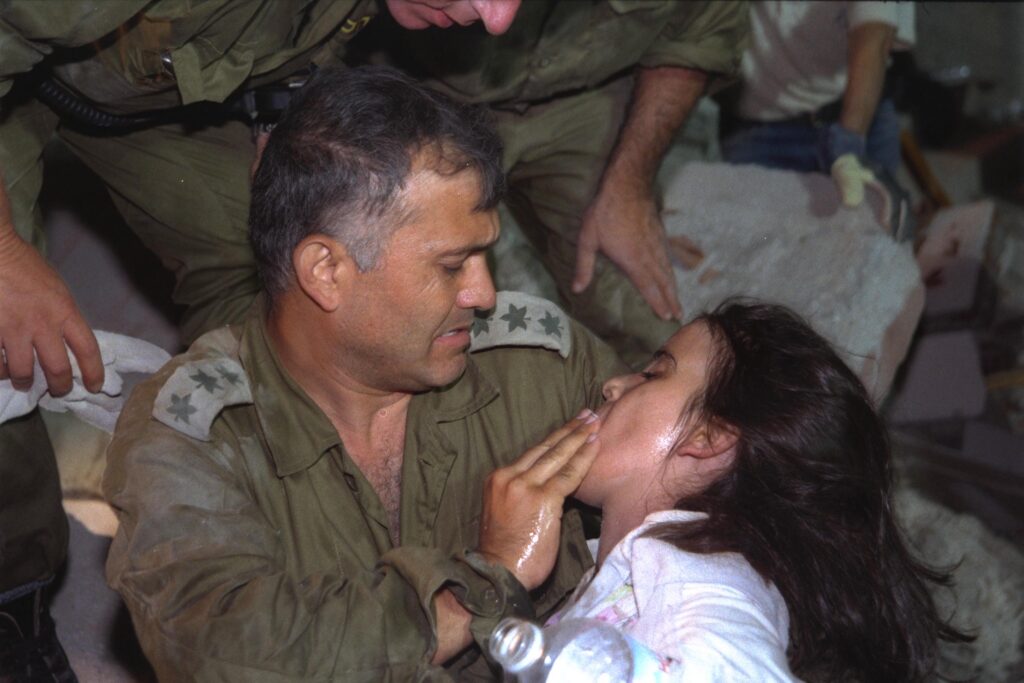
After Israel’s 2008-2009 Gaza operation, Erdoğan publicly criticized Israeli policies. Relations deteriorated further in May 2010 with the Mavi Marmara incident, in which Israeli commandos boarded the Turkish vessel. Ankara recalled its ambassador, expelled Israel’s ambassador, suspended military cooperation, and demanded an apology and compensation for the nine Turkish deaths and the lifting of the Gaza blockade. Diplomatic relations fell to their lowest point since 1949.
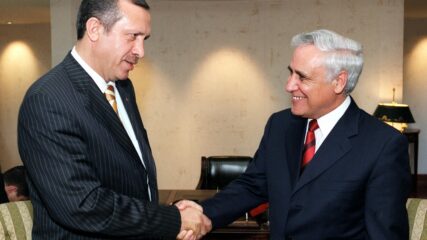
In 2013, through U.S. mediation, Israeli Prime Minister Benjamin Netanyahu issued a formal apology to Erdoğan for operational errors leading to the loss of life on the Mavi Marmara. A reconciliation agreement in 2016 restored full diplomatic ties and compensated victims’ families. Strategic cooperation, however, did not return to its 1990s intensity. Trust had eroded, and both governments were navigating complex domestic constituencies and regional rivalries.
Energy discoveries in the eastern Mediterranean added another layer of competition. Israel deepened cooperation with two bitter Turkish rivals, Greece and Cyprus, including energy and security. Ankara’s maritime boundary agreements and assertive naval posture heightened tensions. Still, trade between Turkey and Israel kept growing, illustrating a paradox: Political disputes coexisted with economic interdependence.
The U.S. recognition of Jerusalem as Israel’s capital in 2017 and move of the embassy to Jerusalem in 2018 triggered another diplomatic row. Turkey expelled Israel’s ambassador and recalled its own, protesting Israeli actions in Gaza during demonstrations along the border. Again, diplomatic representation was downgraded, though commercial ties persisted.
By the early 2020s, regional realignments encouraged renewed pragmatism. The normalization agreements between Israel and several Arab states under the Abraham Accords influenced warmer Turkish-Israeli relations. Turkey at the time faced domestic economic challenges and sought to reduce regional isolation. Quiet intelligence contacts intensified, particularly concerning Iranian activities and instability in Syria.
In 2022, Israel and Turkey restored full diplomatic relations and appointed ambassadors. High-level visits followed, including meetings between Israeli and Turkish leaders. Both sides signaled interest in expanding energy cooperation, potentially involving Israeli natural gas exports through Turkey to European markets. While such projects remained complex and politically sensitive, they reflected a renewed recognition of mutual interests.
The Hamas-Israel war that began in October 2023 again strained ties. Erdoğan sharply criticized Israeli military operations in Gaza and expressed support for Palestinian claims. Diplomatic rhetoric escalated, and trade restrictions were debated. Yet even amid public denunciations, communications remained open. As had been the case since the start of the 21st century, the pattern of relations was dominated by political confrontation layered over enduring economic and security calculations. For example, over seven decades Turkish exports to Israel averaged 1% or less, and Israeli exports to Turkey were a bit more than 1%.
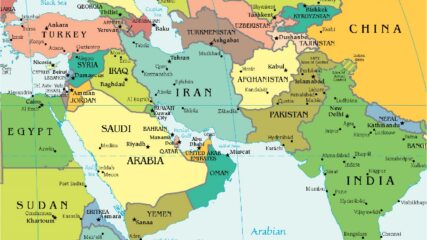
Turkish-Israeli relations are anchored in their non-Arab identities, location adjacent to the eastern Mediterranean and fear of Iranian regional aggressiveness. Over time, when ambassadors were withdrawn and rhetoric hardened, trade and intelligence contacts continued, often facilitated by the United States, which has seen both as vital to American national interests.
— Ken Stein, March 2026