December 19, 2025

Source: https://www.state.gov/releases/office-of-the-spokesperson/2025/12/secretary-of-state-marco-rubio-remarks-to-the-press-6/

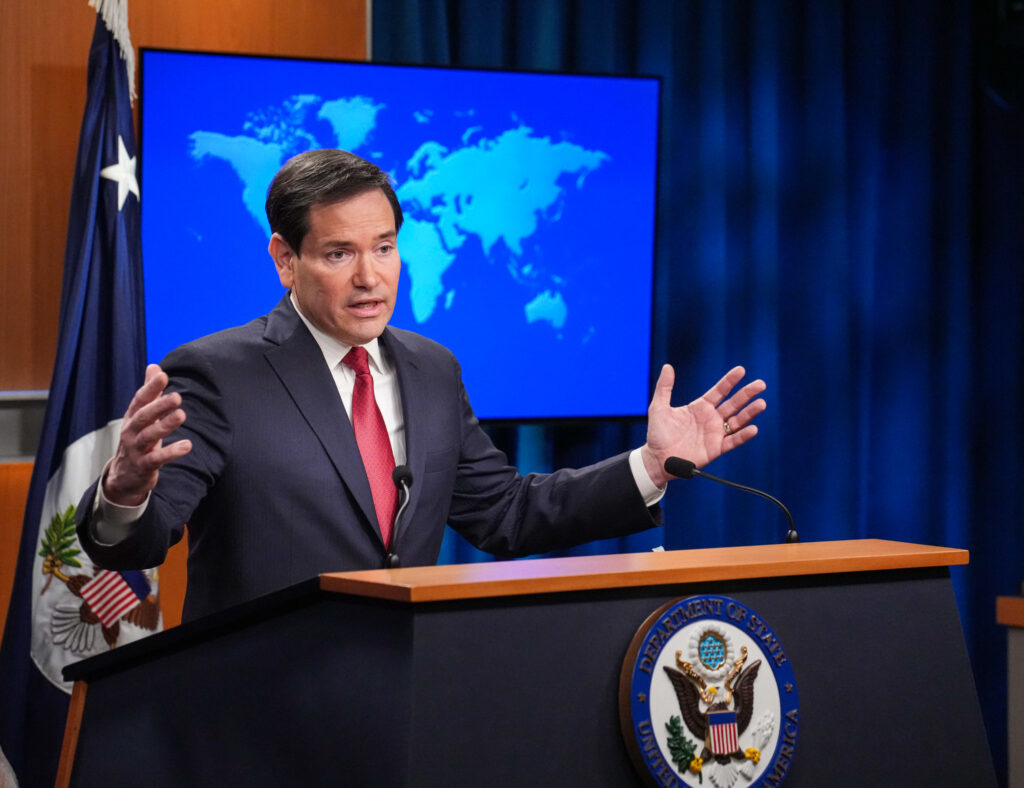
In a bilingual (Spanish and English) press briefing December 19, 2025, Secretary of State Marco Rubio provided updates on the implementation of the Gaza ceasefire as part of an end-of-year wrap-up of the Trump State Department’s work. Rubio acknowledged that no country has committed to participating in the International Stabilization Force (ISF) meant to oversee the Gaza ceasefire and ensure Hamas’ disarmament. He also said the full implementation of the Gaza peace plan will likely extend beyond the term of the Trump administration.

While Rubio was speaking in Washington, Trump peace envoy Steve Witkoff was meeting in Miami with representatives from the other mediating countries in the Gaza peace process, Egypt, Qatar and Turkey, about shifting from Phase 1 to Phase 2 and establishing the Board of Peace, to be chaired by President Donald Trump. The obstacles included Hamas’ refusal to disarm and its failure to complete the release of all hostages. One dead hostage, Staff Sgt. Ran Gvili, remained in Gaza.

Beyond Gaza, Rubio addressed possible Israel-Lebanon peace, the continuing threat of Hezbollah, Iranian human rights abuses, West Bank violence, possible sanctions against the Muslim Brotherhood, and the future role of the U.N. Relief and Works Agency for Palestine Refugees (UNRWA).

Relevant excerpts follow.


Secretary of State Marco Rubio: The president has made it a priority to be a peacemaker, and so you’ve seen us engaged, whether it’s Russia-Ukraine or India and Pakistan or Thailand and Cambodia, which is an ongoing challenge, or the tragedy we see now in Sudan or the potential for further strife in South Sudan and that falling apart — I mean, or Armenia and Azerbaijan. We are always looking for opportunities, if possible, to play the role of a mediator that brings about the avoidance of war or the ending of conflicts. And, obviously, in many of these cases you can get people to the table and agree, and then there’s the implementation process.

And so we’ve made progress on many of these, particularly in getting them to agree to certain conditions. Obviously it’s ongoing work to make sure that those are implemented and applied. And some of these conflicts have deep roots that go back many, many years. But we are prepared to be engaged and helpful in ways that perhaps other nations can’t. We’ve been viewed as indispensable in that regard, and it’s a role the president takes great pride in, in the promotion of peace around the world, and something he deserves a lot of credit for. He is personally engaged in all of this.

Obviously the big one was the situation with Gaza, which, again, is ongoing. There is now a ceasefire. There is not — war is no longer going on at the scale and scope and all the other things that were going on before. But obviously there’s more work to remain. We are still through the process of trying to implement Phase 1 and lead to Phase 2 and Phase 3. That is a long-term project, some of which will extend beyond the four years of this administration. But I thought it was a very important achievement as well. …

Reporter: I want to ask you about Gaza. U.S. wants Pakistan troops to be in Gaza. Has U.S. got the consent from Pakistan that they will be sending their troops in Gaza for peace building and peacemaking there?

Rubio: Yeah, well, look, in fairness to all the countries we’ve talked to about being and having a presence on the ground, I think they want to know specifically what the mandate, what the specific mandate and what the funding mechanism looks like. So we’re very grateful to Pakistan for their offer to be a part of it, or at least their offer to consider being a part of it. I think we owe them a few more answers before we can ask anybody to firmly commit.

But I feel very confident that we have a number of nation-states acceptable to all sides in this who are willing to step forward and be a part of that stabilization force, and certainly Pakistan is key if they agree to do so. But I think we owe them a few more answers before we get there. We’re trying to make a lot of progress here with the — I think the next step here is announcing the Board of Peace, announcing the Palestinian technocratic group that will help provide daily governance, and then, once that’s in place, I think that will allow us to firm up the stabilization force, including how it’s going to be paid for, what the rules of engagement are, what their role will be in demilitarization and so forth. …

Reporter: Today you had the second round of direct negotiations between Lebanon and Israel. Do you foresee a potential deal between these two countries without another round of war? …

Rubio: We’re hopeful. Look, at the end of the day, the goal everybody shares is a strong Lebanese government that controls the country and Hezbollah is disarmed. They’re no longer an armed element that can threaten Israel’s security — that’s the goal here. And we have tried, in a cooperative way, to do everything we can to empower the Lebanese government to have the ability to do that. And so I hope that’s what these talks are aimed towards, and we’ll be supportive in every way we can to achieve that outcome.

What I think is abundantly clear to everybody is no one is in favor of a Hezbollah that can once again threaten the region, act as a direct Iranian proxy. And obviously if they threaten Israel, we’re not going to have peace. So we are hopeful that the talks between Lebanese authorities and the Israelis will create outlines and a way forward that prevents further conflict. I think — I don’t speak for the Israeli government. I can only tell you and echo what they’ve said publicly, and that is that if they feel threatened by Hezbollah, they will take actions in their defense against them.

So we all would hope that we could avoid that, right? We would all hope — in order to have peace, you have to avoid that. And the best way to avoid it is to have a strong Lebanese government that can actually control the country and that Hezbollah is no longer an armed threat to Israel or to the Lebanese state. And that’s what we’re committed to hoping to achieve, and we hope — I can’t speculate on what the talks will lead to, but we’ll do what we can to make them productive. …

Reporter: Returning to Gaza, what is the U.S. understanding of what Hamas is willing to concede on disarmament? Reports suggest that Hamas might hand over its heavy weapons but retain its smaller arms. Is the U.S. prepared to accept partial disarmament as sufficient in Phase 2?

Rubio: Yeah, I’m not going to get into the details of those types of negotiations. Let me just couch it to you this way: Everyone wants peace. No one wants a return to a war. If Hamas is ever in a position in the future that they can threaten or attack Israel, you’re not going to have peace, OK? You’re not going to convince anyone to invest money in Gaza if they believe another war is going to happen in two to three years. So I would just ask everyone to focus on what are the kind of weaponries and capabilities that Hamas would need in order to threaten or attack Israel as a baseline for what disarmament needs to look like because you’re not going to have peace. If two years from now Hamas is launching rockets or killing Israelis or carrying out, God forbid, another 7th of October-type terrorist attack and so forth, you’re not going to have peace. So who is going to invest in a peace, who is going to invest in rebuilding a place that’s going to get destroyed again in a future war? So that’s why disarmament is so critical.

Now, what that entails, we’re going to leave that to the technical teams to work on. It would have to be something obviously that they’re willing to agree to that our partners can push them and pressure them to agree to. It also has to be something that Israel agrees to. In order for that to work, both sides have to agree on it, and we need the space to do it. But that’s the way to think about it, OK? You cannot have a Hamas that can threaten Israel in the future. If they can, you won’t have peace. So that’s the goal. …

Reporter: You said a few moments ago that everyone wants peace for Gaza, and yet by any metric the Israelis are flouting the ceasefire that President Trump negotiated by killing an average of two children a day, not allowing the agreed-upon humanitarian aid into Gaza. How long can this continue? How long can the Israelis be allowed to show such disrespect to President Trump?

Rubio: Well, look, that’s your characterization of it about the term “disrespect.” What I would say is this. This, we, this was, first of all, it was a miracle that it happened in the first place. We all understand how difficult it was for that to come to the conclusion that it did, where the actual — the bombing and everything else, the scale and scope of what we saw ended, all the hostages were released, and we have relative peace right now for the most part, despite the things you’re pointing to. That was very difficult.

But this is not easy. Peace is a verb. It’s not — it’s an action. It’s not a sentiment. Every single day will bring challenges. Every single day. We also have had instances, for example, over the last couple weeks where Hamas elements emerged from a tunnel, attached an explosive device to the side of a vehicle, and injured and almost killed Israeli soldiers. We still have this threat. We still have and see every single day Hamas openly taking steps to strengthen themselves … inside of those places in Gaza that they still control. We saw early on the atrocities they were committing in the streets against people as they were trying to show people how strong they were.

So I don’t think I’m standing here to tell you this is going to be easy. This is an hour-by-hour, day-by-day challenge. It’s one of the reasons why we have stood up this center … operating in Israel in partnership as well with another cell that exists in a regional country. It’s why every single day there are leading — there are meetings among both intelligence, diplomatic and military officials of multiple countries that helped bring about this deal to manage this. And that’s why it is so critical, it is so critical and so key, that we move to complete this first phase, that we move to put in place the Board of Peace, get everybody to agree to be a part of it, move to put in place this Palestinian technocratic organization so that they can begin to provide some governance structure, and move to put in place the stabilization force.

That’s the goal here. But it’s not going to be easy. Every day will bring new challenges to that, and we recognize those challenges are coming from all sides.

Reporter: Very quick follow-up. Who’s going to want to be a part of a stabilization force if Israel is effectively using Gaza as a free-fire zone?

Rubio: Well … these are the things that we’re working through right now. Again, that’s why it didn’t happen yesterday. That’s why we didn’t — I don’t mean yesterday literally. That means why we’re not there yet. This is the hard work of diplomacy and peacemaking. Peacemaking isn’t just signing a piece of paper. It’s actually complying with it. And compliance oftentimes requires, in many cases, in most cases requires daily, constant follow-up and nurturing.

So that is why we are in such a hurry — and I say as a priority — to get to this point where we have the stabilization force in place overseen by the Board of Peace and ultimately a Palestinian technocratic entity that can increase in its capability to provide governance. The stronger they are, the weaker Hamas will be in terms of threatening Israel, and I think the more security Israel should feel and less need for some of these things to happen.

But no one is claiming this is going to be easy. We have to work on this every single day. We have people in this building and deployed abroad, this is all they do 24 hours a day, day after day, elements of the State Department, the Department of War and all other agencies, and including Jared [Kushner] and Steve [Witkoff] and even myself, who talk or do something about — there isn’t a day since this was signed two months ago that haven’t had to do something with regards to making progress on the phases of the ceasefire. …

Reporter: On Phase 2 in Gaza, when is the soonest that we could see that being implemented? …

Rubio: We’ve got to complete Phase 1 to get to Phase 2. That’s why we’re working every day to get there. Look, guys, if this stuff was easy, it would’ve been done already a long time ago. This is a complex situation. No one would dispute it. But it’s important. What we achieved already, what the president achieved ending that war already, was something no one thought was possible. Everyone thought that the last episode was going to be an Israeli incursion into Gaza City that would lead to massive loss of life, and the hostages would never be reunited with their families. And today, as we speak, all the hostages that were living are back. All but I believe one of the bodies has been returned. No one would’ve believed that six months ago. …

That is not the end of the story. We want to continue on this. But what we’re talking about is dealing with something that no one has been able to solve in 30 or 40 years, no one, and it’s going to take some time. But I feel generally optimistic that we have the right people at the table with the right motivations to make it happen, but no one is claiming to you that this is going to be just a straight-up trajectory. It’s going to have its ups and downs. It’s going to have its good days and bad days. The important point is that the momentum and the trajectory on it is a positive trajectory, and we’re investing high levels of our government every day in trying to make that happen.

But we can’t do it alone. We have all these other partners that we have to include, so I would focus you on let’s get the border piece in place and announced, let’s get the technocratic Palestinian group in place, and then let’s get this stabilization force in place, and then we can move on to the other elements, the Phase 2 and Phase 3 of the plan, that hopefully will be what will be enduring. And the work of putting Phase 2 and Phase 3 in place is going to extend far beyond the next three years. I mean, this is a generational commitment. But we want to leave those pieces in place for the next administration to continue to build upon, even as we achieve Phase 1 and parts of Phase 2 during this administration. …

Reporter: About the Hezbollah, I know you already answered, but I wanted to ask you if the U.S. administration is considering a broader military support involving also potential Arab partners not only in providing weapons, but also going to the field to disarm the Hezbollah if the diplomatic talks will fail?

Rubio: I have not heard anyone sort of suggest that at the level of detail that you’ve talked about. I think regionally — for example, if you talk to the Syrian authorities, they’re very concerned about Hezbollah. I think most of the countries in the Gulf region view Hezbollah as an agent of Iranian influence and Iranian action. But as far as what you’re discussing, which is sort of a coalition of armed units going into Lebanon to disarm Hezbollah, I’ve not heard that proposed by anybody. Perhaps you have, but I haven’t, and that’s not certainly something we’ve been —

Reporter: Senator Graham —

Rubio: Oh, OK, well, Lindsey —

Reporter: Was talking about this at the Congress. Yeah.

Rubio: He’s one of my former colleagues. Yeah, well, you should ask Lindsey about how he’s going to put that together because — but we just haven’t heard it. I’m not saying you may not hear that one day in the future. But I think what is clear and I think may, perhaps what Lindsey is speaking to, is that it is clear that if you talk to leaders in the region in all these countries, they all have the same goal, which is to ensure that Hezbollah can no longer play the role that they’ve played in the past, not just threatening Israel but being an agent — an open agent, really a proxy — of Iranian influence in the region. …

Reporter: The settlers’ violence is rampant in the West Bank. … Also, Israel is building more, around 20 settlements. … Doesn’t this undermine your own effort in the peace process? And also, if I may, on Gaza, the humanitarian situation is dire. The babies have been frozen to death because of the weather. Tents have been flooded. Is there anything the United States can do to alleviate the suffering of the civilians in Gaza?

Rubio: Yeah, in the case of the West Bank, you’ve seen our embassy, even, has put out statements and comments about specific incidents there that we’re concerned about, that we do think create a point of strong friction in the broader effort. And our own embassy and Ambassador [Mike] Huckabee has spoken to this as recently as a few weeks ago, very firmly, I believe. And so we’ll continue to communicate that, as we have, and make our opinion known in regards to its impact on the broader challenges.

In the case of humanitarian, absolutely. I mean, this is the reason why that group is set up there every single day. We’ve been successful at opening new corridors. We want to continue to see that increase. We want to continue to see the flow of aid increase into those parts of Gaza that are still under Hamas control. But it also goes back, not to sound like a broken record, to why it is so critical to have the Board of Peace put in place and the Palestinian technocratic group put in place. Because that allows us now, when you have this technocratic Palestinian group in place and a stabilization force to provide security, it now allows us to have someone we can work with to turn over the humanitarian aid to and have them be the ones that help distribute it along with these international partners.

That’s the point we’re trying to get to. … And part of the thing with humanitarian aid is also security. Someone has to provide security for these convoys as they go in because oftentimes they have been attacked, they’ve been looted, they’ve been so forth. We don’t have a force that can do that right now unless the Israelis are going to go in, and that would violate the ceasefire. But if we have a stabilization force on the ground, they could provide security. And then the technical side of it, the logistical side of it, along with the international partners, is what the Palestinian technocratic organization can do.

That is why we are in such a hurry, in such a hurry, to finalize that phase of this deal so that the aid can flow. And not just aid. Then we can move from aid to reconstruction, which is the goal everybody has. You want to reach a point at which you’re not providing aid because Gaza has an economy, and it’s not an economy controlled by Hamas. But we can’t get to that stage until we can secure the place. And that’s why we’re in such a hurry to finalize that phase of the deal. …

Reporter: Human rights organizations report that 2025 has seen the highest number of executions in the Islamic Republic of Iran in over two decades. What specific new measures is the State Department taking to ensure that human rights abuses, specifically this surge of state-sanctioned executions, do not become a secondary priority in your dealings with Tehran?

Rubio: We have very deep and systemic disagreements with the regime in Iran, and it’s … one of the most sanctioned countries in the world. There isn’t a week that goes by, at least two, three times a month, I’m authorizing some new sanction on some new entity related to Iran. I don’t think anyone could argue that this administration has been friendly towards them. So we continue to feature these things because it tells us about who they are.

In the case of some of these executions that you’re talking about — some of them, by the way, were in the aftermath of the war with Israel, where they went through and have jailed people and accused people of being informants and spies and things of that nature. But we’re under no illusion. And every year we put out a report that outlines this, and we’ve been pretty consistent in our messaging. Our problem with the Iranian regime isn’t simply — I mean, obviously, it’s predominantly their desire to acquire nuclear weapons, their sponsorship of terrorism — but it’s ultimately the treatment of their own people. …

I said it in my hearing a year ago in the Senate, and I say it now: I know of no nation on Earth where there is such a difference between a regime that governs the country and the people who live there every single day. That regime is not reflective of the people who live in Iran, who are the inheritors of a proud and long cultural legacy and a proud, proud history. And then you’ve got a clerical, radical regime that has driven it and taken the wealth of that country and used it not to enrich their, secure their people and their future, not to make sure they have enough water and electricity. They’ve used their money to sponsor terrorist organizations all over the world. That’s what they’ve used their money for. So we’re going to continue to consistently point that out. …

Reporter: In your National Security Strategy, you’ve warned Europe about civilizational erasure. When you’ve been watching what’s been happening in Australia with the rise of antisemitism and our government’s response to the Bondi massacre, our prime minister has dodged direct questions on Islamic extremism but then prompted a vote on right-wing extremism as a threat. Do you have any message to Australia about civilizational erasure, and why is America watching this closely?

Rubio: Look, I just think it’s very simple, and that is that any mass migration is highly disruptive to any country. We talked about it here in the United States. When you experience mass migration — I’m not talking about immigration; I’m talking about mass migration, OK? Mass migration is a negative thing. It’s not positive. And it’s very difficult for any society to absorb and assume hundreds of thousands if not millions of people over a short period of time, especially if they come from halfway around the world. There are cultural and assimilations issues related to that, etc. And so these are concerns I have about our own country. Primarily, it’s been a priority of this administration to address this. But I think it’s a growing concern in Europe.

I mean, there are other voices in Europe and obviously in Australia as well that have expressed concern about this. These are facts. This doesn’t make you anti-anybody. What it makes is you do have as a sovereign country the right to control how many people you absorb and how many people you allow in and who those people are. This is a very basic sovereign right, OK? It doesn’t mean you don’t allow any people in. There are people coming into this country every day to visit, to work, to live permanently, but you have to know who they are, and you have to have some limits and controls over what those numbers are. And, obviously, because of some of the things we’ve seen, mass migration over the last decade has been highly disruptive, not just to the United States, but also to continental Europe and in some cases in the Indo-Pacific as well. So I just think this is a real challenge that multiple Western advanced, industrialized countries are facing, and I think it’s pronounced in parts of Europe as well and obviously, at least on the basis of your question, appear to be a challenge as well in Australia. …

Rubio: Sometimes some deals are just not ready. Sometimes the timing is perfect to put it together. If you look at what happened with Gaza, that looked intractable, and then a series of events occurred that made it possible that, for example, the strike inside of Qatar that the Israelis took at the time was sort of a dramatic thing, but in some ways it sort of set in motion a sense of urgency to bring this thing to an end before it spread. So sometimes you just have to be ready for a change in circumstances or conditions that allow progress to be made. …

What brought Hamas to the table, among other things, was the fact that some of the countries that had relationships with Hamas, like Qatar, like Türkiye, played a very constructive role in bringing them to the table and pressuring them to sign an agreement. And we played a similar role on the other side. So it’s not unusual that you would involve outside actors in using leverage to bring parties to the table to agree on something. …

Reporter: On Gaza, you’ve said repeatedly in this room now that peace is a process, that Phase 2 could take the next two to three years. Is there a possibility —

Rubio: To fully implement it.

Reporter: To fully implement it.

Rubio: You can’t build buildings in one day, right?

Reporter: Is there a possibility in your mind that the status quo more or less as we see it now, with this sort of insufficient flow of aid, periodic violations of the ceasefire by each side, a lack of reconstruction and, of course, the absence of an international security force, that this could potentially continue more or less through the rest of the president’s term? And if not, I’m not asking for a date, but I think we’d all like to know, we’ve heard from the president and yourself that there are all these countries that want to join the international security force. When will they deploy? Are we talking in the next year? In the next couple of years? And is there a certain amount of time that could pass at which point the administration, without an ISF, at which point the administration would greenlight or will greenlight Israel to resume its war?

Rubio: Yeah, look, the way to answer that question is this way. No one is arguing that the status quo is sustainable in the long term nor desirable. And that’s why we have a sense of urgency about bringing Phase 1 to its full completion, which is the establishment of the border piece and the Palestinian technocratic authority or organization that’s going to be on the ground, and then the stabilization force comes closely thereafter.

Once we’ve established that, we have a lot of confidence that we are going to have the donors for the reconstruction effort and for all the humanitarian support in the long-term building of Phase 2 and Phase 3. We just don’t think that we’re going to get to Phase 2 or Phase 3 — we don’t believe that we can have a successful donor conference, just as a real example — until people know there’s — they want to know who’s in charge, and they want to know that there’s security, OK? They want to make sure that whatever — who’s going to pledge billions of dollars to build things that are going to get blown up again because a war starts? So they want to know who’s in charge, and they want to know that there’s security and that there’ll be long-term stability.

So no one would argue that what we have in place now is sustainable in the long term. We have to get to the completion of Phase 1. I am confident we will within the timeframe necessary to make it successful. It’s just not today but hopefully very, very soon. We’ve made real progress. We made progress as late as yesterday in additional names for this Palestinian organization that’s going to be the technocratic organization. So I think we’re very close. I think we’re going to get there. I’m optimistic that we’re going to be able to get through Phase 1.

And then what I meant about taking years for Phase 2 or Phase 3 is not years to start it. I’m just being — to rebuild a place, to put buildings and rebuild an economy, that takes time. You’ll have the donors, but you still have to have the equipment. You’ve got to build. You have to do all that sort of thing. This is a long-term project. Phase 1 is not a long-term project. It has to happen. I’m confident it’ll happen within a timeframe that makes it successful. We’re very committed to it, and so is everybody else. Everybody else in the region understands that there is no Plan B. If this doesn’t work, Plan B, or what’s going to happen is a new war, and no one wants that. No one wants that.

Reporter: So, Mr. Secretary, are you going to be able to tell us in the next year who is going to secure Gaza and —

Rubio: Well, what will have to happen is —

Reporter: Who is going to disarm?

Rubio: You’re talking about the stabilization force?

Reporter: Yes.

Rubio: That’ll have to happen much more than a year from now. That is the completion of Phase 1, and when we get through the establishment of the stabilization force, the border piece, Palestinian group, stabilization force. All those things happen boom, boom, boom, one, two, three. They have to happen very quickly, not a year from now. This is something we’re aiming at very soon. It has to. It’s what we’re focused on right now like a laser. …

Reporter: A couple of quick questions. The president directed you, through executive order, to explore sanctions of sectors and chapters of the Muslim Brotherhood. Qatar is Ground Zero for the Muslim Brotherhood. This administration obviously has a very close relationship with the Qataris. How do you confront the Muslim Brotherhood without confronting the Qataris? That’s my first question. Second question is on UNRWA. There’s a report that the State Department is in deep discussions about possibly sanctioning UNRWA. What’s your mindset on that, and do you feel there is any role for UNRWA absent humanitarian aid delivery in the future?

Rubio: I think we can deliver humanitarian aid without UNRWA. I think UNRWA is a corrupted organization that’s unsalvageable, period. And I think our policies reflect that. On the first point that you talked about, I think we’ll have some announcements, if not today, early next week, on Muslim Brotherhood. Designating groups require — there’s a series of internal steps, despite what people may or may not perceive. There are things we have to meet, criteria we have to meet, information we have to have, boxes we have to check, legal reviews that have to happen, and that takes time. But I think there’ll be announcements very soon on that, probably as early, if not today, early this next week.

Reporter: Do you expect pushback from the Qataris?

Rubio: Well, I’m not going to comment on which segments of the Muslim Brotherhood — as you know, there are different chapters, for lack of a better term, and individuals spread throughout the world. But the president’s issued his executive order, and we’re working through the execution of it. And we’ll get to what we need to get to. A lot of this obviously depends, from a legal review standpoint, you have to have certain information that you can cite in order to justify the designation. So we’re working through that. We’ll have some announcements next week, and they won’t be the last ones, announcements that we have.