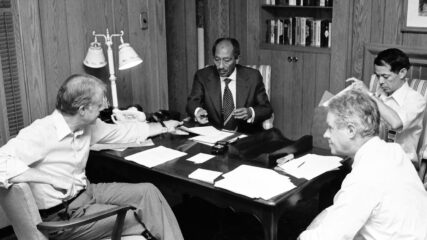
Recounting events at the Egyptian-Israeli-American negotiations, a dozen American, Israeli and Egyptian participants discuss those 13 days of negotiations. Negotiators agreed that they pursued success through “constructive ambiguity,” some at high levels, so the respective sides could agree, for example, on using the term “modalities” to describe a future element that could not be defined in a more tangible way. President Carter and Israel's attorney general at the time of Camp David disagreed at the conference about what Prime Minister Begin promised on the duration of a settlement moratorium. William Quandt, an NSC official, acknowledged that there was no written record of a Begin promise for three months. Carter claimed the promise was in his diary notes, but others who saw Carter's diary said no such promise was made or was in Carter's notes.
Latest articles from CIE
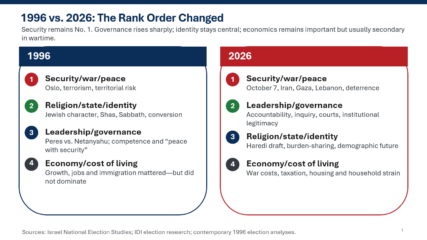
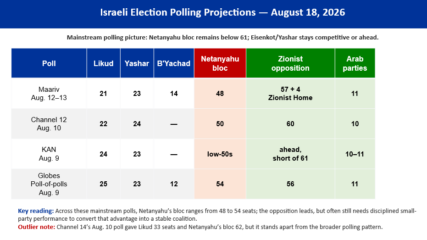
Election Watch 2026: Ranked Issues Motivating the Israeli Electorate According to August Polling Data
The top issues motivating Israeli voters two months before the October 27, 2026, election are national security, October 7 accountability and the cost of living, but other issues affect how those topics influence voting decisions.
Memorandum of Conversation Between U.S. and Egyptian Delegations at Camp David, September 11, 1978 CIE+ CIE+ members only
President Sadat evolved and presented the bulk of Egypt’s views at Camp David, greatly limiting his advisers’ participation. He particularly kept them from demanding Palestinian rights from Israel, which would have ended the talks without an agreement. Sadat anointed President Carter as the more willing, tougher negotiator with the Israelis. Sadat left Camp David with the U.S. at deep odds with the Israelis and Egypt as close as ever to Carter and the Americans.