February 5, 1890
The custom of planting trees in Israel on Tu B’Shevat begins when Ze’ev Yavetz, an educator in Zichron Ya’akov, takes his students to plant trees. In 1908, the custom is adopted by the teachers unions and the Keren Kayemet L’Israel (JNF).
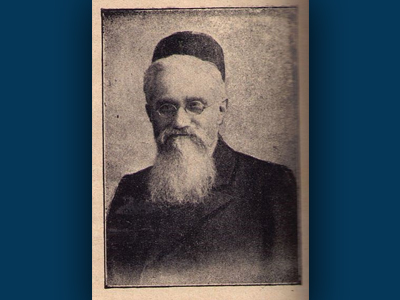
Yavetz, a writer and historian, was born in Kolno, Poland, in 1847 to a wealthy family. He gained a reputation for his scholarship with an article on Jewish history from 1786 to 1886. He made aliyah to the Land of Israel in 1888 and settled in Zichron Ya’akov, where he worked as a teacher. He wrote many articles published throughout the Land of Israel and developed a series of textbooks.
Yavetz served on the Va’ad HaLashon, the committee responsible for developing Modern Hebrew. He is credited with introducing two words: tarbut (culture) and kvish (road). He also advocated that the Hebrew names for the days of the weeks should be based on the items created on those days in the Torah and used by Queen Esther to name her maidens, as mentioned in the Targum commentary.
Yavetz tells Haaretz in 1891: “For the love of the saplings … the school must make a festival of the day that was set aside from ancient times in Israel as the New Year of the Trees. To gracefully and beautifully arrange the trees, saplings, lilies and flowers just like they do in Europe on the first of May.”
Yavetz leaves the Land of Israel in 1894, eventually settling in London, where he completes his 14-volume history of the Jewish people from their time in ancient Israel through the Diaspora.