May 2, 1921
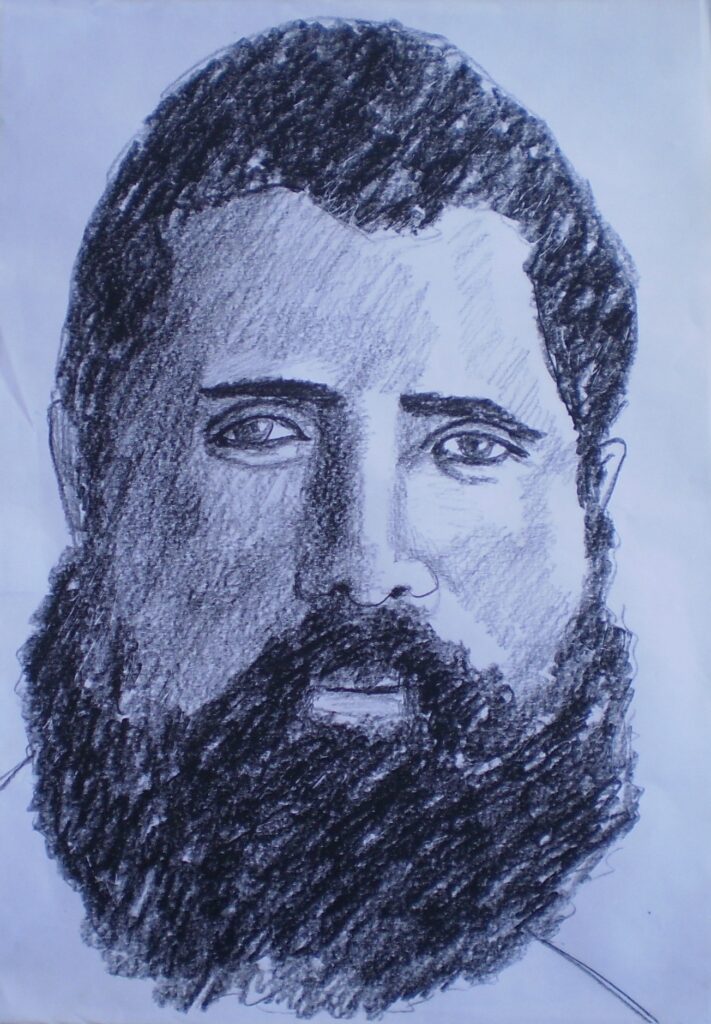
Yosef Haim Brenner, a pioneering writer of modern Hebrew literature, is killed along with five others in rioting between Arabs and Jews in and around Jaffa that began the previous day in the city. Brenner had moved in 1921 to the Abu Kabir neighborhood on the outskirts of Jaffa to focus on his writing.
Born in a Ukrainian shtetl in 1881, he grew up in a poor, traditional family. He abandoned his religious education to affiliate with the secular Jewish socialist Bund movement and earned a living teaching Hebrew. One year after publishing his first book, a collection of stories titled Me-‘Emek ‘akhor (“From the Murky Depths”), Brenner was drafted into the Russian army in 1901. He served for three years and broadened his knowledge of Russian literature and other secular subjects. He deserted the army in 1904 and fled to England, where he lived until 1908. In London he wrote in Hebrew and Yiddish and createds a literary journal, Ha-Me‘orer (“Awakening”).
In London, his writing and viewpoint grew increasingly at odds with the leading cultural Zionist, Ahad Ha’am. While Ahad Ha’am advocated for cultural development emanating from a spiritual center in the Land of Israel, built on Hebrew and Jewish religious traditions, Brenner advocated Jewish salvation through labor as part of an abandonment of the Old World way of Jewish living.
Brenner left London in 1908 and, after a year in Lviv (today in Ukraine, then part of Poland), moved to Palestine in 1909. After working as a laborer, he became a teacher at the prestigious Herzliya Gymnasium while writing, editing and translating. At times he lived in Tel Aviv, Haifa and Jerusalem. He was among the founders of the Histadrut labor federation.
Israeli historian Anita Shapira writes in the prologue to her 2014 biography of Brenner: “He is admired as a writer and cultural leader by religious and secular people alike — and even more so as a person who laid down norms for a society that had lost its moral compass. He was a man of contrasts: skeptical of Zionism and loyal to the Land of Israel, the country where he wanted to raise his son and where he was killed; he possessed the boundless pessimism of a realist who unblinkingly observes realists and also the latent optimism of a man who irrationally claims that ‘despite everything’ the Jews’ will to live will prevail; he epitomized the love of man, the willingness to help anyone in need, and also the terrible awareness of the shortcomings of the human race in general and those of his people in particular.”