Updated January 5, 2026; originally posted October 2023.
By Ken Stein
Hamas’ Origins
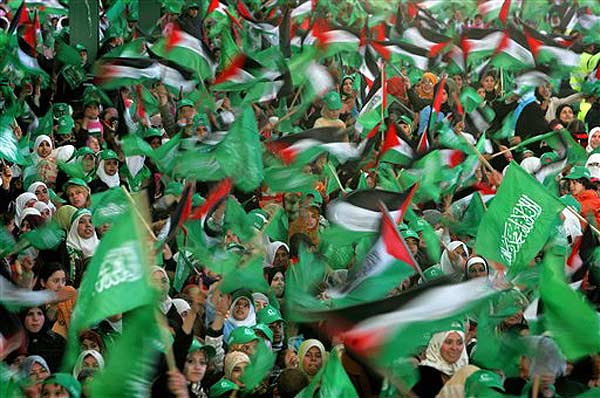
The 1988 Hamas Charter and remarks by its leaders and other publications express hatred of Zionism, Israel and Jews. It is thus unmistakable that Hamas abhors Zionism, Israel and Jews who have a sovereign state. Hamas opposes any negotiations or agreement recognizing Israel as a reality or requiring cooperation with Israel.
Hamas leaders vigorously oppose Israel’s treaty relationships with Egypt (1979) and Jordan (1994), the Palestine Liberation Organization’s recognition of Israel (1993), the Oslo Accords (1993, which promised some Palestinian self-rule), and the Abraham Accords (2020). Hamas opposed the leadership of PLO Chairman Yasser Arafat and his successor as Palestinian Authority president, Mahmoud Abbas, because they cooperated with Israel.
Hamas seeks to be the voice and representative of the Palestinian Arab national movement, pushing aside the PLO and Fatah. When Hamas attacked Israel on October 7, 2023, it hoped to spur major violent eruptions on all of Israel’s borders, deplete Israeli citizen resolve, and take control of the Palestinian Authority, based in Ramallah in the West Bank. Hamas failed to achieve those objectives.
Hamas celebrates the killing of Jews. Hamas’ goal is Israel’s elimination. Yahya Sinwar, the Hamas Gaza leader, said in May 2021: “We support the eradication of Israel through armed jihad and struggle. This is our doctrine. The occupation must be swept from all our land.” Sinwar also offered “complete gratitude to the Islamic Republic of Iran, which provided us with money, weapons and expertise.”
On October 7, 2023, Hamas terrorists murdered 1,200 Jews and others and took more than 250 hostages. In four previous prolonged clashes with Israel, each of which ended in a ceasefire and Hamas rejuvenating to launch further terrorist attacks on Israel, Hamas terrorists killed more than 600 Israelis and wounded thousands of others.
Hamas is a Palestinian political group and movement seeking to create a single, Islamic state in historic Palestine, which is now largely divided among Israel, the Gaza Strip and the Israeli-occupied West Bank. Hamas, meaning “zeal” or “fervor” in Arabic, is also an acronym for Harakat al-Muqawama al-Islamiyya, the Islamic Resistance Movement. The group was founded in 1988 as a militant segment of the Palestinian Arab national movement, then dominated by Arafat’s PLO. Hamas, similar to Hezbollah in southern Lebanon, received massive amounts of Iranian financial support, military training and equipment and collaborated with the Iranian regime in political indoctrination.
Hamas’ ideological origins are in the Muslim Brotherhood, founded 60 years earlier in Egypt. The Muslim Brotherhood rejected the influence of Western culture and called to increase Islam’s role in government and society. Egypt outlawed the Muslim Brotherhood in the early 1950s because it threatened the secular military regime led by Gamal Abdel Nasser.
After the ceasefire that ended its two-year war with Israel in October 2025, Hamas, though severely beaten, remained ideologically committed to Israel’s destruction and directly linked to Turkey and Qatar, as well as other sources, for funding and existence. The Gaza ceasefire did not end hatred for Israel and Jews but forced Hamas to make tactical decisions to continue its struggle to destroy Israel.
Many of Hamas’ leaders were educated in Cairo during Nasser’s reign and soaked in the anti-colonial sentiment ripe in Egypt from the 1950s forward. Founding members of Hamas included religious leaders, sheikhs, intellectuals, businessmen, young activists and paramilitary fighters. Through the years, Hamas provided social services to the needy in Gaza, particularly in the Strip’s 11 refugee camps. Hamas ran schools, kindergartens, summer camps, medical services and sports programs and found jobs for adherents. Mosques and Islamic religious organizations were and remain Hamas’ most important vehicles for spreading its message and delivering its services. Though its members provide some money, most funds come from sympathizers abroad, and Qatar and Iran in recent years have offered major support.
Hamas opposes Palestinian secular nationalism, individual freedom, democracy and liberty instead prioritizes a commitment to the Islamic community. Sheikh Ahmed Yasin, the Hamas founder and most revered of its past leaders, said in 2002: “We declare very clearly that Palestine from al-Naqurah to Rafah and from [the River] Jordan to the Mediterranean Sea is the land of Palestine. There is no harm in establishing a Palestinian state on any part that is liberated at this stage, but without conceding the remaining territories of Palestine. This is the difference between the brothers in the PA and us” (Al-Majallah, March 31, 2002).
Other key Hamas leaders, such as Khaled Mashal, Ismail Haniyeh and Mahmoud al-Zahhar, have been emphatic in their hatred of Israel. In 2012, Mashal summarized in great detail Hamas’ goal to destroy Israel. In a May 2017 statement of principles, Hamas proclaimed:
“Palestine is at the heart of the Arab and Islamic Ummah and enjoys a special status; the establishment of ‘Israel’ is entirely illegal and contravenes the inalienable rights of the Palestinian people and goes against their will and the will of the Ummah; there shall be no recognition of the legitimacy of the Zionist entity. Whatever has befallen the land of Palestine in terms of occupation, settlement building, Judaization or changes to its features or falsification of facts is illegitimate. Rights never lapse.”
Hamas harbors no doubts about its vision for tomorrow — Israel’s destruction — and any solution that falls short of fulfilling this vision is to be rejected out of hand. Hamas is willing to have Palestinians take over Palestine in stages, gain geographic control of portions of it and even reach temporary ceasefires with Israel while working toward its ultimate objective: to assert control over all of Palestine from east to west and north to south.
Since taking over the Gaza Strip in 2007 in a violent coup against the PA and PLO, Hamas has held autocratic control over the population and systematically indoctrinated Palestinian youth with hatred for Israel and Jews. Hamas continues to undermine the PA in the hope of dominating the Palestinian Arab political future. Hamas also has sought international recognition from an array of public figures, including former Irish President Mary Robinson and former U.S. President Jimmy Carter. In August 2014 they wrote a Foreign Policy article and were cited as saying that Hamas should be recognized as “a legitimate political actor.” Carter then told The Times of Israel in May 2015 that Hamas “leaders are committed to peace.”
Despite such international praise, Hamas engaged in four major military confrontations with Israel before its October 7, 2023, invasion. Each round of hostilities was followed by a ceasefire that Hamas exploited to rearm, raise its political banner, obtain more foreign aid and finally resume its intense violence against Israel.
After the Hamas-Israel Gaza War
In October 2025, the longest war in Israel’s history ended with a ceasefire brokered by U.S. President Donald Trump. The plan aims to achieve Israel’s war goals: the release of all hostages; the end of Hamas as a military and political force in the Gaza Strip; Gaza’s demilitarization; Israeli security control over the Strip; and a peaceful transition to a civilian government for Gaza under the auspices of an international military force.
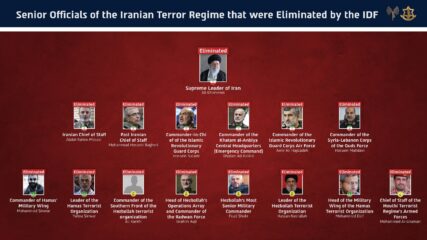
When the war ended, Israel controlled 53 percent of the Gaza Strip, while Hamas held the rest. During the war, Israel decapitated the leadership of Hamas in Gaza and Hezbollah in southern Lebanon and killed key Iranian scientists and military leaders. More than 60,000 Palestinians and 2,000 Israelis were killed in the war, and thousands more on both sides were wounded.
During the war Syria’s Assad leadership fled to Russia, Hezbollah was severely weakened but not destroyed as a political actor in Lebanon, militant Palestinian opposition on the West Bank was reduced, and Iran’s strategic threat to Israel was reduced but not eliminated. Israel also built areas of control on its borders in Lebanon and Syria as well as Gaza.
The October 2023 attack shocked Israel, which had come to believe that it could live peacefully, or at least without regular wars, with its neighbors. What started as a Hamas-Israel war expanded into a wider Israel-Iran confrontation. Countries in Europe, Latin America and the Middle East joined the United States in giving Israel military support to fend off Iranian missile and drone attacks. Israel’s survival was viewed as a strategic necessity to confront an Iranian ideology that sought to undermine moderate Arab states and perhaps ultimately threaten Europe with long-range ballistic missiles. The Israeli government and people realized that those Palestinians who believed in Israel’s destruction would not have their ideology changed, even if they worked in Israel while living in Gaza. As the war unfolded, anti-Israel, anti-Zionist and antisemitic expressions grew worldwide. The realization hit many that even though Israel was recognized by six Arab states, it was not fully accepted. A diverse world Jewry that had for decades pinned a portion of its identity on Israel’s successes felt attacked in the public square and on university campuses. Jews across the world and in Israel felt a renewed vulnerability perhaps not seen since World War II. Still, the war, the hostage taking and the drain on Israeli society generally generated among world Jewry an uncompromising resilience and a commitment to Jewishness and to Israel as a Jewish state.