Haganah Seizes Haifa
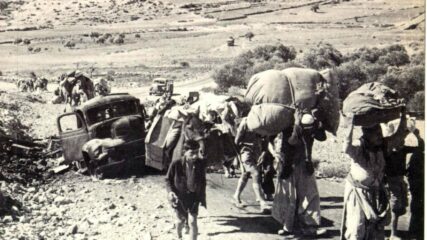
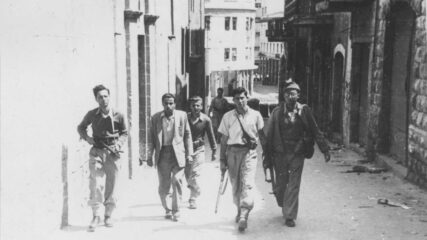
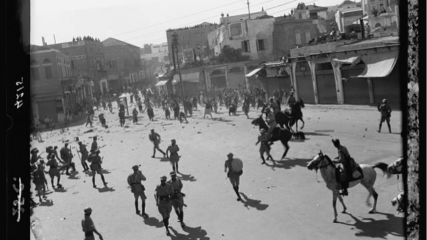
April 22, 1948 As communal violence increases with the approaching departure of British troops and expected declaration of Israeli independence, the Haganah seizes Haifa, and as many as 25,000 Arabs flee the city, possibly in…
A two-day debate on the future of Britain’s presence in Palestine begins in the British House of Commons. Eventually it is decided to terminate the 1922 League of Nations Mandate for Palestine.
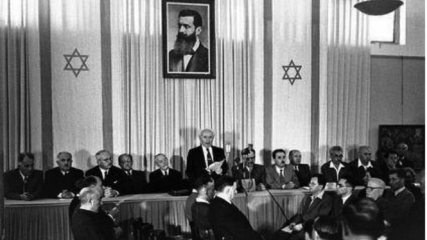
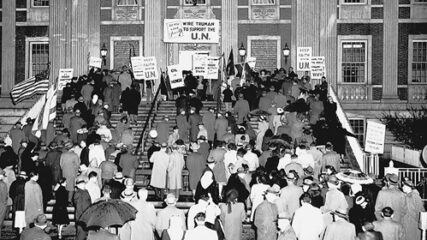
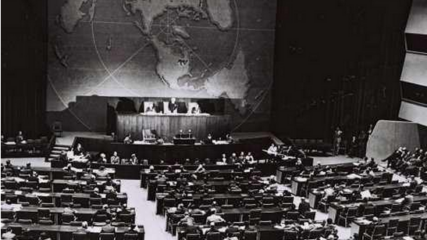
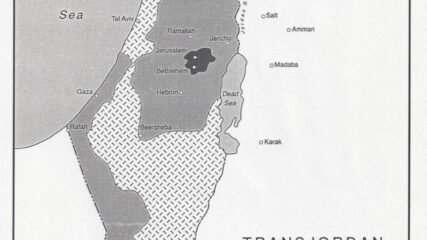
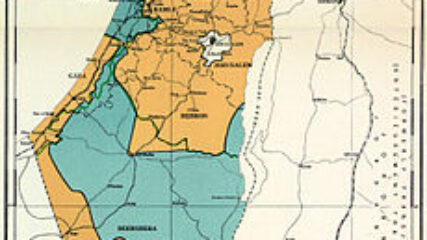
The United Nations General Assembly passes Resolution 181 by a vote of 33-13 with 10 abstentions. The Resolution recommended the creation of separate Arab and Jewish states in Palestine, linked by an economic union.
September 29, 1947 The Arab Higher Committee for Palestine formally rejects the U.N. Special Committee on Palestine’s partition plan, which advocates for the division of the land into a separate Jewish and Arab states and…
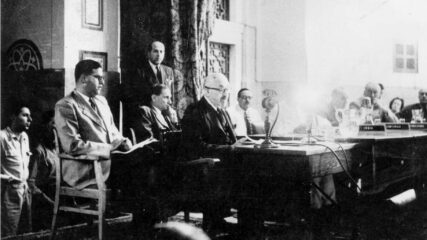
The United Nations had set up UNSCOP in April 1947. Its purpose, like previous commissions that visited Palestine, is to investigate underlying causes for communal unrest and to make political recommendations about curtailing violence.
A Land Transfer Committee report reveals that Arabs in Palestine willingly continued to sell land to Zionists in the early 1940s despite the British legal prohibition on doing so.
A specialist in the field of educational psychology, Gavriel Salomon served as Dean of the Faculty of Education at the University of Haifa from 1993-1998.
At the conclusion of a four-day conference in Cairo, Egypt, Arab leaders adopt the Resolutions of the Inter-Parliamentary Congress. The conference and resolutions are a response to the British Peel Commission Report of 1937.
As part of the Zionist strategy to engage the British government in political negotiations, Chaim Weizmann airs his grievances against the British government for reversing their pro-Zionist policy.
Violence between Jews and Arabs quickly escalated as Arab workers went on a six-month strike as violence erupted in different parts of British-ruled Palestine.
The White Paper contained distinct threats to the geography of the Jewish National Home. The subsequent nine years saw unprecedented growth of Jewish demographic and physical presence in Palestine.
In a diary entry, Frederick Kisch, the head of the Political Department of the Jewish Agency, notes that most Arab leaders “recognize that the policy of non-cooperation with the Government has been a failure.”
March 1, 1920 A Shi’ite Arab militia, accompanied by local Bedouins, attacks the Jewish agricultural settlement of Tel Hai, which has served as a border outpost in the Upper Galilee between British-controlled Palestine and French-controlled…
British General Edmund Allenby appoints Ronald Storrs as Military Governor of Jerusalem.
A secret treaty is negotiated to divide the former Ottoman territories between Britain and France.
December 14, 1858 The Ottoman Empire enacts the Tapu Law, which introduces title deed registration in the empire’s Arab provinces. An effort to apply the principles of the Ottoman Land Code of 1858, the land…