Rabbi Abba Silver Addresses U.N. General AssemblyCIE+
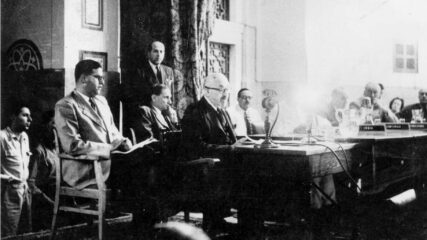
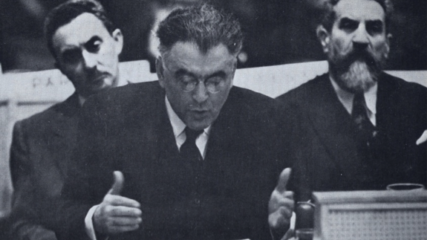
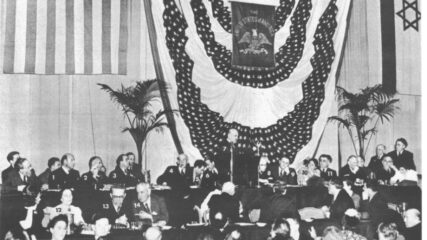
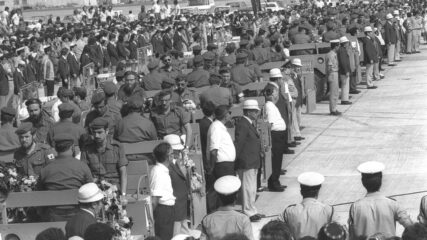
In an address on behalf of the Jewish Agency, Rabbi Abba Hillel Silver calls upon the United Nations to honor the 1917 Balfour Declaration.
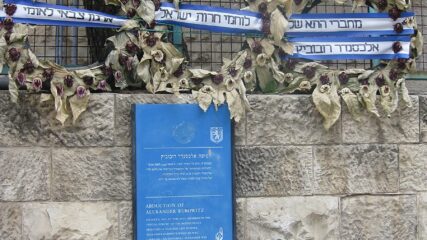
May 6, 1947 Alexander Rubowitz, 16, is abducted in the Rehavia neighborhood of Jerusalem while on a mission for Lohamei HaHerut b’Yisrael (Fighters for the Freedom of Israel), known by the acronym Lehi or as…
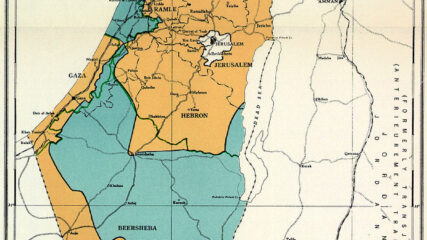
April 2, 1947 The British government notifies the United Nations of its intent to bring the question of Palestine’s future before the next U.N. General Assembly. The United Kingdom also requests a special General Assembly…
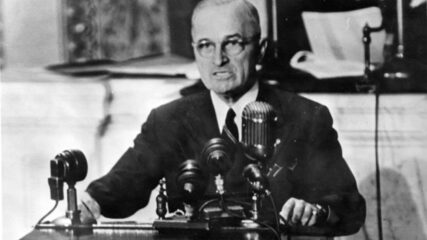
In a speech delivered to a joint session of Congress, President Harry Truman outlines a new, decidedly anti-Soviet direction for American foreign policy.
The British respond to rising violence in Mandatory Palestine by asking the United Nations to figure out what to do.
A Land Transfer Committee report reveals that Arabs in Palestine willingly continued to sell land to Zionists in the early 1940s despite the British legal prohibition on doing so.
November 1, 1945 The newly formed Jewish Resistance Movement sets off explosions at more than 150 sites along the railway system of British Mandatory Palestine and blows up three British gunboats in the Jaffa and…
The Harrison Report, an inquiry into the conditions of displaced persons camps in occupied Germany, reveals that many of the rumors of poor treatment of Jews are indeed true and that “we appear to be treating the Jews as the Nazis treated them, except that we do not exterminate them.”
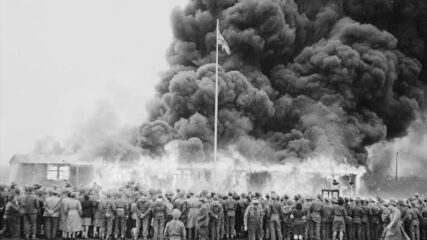
April 15, 1945 The British 11th Armored Division liberates the Nazis’ Bergen-Belsen concentration camp in northern Germany, discovering 60,000 starving prisoners, most of them seriously ill, and 13,000 unburied corpses. They are the remnants of…
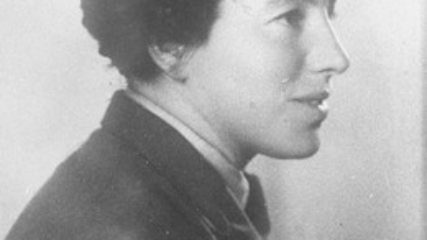
November 20, 1944 Haviva Reik and two other paratroopers from British Mandatory Palestine are among about 40 Jewish fighters executed by the Nazis after the suppression of an uprising in Slovakia. Reik, who was born…
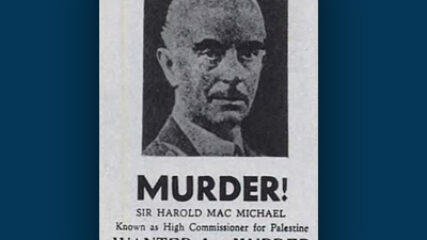
Rattled by numerous attempts on his life, and fearing for the safety of his family, MacMichael steps down in August 1944.
In a letter written to Leon Kubowitzki, head of the Rescue Department of the World Jewish Congress, US Assistant Secretary of War John J. McCloy states that the War Department would not order the bombing of Nazi Death Camps because they did not see it as a priority for US military resources.
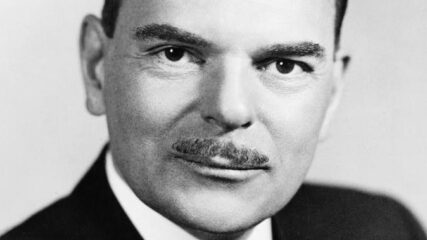
At the 1944 Republican Party National Convention, New York Senator Thomas Dewey’s strong support for the establishment of a Jewish state in Palestine captures the attention of Zionists in Palestine and, more notably, American Jewry.
A joint communiqué is issued, and it is clear that no widespread action to rescue Jews will be forthcoming. This bolsters the Zionist argument for a Jewish homeland.
The Biltmore Conference will set the framework for Zionist policy in the years during and after World War II.
After being mistaken as an enemy ship, the SS Struma, carrying nearly 800 Jewish refugees hoping to immigrate into Palestine, including 70 children, is sunk by a Russian submarine in the Black Sea.
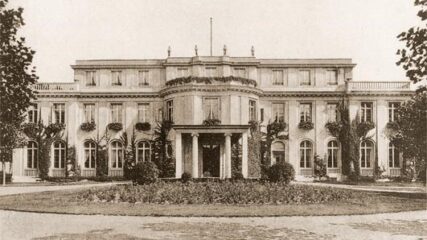
Nazis draw up a plan for the “Final Solution” of European Jewry in the Berlin suburb of Wannsee.
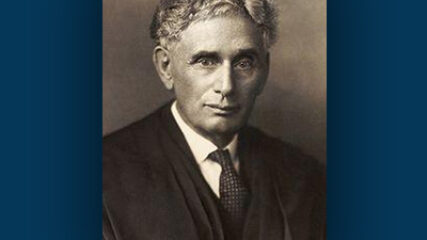
Louis Brandeis, retired United States Supreme Court Justice and celebrated American Zionist, passes away in Washington DC at the age of 84.
Weightlifter Yossef Romano, one of the eleven Israeli athletes murdered at the 1972 Munich Olympics, is born in Benghazi, Libya.
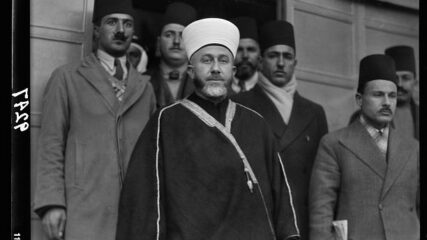
The Mufti has enormous power in his hands, yet he chooses non-engagement with the British, who controlled Palestine.
December 22, 1938 The Rambam Health Care Campus opens as the British Government Hospital of Haifa and is hailed by the British high commissioner for Palestine, Harold MacMichael, as the “finest medical institution in the…
Kibbutz Kfar (Village) Ruppin is established under the framework of the “Tower and Stockade” movement in Zionism, which takes place primarily between 1936-1939.
In the midst of the 1936-1939 Arab revolt, a debate over British policy in Mandatory Palestine is held in the House of Commons.
At the conclusion of a four-day conference in Cairo, Egypt, Arab leaders adopt the Resolutions of the Inter-Parliamentary Congress. The conference and resolutions are a response to the British Peel Commission Report of 1937.