British Parliament Debates Future of PalestineCIE+
In the midst of the 1936-1939 Arab revolt, a debate over British policy in Mandatory Palestine is held in the House of Commons.
At the conclusion of a four-day conference in Cairo, Egypt, Arab leaders adopt the Resolutions of the Inter-Parliamentary Congress. The conference and resolutions are a response to the British Peel Commission Report of 1937.
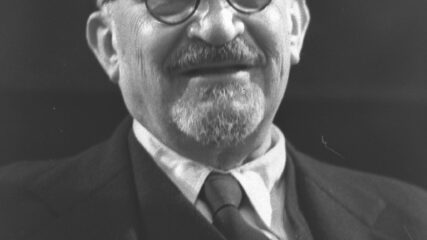
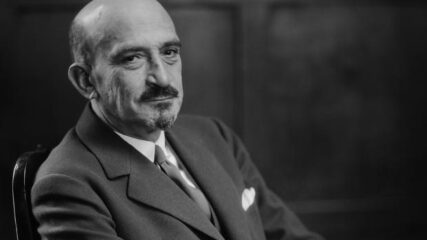
As part of the Zionist strategy to engage the British government in political negotiations, Chaim Weizmann airs his grievances against the British government for reversing their pro-Zionist policy.
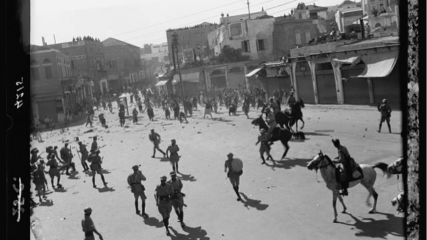
Violence between Jews and Arabs quickly escalated as Arab workers went on a six-month strike as violence erupted in different parts of British-ruled Palestine.
Zionist leaders debate how to confront proposed British restrictions on Jewish land purchase in Palestine.
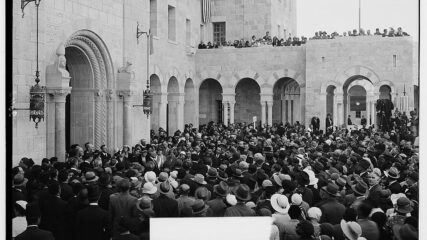
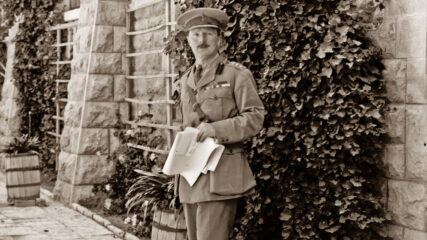
The Jerusalem YMCA, still operational today, is opened by General Edmund Allenby in front of an overflow crowd.
The same day that Adolf Hitler is appointed Chancellor of Germany by President Paul Von Hindenburg, Recha Freier establishes the Committee for the Assistance of Jewish Youth.
The White Paper contained distinct threats to the geography of the Jewish National Home. The subsequent nine years saw unprecedented growth of Jewish demographic and physical presence in Palestine.
In a diary entry, Frederick Kisch, the head of the Political Department of the Jewish Agency, notes that most Arab leaders “recognize that the policy of non-cooperation with the Government has been a failure.”
The Jewish Agency holds its first meeting on August 12, the day after the conclusion of the Congress. With so many Jews having immigrated to the US over the previous four decades, American presence in the Jewish Agency had become financially and politically significant for Zionism’s key growth in the United States.
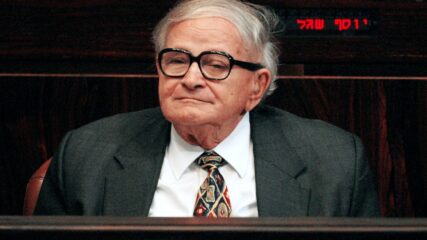
November 23, 1926 Rafi Eitan, whose intelligence career ranges from the high of capturing Adolf Eichmann in Argentina to the low of handling U.S. Navy analyst Jonathan Pollard as a spy, is born on a…
In border designations for states drafted primarily by Britain and France after WWI, the new state of Syria gains control of the Golan Heights.
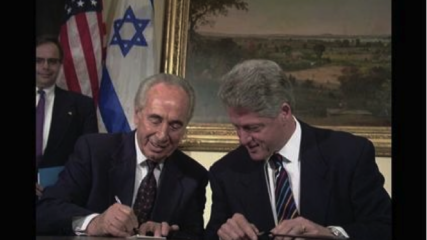
The only politician in Israeli history to hold the positions of both President and Prime Minister, Shimon Peres is born in Belorussia to Yitzchak and Sara Perski.
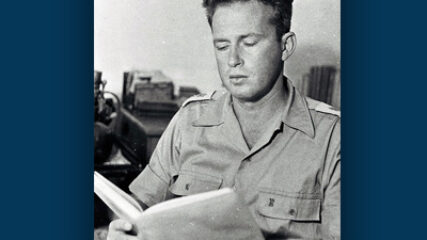
Yitzhak Rabin, Israel’s 5th Prime Minister, is born in Jerusalem to parents who came to Israel during the Third Aliyah. He is the first Israeli Prime Minister to be born in Eretz Yisrael.
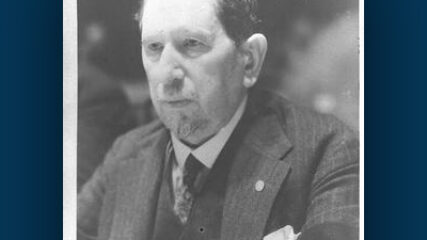
Nahum Sokolow, serving as President of the Executive Committee of the World Zionist Congress, meets with President Warren Harding in Washington, D.C.
Following the San Remo conference in April 1920, a treaty is signed between the Allies and the Ottoman Empire in the town of Sevres, France, officially breaking up the Ottoman Empire.
British Prime Minister David Lloyd George asks Herbert Samuel to become the first High Commissioner of Palestine.
Chaim Weizmann warns that unless world Jewry secures a place of their own they will be faced by a terrible catastrophe.
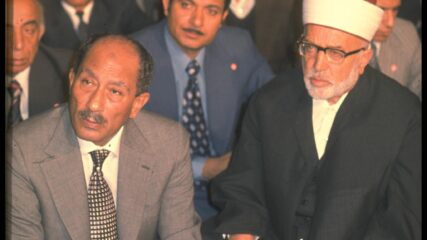
Born into a family of thirteen children in Mit Abu al-Kum, Egypt, Sadat is a member of the Free Officers movement that overthrew Egypt’s monarchy in 1952. As Egypt’s President, he signs a historic peace agreement with Israel in 1979.
British General Edmund Allenby appoints Ronald Storrs as Military Governor of Jerusalem.
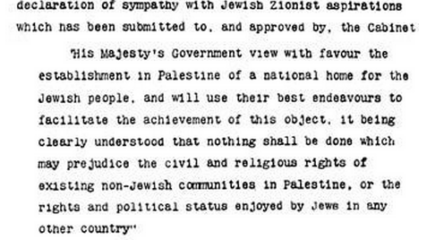
In seeking official government endorsement for the Zionist cause from a great power, the leadership of the Zionist Organization successfully obtains support from the British government in 1917 by way of the Balfour Declaration.
A secret treaty is negotiated to divide the former Ottoman territories between Britain and France.
The Husayn-McMahon correspondence commences between the Arab leader Husayn bin-Ali and the British government official Sir Henry McMahon.
Chaim Weizmann, first President of Israel, then working as a chemist in Manchester, England, is appointed to the British Admiralty as an Honorary Technical Adviser on acetone supplies.