Golda Meir Secretly Meets With King Abdullah in Amman
The second secret meeting between the two is a last-ditch effort to persuade Transjordan to stay out of an impending war with the soon-to-be declared State of Israel.


The second secret meeting between the two is a last-ditch effort to persuade Transjordan to stay out of an impending war with the soon-to-be declared State of Israel.
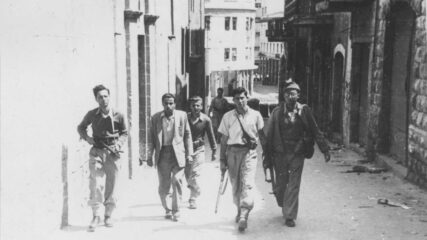
April 22, 1948 As communal violence increases with the approaching departure of British troops and expected declaration of Israeli independence, the Haganah seizes Haifa, and as many as 25,000 Arabs flee the city, possibly in…
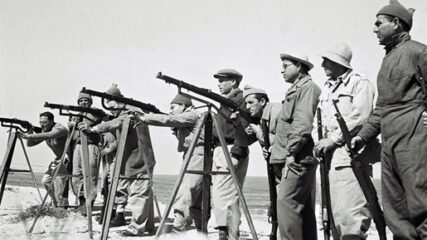
Ben-Gurion feared that there were too many decision-making centers in the Yishuv and that urgency and immediacy demanded one single voice.
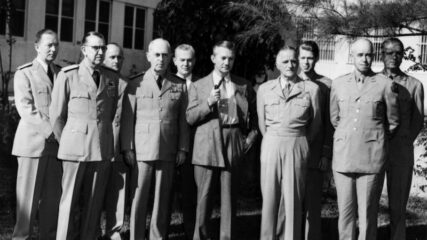
The United States was deeply worried that supporting the establishment of a Jewish state would jeopardize Arab oil supplies and force the US to send troops, risking a confrontation with the USSR.
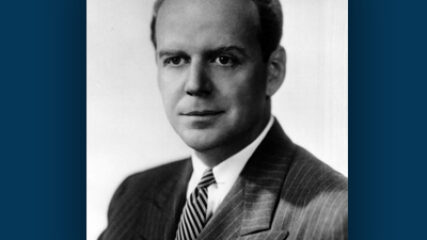
Clark Clifford did not want the US to waiver from the partition resolution passed at the UN in November 1947, which called for the division of Palestine into Arab and Jewish states.

February 22, 1948 Arab militants disguised as British troops, joined by a pair of British deserters, detonate bombs in three British military trucks and an armored car in the morning along the shopping district of…
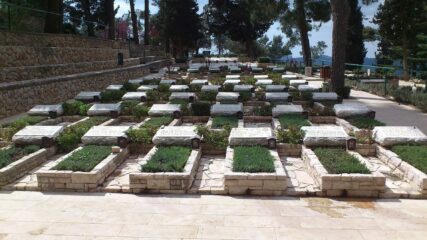
January 16, 1948 A convoy of 35 Haganah men carrying supplies on foot to the blockaded settlements of Gush Etzion is spotted by Arab civilians around daybreak after departing from Hartuv at 11 the night…
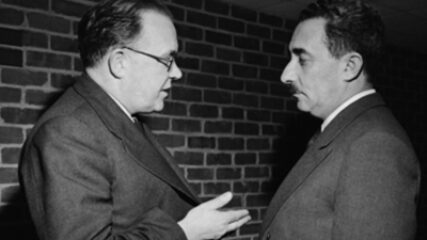
A two-day debate on the future of Britain’s presence in Palestine begins in the British House of Commons. Eventually it is decided to terminate the 1922 League of Nations Mandate for Palestine.
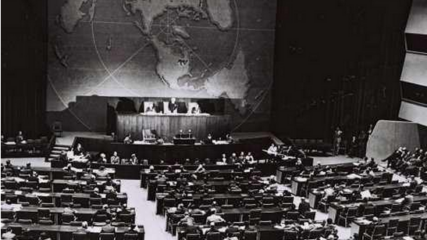
The United Nations General Assembly passes Resolution 181 by a vote of 33-13 with 10 abstentions. The Resolution recommended the creation of separate Arab and Jewish states in Palestine, linked by an economic union.
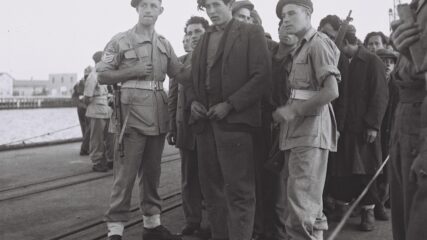
The Aliyah Bet ship Kadima arrives in Haifa under British escort. All of its passengers are arrested and moved to detention camps in Cyprus.
David Ben-Gurion, the chairman of the Executive of the Jewish Agency since 1935, formally accepts the partition plan proposed by the United Nations Special Committee on Palestine (UNSCOP).
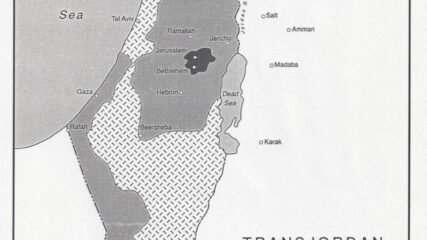
September 29, 1947 The Arab Higher Committee for Palestine formally rejects the U.N. Special Committee on Palestine’s partition plan, which advocates for the division of the land into a separate Jewish and Arab states and…
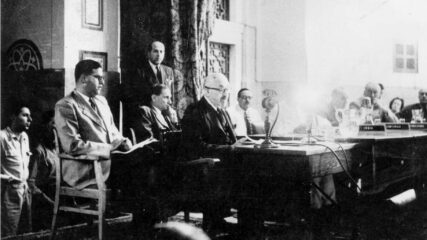
The United Nations had set up UNSCOP in April 1947. Its purpose, like previous commissions that visited Palestine, is to investigate underlying causes for communal unrest and to make political recommendations about curtailing violence.
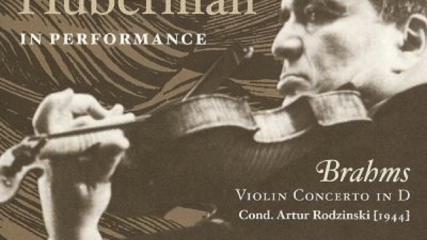
Known as one of the most cherished violinists of his generation, and one of the greatest Jewish musicians of all time, Bronislaw Huberman passed away at his home in Switzerland at the age of 64.

Emma Gottheil, one of the first and most important women in Zionist leaders, passes away at her New York home at the age of 85.
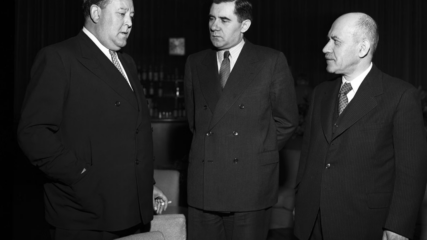
Soviet Foreign Minister Andrei Gromyko proposes a unitary state for Palestine, but vows to support partition if it is deemed the only workable solution.
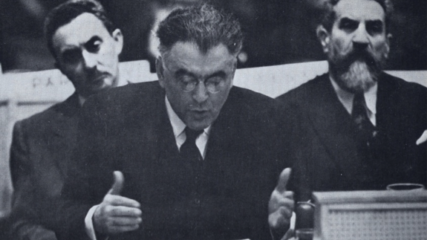
In an address on behalf of the Jewish Agency, Rabbi Abba Hillel Silver calls upon the United Nations to honor the 1917 Balfour Declaration.
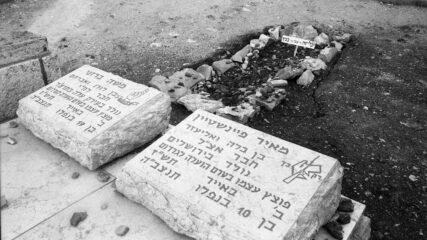
April 21, 1947 Two Jewish underground fighters, Moshe Barazani and Meir Feinstein, blow themselves up in a British prison in Jerusalem at night to avoid being hanged the next morning. Barazani, a Kurdish Jew born…
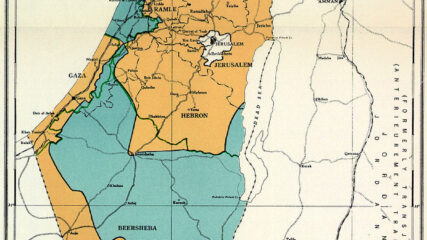
April 2, 1947 The British government notifies the United Nations of its intent to bring the question of Palestine’s future before the next U.N. General Assembly. The United Kingdom also requests a special General Assembly…
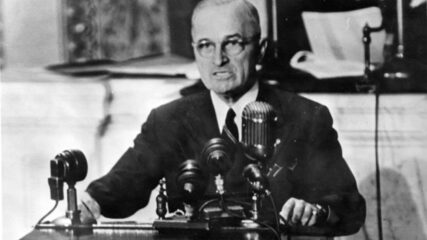
In a speech delivered to a joint session of Congress, President Harry Truman outlines a new, decidedly anti-Soviet direction for American foreign policy.
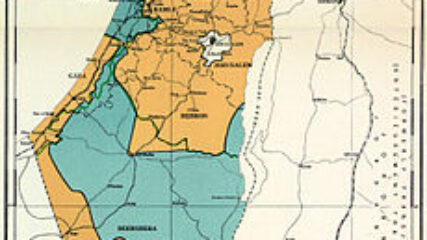
The British respond to rising violence in Mandatory Palestine by asking the United Nations to figure out what to do.
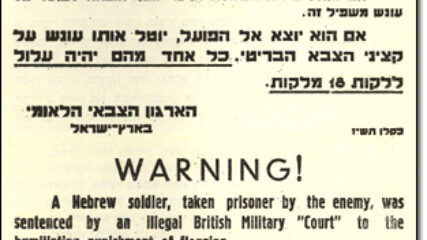
December 29, 1946 The underground militant movement Irgun carries out the Night of the Beatings, an effort across Palestine to flog British soldiers in retribution for the lashing of captured Irgun members. Irgun members abduct…

A Land Transfer Committee report reveals that Arabs in Palestine willingly continued to sell land to Zionists in the early 1940s despite the British legal prohibition on doing so.
November 1, 1945 The newly formed Jewish Resistance Movement sets off explosions at more than 150 sites along the railway system of British Mandatory Palestine and blows up three British gunboats in the Jaffa and…
