Dalia Itzik Is Born
Dalia Itzik is born in Jerusalem to a family of Iraqi immigrants. In the Seventeenth Knesset (2006), she becomes the first woman to serve as Speaker of the Knesset.

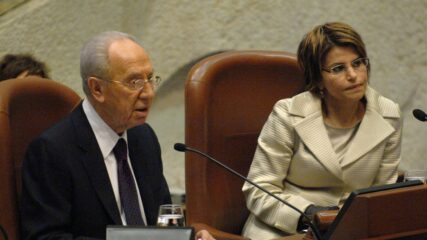
Dalia Itzik is born in Jerusalem to a family of Iraqi immigrants. In the Seventeenth Knesset (2006), she becomes the first woman to serve as Speaker of the Knesset.

January 9, 1952 The Knesset ends three days of debate by voting 61-50 to accept more than $800 million in Holocaust reparations from the Western German government over 14 years. The decision sparks protests and…
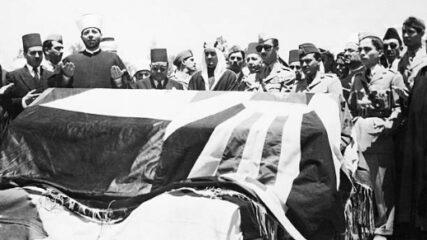
July 20, 1951 Abdullah I, the founding king of Jordan, is assassinated by a Palestinian nationalist at the Al Aqsa Mosque entrance in Jerusalem. The king’s bodyguards immediately shoot the assassin dead. Abdullah’s grandson, Hussein,…
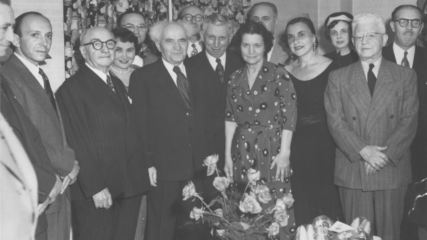
Ben-Gurion’s trip, the first visit by an Israeli Prime Minister to the US, includes a tour of hydroelectric and water projects in Tennessee and Alabama.
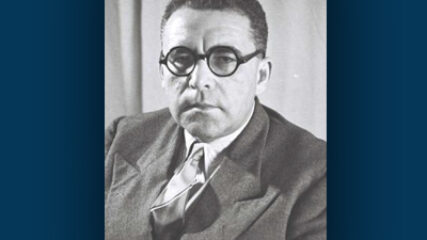
After more than a year of continued debate on the issue, the First Knesset adopts the “Harari Resolution,” which stipulated that the “constitution” of Israel would be composed of a series of Basic Laws approved by the Knesset.
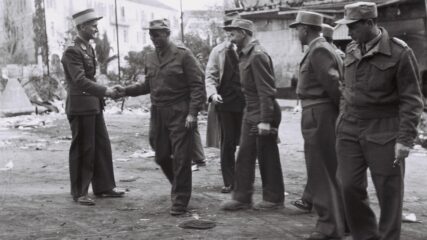
By a vote of 60-2, with members of Mapam and Herut abstaining, the Knesset adopts a proclamation declaring Jerusalem the capital of Israel.

December 5, 1949 Prime Minister David Ben-Gurion declares in a Knesset speech that “Jewish Jerusalem is an organic, inseparable part of the state of Israel” and that Israel rejects any attempt by the United Nations…
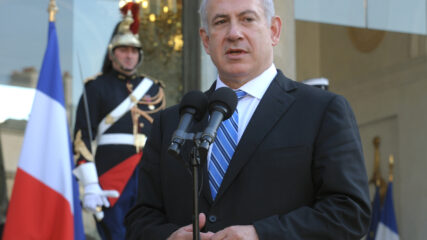
Benjamin Netanyahu, the ninth and current Prime Minister of Israel, is born in Tel Aviv. Although he spends a good portion of his childhood in Philadelphia, Netanyahu returns to Israel in 1967 to fulfill his service in the IDF.
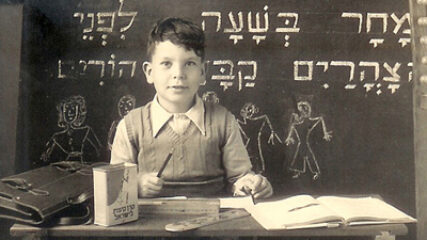
The Compulsory Education bill, which had been passed on September 12th, enters into law. It mandates that all children between the ages of 5 and 15 attend a state-recognized educational institution.
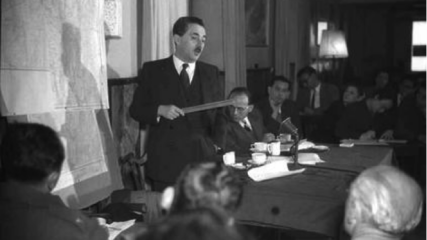
In an address to the Knesset, Foreign Minister Moshe Sharett reconfirms Israel’s willingness to negotiate agreeable and sustainable terms of peace with its neighbors.
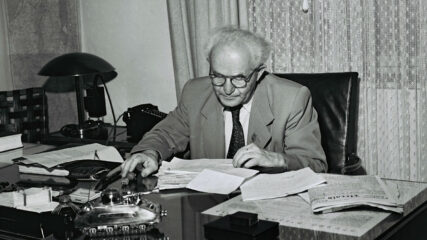
March 8, 1949 David Ben-Gurion’s Knesset-leading Mapai party joins the United Religious Front, the Progressive Party, the Sephardi and Mizrahi Communities, and the Arab-led Democratic List of Nazareth to form a government after Israel’s first…
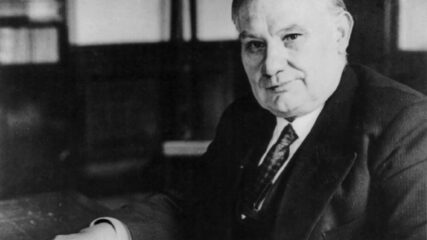
In a cable to the State Department, US Chargé d’affaires Julius Holmes recounts British Foreign Secretary Ernest Bevin’s concerns that “within five years, Israel may be a Communist state.”
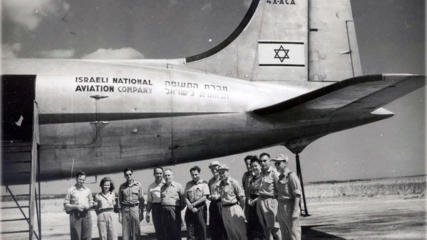
El Al, Israel’s national airline, is officially incorporated about seven weeks after a repainted military plane used the name while bringing Chaim Weizmann home for Switzerland.
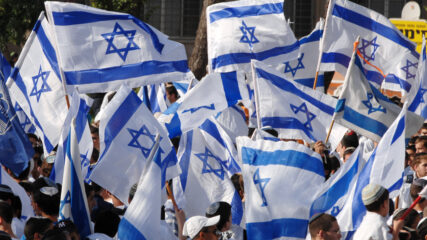
The iconic flag with two blue stripes and a blue Star of David at its center becomes the official Israeli flag more than five months after the establishment of the state.
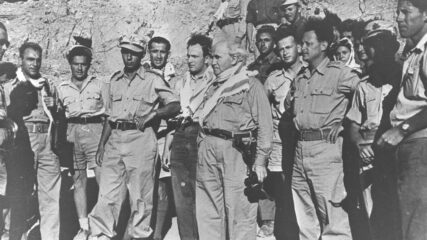
Prime Minister David Ben-Gurion summons dozens of Palmach commanders for a conference. There he announces a plan to dismantle the elite, underground fighting unit and integrate it into the newly established Israel Defense Forces.
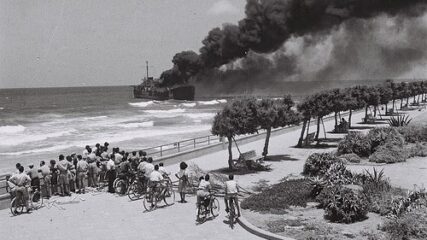
The Altalena arrives off the coast of Kfar Vitkin from France carrying 900 immigrants and a large stockpile of weapons.
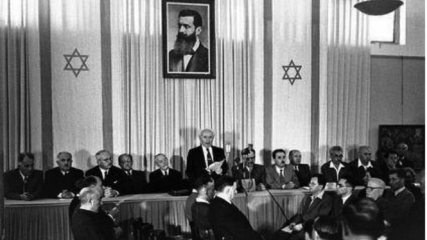
On Friday afternoon in the Tel Aviv Museum, David Ben-Gurion, chairman of the Provisional State Council, declares Israel’s independence. The United States is the first country to recognize the new and already besieged state of Israel.
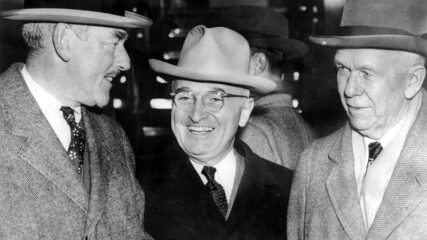
The US State Department prepares a memorandum for Secretary of State George Marshall and President Truman seeking non-implementation of the UN partition resolution (181) on Palestine.
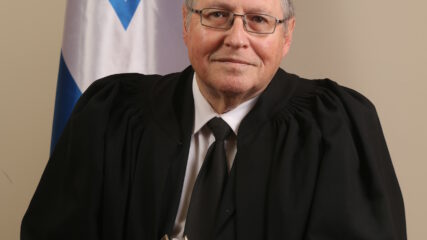
June 13, 1947 Elyakim Rubinstein, whose law career leads him to diplomacy and the Israeli Supreme Court, is born in Tel Aviv. After his military service, he earns bachelor’s and master’s degrees from the Hebrew…
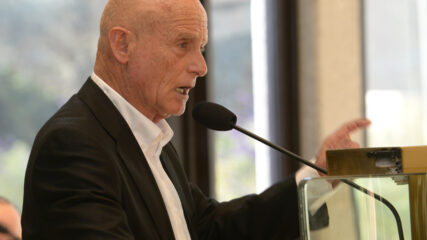
June 27, 1945 Ami Ayalon, who leads the Shin Bet and the Israeli navy, is born in Tiberias. He serves in the navy from 1963 to 1996. He volunteers for the Shayetet 13 commando unit,…

Berl Katznelson, a leader in the Labor Zionist movement, dies suddenly at the age of 57 in Jerusalem. His advocacy for the creation of a labor-based society in Israel would eventually form the basis of the Mapai party, which was created in 1930 and would dominate Israeli politics until the late 1970′s.
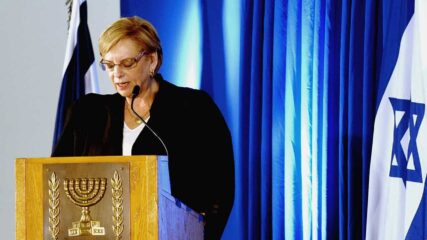
Dorit Beinisch, the first woman to serve as president of the Israeli Supreme Court, is born in Tel Aviv.
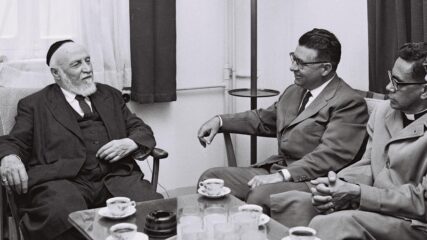
Jacob Toledano returns to the Land of Israel in early 1942 to take up his new post as Sephardi Chief Rabbi of Tel-Aviv and Jaffa.
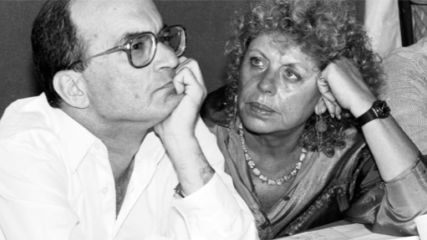
Yossi Sarid, a politician on the left known as “Israel’s moral compass,” is born in Rehovot.
