Articles ranging from 250 to 1,500 words that provide a brief overview of a topic or answer a basic question related to the modern State of Israel.
November 29, 1947 Official Records of the General Assembly, Second Session Supplement No. 11,Volumes l-lV. Deteriorating Relationship Between Britain and Palestine The British intention (Peel Report in 1937) to partition Palestine into Arab and…
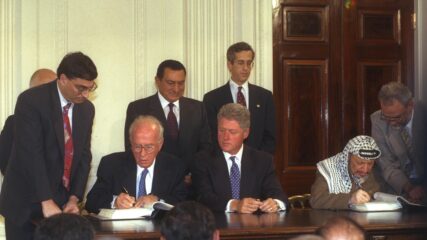
September 28, 1995 After signing the Declaration of Principles (DOP) on Interim Self-Government Arrangements, commonly known as the Oslo Accords, on September 13, 1993, Israel and the PLO reached three additional interim agreements before Oslo…
By Ken Stein, October 28, 2024 When Georgia Governor Jimmy Carter became the 39th President of the United States in 1977, he had little foreign policy experience, particularly regarding the Arab-Israeli conflict. Despite this, he…
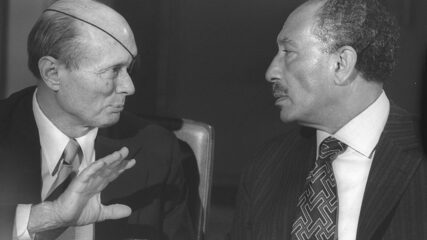
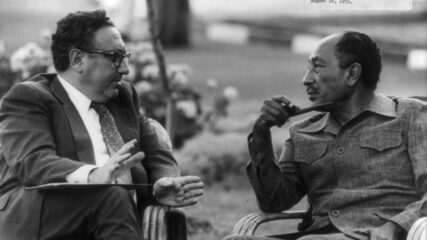
Egyptian President Sadat colluded with Syrian President Assad to attack Israel on October 6, 1973. Sadat’s objective was not to seek Israel’s destruction but to gain a limited success by crossing the canal. He also sought to engage American diplomacy to generate talks with Israel that would see Israeli withdrawal from Egyptian land Israel secured in the June 1967 War. Sadat took a large gamble by attacking Israel yet he unfolded a negotiating process with Israel that lasted through 1979. He achieved his overarching long-term priority of having Egyptian Sinai returned to Egyptian sovereignty.
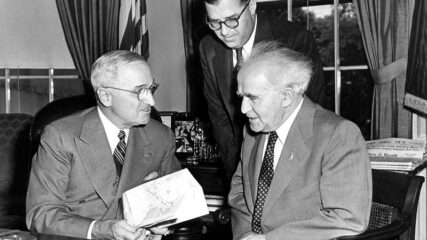
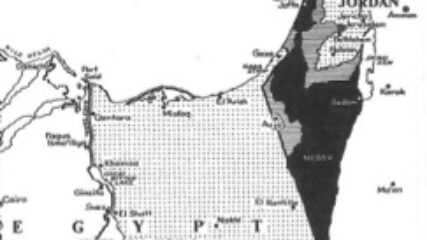
Otherwise known as Israel’s War of Independence, or, “the nakbah” or disaster to the Arab world because a Jewish state was established, the war was fought between the newly established Jewish state of Israel opposed by Palestinian irregulars, and armies from five Arab states. Official beginning of the war is usually given as May 14, 1948, the date Israel declared itself an independent Jewish state, but the war’s first of four phases began in November 1947. Lasting for two years, the war ended with armistice agreements signed in 1949 between Israel and four Arab states.