Yigal Allon, 1918-1980 CIE+ members only
Allon led the Palmach and was an IDF major general who oversaw the Southern Command. He served in the Knesset from 1955 until his death. After the 1967 war, he proposed returning the West Bank…


Allon led the Palmach and was an IDF major general who oversaw the Southern Command. He served in the Knesset from 1955 until his death. After the 1967 war, he proposed returning the West Bank…
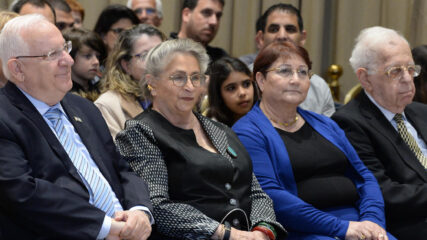
Avineri, a native of Poland, was one of Israel’s premier political scientists as a Hebrew University professor and wrote extensively on the history of political philosophy, including Marx, Engels, Hegel, Zionism, colonialism and the Soviet…
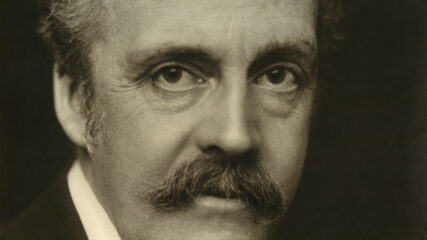
Balfour, an English politician and diplomat who served as the British prime minister from 1902 to 1905, was the foreign secretary in November 1917 when he sent a letter to Lord Rothschild that became known…
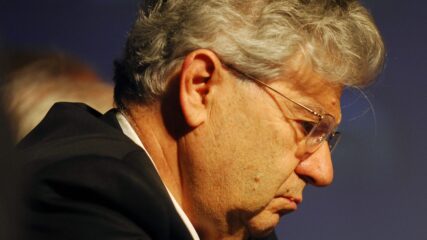
Lithuania-born Barak was a 28-year Supreme Court justice who served as the president of the court from 1995 to 2006. He lifted restrictions on individual petitions to the court and strengthened the judiciary’s authority to…
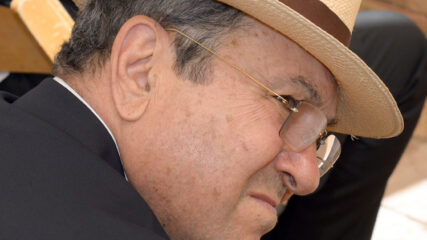
As Israel’s 10th prime minister and last from the Labor Party from 1999 to 2001, Barak ended the occupation of southern Lebanon, participated in the 2000 Camp David talks, was rebuffed by Yasser Arafat in…
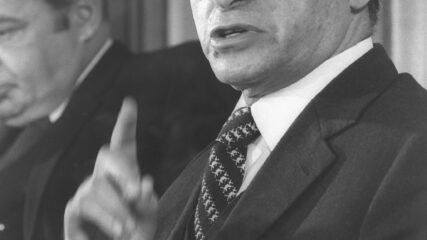
Born in Belarus, Begin joined the Revisionist Betar movement and escaped Nazis and Soviets to reach Palestine. He led the Irgun, then spent three decades in the political opposition, including arguing against German reparations. In…

Bunche, an American diplomat, received the Nobel Peace Prize in 1950 for brokering the armistice agreements between Israel and four Arab neighbors in 1949. He served in 1947 with the U.N. Special Committee on Palestine,…

Churchill visited Palestine in March 1921 as the British secretary of state for the colonies and declared that a Jewish national home would be a “blessing to the whole world.” In July 1922, after the…
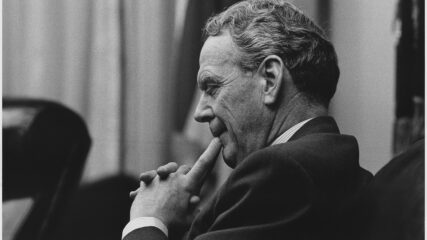
As a special presidential counsel, Clifford opposed the pro-Arab State Department and urged President Harry Truman to maintain support for the U.N. partition of Palestine and to lift the arms embargo on Jewish forces heading…
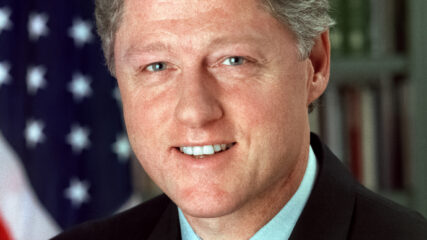
As president, Clinton hosted the signing of the 1993 Oslo Accords, helped Jordan and Israel achieve a peace treaty in 1994, and mediated the 1995 Oslo II agreement that recognized the Palestinian Authority. He brokered…
A close adviser to Chaim Weizmann on his relations with British officials, Dugdale was a strong, non-Jewish advocate for Zionism. A niece of Arthur Balfour’s, she wrote a biography of him and a book on…
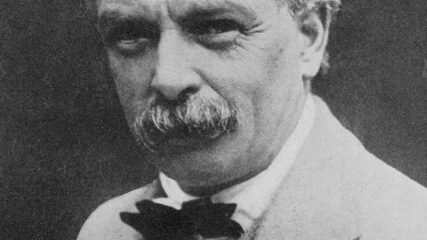
Lloyd George was the British prime minister from 1916 to 1922. His government issued the Balfour Declaration and took control of Palestine during World War I, negotiated for the inclusion of the declaration’s language at…
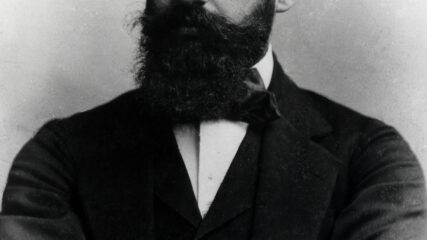
Born in Hungary, Herzl is viewed as the father of modern political Zionism. A journalist, novelist and playwright, he embraced Zionism after reporting on Alfred Dreyfus’ trial in France. His pamphlet “Der Judenstaat” (“The Jewish…

The 36th U.S. president, Johnson increased U.S. economic and military support for Israel. Unlike Dwight Eisenhower in 1956, Johnson did not demand Israel’s immediate withdrawal from captured territory after the 1967 war. He outlined five…
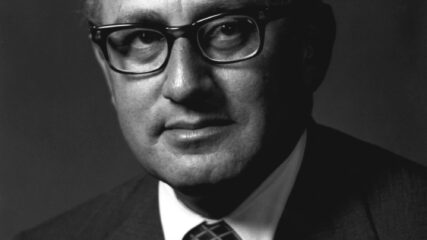
Kissinger was the national security adviser and secretary of state to Presidents Richard Nixon and Gerald Ford. He heavily influenced U.S. policy in the Middle East and made “shuttle diplomacy” famous after the October 1973…

Born in Ukraine and raised in Wisconsin, Meir rose in Labor Zionism with the Histadrut and engaged in diplomacy for the Jewish Agency and Israel, including trying to keep Transjordan out of the 1948 war…
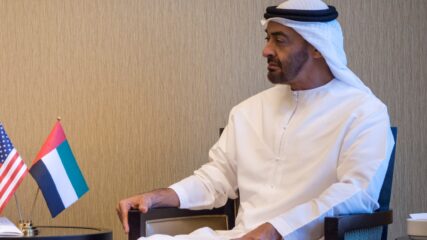
Bin Zayed, known as MBZ, is the president of the United Arab Emirates and the ruler of Abu Dhabi. In August 2020 he signed the Abraham Accords to normalize relations between the UAE and Israel….
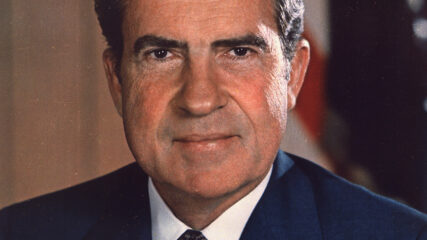
Though he expressed antisemitic views in private, Nixon as the 37th U.S. president authorized the airlift that replenished Israel’s arms during the October 1973 war, providing the means for Israel to end the war with…
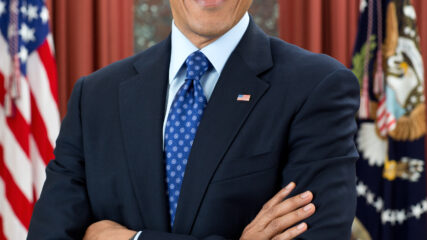
The 44th U.S. president, Obama was less active in seeking Middle East peace than his three immediate predecessors and tried to strengthen relations with Israel’s neighbors. He split with Israeli Prime Minister Benjamin Netanyahu over…
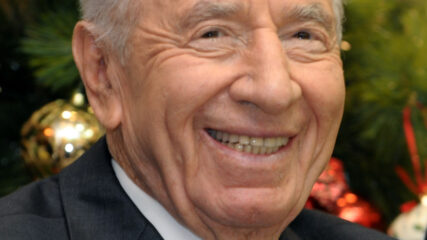
Peres is the only Israeli to serve as prime minister and president. Born in Belarus, he arrived in Palestine in 1934. He helped establish and arm the initial IDF in the 1940s and launched a…
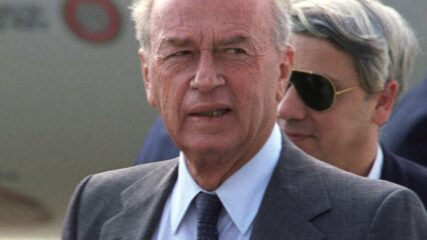
Rabin was a two-time prime minister whose assassination shattered hopes for peace under the Oslo Accords, for which he shared the 1994 Nobel Peace Prize with Shimon Peres and Yasser Arafat. He also signed a…
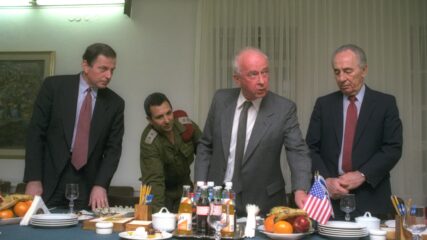
Diplomat and historian Rabinovich is a former ambassador to the United States and former president of Tel Aviv University. A former IDF lieutenant colonel, he was Israel’s chief negotiator with Syria in the 1990s. His…

Although considered pro-Israel, Reagan, the 40th U.S. president, acted to balance U.S. policy toward Israel and Arab states. Under Reagan, the United States halted F-16 sales to Israel after its raid on Iraq’s nuclear reactor…
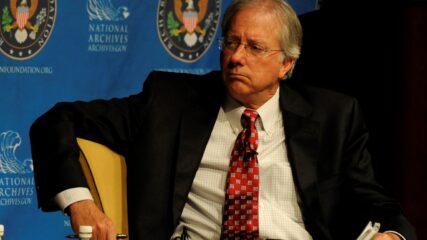
Working in the Defense Department, with the National Security Council or in the State Department under every president from Jimmy Carter to Barack Obama, Ross helped shape U.S. Middle East policy. He helped get Israel…
