Israel, Jordan Sign Armistice
Israel’s War of Independence ends with the signing of individual armistice agreements between the newly established Jewish state and Jordan, Egypt, Syria, and Lebanon in 1949.

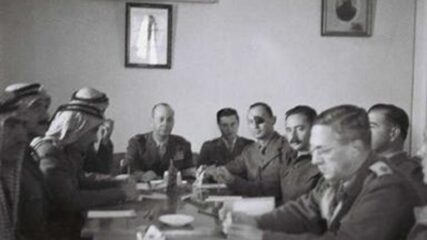
Israel’s War of Independence ends with the signing of individual armistice agreements between the newly established Jewish state and Jordan, Egypt, Syria, and Lebanon in 1949.
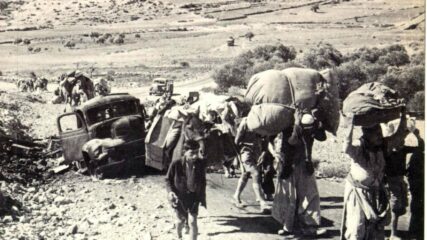
December 11, 1948 The United Nations General Assembly passes Resolution 194, addressing “the situation in Palestine” amid the ongoing Israeli War of Independence, on a vote of 35-15 with eight abstentions. The resolution never references…
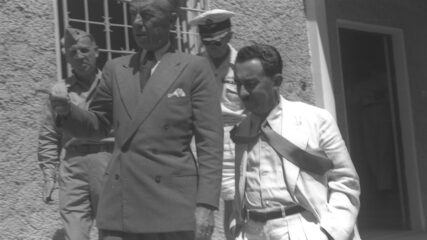
September 17, 1948 Count Folke Bernadotte, a diplomat sent by the United Nations to mediate between Israel and the Arabs during the War of Independence, is assassinated in Jerusalem by members of Lehi (the Stern…
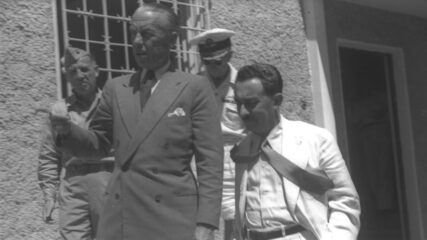
May 20, 1948 Count Folke Bernadotte is appointed by the U.N. Security Council as the mediator for Middle East peace efforts five days into the Israeli War of Independence. Bernadotte was born in Sweden in…
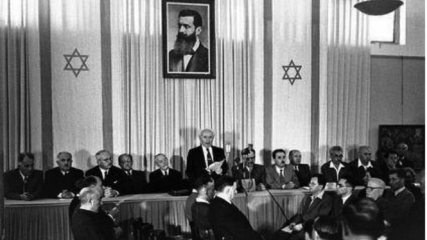
On Friday afternoon in the Tel Aviv Museum, David Ben-Gurion, chairman of the Provisional State Council, declares Israel’s independence. The United States is the first country to recognize the new and already besieged state of Israel.

The second secret meeting between the two is a last-ditch effort to persuade Transjordan to stay out of an impending war with the soon-to-be declared State of Israel.
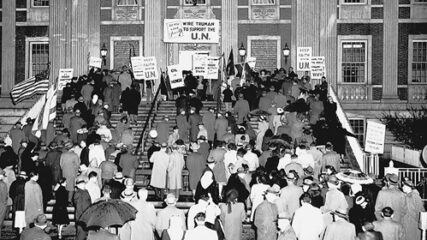
The United States was deeply worried that supporting the establishment of a Jewish state would jeopardize Arab oil supplies and force the US to send troops, risking a confrontation with the USSR.
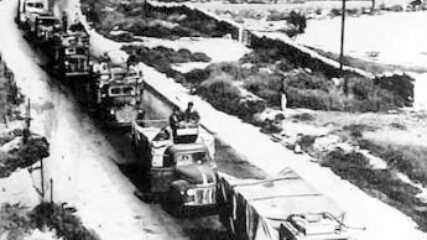
April 1, 1948 Nine Jews are killed and 17 others are wounded in an unsuccessful attempt to move a 60-truck convoy of food and other supplies to Jerusalem through Wadi Sarrar, even though Haganah patrols…
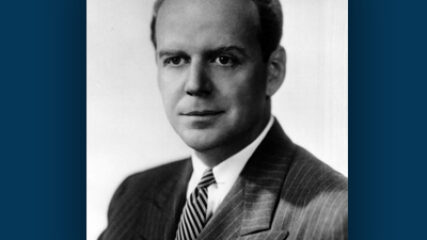
Clark Clifford did not want the US to waiver from the partition resolution passed at the UN in November 1947, which called for the division of Palestine into Arab and Jewish states.
A two-day debate on the future of Britain’s presence in Palestine begins in the British House of Commons. Eventually it is decided to terminate the 1922 League of Nations Mandate for Palestine.
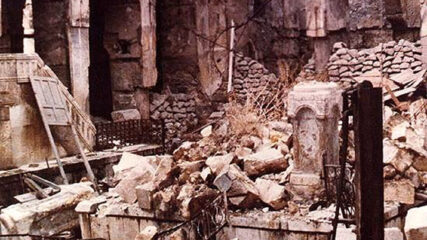
The U.N. General Assembly vote the previous day for the partition of Palestine sparks between Jews and Arabs in the British Mandate of Palestine and riots against Jews in Arab cities around the Middle East
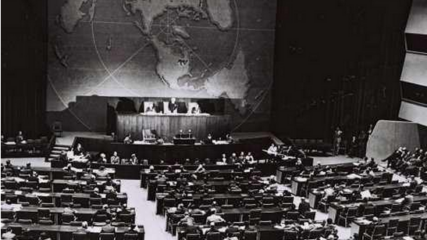
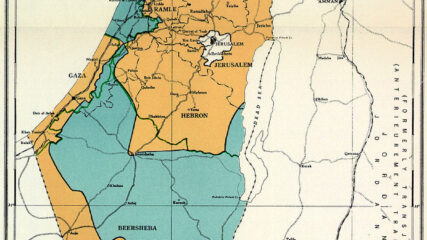
The United Nations General Assembly passes Resolution 181 by a vote of 33-13 with 10 abstentions. The Resolution recommended the creation of separate Arab and Jewish states in Palestine, linked by an economic union.
David Ben-Gurion, the chairman of the Executive of the Jewish Agency since 1935, formally accepts the partition plan proposed by the United Nations Special Committee on Palestine (UNSCOP).
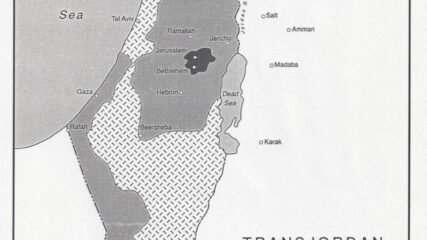
September 29, 1947 The Arab Higher Committee for Palestine formally rejects the U.N. Special Committee on Palestine’s partition plan, which advocates for the division of the land into a separate Jewish and Arab states and…
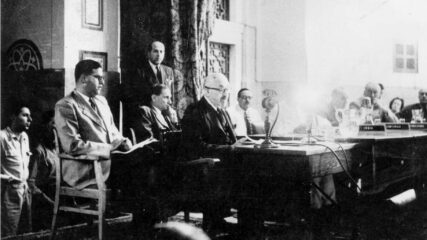
The United Nations had set up UNSCOP in April 1947. Its purpose, like previous commissions that visited Palestine, is to investigate underlying causes for communal unrest and to make political recommendations about curtailing violence.
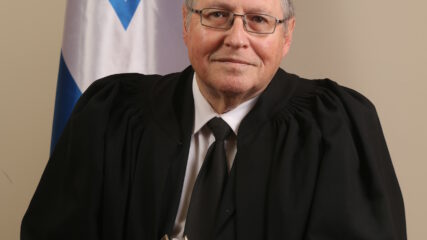
June 13, 1947 Elyakim Rubinstein, whose law career leads him to diplomacy and the Israeli Supreme Court, is born in Tel Aviv. After his military service, he earns bachelor’s and master’s degrees from the Hebrew…
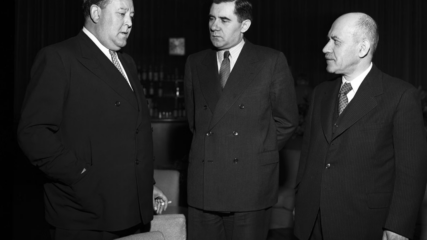
Soviet Foreign Minister Andrei Gromyko proposes a unitary state for Palestine, but vows to support partition if it is deemed the only workable solution.
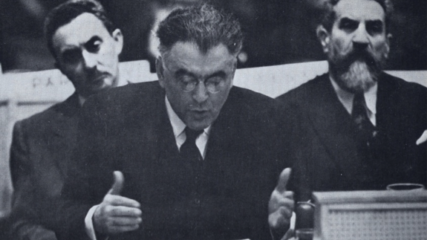
In an address on behalf of the Jewish Agency, Rabbi Abba Hillel Silver calls upon the United Nations to honor the 1917 Balfour Declaration.
April 2, 1947 The British government notifies the United Nations of its intent to bring the question of Palestine’s future before the next U.N. General Assembly. The United Kingdom also requests a special General Assembly…
The British respond to rising violence in Mandatory Palestine by asking the United Nations to figure out what to do.
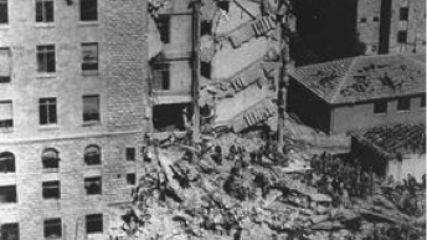
Members of the Irgun, a Jewish military organization that is absorbed into the IDF during the 1948 War, bomb the British administrative headquarters in Palestine, based in the King David Hotel in Jerusalem. Twenty-eight British, forty-one Arabs, and seventeen Jews are killed.
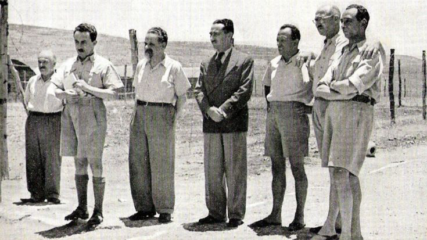
November 1, 1945 The newly formed Jewish Resistance Movement sets off explosions at more than 150 sites along the railway system of British Mandatory Palestine and blows up three British gunboats in the Jaffa and…
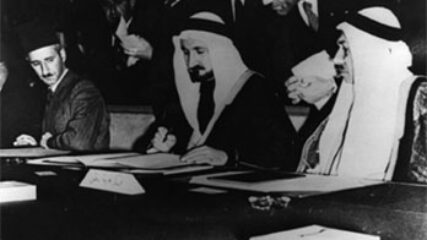
The Arab League Constitution is signed in a ceremony marked by speeches from representatives of each of the six signatory states.
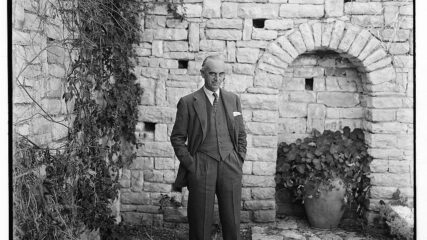
Rattled by numerous attempts on his life, and fearing for the safety of his family, MacMichael steps down in August 1944.
