Third Maccabiah Games Begin
The Third Maccabiah Games commence in the 50,000-seat stadium in Ramat Gan, Israel.

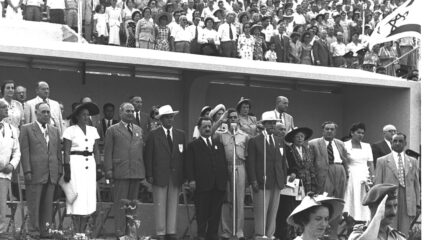
The Third Maccabiah Games commence in the 50,000-seat stadium in Ramat Gan, Israel.

Introduced as part of a festive legislative session marking the anniversary of Theodor Herzl’s death, the Law of Return creates an open-door immigration policy for Jews throughout the world.

Following the passage of March 1950 law allowing Jews to leave Iraq, the Ministry of Aliyah in Israel develops a plan to facilitate their immigration to Israel.
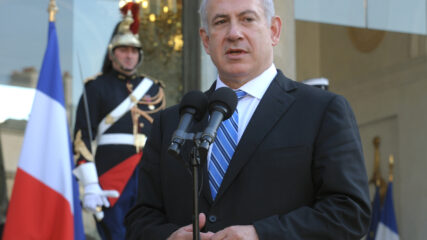
Benjamin Netanyahu, the ninth and current Prime Minister of Israel, is born in Tel Aviv. Although he spends a good portion of his childhood in Philadelphia, Netanyahu returns to Israel in 1967 to fulfill his service in the IDF.
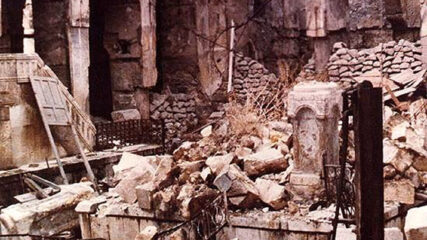
The U.N. General Assembly vote the previous day for the partition of Palestine sparks between Jews and Arabs in the British Mandate of Palestine and riots against Jews in Arab cities around the Middle East

Emma Gottheil, one of the first and most important women in Zionist leaders, passes away at her New York home at the age of 85.
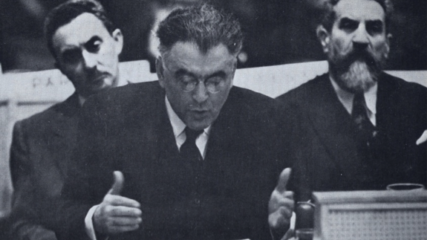
In an address on behalf of the Jewish Agency, Rabbi Abba Hillel Silver calls upon the United Nations to honor the 1917 Balfour Declaration.
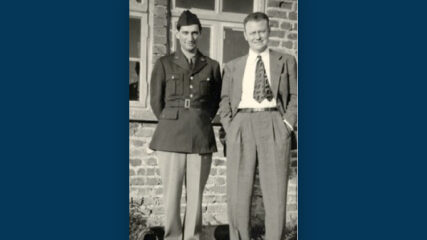
The Harrison Report, an inquiry into the conditions of displaced persons camps in occupied Germany, reveals that many of the rumors of poor treatment of Jews are indeed true and that “we appear to be treating the Jews as the Nazis treated them, except that we do not exterminate them.”
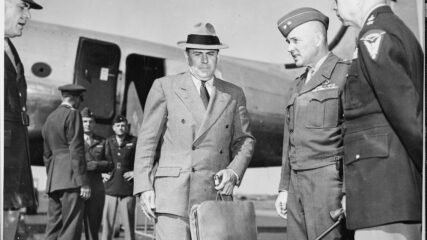
In a letter written to Leon Kubowitzki, head of the Rescue Department of the World Jewish Congress, US Assistant Secretary of War John J. McCloy states that the War Department would not order the bombing of Nazi Death Camps because they did not see it as a priority for US military resources.
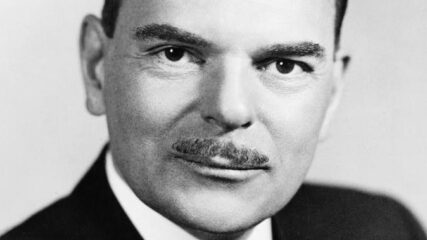
At the 1944 Republican Party National Convention, New York Senator Thomas Dewey’s strong support for the establishment of a Jewish state in Palestine captures the attention of Zionists in Palestine and, more notably, American Jewry.
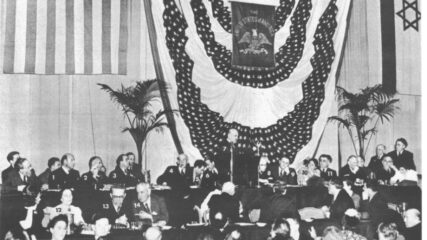
The Biltmore Conference will set the framework for Zionist policy in the years during and after World War II.
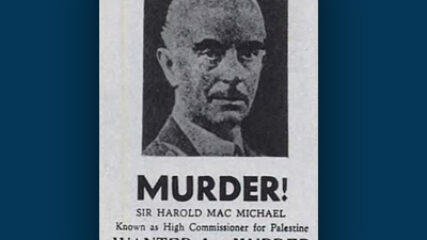
After being mistaken as an enemy ship, the SS Struma, carrying nearly 800 Jewish refugees hoping to immigrate into Palestine, including 70 children, is sunk by a Russian submarine in the Black Sea.
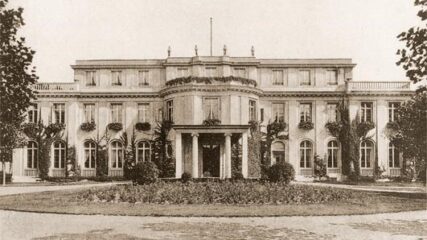
Nazis draw up a plan for the “Final Solution” of European Jewry in the Berlin suburb of Wannsee.
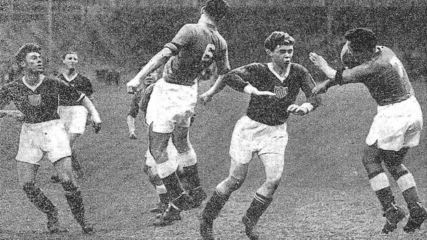
Playing their final match of an eleven match American tour, the Maccabi Tel-Aviv Football Club loses 4-1 to an American all-star team at Yankee Stadium in front of 20,000 spectators.

Exiled because of Italy’s incursion into Ethiopia, Selassie spends a few weeks in Jerusalem contemplating how best to gain global support for his country.

Opening the 1933-34 academic year, Judah Magnes, the president of the Hebrew University of Jerusalem, outlines an expansion plan for the university.
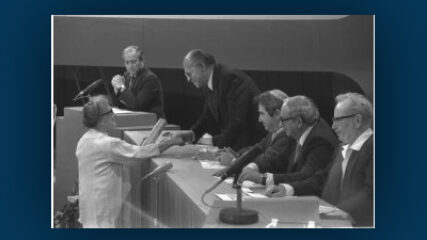
The same day that Adolf Hitler is appointed Chancellor of Germany by President Paul Von Hindenburg, Recha Freier establishes the Committee for the Assistance of Jewish Youth.
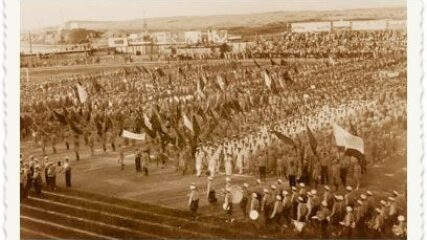
The first Maccabiah Games, an international Jewish Olympics, open in Tel Aviv.
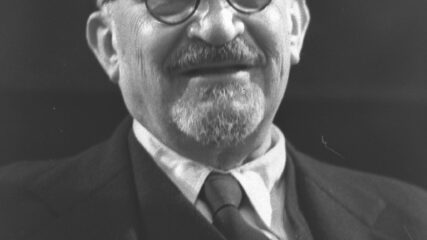
The Jewish Agency holds its first meeting on August 12, the day after the conclusion of the Congress. With so many Jews having immigrated to the US over the previous four decades, American presence in the Jewish Agency had become financially and politically significant for Zionism’s key growth in the United States.
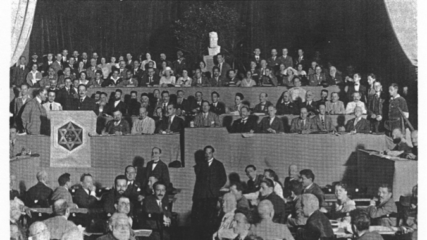
Convened in Carlsbad, Czechoslovakia, the Thirteenth Zionist Congress discusses details of the Palestine Mandate and particularly the prerogatives of the Palestine Zionist Executive (PZE) that guide Jewish immigration and settlement in Palestine.
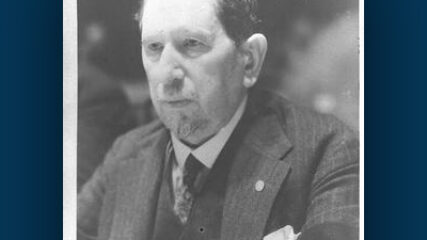
Nahum Sokolow, serving as President of the Executive Committee of the World Zionist Congress, meets with President Warren Harding in Washington, D.C.
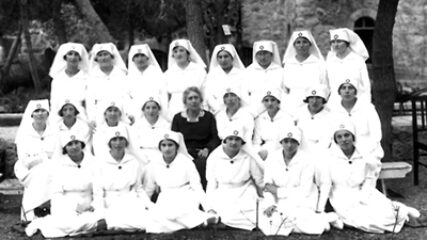
Twenty-two women graduate from the Nurses’ Training Institute at Rothschild Hospital in Jerusalem. They are the first to receive nursing degrees in the Land of Israel.
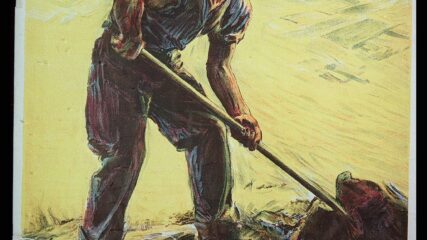
December 24, 1920 The World Zionist Congress in London launches Keren Hayesod (Hebrew for the Foundation Fund, now known in English as the United Israel Appeal) to raise money for the Zionist movement and fulfill…
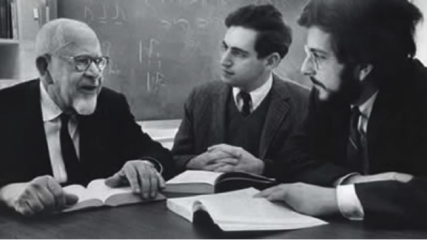
Rabbi Mordechai M. Kaplan, publishes “A Program for the Reconstruction of Judaism” in the Menorah Journal. His ideology eventually leads to the creation of a fourth American Jewish denomination, the Reconstructionist movement.
