Homosexuality Legalized in Israel
March 22, 1988 The Knesset repeals a British Mandate-era law banning sex between people of the same gender and thereby legalizes homosexuality in Israel. The repeal is part of a package of sex and sex-crime…


March 22, 1988 The Knesset repeals a British Mandate-era law banning sex between people of the same gender and thereby legalizes homosexuality in Israel. The repeal is part of a package of sex and sex-crime…

Mordechai Vanunu, an Israeli nuclear technician who leaked details of Israel’s nuclear program to the British press, is extradited to Israel, one day after an undercover female Mossad agent posing as an American lured him to Italy from London.
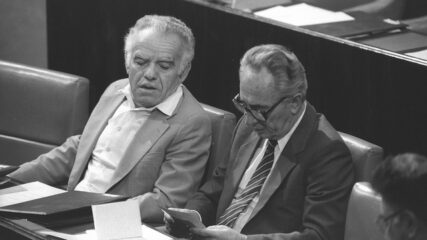
Shimon Peres becomes Israel’s eighth Prime Minister. He moves swiftly to form a coalition government.
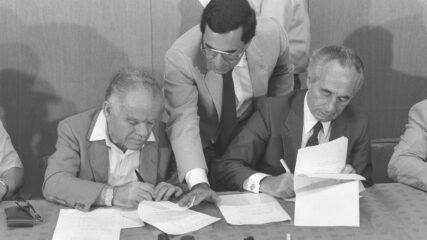
When neither party receives a majority of the votes in the eleventh Israeli Knesset elections, the Labor and Likud parties form a coalition government.

After a two-year investigation, the Shin Bet (The Israeli Security Force) arrests fifteen members of the Jewish Underground.
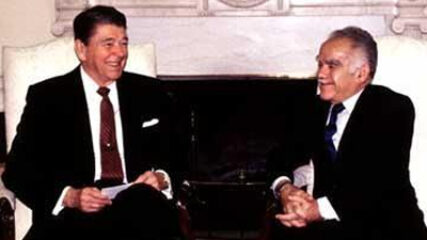
Yitzhak Shamir becomes the seventh Prime Minister of Israel after Menachem Begin resigns due to health and personal issues.
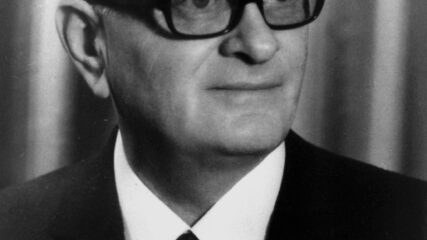
June 19, 1983 Simha Erlich, the deputy prime minister in Israel’s first two Likud-led governments, dies. Born in 1915 in what is now southeastern Poland, where he was involved in a Zionist youth group, Erlich…
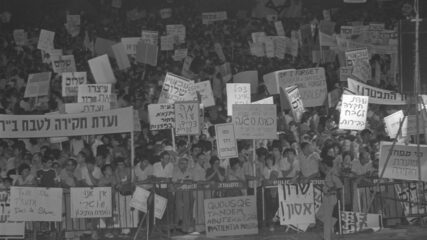
September 25, 1982 An estimated 400,000 protesters in Tel Aviv demonstrate anger at the massacre in the Sabra and Shatila refugee camps in Lebanon and demand an investigation into Israel’s role and responsibility. Organized by…
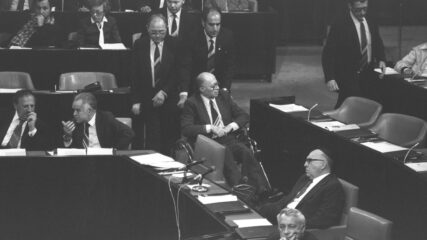
In a quickly organized and somewhat surprising move, the Knesset votes to annex the Golan Heights by a vote of 63-21.

Moshe Dayan, Israel’s iconic military and political leader, passes away from a heart attack in a Tel Aviv hospital at the age of 66.
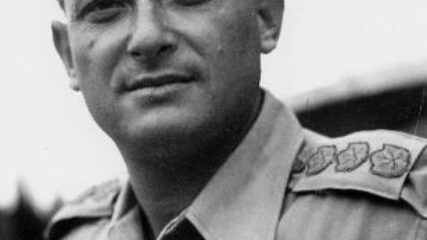
Yigal Alon, born in 1918 in Kfar Tabor, begins his career in the Haganah. Later elected to the Knesset in 1954, he remains a parliament member until his death.
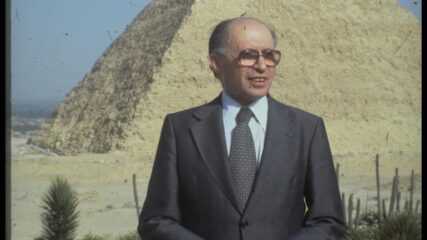
As a follow-up to the peace treaty with Egypt, Menachem Begin becomes the first Israeli prime minister to visit an Arab capital.
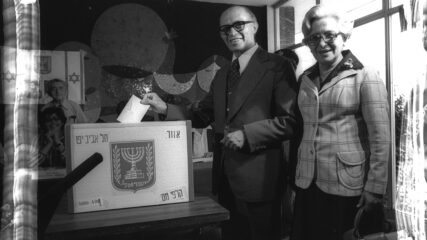
Bolstered by the support of Jews from North Africa and the Middle East, Likud’s victory ends the Labor movement’s hegemony over Israeli politics.

Judges Miriam Ben-Porat and Shimon Asher are appointed to Israel’s Supreme Court by President Ephraim Katzir. Ben-Porat is the first woman to serve as a judge in Israel’s highest court.
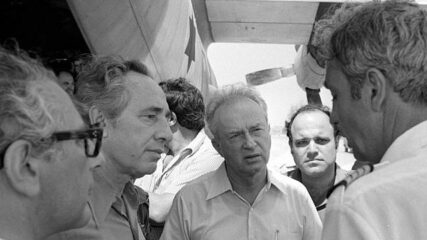
December 20, 1976 Prime Minister Yitzhak Rabin fires two National Religious Party members, Religious Affairs Minister Yitzhak Rafael and Welfare Minister Zevulun Hammer, from the Cabinet and sees a third, Interior Minister Yosef Burg, resign,…

April 29, 1976 Politician Tamar Zandberg of the left-wing Meretz party is born in Ramat Gan. She is first elected to the 19th Knesset in 2013, then wins a place in the 20th, 21st, 22nd…
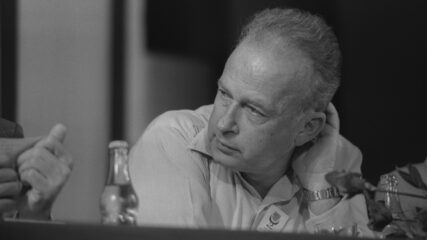
June 3, 1974 Having defeated Shimon Peres in an election for Labor Party leader, Yitzhak Rabin formally succeeds Golda Meir as prime minister when he presents his coalition government to the Knesset for approval. He…
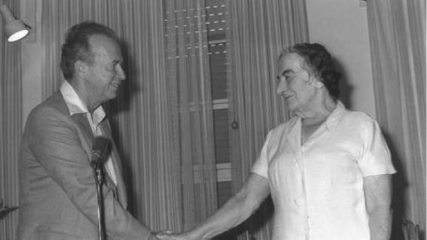
Following a week of intense public debate and finger pointing, Prime Minister Golda Meir announced that she was resign as leader of the country at a Labor Party meeting.
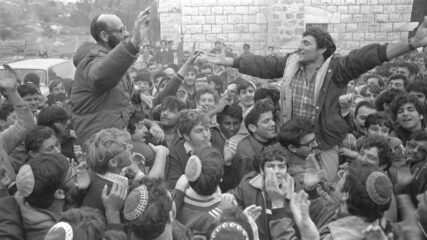
February 7, 1974 Gush Emunim (Bloc of the Faithful), a settler movement closely tied to the National Religious Party, is founded by followers of Rabbi Tzvi Yehuda Kook, including Hanan Porat, Haim Drukman and Rabbi…
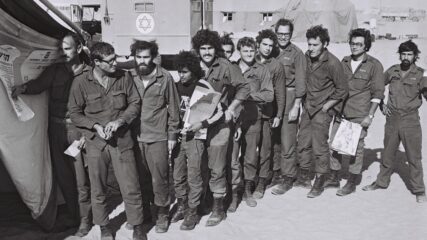
Israel holds the election for the eighth Knesset after a delay caused by the October 1973 war.

David Ben-Gurion, (born David Gruen) Israel’s first Prime Minister passes away at the Tel Hashomer-Sheba Medical Center in Tel-Aviv at the age of 87.
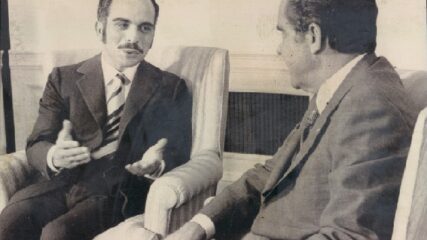
In a radio address delivered to the Jordanian people on Amman Radio, Jordan’s King Hussein proposes a federal solution to the Arab-Israeli conflict.
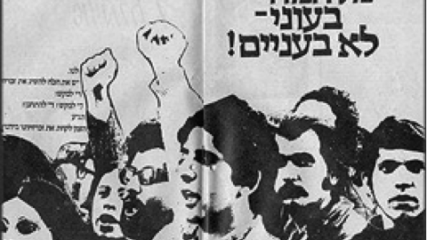
Emerging in the early seventies, to protest against the social injustices felt by the Mizrahi Jews in Israel, the Black Panthers staged a number of demonstrations in the country and began to generate widespread support.
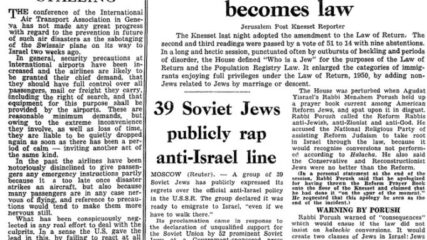
Israel’s Law of Return, which was originally passed in 1950, was amended to further define citizen eligibility in Israel.
