Jonathan Pollard Is Sentenced to Life in Prison CIE+ members only
Jonathan Pollard, accused of spying for Israel, is sentenced to life in prison for espionage. He is later released in 2015.

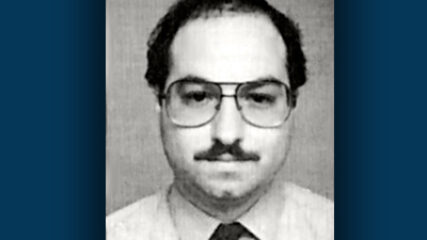
Jonathan Pollard, accused of spying for Israel, is sentenced to life in prison for espionage. He is later released in 2015.

Israel and the United States sign a secret agreement for Israeli participation in Strategic Defense Initiative (“Star Wars”) research.
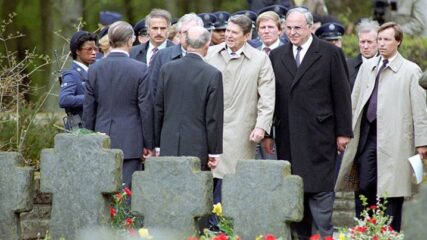
The President, seeking reconciliation with Europe, angers Jewish leaders in the US and Israel with his planned visit to a Nazi military cemetery.
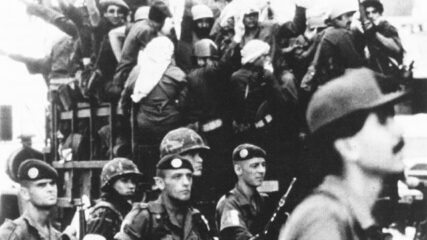
American, French, and Italian troops supervise the evacuation of around 15,000 PLO forces from Lebanon’s capital. Terrorists and Syrian forces leaving Beirut are one of Israel’s principal goals during the 1982 Lebanon War.

President Ronald Reagan announces a plan to sell military aircraft to Saudi Arabia.

June 7, 1981 Eight Israeli F-16s fly a 2,000-mile round trip to bomb Iraq’s Osirak plutonium nuclear reactor at the Tammuz I complex 10 miles south of Baghdad. The mission, Operation Opera, succeeds at destroying…

In 1950, the Knesset passes a law that states, “Whereas with establishment of the state of Israel, Jerusalem once more becomes the capital.” In 1980, the Knesset elevates the law to a Basic Law, giving the political status of Jerusalem increased legislative weight.
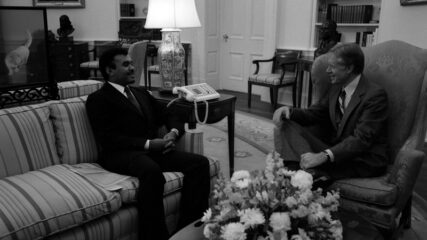
After Egyptian President Anwar Sadat’s diplomatic opening with Israel, almost all Arab states publicly criticized his engagement with Jerusalem.

Sixteen months after Egyptian President Anwar Sadat’s historic visit to Jerusalem and Knesset address, the Egyptian-Israeli Peace Treaty is signed at the White House in Washington.
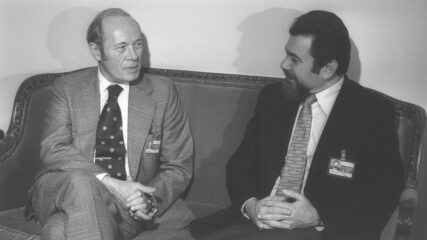
After Egyptian President Sadat’s historic visit to Jerusalem in November 1977, the United States seeks to move negotiations closer to an agreement between Israel and Egypt.

February 14, 1978 President Jimmy Carter announces a plan to sell advanced fighter jets to Israel, Egypt and Saudi Arabia. Coming three months after Egyptian President Anwar Sadat’s visit to Israel, the proposal draws swift…
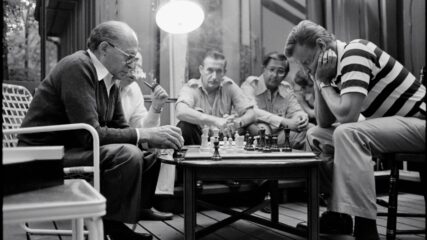
Zgibniew Brzezinski, President Carter’s National Security Adviser, wrote a memorandum redefining the Carter administration’s position on resolving the Arab-Israeli conflict, and advocating for a Palestinian homeland.
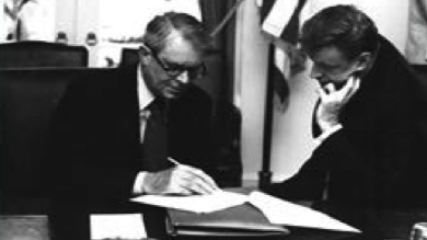
Five major points regarding Israel were made at the White House Middle East Policy review meeting on April 19, 1977.
In a Paris meeting, United States Secretary of State Henry Kissinger tells Foreign Minister Hammadi that the United States would not negotiate Israel’s existence but could “reduce its size to historical proportions.”
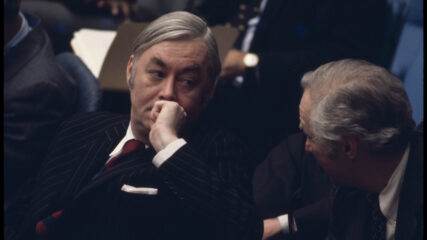
The United Nations passes UN Resolution 3379, which defines Zionism as a form of racism and racial discrimination. It passes with a vote of 72 in favor, 35 against, and 32 abstentions.
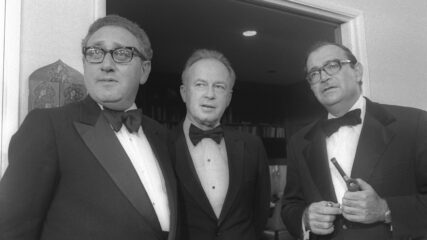
In Geneva, Switzerland, Israel and Egypt sign their Second Disengagement Agreement (Sinai II) following the October 1973 War.
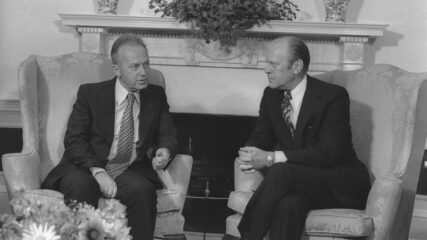
After a breakdown in diplomatic talks between Gerald Ford and Yitzhak Rabin, 76 senators sign a letter to the president stressing the importance of both military and economic assistance to Israel.
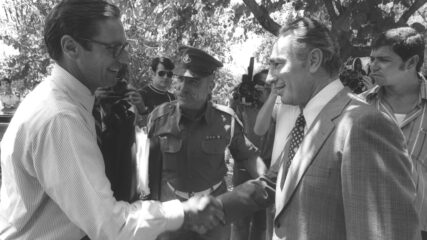
A wide-ranging agreement on expanded economic cooperation provides short term relief to Israel’s struggling economy.
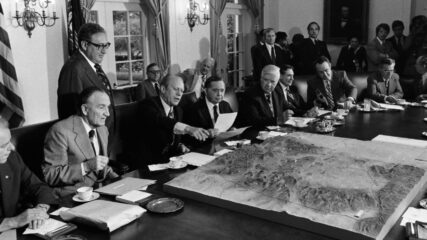
The US undertakes a “reassessment” of the Washington-Israel relationship, creating enormous tension between the US executive branch and the Israeli government.

March 18, 1974 The Organization of Petroleum Exporting Countries, led by Arab oil producers, lifts the oil embargo it had placed on the United States for resupplying Israel during the Yom Kippur War. OPEC also…
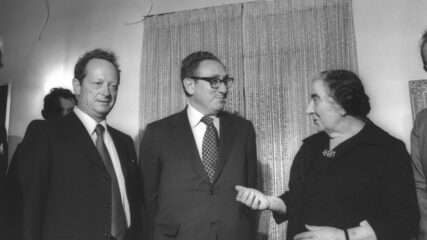
February 27, 1974 U.S. Secretary of State Henry Kissinger arrives in Tel Aviv from Damascus with a list of 65 Israeli prisoners held by Syria since the Yom Kippur War in October 1973, along with…
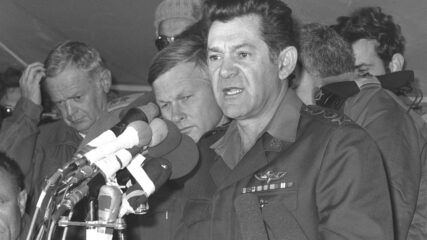
With U.S. assurances, Israel and Egypt agree to a buffer zone between their forces in the Sinai, moving toward what both sides wanted: the return of the peninsula for Egypt, peaceful relations for Israel.
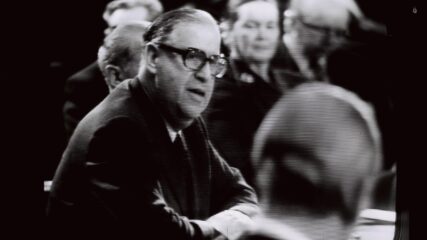
Convened under the co-chairmanship of the United States and Soviet Union, the Geneva Middle East Conference is “aimed at establishing a just and durable peace in the Middle East.”
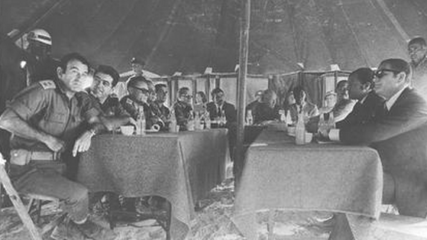
At the end of the October 1973 War, after several miscommunications, the first Egyptian-Israeli Military Talks between Generals commenced. These talks take place at 1am in Israeli-controlled territory, 101 kilometers from Cairo.
