Arabs Weaponize Oil Against Israel’s Allies CIE+ members only
Oil ministers from Arab states cut exports by 5% and recommend an embargo of Israel’s allies in response to the U.S. airlift of military supplies to Israel during the Yom Kippur War.

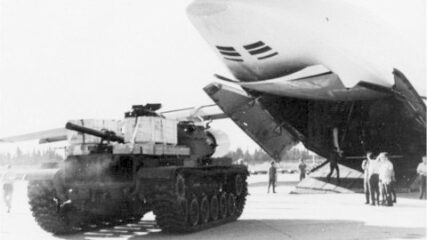
Oil ministers from Arab states cut exports by 5% and recommend an embargo of Israel’s allies in response to the U.S. airlift of military supplies to Israel during the Yom Kippur War.
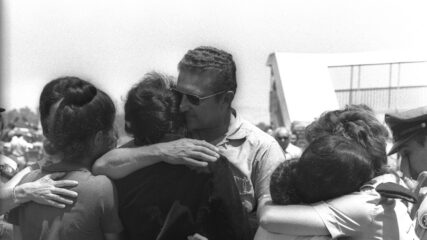
July 1, 1973 Col. Yosef “Joe” Alon, a military attaché at the Israeli Embassy in Washington, is shot five times in his driveway in Chevy Chase, Maryland, after attending a farewell party for an Israeli…

Hafez Ismail and Henry Kissinger conduct secret meetings. Egyptian President Sadat had decided to appoint veteran diplomat Ismail to a newly created position, Egyptian National Security Adviser, in 1972.

Known as Operation Diamond, the plan to recover a functional, Russian-made MIG-21 fighter jet succeeds after the Mossad cuts a deal with disillusioned Iraqi-Christian fighter pilot Munir Redfa. As part of the deal, Redfa receives $1 million, Israeli citizenship for himself and his family, and guaranteed full-time employment.
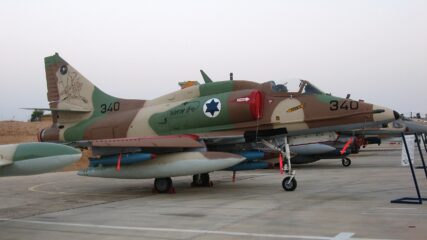
May 19, 1966 The Johnson administration announces that it will sell A-4 Skyhawk light bombers to Israel, marking the first sale of U.S. warplanes to Israel and a shift from France to the United States…

March 10, 1960 Israeli Prime Minister David Ben-Gurion and U.S. President Dwight Eisenhower meet for more than two hours at the White House. “This was the first opportunity I have had of seeing President Eisenhower…
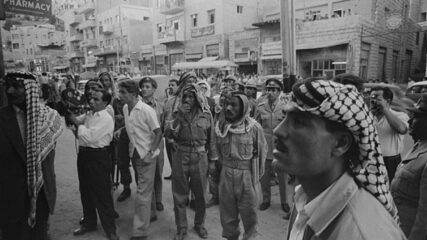
July 14, 1958 Iraqi army officers stage a coup and overthrow and kill King Faisal. Also killed is Iraq’s crown prince, whose body is left hanging outside the Defense Ministry. Iraqis celebrate, but Western powers…

January 30, 1958 At a meeting in Ankara, Turkey, U.S. Secretary of State John Foster Dulles tells Baghdad Pact states that the United States is committed to assisting their defense programs. This statement is seen…

In a nationally televised address to the American people, President Dwight Eisenhower discusses the tense situation in the Middle East in the aftermath of the October 1956 Suez War.
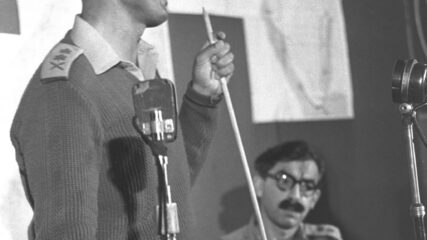
The Knesset debates Prime Minister David Ben-Gurion’s announcement that Israeli troops would withdraw from Sinai following the 1956 Suez War.
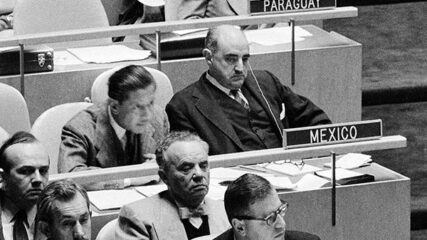
January 25, 1956 Abba Eban, Israel’s ambassador to the United States, and John Foster Dulles, the U.S. secretary of state, discuss a proposal for the United States to sell Israel $50 million worth of weapons…

August 26, 1955 Secretary of State John Foster Dulles delivers a speech to the Council on Foreign Relations that points to the Eisenhower administration’s new plan to launch covert discussions between Israeli Prime Minister David…

May 11, 1953 U.S. Secretary of State John Foster Dulles arrives in Cairo at the start of a 2½-week fact-finding trip to Egypt, Israel, Jordan, Syria, Lebanon, Iraq, India, Pakistan, Turkey and Libya. Dulles emphasizes…
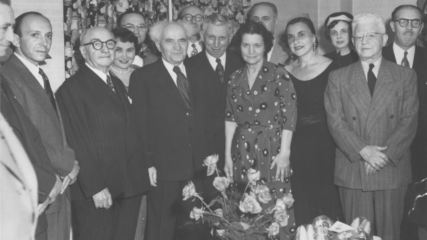
Ben-Gurion’s trip, the first visit by an Israeli Prime Minister to the US, includes a tour of hydroelectric and water projects in Tennessee and Alabama.
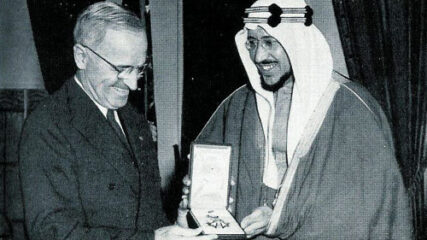
Shaikh Yusuf Yassin, Saudi Arabia’s Deputy Foreign Minister, states that “Arab states would never agree to any working relationship with Israel.”
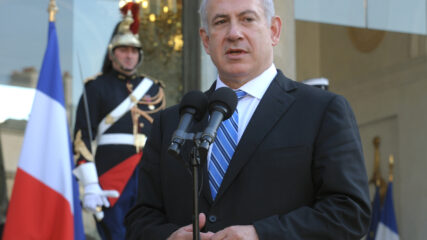
Benjamin Netanyahu, the ninth and current Prime Minister of Israel, is born in Tel Aviv. Although he spends a good portion of his childhood in Philadelphia, Netanyahu returns to Israel in 1967 to fulfill his service in the IDF.

Rabbi Stephen S. Wise, a stalwart of American Zionism and the Reform movement, dies at age 75.
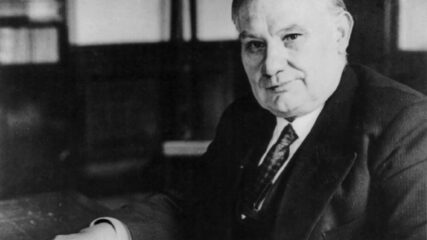
In a cable to the State Department, US Chargé d’affaires Julius Holmes recounts British Foreign Secretary Ernest Bevin’s concerns that “within five years, Israel may be a Communist state.”
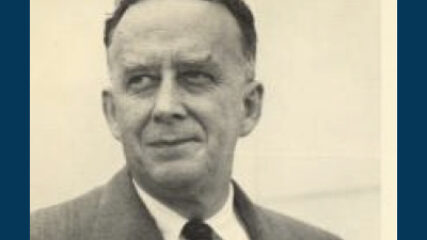
The US rejects a UN request that US Marines be temporarily stationed in Jerusalem to support an Israeli-Arab military truce agreement. The US continues its policy of supporting diplomacy in the region, while maintaining politically-strategic, military distance.
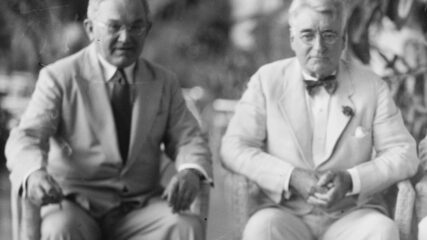
Shortly after Israel declared its independence from the British, on May 14, 1948, the US sent a memorandum to the UN that indicated its acceptance of the new state and the direction of its future policy in the Middle East.
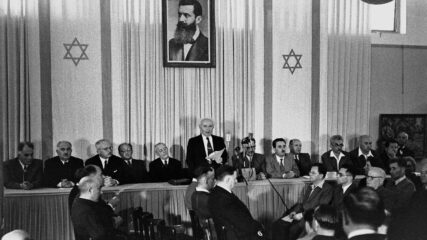
On Friday afternoon in the Tel Aviv Museum, David Ben-Gurion, chairman of the Provisional State Council, declares Israel’s independence. The United States is the first country to recognize the new and already besieged state of Israel.
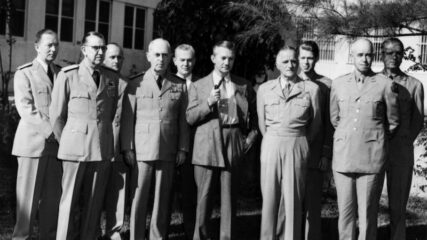
The United States was deeply worried that supporting the establishment of a Jewish state would jeopardize Arab oil supplies and force the US to send troops, risking a confrontation with the USSR.
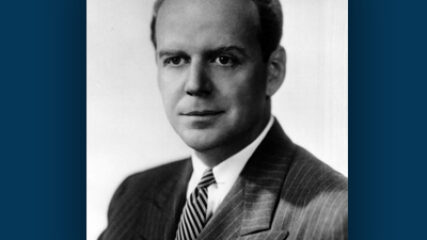
Clark Clifford did not want the US to waiver from the partition resolution passed at the UN in November 1947, which called for the division of Palestine into Arab and Jewish states.
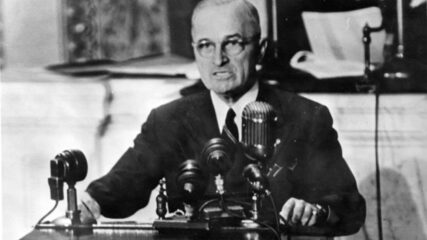
In a speech delivered to a joint session of Congress, President Harry Truman outlines a new, decidedly anti-Soviet direction for American foreign policy.
