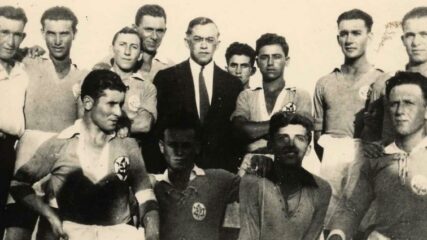
First Tel Aviv Soccer Derby
Maccabi Tel Aviv and Hapoel Tel Aviv hold their first soccer derby, a 3-0 Maccabi win.
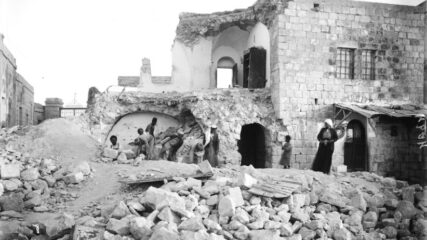
July 11, 1927 A major earthquake strikes Jericho just after 3 p.m., killing between 300 and 500 people and injuring at least 700 others. Measured at a magnitude of 6.3, the quake lasts about five…
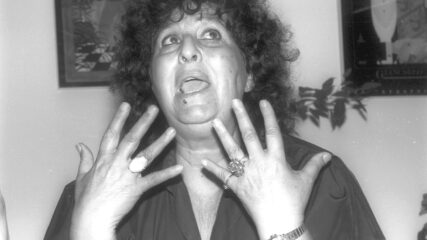
December 25, 1925 Politician and activist Geulah Cohen, the founder of the Tehiya party, is born in Tel Aviv. Cohen becomes involved with political movements in Mandatory Palestine when she is young, and she joins…
The Hebrew University officially opens in Jerusalem on Mount Scopus with Zionist and British leaders joined by representatives from universities across the world.
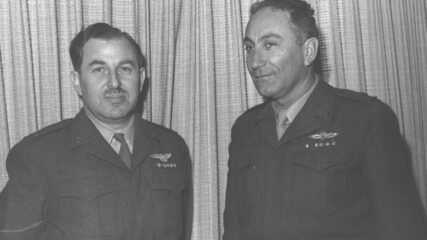
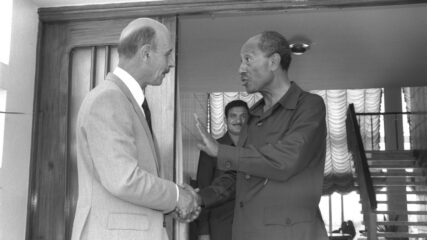
November 9, 1924 Avraham Tamir, a military strategic mastermind who rises to the rank of major general, is born. He is one of the first Israeli officials to meet with PLO Chairman Yasser Arafat and…
Unable to immigrate to the US, many European Jews immigrate to the land of Israel. Between 1924 and 1929, the period known as the Fourth Aliyah, 82,000 Jews arrive in Palestine.
In border designations for states drafted primarily by Britain and France after WWI, the new state of Syria gains control of the Golan Heights.
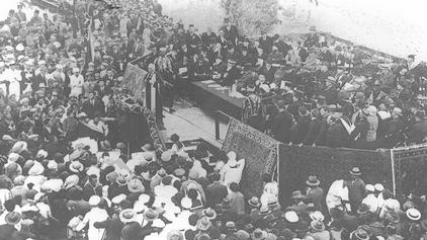
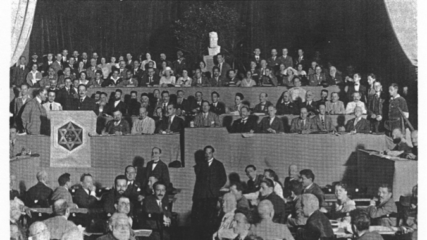
Convened in Carlsbad, Czechoslovakia, the Thirteenth Zionist Congress discusses details of the Palestine Mandate and particularly the prerogatives of the Palestine Zionist Executive (PZE) that guide Jewish immigration and settlement in Palestine.
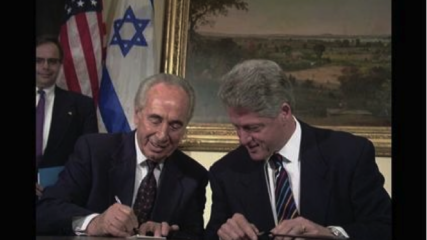
The only politician in Israeli history to hold the positions of both President and Prime Minister, Shimon Peres is born in Belorussia to Yitzchak and Sara Perski.
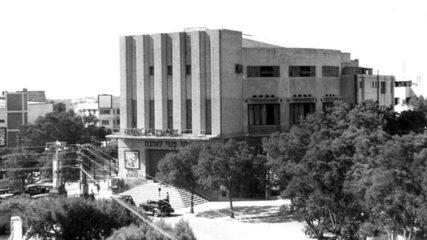
July 28, 1923 Mordechai Golinkin’s production of Giuseppe Verdi’s “La Traviata” marks the beginning of opera in Mandatory Palestine. Because Palestine has no opera house, the performance is in a movie theater. Golinkin, who wrote…
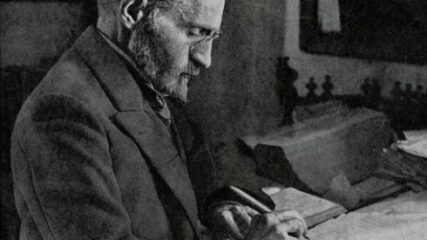
Eliezer Ben-Yehuda, considered the “father of modern Hebrew,” dies from tuberculosis at the age of 64 in Jerusalem. Thirty thousand mourners attend his funeral on the Mount of Olives.
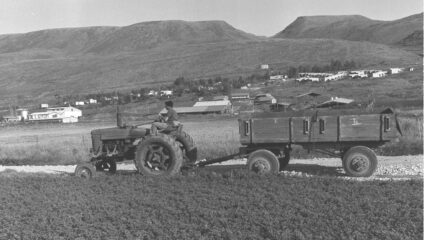
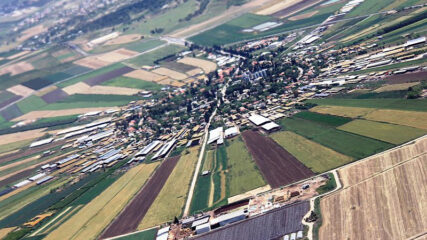
Nahalal, the first moshav ha’ovdim (workers settlement), is founded in the northwest Jezreel Valley, about halfway between Haifa and Afula.
December 24, 1920 The World Zionist Congress in London launches Keren Hayesod (Hebrew for the Foundation Fund, now known in English as the United Israel Appeal) to raise money for the Zionist movement and fulfill…
The first Hebrew language medical journal in Palestine, “HaRufuah,” is published quarterly by the Jewish Medical Association of Palestine. The journal is still published monthly by the Israel Medical Association and distributed to all its members free of charge.
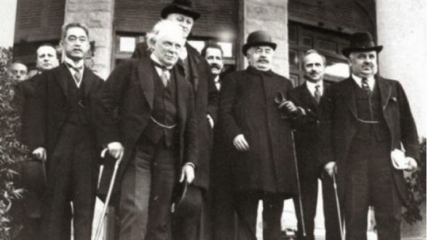
Following the San Remo conference in April 1920, a treaty is signed between the Allies and the Ottoman Empire in the town of Sevres, France, officially breaking up the Ottoman Empire.
British Prime Minister David Lloyd George asks Herbert Samuel to become the first High Commissioner of Palestine.
March 1, 1920 A Shi’ite Arab militia, accompanied by local Bedouins, attacks the Jewish agricultural settlement of Tel Hai, which has served as a border outpost in the Upper Galilee between British-controlled Palestine and French-controlled…
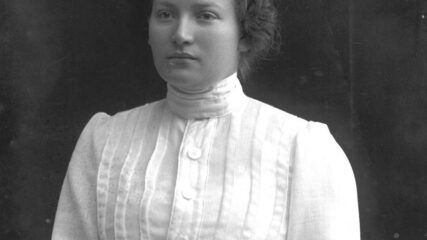
Sarah Aaronsohn, a Nili intelligence operative, dies four days after shooting herself in an effort to avoid further torture and interrogation by Turkish authorities.
A secret treaty is negotiated to divide the former Ottoman territories between Britain and France.
The Husayn-McMahon correspondence commences between the Arab leader Husayn bin-Ali and the British government official Sir Henry McMahon.
Shmuel Katz, a leader of Revisionist Zionism and a founder of the Herut Party in Israel, is born in Johannesburg, South Africa.
Responding to a plea from Henry Morgenthau, United States Ambassador to Turkey and American Jewish leaders, led by Louis Marshall and Jacob Schiff, quickly raise $50,000 in aid for the Jewish community in the Palestine.
Arthur Ruppin, head of the Palestine Office of the World Zionist Organization, purchases the estate of Sir John Gray Hill on Mount Scopus in Jerusalem for the purpose of building a university.
An important moment in Israel’s nation-building comes when the Kuratorium (board of trustees) of the Technion University, then under construction in Haifa, reverses its decision of October 1913 and decides that Hebrew, not German, will be the language of instruction at the new school.