Nasser Calls for Israel’s Destruction in Speech to Trade Unionists, May 1967CIE+
Ten days before the start of the Six-Day War, Egyptian President Gamal Abdel Nasser declares that Egypt, Syria and other Arab states intend to destroy Israel.
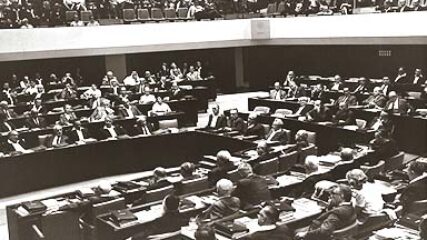
With tensions on its borders, Eshkol tries to reassure Israeli public. Instead he gives a “painfully faltering” speech. Popular and party disgruntlement follow, opening the way for Eshkol to turn over the Defense Ministry two days later to General Moshe Dayan.
Egyptian President Gamal Abdel Nasser asserts that the conflict with Israel is not over access to the Gulf of Aqaba but the very existence of Israel; Egypt’s foes are Britain and the United States, which support Israel.
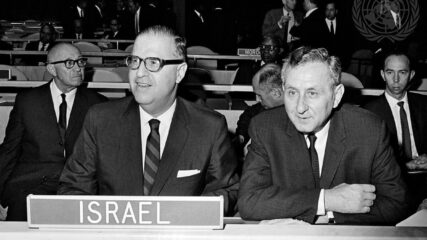
The Israeli ambassador to the United Nations delivers a detailed outline of events that will lead to war two days later.
Ambassador Abba Eban tells the U.N. why Israel had to fight the war earlier in June 1967 and calls for new efforts for regional peace.
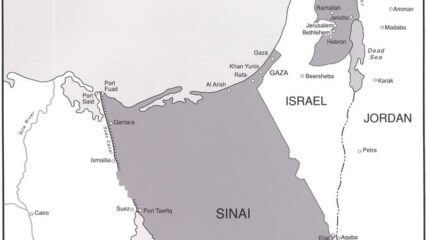
After the June 1967 war, the Israeli government sent word through the United States to Egypt and Syria seeking to jump-start a peace process. Apparently no response was received.
President Johnson’s remarks became the philosophical outline for UN Resolution 242 passed in November 1967. Core to his view was that Israel would not need to return to the pre-1967 war borders, and that the territorial integrity and sovereignty of all states in the region should be protected.
Arab states declare “no peace, no negotiation, no recognition” with Israel after their collective defeat in the June 1967 War.
Resolution 242 calls for Israeli withdrawal from unspecified captured territories in return for the right of all states to live in peace. It does not call for a full withdrawal. It is the basis for treaties with Egypt (1979) and Jordan (1994) and for PLO recognition of Israel (1993).