After Israel’s War of Independence ended in armistice agreements rather than treaties, in the 1950s and 1960s cross-border attacks pockmarked the Arab-Israeli theater until the June 1967 war. That war changed the Arab-Israeli conflict forever as Israel, after being surrounded by hostile Arab armies for three weeks, pre-emptively struck and defeated Arab armies in six days to take control of territories previously held by Egypt, Jordan and Syria. U.S. President Lyndon Johnson suggested that an Israeli withdrawal from any of these lands should be rewarded with negotiated agreements and a measure of nonbelligerency from Cairo, Amman and Damascus. Johnson’s idea was enshrined in U.N. Security Council Resolution 242, which called for an exchange of land for peace and long-term territorial integrity for all states in the region.
After the 1973 war, Egyptian President Anwar Sadat engaged the United States as the mediator between Jerusalem and Cairo at the December 1973 Geneva conference. The United States negotiated two disengagement agreements between Israel and Egypt in 1974 and 1975 and one between Israel and Syria in 1974. Arab-Israeli negotiations had commenced in earnest with Washington at the center and with Moscow, Europe and the United Nations on the sidelines. The cornerstone of the 1975 agreement emerged with civilian U.S. personnel stationed between Israeli and Egyptian forces in Sinai.

Israel State Archives — Selected Record Groups The Israel State Archives in Jerusalem are a treasure-trove for those seeking to understand Israel’s evolution. Successive archival groups reference Israel over the past century. More than the…
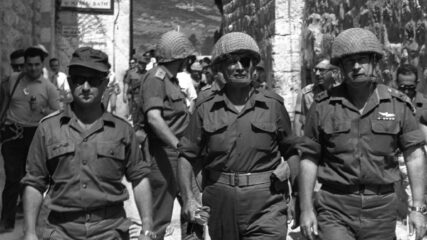
June 2025 CIE has compiled the following list of books and articles, including some available on our website, to guide understanding of Israel’s capital, the holy city of Jerusalem. Books Adelman, Madelaine, and Miriam Fendius…
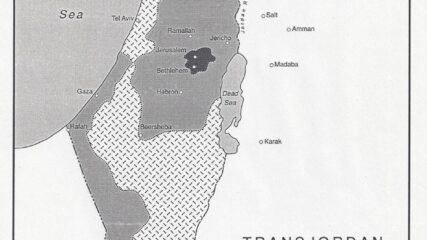
Ken Stein, President, Center for Israel Education, May 19, 2025 Introduction Since 1937, the idea of geopolitically separating Jewish and Arab populations west of the Jordan River has been a recommended solution to mitigate violence between…
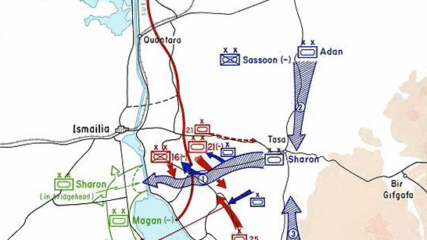
CIE has compiled the following list of books, articles and interviews, including many available on our website, to guide understanding of the unfolding of the October 1973 Middle East war and its consequences. Books Adan, Avraham. On…

Kenneth W. Stein, “Evolving a Diplomatic Legacy From the October War: The US, Egyptian, and Israeli Triangle,” in Asaf Siniver (ed.), The October 1973 War Politics, Diplomacy, and Legacy, London: Hurst and Company, 2013. This…
Hafez Ismail was a close adviser to Egyptian President Anwar Sadat. Ismail carried out secret negotiations with Henry Kissinger before the 1973 war to see if the U.S. would quietly start talks with the Israelis. Kissinger said no. Ismail provides notable insights into Sadat’s sophisticated decision-making.
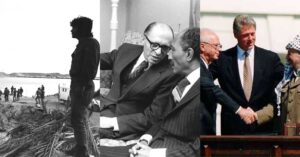
Unfold six Arab states’ embrace of Israel since 1973 out of national interests and U.S. mediation, sidelining the Palestinian movement, and explore Hamas’ Oct. 7, 2023, attack and its implications for the Israeli-Palestinian conflict and Israeli diplomacy.

2013 Kenneth W. Stein, “Evolving a Diplomatic Legacy From the October War: The US, Egyptian, and Israeli Triangle,” in Asaf Siniver (ed.), The October 1973 War: Politics, Diplomacy, and Legacy, London: Hurst and Co., 2013,…
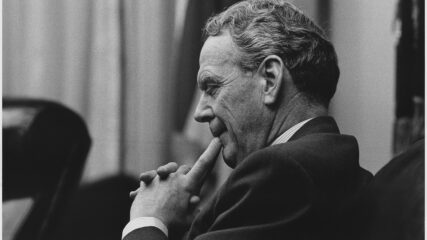
As a special presidential counsel, Clifford opposed the pro-Arab State Department and urged President Harry Truman to maintain support for the U.N. partition of Palestine and to lift the arms embargo on Jewish forces heading…

The 36th U.S. president, Johnson increased U.S. economic and military support for Israel. Unlike Dwight Eisenhower in 1956, Johnson did not demand Israel’s immediate withdrawal from captured territory after the 1967 war. He outlined five…
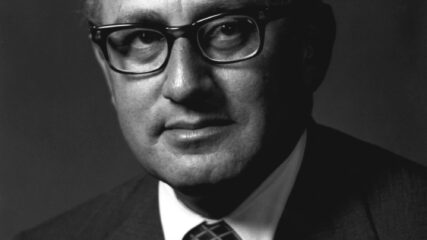
Kissinger was the national security adviser and secretary of state to Presidents Richard Nixon and Gerald Ford. He heavily influenced U.S. policy in the Middle East and made “shuttle diplomacy” famous after the October 1973…
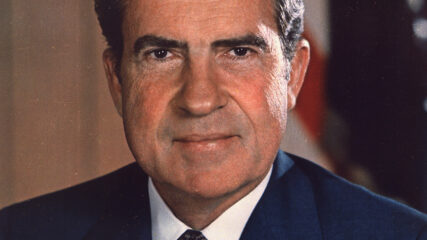
Though he expressed antisemitic views in private, Nixon as the 37th U.S. president authorized the airlift that replenished Israel’s arms during the October 1973 war, providing the means for Israel to end the war with…
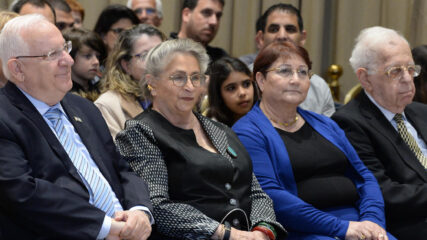
Avineri, a native of Poland, was one of Israel’s premier political scientists as a Hebrew University professor and wrote extensively on the history of political philosophy, including Marx, Engels, Hegel, Zionism, colonialism and the Soviet…

Allon led the Palmach and was an IDF major general who oversaw the Southern Command. He served in the Knesset from 1955 until his death. After the 1967 war, he proposed returning the West Bank…

The first foreign minister and second prime minister of Israel, Ukraine-born Sharett (originally Shertok) was a signer of the Declaration of Independence and one of the key negotiators of cease-fire agreements that ended the War…
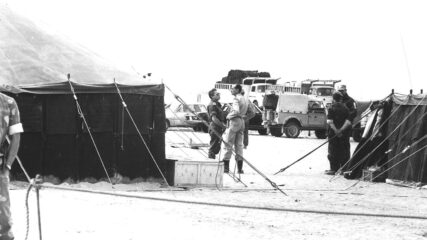
Coming up, fifty years after the June 1967 War. How many times have I taught the causes and effects, or written about the War? Hundreds of times in forty years.
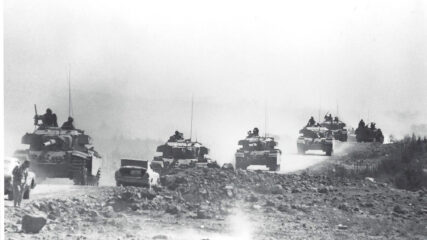
Many recollections remain from the Egyptian-Syrian surprise attack on Israel on Yom Kippur in 1973. The war set in motion a diplomatic process that eventually culminated in the 1979 Egyptian-Israeli Peace Treaty.
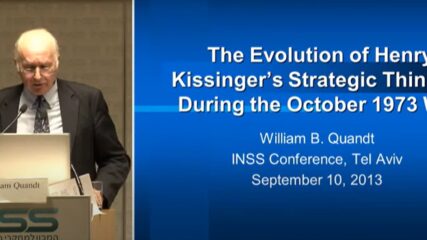
September 10, 2013 Speaker: Professor William Quandt, Professor Emeritus, University of Virginia, speaks at the “Yom Kippur War — A Launching Pad for U.S. Middle East Policy” conference, held in Tel Aviv by the Institute…
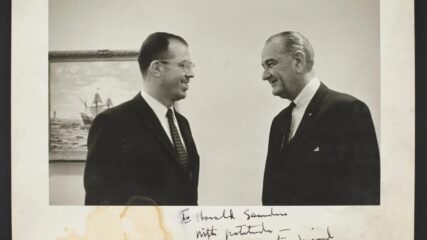
Many in the Arab world and amongst Palestinian leaders believe that, for the sake of evenhandedness and justice, the U.S. government, a longtime supporter of Israel’s security and existence, should have openly endorsed and urged others to vote for the proposition of Palestinian state recognition at the United Nations. Criticism of the U.S. failing to do so has been harsh, but it is also without perspective or historical context. What is forgotten is the persistent, even aggressive, perhaps unprecedented role that Washington has played in pushing for Palestinian rights, self-determination and, most recently, for Palestinian statehood.
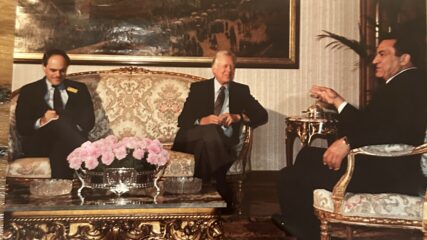
Spring/Summer 1997 Kenneth W. Stein, “Continuity and Change in Egyptian-Israeli Relations, 1973-97,” Israel Affairs, Spring/Summer 1997, Vol. 3, Nos. 3 and 4, pp. 296-320 For 25 years, tension, mistrust, and strain have characterized Egyptian-Israeli relations….
With a keen memory to detail, Nicholas Veliotes engaged an array of American and Middle Eastern political leaders. This interview is laced with charming and enthusiastic candor as he served in American diplomatic positions from 1973 to 1986 in Tel Aviv, Washington, Amman and Cairo. He was present when sensitive U.S. policies were debated and operationalized. His assessments of Kissinger, Sadat, Meir, Nixon, King Hussein, Brzezinski, Carter, Vance and a whole panoply of Israeli officials bubble with content; the vignettes he shares about Nixon and Brzezinski are priceless. In the late 1970s and early 1980s, Veliotes, along with Morris Draper, Hermann Eilts, American consuls general in Jerusalem and other U.S. officials failed in repeated attempts to secure PLO leader Yasser Arafat’s participation in the diplomatic process.
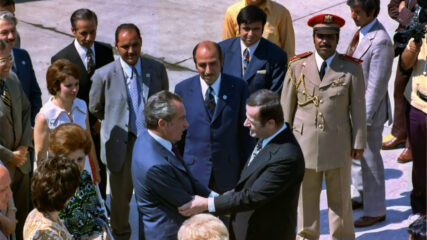
From 1970 to 1984, Khaddam served as Syria’s foreign minister, and later he was Syria’s decision-maker for actions in Lebanon. He recounts Syrian anger toward Egyptian President Sadat’s slow but continual bilateral engagement and recognition of Israel. He recalls how Syrian President Assad, after a four-hour meeting, refused Henry Kissinger’s invitation to attend the 1973 Geneva peace conference, not wanting to sanction the closeness Sadat was establishing with Israel and with Washington. These were the same reasons why Syria refused President Carter’s invitation to attend a similar Middle East peace conference in 1977. Khaddam says, “We were shocked by Sadat’s actions.”
Mustafa Khalil served as the primary Egyptian negotiator in tying up the Egyptian-Israeli treaty with Israeli Foreign Minister Moshe Dayan between September 1978 and March 1979. Though most of the talks took place in Washington, the final excruciating details were negotiated in difficult exchanges in Jerusalem between Jimmy Carter and Menachem Begin in the week before the March 26, 1979, treaty signing.
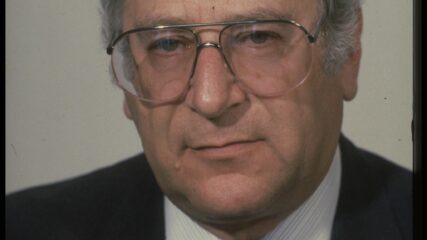
For years, Naftali Lau-Lavie worked closely with Moshe Dayan. His remarks here focus on Dayan as Menachem Begin’s foreign minister (1977-1979). He provides sumptuous detail on Dayan’s thinking and interactions with the Carter administration as it tried to force a Palestinian/PLO state on Israel in seeking a comprehensive Middle East peace.

