Cards List
FILTERED BY:
<span class="cie-plus-title">Ken Stein, “The U.S. Role in Palestinian Self-Determination”</span><span class="cie-plus-badge">CIE+</span>

Ken Stein, “The U.S. Role in Palestinian Self-Determination”CIE+

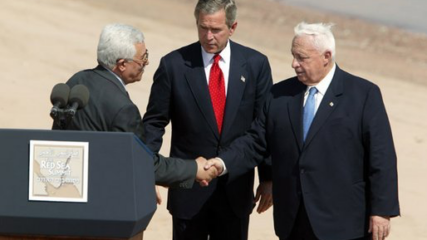
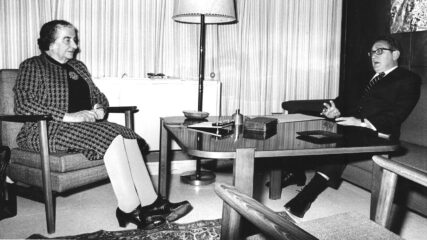
Many in the Arab world and amongst Palestinian leaders believe that, for the sake of evenhandedness and justice, the U.S. government, a longtime supporter of Israel’s security and existence, should have openly endorsed and urged others to vote for the proposition of Palestinian state recognition at the United Nations. Criticism of the U.S. failing to do so has been harsh, but it is also without perspective or historical context. What is forgotten is the persistent, even aggressive, perhaps unprecedented role that Washington has played in pushing for Palestinian rights, self-determination and, most recently, for Palestinian statehood.

<span class="cie-plus-title">Annapolis: Precedents and Transactions but Not Transformations</span><span class="cie-plus-badge">CIE+</span>

Annapolis: Precedents and Transactions but Not TransformationsCIE+

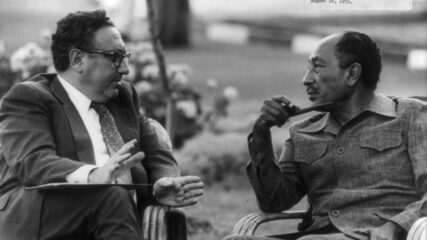
Since the June 1967 war, more than two dozen mediators have engaged in Arab‐ Israeli diplomacy seeking to clarify one underlying question: under what conditions and over what period of time would Israel relinquish land attained in the June 1967 War, and what kind of understanding or agreement from an Arab partner would Israel receive in return? The Annapolis Conference in 2007, was again a Transaction but not a Transformation of Outcomes.

<span class="cie-plus-title">A Zionist State in 1939</span><span class="cie-plus-badge">CIE+</span>

A Zionist State in 1939CIE+

“A Zionist State in 1939,” Dr. Kenneth W. Stein, CHAI (Atlanta), Winter 2002 “Had not the Nazi crimes been committed against Jews during World War II, the Jewish State would have never come true.” So…

<span class="cie-plus-title">How Prime Minister Yitzhak Rabin Viewed the 1993 Oslo Accords — A Collection in His Own Words</span><span class="cie-plus-badge">CIE+</span>

How Prime Minister Yitzhak Rabin Viewed the 1993 Oslo Accords — A Collection in His Own WordsCIE+

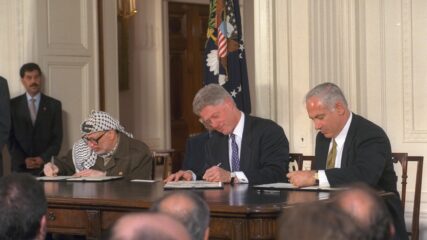
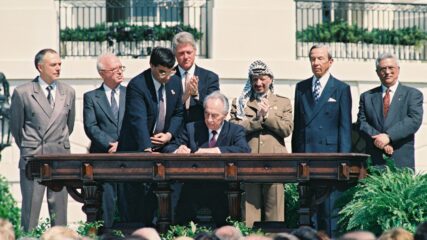
In September 2023, thirty years after the historic signing of the Oslo Accords, there is occasion to review Prime Minister Rabin’s understanding of them. I assembled this collection years ago from Daily Reports- Near East and South Asia, 1993-1995. Two short items about Rabin’s views are also found or linked here. Rabin provided a summary of his views of the Accords in a Knesset speech in October 5, 1995. Some of Rabin’s reasons for signing the Accords are also provided in Yehuda Avner’s The Prime Ministers.

Documents and Sources, Ken's Blog|September 1993-November 1995
<span class="cie-plus-title">October 27, 1973, “The Link Between War and Diplomacy: The Kilometer 101 Talks After the October 1973 War”</span><span class="cie-plus-badge">CIE+</span>

October 27, 1973, “The Link Between War and Diplomacy: The Kilometer 101 Talks After the October 1973 War”CIE+

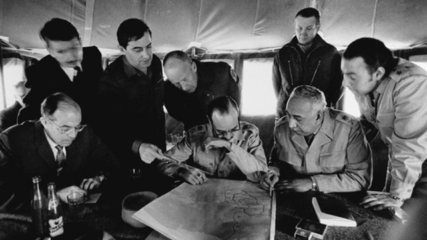
Ken Stein explains in detail how Egyptian and Israeli leaders coached their generals into reaching an understanding on how their troops would be disengaged after the war. On that day, a German-born Egyptian career foreign service officer, Omar Sirry was told to pack his toothbrush and go to meet several Israelis along with other Egyptians at the 101 Kilometer marker for talks.

<span class="cie-plus-title">The 1973 October War — A Short History</span><span class="cie-plus-badge">CIE+</span>

The 1973 October War — A Short HistoryCIE+

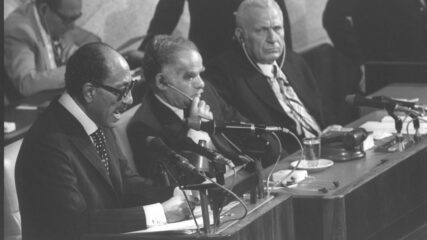
Egyptian President Sadat colluded with Syrian President Assad to attack Israel on October 6, 1973. Sadat’s objective was not to seek Israel’s destruction but to gain a limited success by crossing the canal. He also sought to engage American diplomacy to generate talks with Israel that would see Israeli withdrawal from Egyptian land Israel secured in the June 1967 War. Sadat took a large gamble by attacking Israel yet he unfolded a negotiating process with Israel that lasted through 1979. He achieved his overarching long-term priority of having Egyptian Sinai returned to Egyptian sovereignty.

Explainer: The Arab-Israel War of 1948 — A Short History

Explainer: The Arab-Israel War of 1948 — A Short History

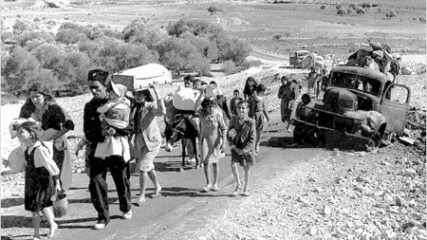
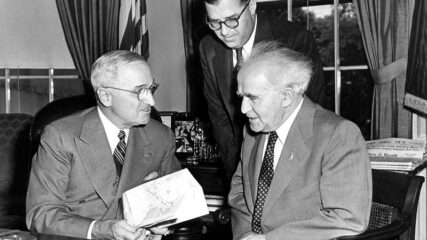
Otherwise known as Israel’s War of Independence, or, “the nakbah” or disaster to the Arab world because a Jewish state was established, the war was fought between the newly established Jewish state of Israel opposed by Palestinian irregulars, and armies from five Arab states. Official beginning of the war is usually given as May 14, 1948, the date Israel declared itself an independent Jewish state, but the war’s first of four phases began in November 1947. Lasting for two years, the war ended with armistice agreements signed in 1949 between Israel and four Arab states.

<span class="cie-plus-title">UNGA Resolution 181</span><span class="cie-plus-badge">CIE+</span>

UNGA Resolution 181CIE+

The 1937 plan to partition Palestine was never implemented. It did, however, remain a workable political option for resolving the conflict between Arabs and Zionists. Britain needed to placate Arab state opposition to Zionism, so it refrained from actively revisiting the partition plan.

Issues and Analyses, Ken's Blog|November 29, 1947