<span class="cie-plus-title">Are They Legal or Not? Pompeo’s Announcement on the Israeli Settlements</span><span class="cie-plus-badge">CIE+</span>

Are They Legal or Not? Pompeo’s Announcement on the Israeli SettlementsCIE+

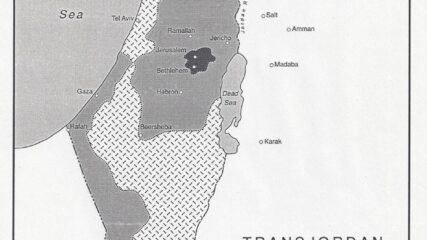
The announcement by US Secretary of State Mike Pompeo that “the establishment of Israeli civilian settlements in the West Bank is not, per se, inconsistent with international law” is in line with Israel’s official position, and its inherent message – that preoccupation with the question of the legality of the settlements narrows Palestinian flexibility and discourages the achievement of a negotiated resolution to the conflict – is correct. However, the announcement’s practical value is minor, and there are even potential risks and costs for Israel.

Issues and Analyses|November 24, 2019
<span class="cie-plus-title">Gaza in Crisis, 2018</span><span class="cie-plus-badge">CIE+</span>

Gaza in Crisis, 2018CIE+

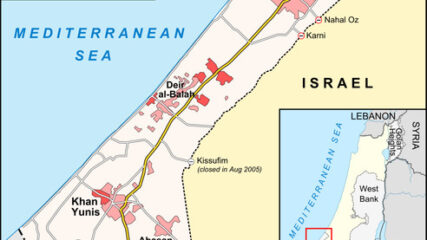
Demographic pressures lie behind much of what is happening in Gaza. In 1948, 250,000 Palestinian refugees fled to Gaza, where the existing population was 80,000. Today, the population of Gaza is about 1.9 million of whom 1.3 million (68%) are refugees. Palestinians are the only people to retain refugee status generation after generation as a result of United Nations support.

<span class="cie-plus-title">Ken Stein, “The U.S. Role in Palestinian Self-Determination”</span><span class="cie-plus-badge">CIE+</span>

Ken Stein, “The U.S. Role in Palestinian Self-Determination”CIE+

Many in the Arab world and amongst Palestinian leaders believe that, for the sake of evenhandedness and justice, the U.S. government, a longtime supporter of Israel’s security and existence, should have openly endorsed and urged others to vote for the proposition of Palestinian state recognition at the United Nations. Criticism of the U.S. failing to do so has been harsh, but it is also without perspective or historical context. What is forgotten is the persistent, even aggressive, perhaps unprecedented role that Washington has played in pushing for Palestinian rights, self-determination and, most recently, for Palestinian statehood.

<span class="cie-plus-title">Annapolis: Precedents and Transactions but Not Transformations</span><span class="cie-plus-badge">CIE+</span>

Annapolis: Precedents and Transactions but Not TransformationsCIE+

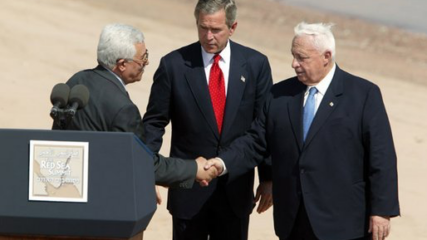
Since the June 1967 war, more than two dozen mediators have engaged in Arab‐ Israeli diplomacy seeking to clarify one underlying question: under what conditions and over what period of time would Israel relinquish land attained in the June 1967 War, and what kind of understanding or agreement from an Arab partner would Israel receive in return? The Annapolis Conference in 2007, was again a Transaction but not a Transformation of Outcomes.

<span class="cie-plus-title">The Quest for Arab-Israeli Peace</span><span class="cie-plus-badge">CIE+</span>

The Quest for Arab-Israeli PeaceCIE+

“The Quest for Arab-Israeli Peace: Israel’s Disengagement from the Gaza Strip: Precedents, Motivations and Outcomes” Zionism Fulfilled.- Israel’s preemptive physical disengagement from the Gaza Strip in August 2005 was the result of a national consensus;…

Issues and Analyses, Ken's Blog|February 19, 2005
<span class="cie-plus-title">Kenneth Stein, “Separate Palestinians, Israelis Through a Trusteeship,” Orlando Sentinel, 2002</span><span class="cie-plus-badge">CIE+</span>

Kenneth Stein, “Separate Palestinians, Israelis Through a Trusteeship,” Orlando Sentinel, 2002CIE+

Note by the author: As a faculty member at Emory University, I wrote several articles per month for national and local newspapers. This article appeared in October 2002 in the Orlando Sentinel. The idea for a trusteeship to be possibly be considered to manage the Israeli-Palestinian relationship emerged from my decades of study of the Palestine Mandate, understanding the concept of separation of the two communities that was offered by the British on more than one occasion during the 1930s and 1940s, and the American suggestion in early 1948 to create a trusteeship for Palestine’s future. Martin Indyk, a US diplomat published an article about considering a trusteeship as a future political option in a Foreign Policy magazine article in July 2003.